
Project
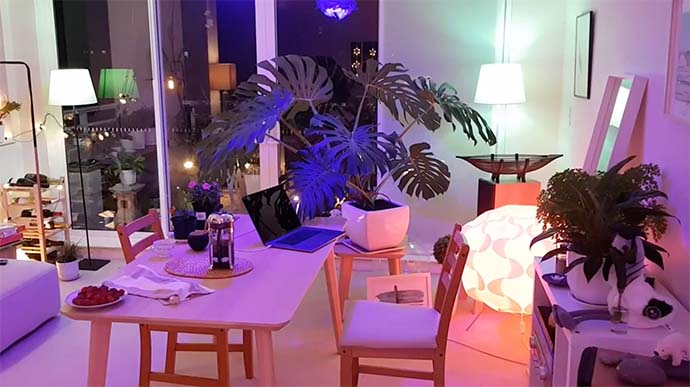
The world currently faces an increasingly uncertain and diverse set of energy futures, facilitated by climate change, the increasing integration of distributed energy resources, and people’s changing digital-enabled lifestyles.
Monash University has collaborated with industry partners Ausgrid, AusNet Services and Energy Consumers Australia to embark on a three year, $2.3 million research project to understand better how emerging technologies will impact our future energy needs.
Funded through the Australian Research Council’s Linkage Projects scheme, this research aims to understand and forecast changing digital lifestyle trends and their impact on future household electricity demand, including at peak times.
The project will involve almost 200 residential energy consumers in in-depth research activities, making it the most extensive sociological study of energy demand and consumers’ energy futures conducted in Australia.
The project expects to generate new knowledge by employing digital ethnography and sociological theories to investigate how changing social practices will impact electricity sector planning.
The research explores how emerging technologies are changing people’s digital-enabled lifestyles across several practice domains in the home. These include charging and mobility; cooking and eating; healthy indoor air and thermal comfort; living and play; working and studying from home; caring for the home and its occupants; and making, saving, storing and shifting energy.
A key innovation of the project is the development of future-focused scenarios for everyday life based on people’s understanding of their futures, specifically their expectations and aspirations for how they are going to live with digital and energy technologies in the near (2025-30) and medium-far (2030-50) future. These timelines align with the forecasting cycles of electricity distribution businesses.
Outcomes
Expected outcomes include:
- scenarios and principles for digital energy futures to help guide energy forecasting
- energy policy and demand management programs
- an interdisciplinary energy demand forecasting methodology; and
- demand management tools to help the sector meet future residential consumption.
The project will also advance social science-led futures research, experimenting with new methodologies to develop non-predictive future scenarios, with transferable insights for other sectors.
The DEF project is expected to provide significant energy sector and consumer benefits by improving energy forecasting and planning. These benefits could include lowering the cost of infrastructure spending and helping secure affordable, equitable energy provisions and sustainable futures for Australian households.
Project Design
Research Objectives
- Understand how Australian household practices are currently changing with new and emerging intelligent and digital technologies across different consumer groups in the electricity sector.
- Identify emerging future scenarios and principles that have important implications for the electricity sector in the near, medium and far future.
- Test and develop a theoretical and methodological approach to studying and anticipating changing trends in household practices, which brings a futures perspective to theories of social practice.
- Develop a new industry-relevant forecasting model for tracking and anticipating peak electricity demand and energy consumption more broadly incorporating insights from future-oriented social science research.
- Develop practical demand management solutions for Australian electricity network businesses to plan efficient, cost-effective and reliable networks.