Ellisdon Lab research
Collaborations | Student research projects | Publications
About Professor Andrew Ellisdon
Professor Andrew M. Ellisdon leads the Structural Biology of Signalling and Cancer Laboratory at the Monash Biomedicine Discovery Institute, Monash University. His laboratory investigates how cells sense, organise and respond to molecular signals that control growth, metabolism, inflammation and cancer.
Andrew completed his PhD at Monash University in 2007 before undertaking international postdoctoral training in structural biology as a Marie Curie and EMBO Fellow at the MRC Laboratory of Molecular Biology in Cambridge, UK. He returned to Monash to establish a research program that integrates cryo-electron microscopy, X-ray crystallography, protein biochemistry, cell signalling, advanced imaging and computational approaches to understand how protein complexes function in cells.
A major goal of the Ellisdon Laboratory is to capture “signalling in action” by visualising the molecular machines that allow cells to detect nutrients, lipids, cytokines and stress signals, and by defining how these systems are altered in disease. Current research spans lysosomal nutrient sensing and mTORC1 signalling, cholesterol-sensing membrane proteins, tumour suppressor and oncogene signalling complexes, and engineered protein therapeutics for immune and inflammatory disease.
Our research
Current projects
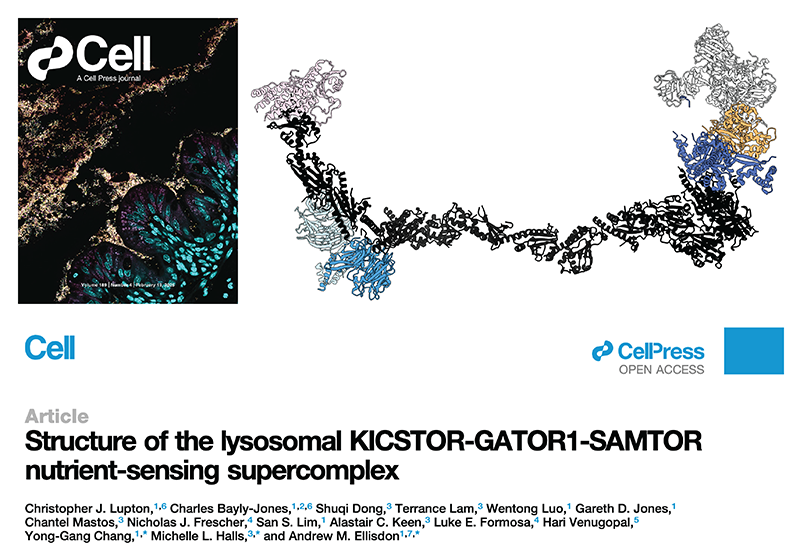
How cells sense nutrients and control growth
Cells constantly measure nutrient availability and adjust growth, metabolism and recycling pathways accordingly. Our laboratory studies how these decisions are organised at lysosomes, specialised organelles that act as both recycling centres and signalling platforms inside the cell.
A major focus is the mTORC1 pathway, a master regulator of cell growth, metabolism and autophagy. We use single-particle cryo-electron microscopy, protein biochemistry, reconstitution of purified complexes, cross-linking mass spectrometry, proteomics, live-cell imaging, cell signalling assays and computational modelling to understand how nutrient-sensing protein supercomplexes assemble and switch between active and inactive states.
By revealing how cells sense nutrients at the molecular level, we aim to understand fundamental mechanisms that control cell growth and survival. These discoveries are relevant to cancer, metabolic disease, neurodevelopmental disorders and ageing, where nutrient-sensing pathways are frequently disrupted.
Designing next-generation cytokine therapeutics
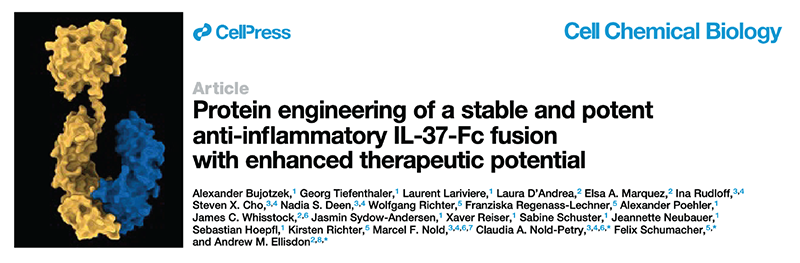
Cytokines are the molecular language of the immune system. They coordinate inflammation, tissue repair and host defence, but when these signals are dysregulated they can drive chronic inflammatory disease.
Our laboratory focuses on the interleukin-1 family, a group of cytokines that includes both powerful pro-inflammatory signals and naturally occurring anti-inflammatory regulators. We use structural biology, protein engineering and AI-enabled protein design to understand how these cytokines bind their receptors and to create new cytokine-inspired biologics.
This work builds on long-standing programs in structure-guided cytokine engineering, including IL-37 and related anti-inflammatory cytokines, and has supported patents, commercial partnerships and translational development with Roche, and Biocurate. Our goal is to develop stable, potent and manufacturable molecules that precisely tune inflammatory signalling for inflammatory, autoimmune and immune-mediated diseases.
Lysosomal GPCRs and cholesterol sensing
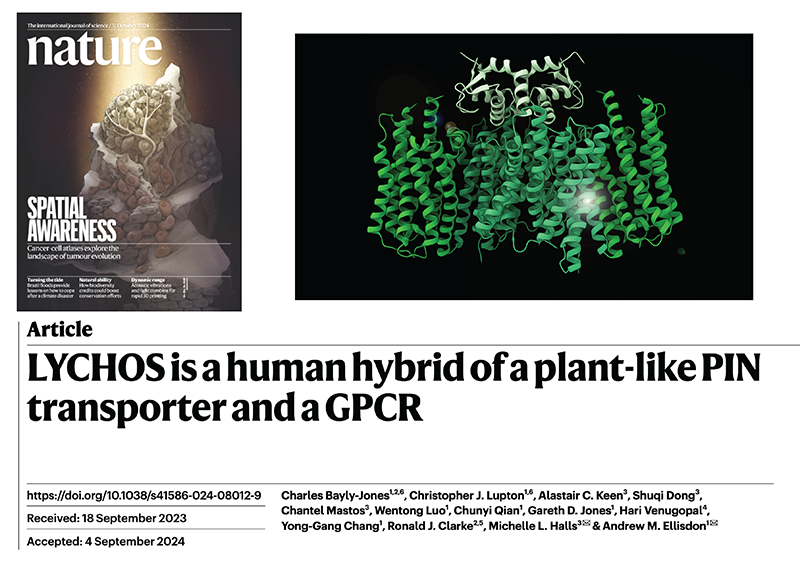
G protein-coupled receptors are best known for detecting hormones, neurotransmitters and sensory cues at the cell surface. Our laboratory studies how GPCR-like proteins may also act inside the cell, where they detect nutrients, lipids and metabolites within organelles such as lysosomes.
A major focus is GPR155, an evolutionarily conserved lysosomal membrane protein that contains a plant-like PIN transporter fold and acts as a cholesterol-responsive regulator of mTORC1 signalling. We combine cryo-electron microscopy, membrane-protein biochemistry, lipid and sterol-binding assays, cross-linking mass spectrometry, lysosomal imaging, metabolomics, cell signalling assays and computational modelling to understand how these proteins sense their chemical environment. This work aims to uncover new principles of organelle-based signalling, cholesterol sensing and metabolic regulation, with implications for cancer, metabolic disease and neurological disorders.
Visit Professor Ellisdon's Monash research profile to see a full listing of current projects.
Techniques/expertise
We utilise a range of structural biology techniques including protein crystallography, single-particle cryoEM, cross-linking and mass-spectrometry, H/D exchange mass-spectrometry and NMR within the laboratory. Expression systems available within the laboratory include yeast, bacterial, insect, and mammalian cells allowing us to purify even the most intricate multi-component protein complexes.
Collaborations
We collaborate with many scientists and research organisations around the world. Some of our more significant national and international collaborators are listed below. Click on the map to see the details for each of these collaborators (dive into specific publications and outputs by clicking on the dots).

Professor Marcel Nold, Hudson Institute
Associate Professor Hans Elmlund, Monash University
Dr Michelle Halls, Monash Institute of Pharmaceutical Sciences
Associate Professor Claudia Nold, Hudson Institute
Professor Christina Mitchell, Monash University
Professor Eric Morand, School of Clinical Sciences at Monash Health
Associate Professor Gerry Hammond, University of Pittsburgh
Student research projects
The Ellisdon Lab offers a variety of Honours, Masters and PhD projects for students interested in joining our group. There are also a number of short term research opportunities available.
Please visit Supervisor Connect to explore the projects currently available in our Lab.
