
Design of a continuous membrane water treatment plant
Project Status
Complete
Motivation
Membranes have garnered increasing attention in the pulp and paper industry to filter various water streams and reuse the water to close the process water loop and minimise fresh water use. However, there is limited research on the performance of ultrafiltration (UF) membranes in paper mills operating with recycled fibres (RCF). One of the major hindrances to the implementation of membrane technology in any industry is membrane fouling, which hinders the permeate flow through the membrane and reduces the system performance and efficiency. RCF effluents are characterised by high and variable organic load, which is known to contribute significantly to fouling.
Approach
This study investigated the effect of transmembrane pressure (TMP) and feed organic load on the process performance, rates and types of fouling, and COD removal in UF membranes. The researchers designed a pilot-scale system mimicking industrial processes, to evaluate the likely process behaviour at industrial scale. Industrial Synder® UF flat-sheet membranes (MQ model) 50 kDa MWCO with 42 cm2 active surface area and Sterlitech CF042H membrane module were used. In addition, constant pressure and crossflow regime were used.

Figure 1: Schematic of the laboratory membrane testing apparatus
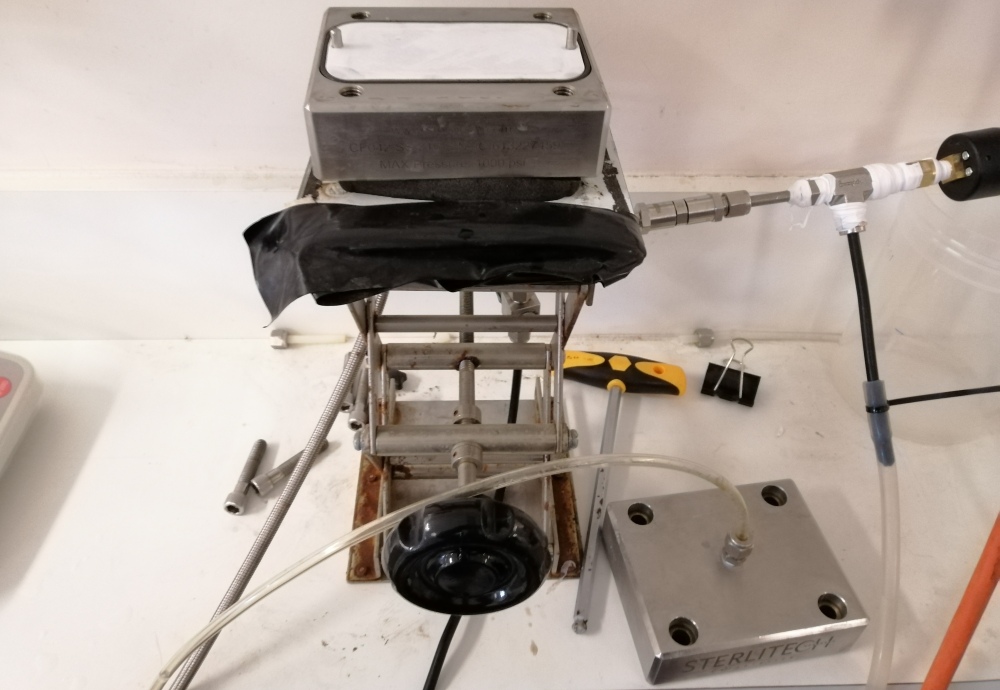
Figure 2: Photo of the laboratory membrane testing apparatus showing the membrane surface
Outcomes
The results showed that TMP controlled the flux, fouling rates, and COD removal, while the feed organic load dictated the fouling type. Low TMP (1.35 bar) generated the highest specific fluxes and chemical oxygen demand removal, while higher TMPs produced higher fluxes and fouling rates. The process was characterised by high initial fluxes, followed by cake formation and pore blockage, which induced cake filtration. This study shows the potential of UF membranes to be used as pre-treatment in filtering the process water in a recycled paper mill operating with 100% RCF, a critical step forward in implementing an integrated water system, and eventually closing the water loop.