
Multidimensional Data Quality Assessment for the Atlas of Living Australia
Overview
The Atlas of Living Australia (ALA) holds more than 185 million records of where and when species were observed. The records come from museums and herbaria, government agencies, research programs and citizen-science apps. Together with the Global Biodiversity Information Facility (GBIF), ALA supports research, conservation and environmental decisions. The value of these records depends on their quality, which varies widely: species can be misidentified, locations misplaced and dates recorded incorrectly. Current quality control relies on rule-based checks. They catch known types of error but cannot cover every way a record can be wrong. A record can look valid on a map yet be ecologically implausible, such as a river-dwelling species recorded on a nearby mountain.

This project will explore a range of approaches to data quality assessment, mainly unsupervised and self-supervised, that do not depend on labelled errors. It builds on the idea that a valid record should be consistent across several dimensions:
- environmental and spatial context: where the record is and what habitat surrounds it;
- time and seasonality: when the species is expected to be active or present;
- observer reliability: who recorded it, how, and with what evidence;
- taxonomic similarity: which species are easily confused with each other;
- assemblage consistency: which other species were recorded at the same place and time.
Deep learning and clustering will be used to capture a wide range of dependencies within and between these dimensions.
The expected outcome is a scalable framework that estimates how likely each record is to be correct. It will also explain why a record is flagged by pointing to the dimension or field at fault. The resulting open-source methods and tools are intended for uptake by national and global biodiversity data infrastructures.
Research team
-

Ilya Bessonov
PhD candidate
-
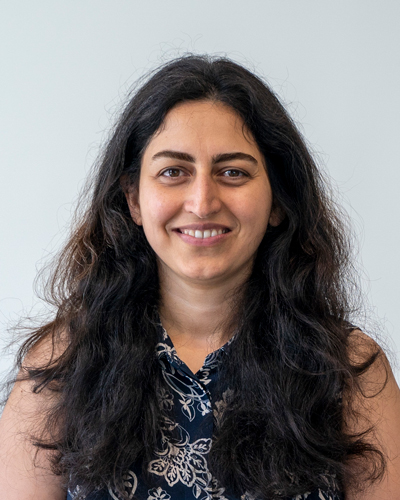
Dr Mahsa Salehi
Director, Temporal Analytics Lab
-
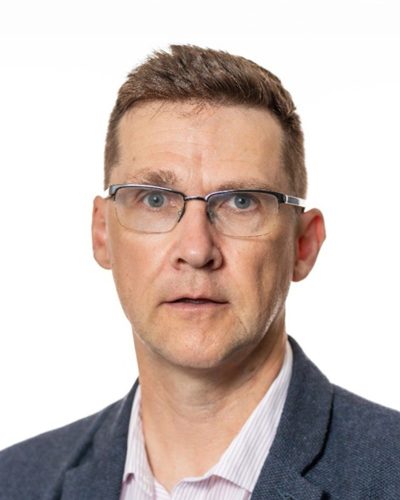
Professor James Bailey
Head of Department (DSAI)
-
Dr Martin Westgate
Atlas of Living Australia