
Regulatory Pathway for a Sustainable Financial Ecosystem
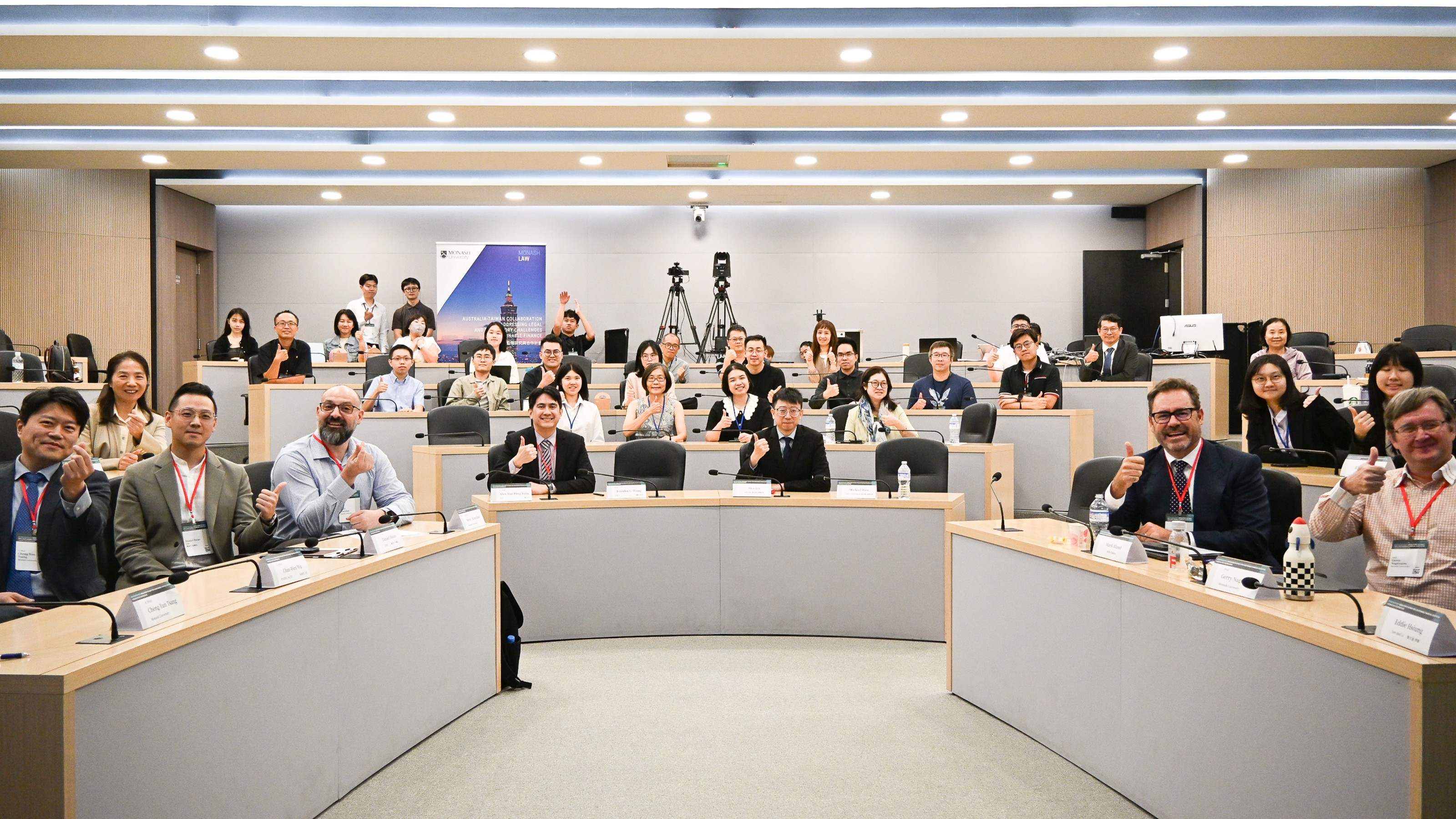
Our second workshop, held on 28 August 2025 at National Chengchi University in Taipei, marked yet another milestone as the very first international event of the Monash University's collaborative research project with the Taiwan Sustainable Finance and Impact Investing Academy. The successful Workshop was made possible with the help of co-organisers National Chengchi University (NCCU) College of Law and the Taiwan Sustainable Finance and Impact Investing Academy (SFIIA). Held at NCCU’s Center for Public and Business Administration Education, the Workshop brought together senior regulators, government ministers, bank executives, sustainable finance architects, academics and industry lawyers to address the challenges across four presentations and two high-level panel sessions. The collaboration unfolded candid dialogue about how law, finance, data infrastructure and institutional design must now evolve together.
Opening Remarks: The Policy Context – Another Step in Climate Regulation
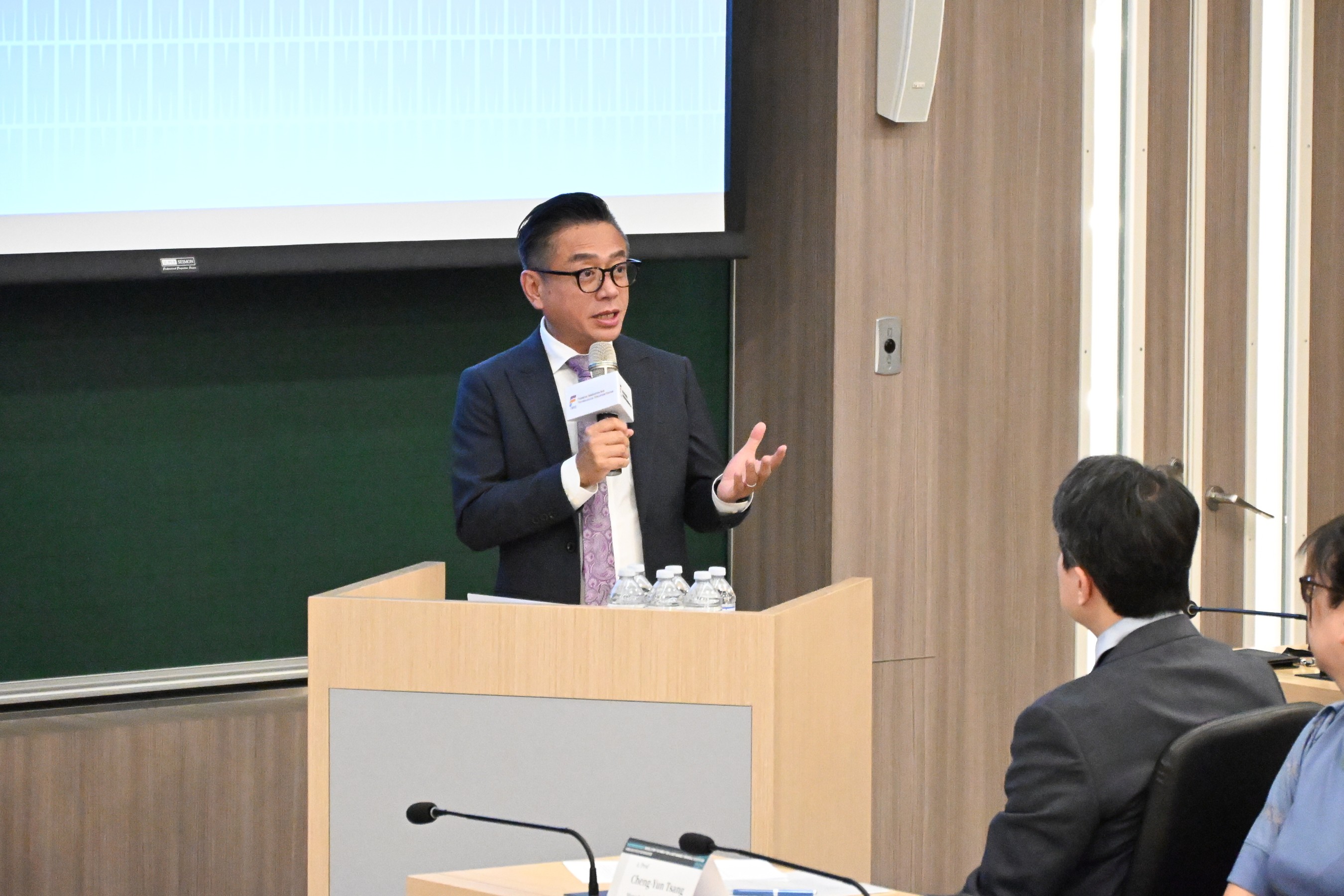
Christopher Lim, Deputy Representative, Australian Office, Taipei, presenting opening remarks at the sustainable finance workshop in Taipei.
The opening remarks featured senior representatives from Australia and Taiwan: Mr Christopher Lim (Deputy Representative of the Australian Office Taipei), Ms Wen-Chen Shih (Deputy Minister for Taiwan’s Ministry of Environment), Ms Hsou-Yuan Chuang (Vice Chairperson for the Financial Supervisory Commission), Professor Jennifer Wang (Principal of the SFIIA), Professor Chih-Chou Yeh (Associate Dean of NCCU College of Law).
Collectively, the speakers underscored the importance of sustained and practical collaboration at a time when both Australia and Taiwan are advancing ambitious climate, net-zero and sustainable finance frameworks. The remarks reflected a shared recognition that the bilateral relationship is evolving beyond traditional energy trade, with growing emphasis on renewable investment, green technology, and climate-aligned financial systems. The opening session served as a strong institutional endorsement of the project and its role in supporting cross-border dialogue on regulatory and market design for sustainable finance.
In concluding the opening segment, Associate Professor Cheng-Yun Tsang framed the workshop as a shift from policy intent to implementation, setting the tone of the Workshop for deeper discussion on how law and regulation can shape transition finance, market practices, and climate risk governance within financial systems.
Presentation Highlights: Building the Infrastructure of Transition
Session 1: Taiwan's Sustainable Finance Framework and the Net-Zero Transition
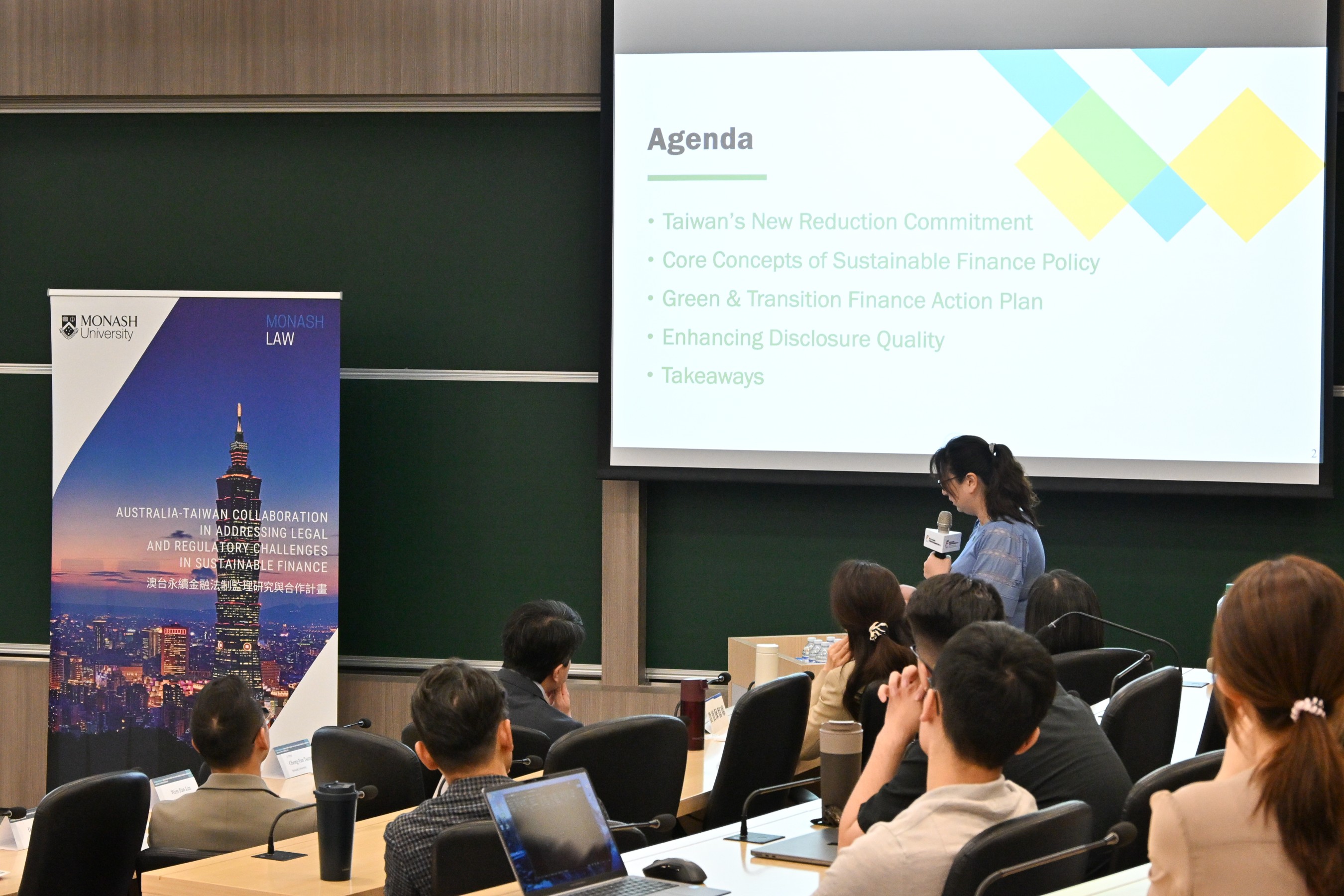
Ms Wen Fan Lin, Assistant-General, Department of Development and Innovation, Taiwan Financial Supervisory Commission (FSC), detailed Taiwan’s climate targets and how they are operationalising transition finance. She explained that Taiwan’s updated emissions targets and carbon pricing regime require the financial system to play an active role in guiding corporate transition. It is not only through green bonds and loans, but through data infrastructure, taxonomies, and carbon-linked incentives that embed climate outcomes directly into lending conditions and risk pricing models.
Session 2: Australia's Legal and Regulatory Landscape for Sustainable Finance
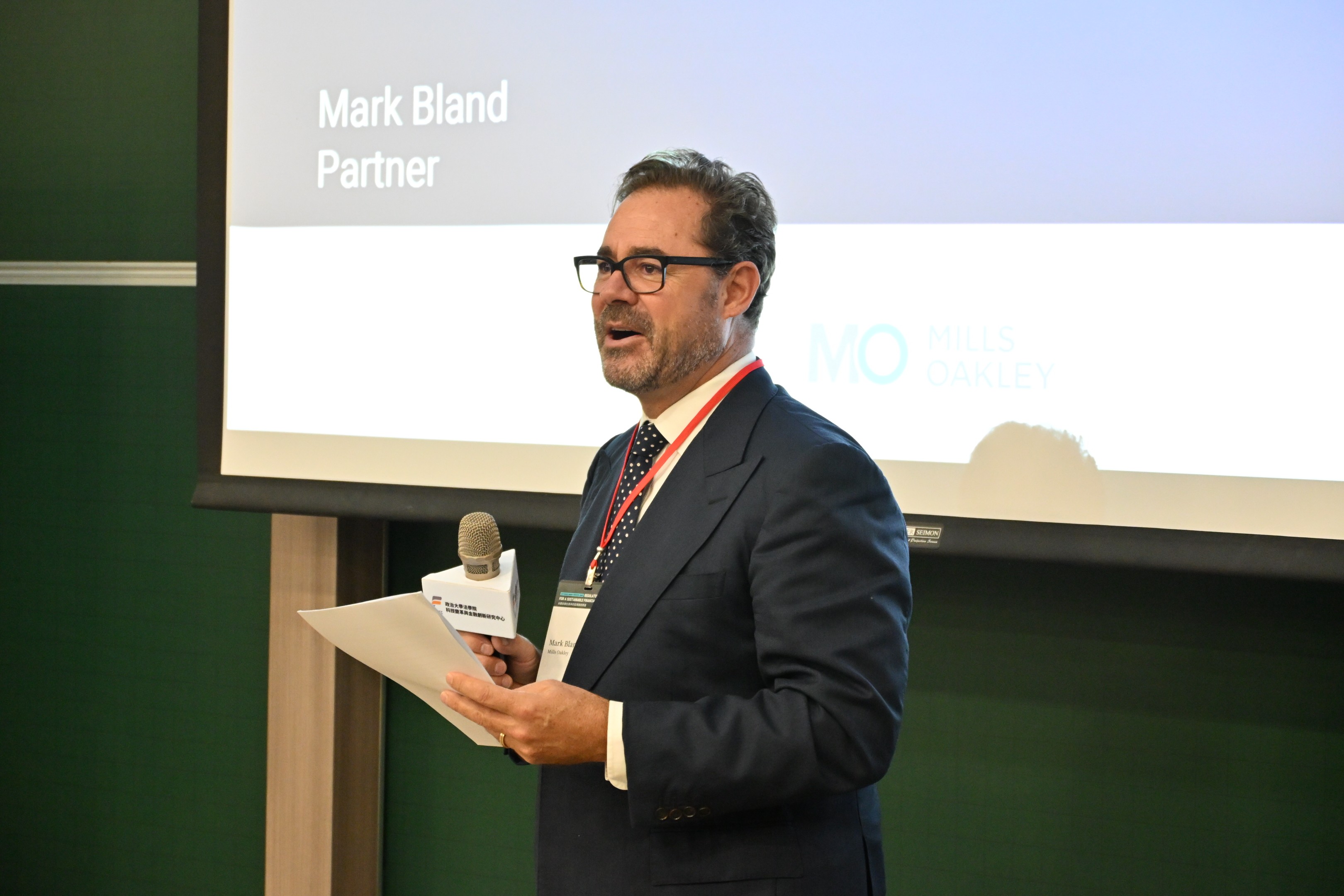
Mr Mark Bland, Partner at Mills Oakley, examined how sustainable finance regulation is evolving within Australia’s existing corporate, financial services and consumer protection frameworks. He examined Australia’s robust regulatory response to greenwashing, noting that while enforcement has strengthened market integrity, it has also contributed to “greenhushing”, where financial institutions limit public sustainability disclosures due to litigation risk. This tension highlights the importance of regulatory clarity and guidance to support credible participation in sustainable finance markets.
Session 3: Climate Risk Management in Financial Institutions
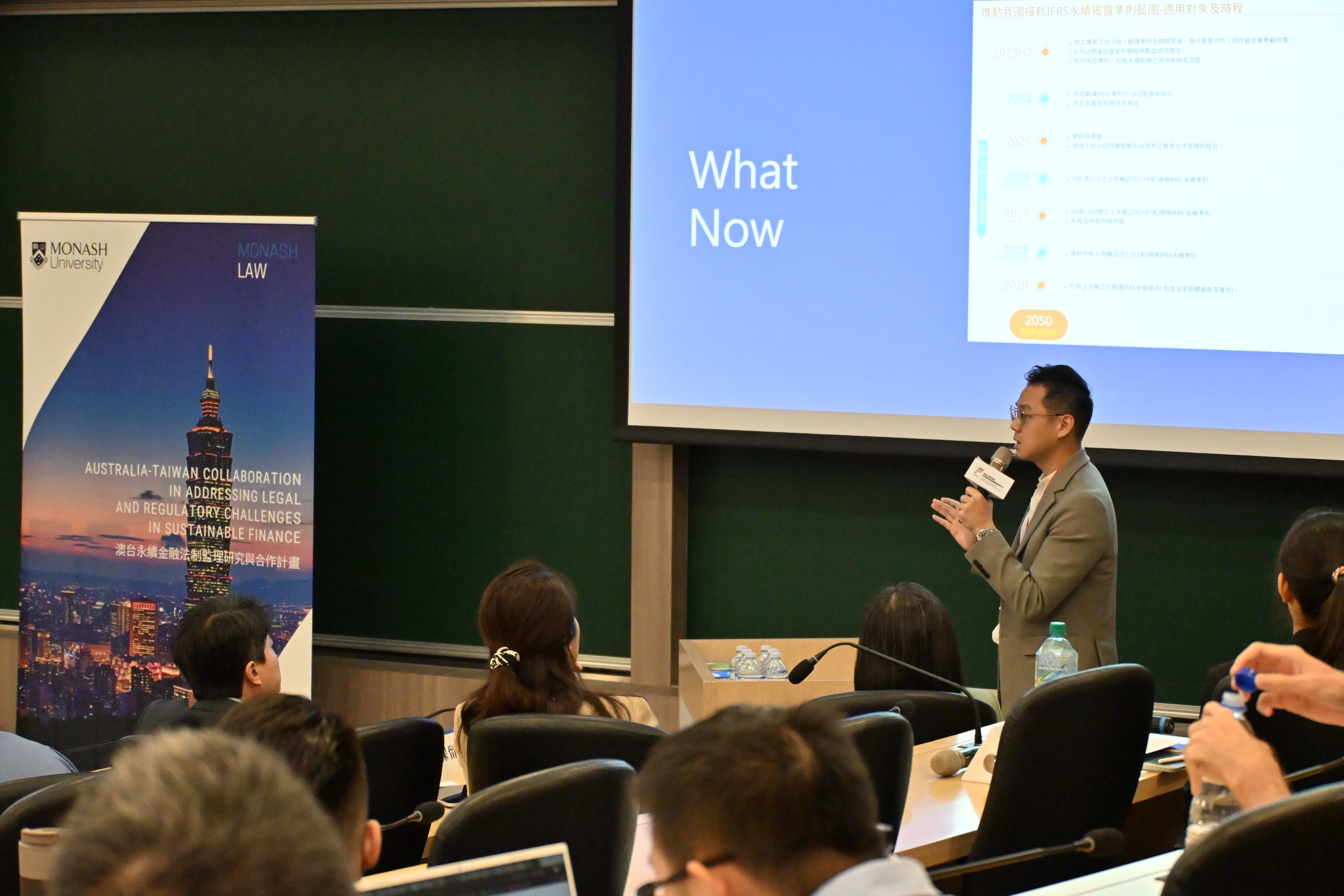
Mr Daniel Hsiao, Chief Sustainability Officer of CRIF, shifted the focus from regulation to institutional implementation, examining how climate risk is being operationalised within financial institutions. Utilising the CRIF’s expertise in data analytics and risk modelling, he provided eye-opening insights on the difference between climate risk and traditional financial risk. He highlighted the growing reliance of financial institutions on high-quality, standardised and verifiable data to support climate risk assessment, portfolio analysis and regulatory reporting. Without robust data infrastructure and internal analytical capability, climate disclosures risk becoming compliance exercises rather than decision-useful tools.
Session 4: Sustainable Finance in Practice – A Banking Perspective
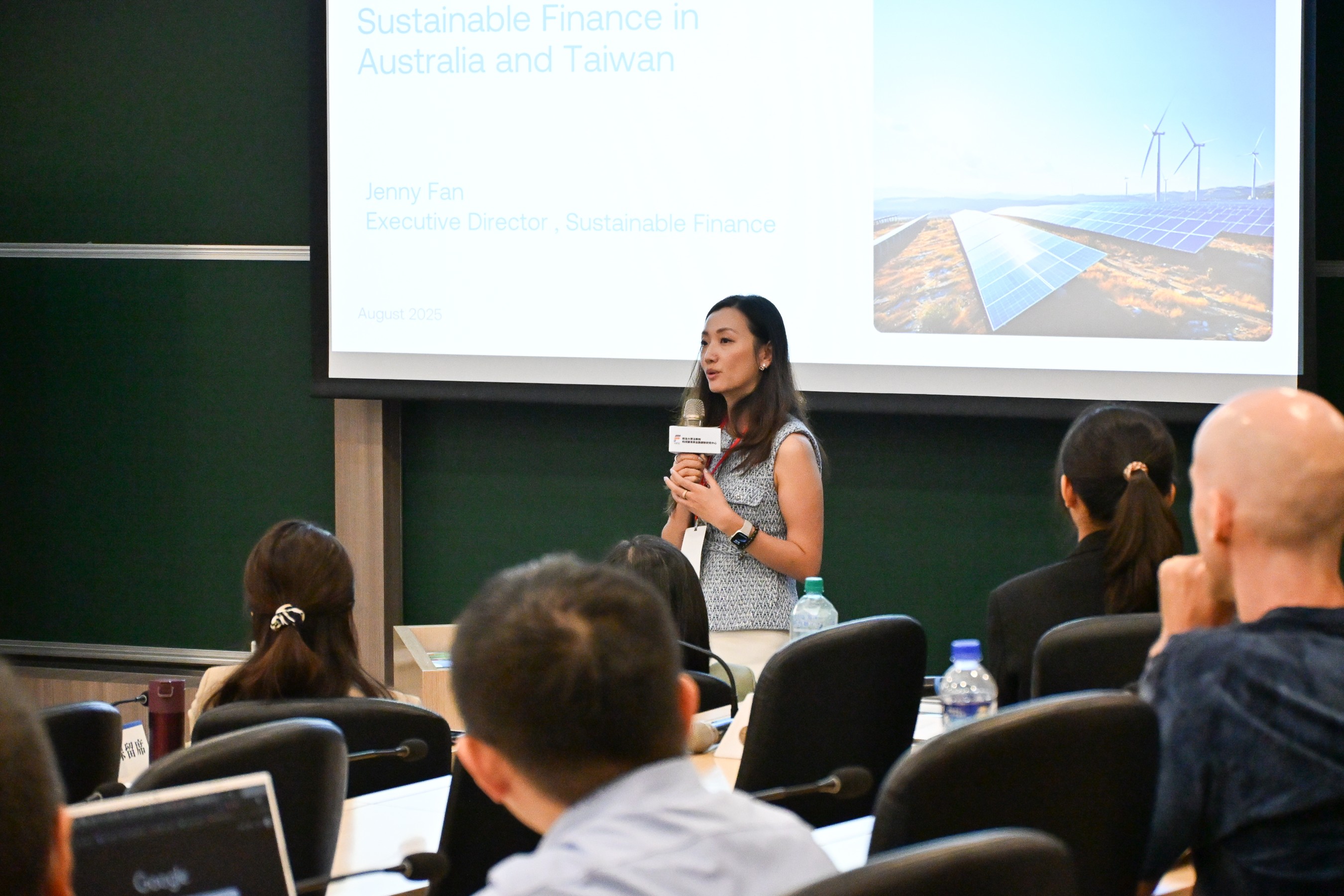
Ms Jenny Fan, Executive Director in Sustainable Finance at ANZ, presented a market-facing perspective on how a major international bank structures sustainable finance products under evolving regulatory expectations. She discussed the practical realities of developing green loans, sustainability-linked loans and transition finance across multiple jurisdictions. Her presentation emphasised the importance of common standards and shared language to align borrowers, investors and regulators. She also highlighted the role of internal ESG expertise within banks to assess the credibility and ambition of sustainability-linked transactions, ensuring that products meet both regulatory requirements and market expectations.
Afternoon Program: Panel Discussions
Panel 1: Empowering Sustainable Finance Products and Markets
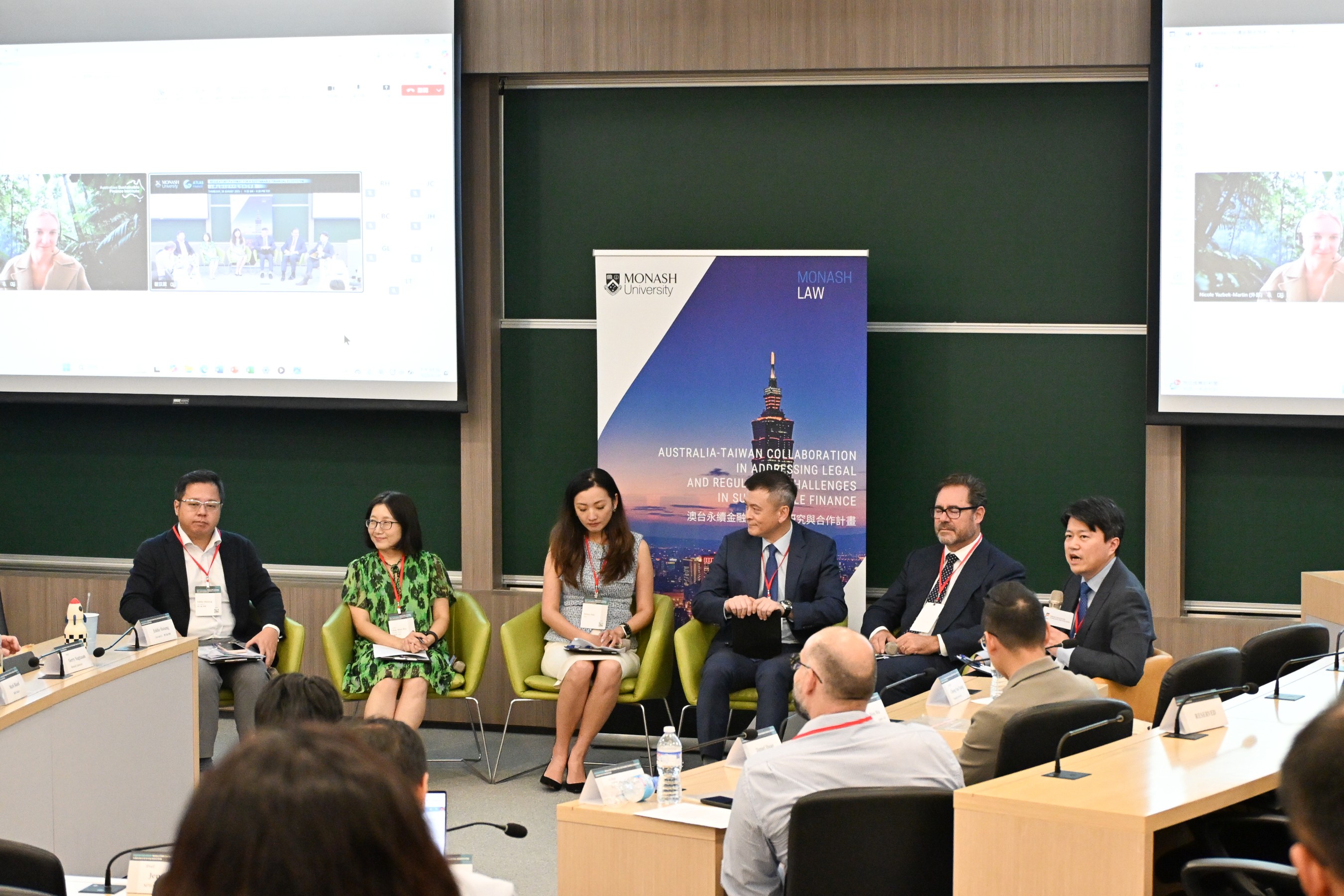
The first panel forum brought together a cross-section of legal, regulatory, banking and policy expertise from Australia and Taiwan. Moderated by A/Prof Cheng-Yun Tsang, the discussion featured contributions from A/Prof Chin-Wen Wu (National Chengchi University), Eddie Hsiung (Lee and Li, Attorneys-at-Law), Jenny Fan (ANZ), Mark Bland (Mills Oakley), Michael Wen (Cathay United Bank), and Nicole Yazbek-Martin (Australian Sustainable Finance Institute).
This first panel forum addressed one of the most pressing challenges facing sustainable finance today:
How regulation can enable credible, scalable sustainable financial products without discouraging market participation?
A central theme was the idea that regulation must move beyond a purely defensive role.
Panellists broadly agreed that while preventing greenwashing is essential to market integrity, over-correction can unintentionally suppress legitimate sustainability leadership. Speakers discussed the role of regulation in shaping sustainable lending and investment markets, with particular attention to the balance between preventing greenwashing and enabling innovation.
A key theme was the importance of clear standards and shared terminology, including the role of sustainable finance taxonomies and guidance, in reducing uncertainty for financial institutions and investors. Panellists noted that well-designed frameworks can help align regulatory expectations, product design and market communication, supporting confidence in sustainable finance products.
The discussion also highlighted the value of ongoing engagement between regulators and industry, particularly in fast-evolving areas such as sustainability-linked finance and transition finance. Rather than viewing regulation as static, panellists emphasised the need for adaptive approaches that reflect market practice while preserving accountability.
Panel 2: Navigating Climate Risk Management by Financial Institutions
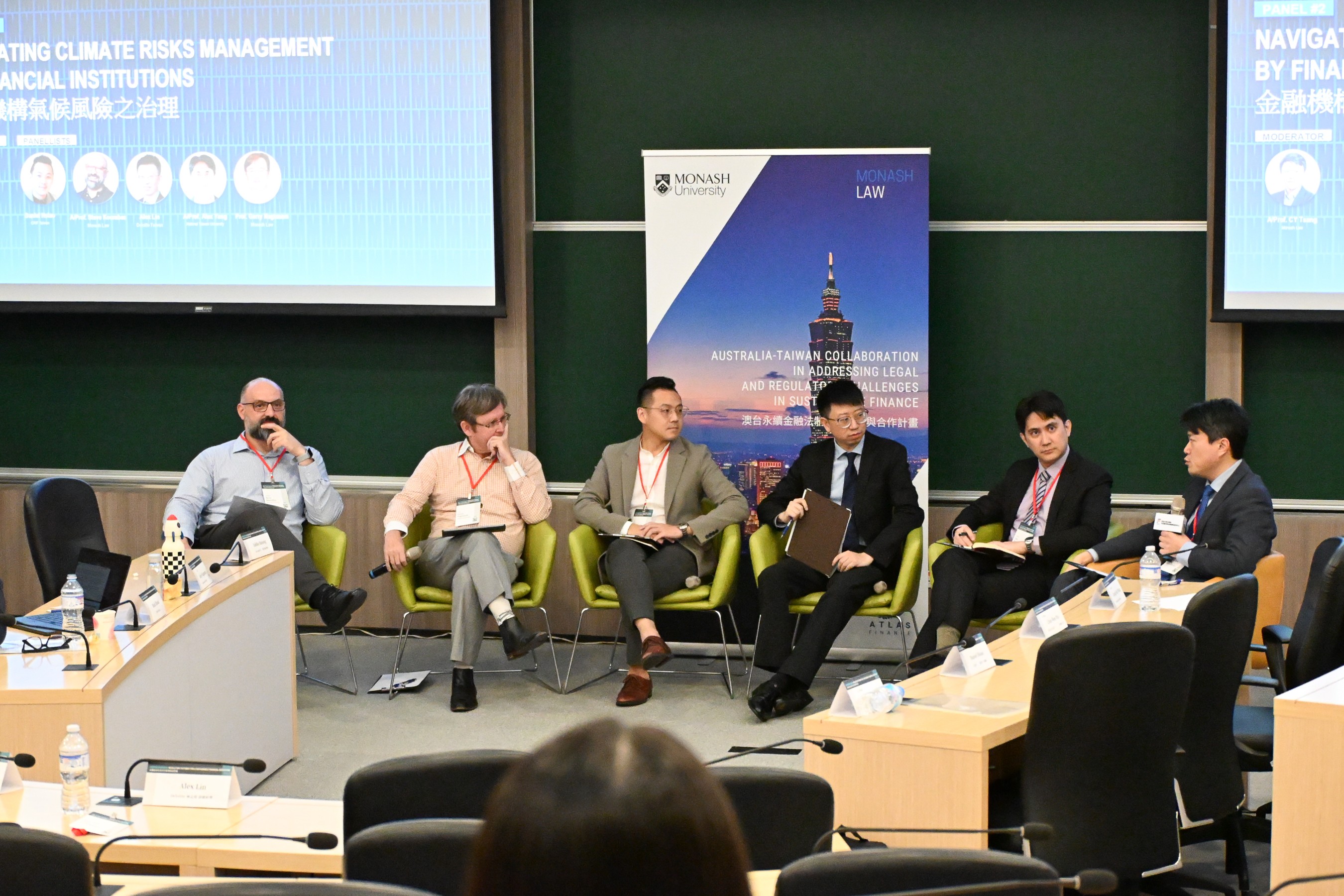
The second panel shifted focus to institutional governance and risk management, drawing on perspectives from academia, professional services and financial institutions across both jurisdictions. Also moderated by A/Prof Cheng-Yun Tsang, the panel included Alex Lin (Deloitte Taiwan), A/Prof Alex Yue-Ping Yang (National Taiwan University), Daniel Hsiao (CRIF), Professor Gerry Nagtzaam (Monash University), and A/Prof Steve Kourabas (Monash University).
Panellists examined the practical challenges of integrating climate considerations into existing risk management systems, including the use of climate scenario analysis, data tools and internal governance structures. The discussion highlighted that climate risk often differs from conventional financial risks due to its longer time horizons, uncertainty and potential system-wide impacts.
Speakers also reflected on the increasing role of boards and senior management in overseeing climate risk, as well as the importance of reliable data and internal controls in supporting risk assessment and disclosure. As regulatory and supervisory expectations continue to develop, institutions are progressively strengthening their approaches to climate risk management.
Looking Ahead: Building a Framework for Cross-Border Cooperation
With further workshops scheduled across Taipei, Brisbane, Sydney and Canberra, the Australia–Taiwan collaboration is positioning itself as a high-level workshop for sustainable transition..
Written by Jerome Ho, 3 February 2026