
Project overview
 This project aims to improve how data is collected and used to understand family and domestic violence (FDV) in families of current and former Australian Defence Force (ADF) members. It will help lay the foundation for tracking trends over time and ensure that data is used in ways that reflect the unique cultural and organisational contexts of military and veteran communities. The goal is to make FDV data more useful for services that support veterans and their families.
The project includes 5 stages (see Figure 1), each with specific goals:
- Build a foundation for tracking change in FDV over time, especially in response to new policies or practices.
- Ensure data strategies reflect military and veteran contexts, including how these settings may affect how FDV is disclosed, recorded and used.
- Co-design a risk identification and assessment tool tailored to the needs of national mental health and family support services for veterans.
- Strengthen partnerships across sectors to support coordinated strategies for addressing FDV in military and veteran families.
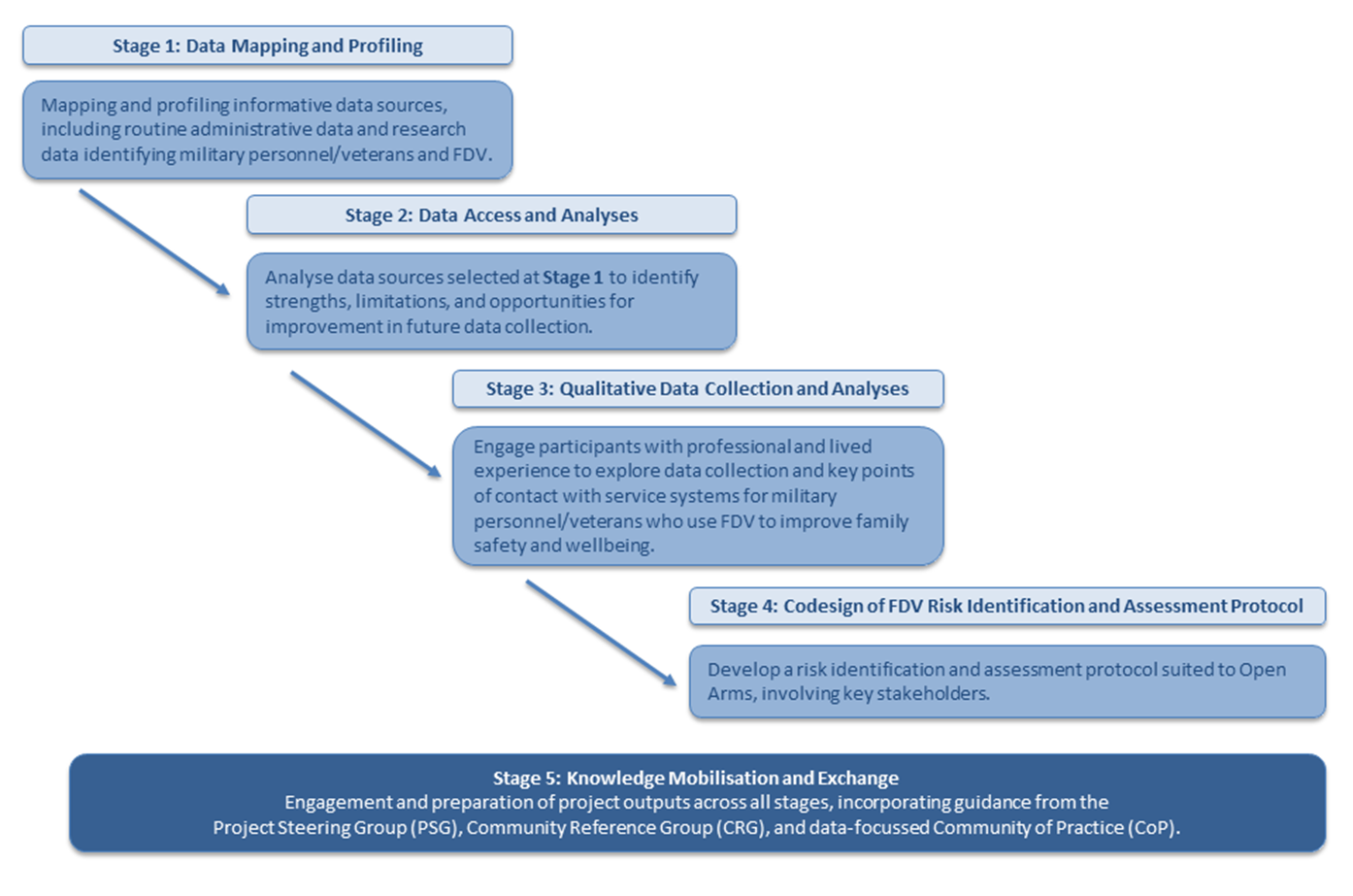
The project is supported by a number of advisory and community engagement groups that bring together key partners, including the Department of Veterans' Affairs, Defence, family violence services, and people with lived experience. These groups include:
- Project Steering Group (PSG): This group guides the project's direction and includes representatives from funding bodies, partner organisations, peak bodies in the family and domestic violence sector, people with lived experience, and other key stakeholders.
- Community Reference Group (CRG): This group provides subject matter expertise and includes people with lived experience, as well as representatives from ex-service organisations, veteran support associations and family violence service providers.
- Community of Practice (CoP): Focused on data, this group supports ongoing knowledge sharing between service providers and researchers. It includes people with lived experience and promotes best practices throughout the project.