
Publications
Featured publications
Below is a list of featured recent publications by members of the HER Centre Australia team. To see all publications CLICK HERE
Gunasekera L, Cheng S, Foster E, Sivathamboo S, O'Brien T, Butzkueven H, Kulkarni J, Hutton E. Retrospective audit of the real-world safety and effectiveness profile of eptinezumab for treatment-resistant chronic migraine in Australia. Headache, The Journal of Head and Face Pain, Volume66, Issue 1, January 2026, Pages 108-117. https://doi.org/10.1111/head.70015
THREDing together a new approach to eating disorders
Authors: Jayashri Kulkarni, Anthony de Castella, Leo Chen
Monash Lens - 12 June 2023
For too long, eating disorders have been surrounded by ignorance about their cause and stigma that often assigns blame to the person suffering: “If only she would eat … the problem would go away.”
But it’s not that simple. These complex conditions require multi-faceted solutions. Yet for 60 years, not much has changed in treating eating disorders, which range from disordered patterns of eating to anorexia nervosa.
Anorexia has a high mortality and very high morbidity rate, but the mainstay treatments available are psychotherapies such as cognitive behavioural therapy (CBT) that often don’t work long-term.
These “talking therapies” are the gold standard treatment for most eating disorders, yet don’t encompass the big picture, or the possibility of biological causes.
A new Monash University eating disorder research program will target biological causes and possible treatments, including anti-psychotic drugs, brain stimulation and hormones.
The Li Transformative Hub for Research in Eating Disorders (THRED) will sit within HER Centre Australia, which was launched in 2022 to consolidate and expand research and treatment of women’s mental illness.
 Click Here to Read the Article
Hot flushes, night sweats, brain fog? Here’s what we know about phytoestrogens for menopausal symptoms
Authors: Caroline Gurvich, Jane Varney, Jayashri Kulkarni
The Conversation: June 5th 2023
While some women glide through menopause, more than 85% experience one or more unpleasant symptoms, which can impact their physical and mental health, daily activities and quality of life.
Hot flushes and night sweats are the most common of these, affecting 75% of women and the symptom for which most women seek treatment. Others include changes in weight and body composition, skin changes, poor sleep, headaches, joint pain, vaginal dryness, depression and brain fog.
While menopause hormone therapy is the most effective treatment for menopausal symptoms, it is sometimes not recommended (such as following breast cancer, as there is conflicting evidence about the safety of menopause hormone therapy following breast cancer) or avoided by people, who may seek non-hormonal therapies to manage symptoms. In Australia it is estimated more than one-third of women seek complementary or alternative medicines to manage menopausal symptoms.

Shutterstock
Reference
- Caroline Gurvich, Jane Varney, Jayashri Kulkarni - Hot flushes, night sweats, brain fog? Here’s what we know about phytoestrogens for menopausal symptoms. The Conversation. 2023, June 5th
Join Our Focus Group
Description: During menopause, up to 70% of women experience brain fog and other symptoms that can significantly impact their work and daily lives. To gain a better understanding of menopause-related brain fog and explore available strategies, we are developing a fact sheet that provides knowledge and resources on this topic. By joining our focus group, you can share your experiences and opinions, which will help us in developing and evaluating the fact sheet. To express your interest and learn more, please sign up using the following link.
Link: Click Here to Learn more and / or Join the Focus Group
Elimination of cervical cancer: ensuring equity
Authors: Deborah Bateson, Yin Ling Woo & Jayashri Kulkarni
In 2020, the Director General of WHO, Tedros Adhanom Ghebreyesus, launched a global strategy for the elimination of cervical cancer as a public health problem. Elimination (fewer than four new cases per 100 000 women per year) is now imaginable, and countries are urged to implement initiatives to achieve the 90%–70%–90% targets for 2030 across the three pillars of human papillomavirus (HPV) vaccination for girls, screening, and the treatment of cervical precancers and invasive cancers1.However, as shown by Kejia Hu and colleagues, 2 in this issue of The Lancet Public Health, a substantial proportion of women with mental illness are left behind with regard to cervical cancer prevention.

The Lancet Public Health. Open Access. Volume 8, Issue 4, April 2023, Pages e248-e249
Published: April, 2023 DOI: https://doi.org/10.1016/S2468-2667(23)00055-5
Cognition, the menstrual cycle, and premenstrual disorders: A review
Authors: Jessica Le, Natalie Thomas, and Caroline Gurvich
Sex hormones, such as estrogens, progesterone, and testosterone, have a significant influence on brain, behavior, and cognitive functioning. The menstrual cycle has been a convenient model to examine how subtle fluctuations of these hormones can relate to emotional and cognitive functioning. The aim of the current paper is to provide a narrative review of studies investigating cognitive functioning in association with the menstrual cycle in biological females, with a focus on studies that have investigated cognitive functioning across the menstrual cycle in females with premenstrual mood disorders, such as premenstrual syndrome (PMS) and premenstrual dysphoric disorder (PMDD). In line with previous reviews, the current review concluded that there is a lack of consistent findings regarding cognitive functioning across the menstrual cycle. Most studies focused on changes in levels of blood estrogen, and neglected to explore the role of other hormones, such as progesterone, on cognitive functioning. Cognitive research involving premenstrual disorders is in its infancy, and it remains unclear whether any cognitive disturbances that are identified may be attributed to negative experience of mood and psychological symptoms or be a more direct effect of hormonal dysregulation or sensitivity. Suggestions for future research are provided.

Click Here to Download a PDF Copy
Reference
- Jessica Le, Natalie Thomas, and Caroline Gurvich - Cognition, The Menstrual Cycle, and Premenstrual Disorders: A Review. Brain Sci. 2020, 10, 198; doi:10.3390/brainsci10040198
Depression: A major challenge of the menopause transition
Author: Jayashri Kulkarni
Women are more likely to develop depressive symptoms during the perimenopause compared with other periods of their life, including women with no previous history of depression. Guidelines recommend antidepressant medications as first-line treatment; however, emerging evidence suggests menopausal hormone treatment may also be effective. A biopsychosocial approach to management, including treating depressive symptoms and addressing relevant psychological and lifestyle factors, offers the best outcomes and improvement in quality of life.

Reference
- Kulkarni, J. Depression - A major challenge of the menopause transition. Medicine Today; October 2022, Vol 23, NUMBER 10
Treatment of depression in the menopause
Authors: Megan Herson, Jayashri Kulkarni
Perimenopause marks the transition from a woman’s reproductive stage to menopause. Usually occurring between 42 and 52 years of age, it is determined clinically by the onset of irregular menstrual cycles or variable cycle lengths. Women are at an increased risk of depression and anxiety during perimenopause and the menopausal transition. Depressive symptoms experienced in perimenopause are often more severe compared to pre- and post-menopause. During menopausal transition, the impact of fuctuating estrogen in the central nervous system (CNS) can have negative psychological efects for some women. Traditional frst-line management of menopausal depression involves antidepressants, with modest outcomes. The positive efects of estrogen treatment in the CNS are becoming increasingly recognised, and hormonal therapy (HT) with estrogen may have a role in the treatment of menopausal depression. In this review we will outline the prevalence, impact and neurochemical basis of menopausal-associated depression, as well as hormone-based approaches that have increasing promise as efective treatments.

Reference
Herson, M., Kulkarni, J. Hormonal Agents for the Treatment of Depression Associated with the Menopause. Drugs & Aging. 14th June 2022
Physical disorders and borderline personality disorder
Authors: Tia Tsinanis, Eveline Mu, Jayashri Kulkarni
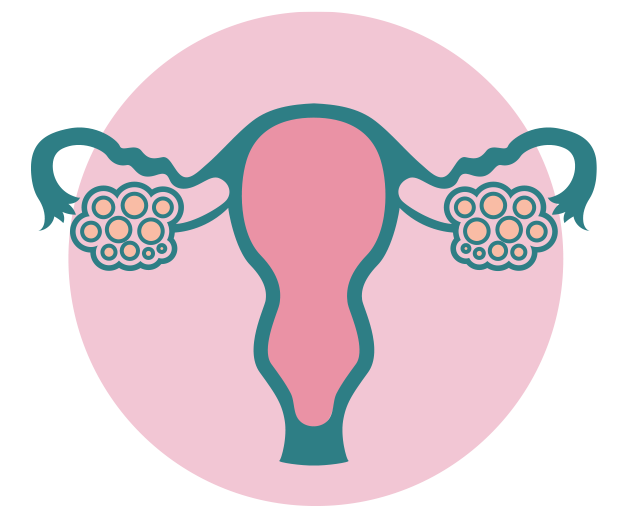
The physical risks of oral contraception are well established. However, the psychological adverse effects are not as well described. This commissioned article for the Australian Prescriber reviews the evidence around hormonal contraception and mood disorders. The article suggests that some mood changes may be related to hormones used in the contraceptive pill, with some hormones affecting mood more than others.
Reference
Tsinanis, T., Mu, E., & Kulkarni, J. (2021). The physical symptoms of polycystic ovarian syndrome exacerbate the mental health symptoms of borderline personality disorder. Australian & New Zealand Journal of Psychiatry, 56 (7), 878
Hormonal contraception and mood
Authors: Eveline Mu, Jayashri Kulkarni
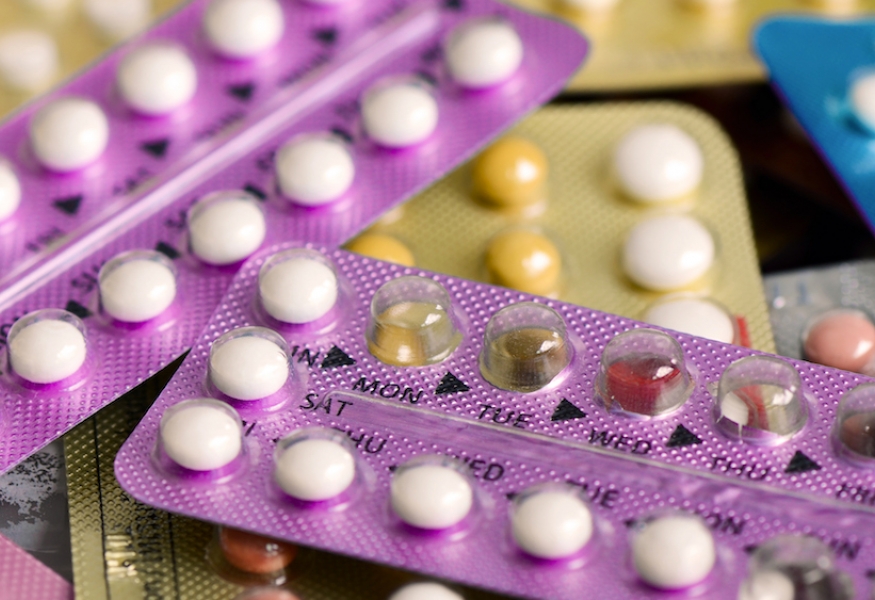
The physical risks of oral contraception are well established. However, the psychological adverse effects are not as well described. This commissioned article for the Australian Prescriber reviews the evidence around hormonal contraception and mood disorders. The article suggests that some mood changes may be related to hormones used in the contraceptive pill, with some hormones affecting mood more than others.
Reference
Mu, E., & Kulkarni, J. (2022). Hormonal contraception and mood disorders. Australian Prescriber, 45, 75-9.
Sex hormones and trauma
Authors: Eveline Mu, Lizzie Thomas, Jayashri Kulkarni
Fluctuations of sex hormones across the menstrual cycle have been linked to exacerbation of symptoms of psychiatric disorders. This mini-review examines the influence of sex hormones and the menstrual cycle on post traumatic stress disorder, borderline personality disorder, and complex post traumatic stress disorder, and discusses the involvement of the hypothalamic-pituitary-adrenal axis. This review highlights the importance of considering an individual’s trauma history as it may influence symptom severity and diagnosis, and the phase of the menstrual cycle at the time of the diagnosis. This review also highlights that additional work is needed to clarify the influence of estradiol and progesterone fluctuations on trauma-related symptoms.
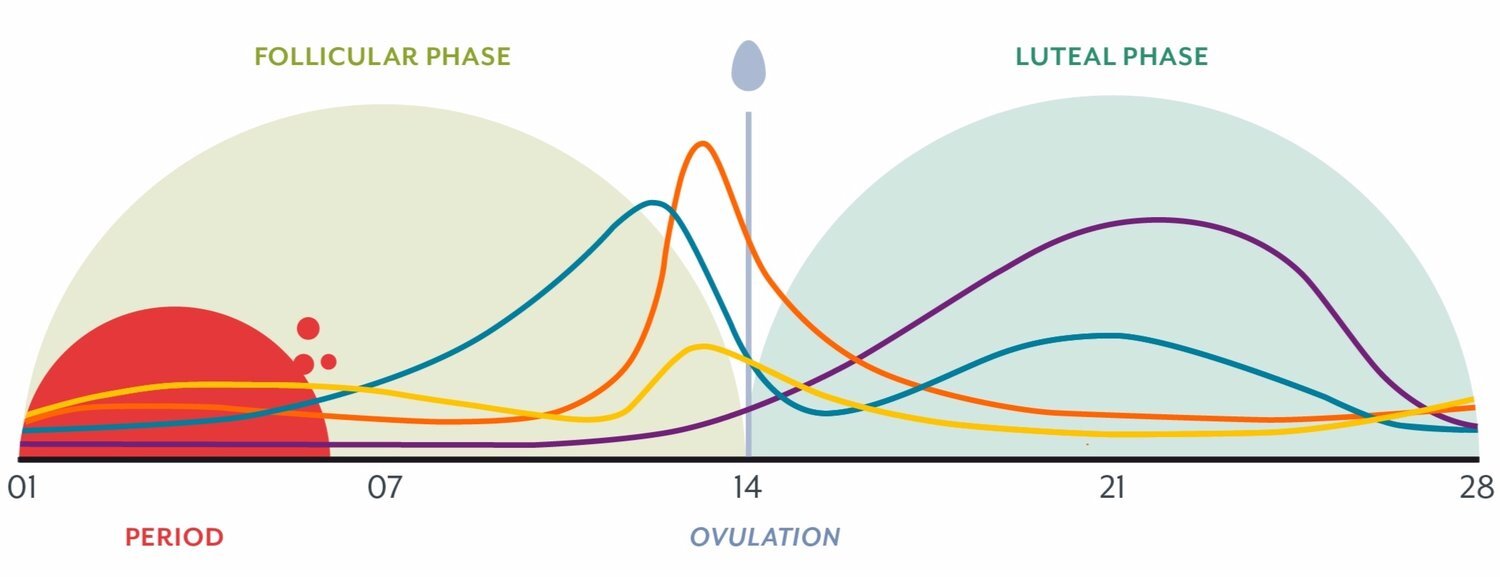
Fig.1 - The menstrual cycle
Reference
Mu, E., Thomas, E. H., & Kulkarni, J. (2022). Menstrual Cycle in Trauma-Related Disorders: A Mini-Review. Frontiers in Global Women's Health, 3.
Menopause and cognition
Authors: Caroline Gurvich, Chen ‘Vanessa’ Zhu
The menopausal transition represents the transition from a woman's reproductive years through to menopause. It is a time of significant physiologic and hormonal changes and for many women can also involve a wide range of symptoms that can include mood swings, anxiety, depressed mood, hot flushes, night sweats, sleep disturbance as well as physical manifestations such as breast swelling and muscle pains. More than half of menopausal women report 'brain fog' which can include moments of forgetfulness and difficulties retrieving words. In addition to the direct effect of menopausal hormone changes on the brain, particularly the fluctuations and eventual decline in the hormone estrogen, other menopausal symptoms, such as hot flashes, sleep disturbance, and depressive mood are indicated to result in 'brain fog' or cognitive symptoms. This review, conducted by PhD candidate Chen 'Vanessa' Zhu and her supervisor A/Prof Caroline Gurvich synthesises studies that have examined menopausal symptoms and lifestyle factors that have a direct or indirect impact on cognition during the menopausal transition. Of the identified risk and protective factors, several are modifiable lifestyle factors that could be targets for future interventions to either directly or indirectly improve cognition, such as diet and physical exercise.
Reference
Zhu, C., Thomas, N., Arunogiri, S., & Gurvich, C. (2022). Systematic review and narrative synthesis of cognition in perimenopause: The role of risk factors and menopausal symptoms. Maturitas, 164, 76-86. doi:10.1016/j.maturitas.2022.06.010
Cognition in mental illness
Authors: Caroline Gurvich, Elizabeth Thomas, Jayashri Kulkarni
Telomeres, the protective cap-like structures that stop the ends of our chromosomes from becoming frayed or tangled, are of increasing interest globally as markers of cellular ageing. This is one of the first studies to reveal a link between telomere length and cognitive impairment in people with bipolar-schizophrenia spectrum disorders.
Reference
Gurvich, C., Thomas, N., Hudaib, A. R., Van Rheenen, T. E., Thomas, E. H. X., Tan, E. J., . . . Rossell, S. L. (2022). The relationship between cognitive clusters and telomere length in bipolar-schizophrenia spectrum disorders. Psychol Med, 1-8. doi:10.1017/S0033291722002148
Sex differences in stress response
Authors: Caroline Gurvich, Elizabeth Thomas, Jayashri Kulkarni
This study demonstrates that the way stress influences telomere length, a marker of biological aging, differs between males and females.
Reference
Thomas, N., Hudaib, A. R., Romano-Silva, M., Bozaoglu, K., E, H. X. T., Rossell, S., . . . Gurvich, C. (2022). Influence of cortisol awakening response on telomere length: Trends for males and females. Eur J Neurosci, 55(9-10), 2794-2803. doi:10.1111/ejn.14996
Sex hormones and cognition
Authors: Caroline Gurvich, Jayashri Kulkarni
Hormones of the hypothalamic-pituitary-gonadal axis that regulate reproductive function are also potent neurosteriods that have multiple effects on the development, maintenance, and function of the brain. This chapter provides an overview of the growing body of evidence linking sex hormones to cognitive functioning across the lifespan.
Reference
Gurvich, C., Le, J., Thomas, N., Thomas, E. H. X., & Kulkarni, J. (2021). Sex hormones and cognition in aging. Vitam Horm, 115, 511-533. doi:10.1016/bs.vh.2020.12.020