
Research highlights
-
Vital signs monitoring in Australasian emergency departments: Development of a consensus statement from ACEM and CENA
Associate Professor Cliff Connell
 A patient’s vital signs such as their temperature, heart and respiratory rate, blood pressure and conscious state are measurements of a person’s physiological status. They are usually simple to collect and provide a way to monitor acute hospital patients for potential instability. Vital signs measurement regimes and recommendations (e.g., what should be measured, how often they should be measured) are universally well established in the acute hospital ward setting. However, similar broad recommendations and guidelines have never been established in the Australasian emergency department (ED) setting. Rather, decisions about what vital signs should be measured and how often they should be measured in the ED have often been guided by factors such as a patient’s status, emergency clinicians’ clinical judgement and traditional local practice and conventions.
Consistent policy and practice are fundamental in the provision of equitable access to safe and high-quality patient care in all EDs. To achieve consistent practice in Australasia, this study sought to describe expert consensus on vital signs monitoring in the Australasian ED setting and inform the content of the Australasian College for Emergency Medicine (ACEM) and College of Emergency Nursing Australasia (CENA) position statement on vital signs monitoring in the emergency department. Using a practical and reliable method of generating consensus (nominal group technique), this study addressed potential variability in current ED practices contributing to improved patient outcomes and more efficient ED operations. The use of the nominal group technique, follow-up surveys and extensive 2-year emergency care stakeholder engagement process, including representation from Aotearoa / New Zealand and most Australian states and territories, provided a robust framework for capturing diverse expert consensus opinion across the region. The outcomes from this research represent an important first step toward providing ED patient vital signs monitoring recommendations that are evidence-based, person-centred and achievable.
The study [1] and resulting joint position statement is the first of its kind in Australasia, offering a unified position on emergency practice from the two peak bodies representing emergency nursing and emergency medicine in Australasian EDs. For the first time, this study generated a valuable, and ‘live’ document that will be adjusted over time as empirical evidence for the optimum standard and frequency of vital signs monitoring in ED setting becomes available.
The development and endorsement of a CENA / ACEM joint position statement on vital signs monitoring in Australasian emergency departments has significant implications for the provision of emergency care. Providing a minimum set of principles and recommendations about vital signs monitoring in ED, this study1 (and resulting position statement) enable emergency Nurses and Doctors to improve equitable access to safe and high-quality care for all consumers of emergency care throughout the region. This research achieves this by providing practical expert recommendations for consistent ED policy and practice across Australasia.
1. Connell CJ, Craig S, Crock C, Kuhn L, Morphet J, Unwin M. Vital signs monitoring in Australasian emergency departments: Development of a consensus statement from ACEM and CENA. Australasian Emergency Care. 2024. https://doi.org/10.1016/j.auec.2024.04.001
-

The ENGAGE Project: Improving Medication Management for Older People
As older adults navigate transitions of care, it’s essential to engage them in decisions about their medications. With complex care needs and multiple transitions, without better strategies, the risks of medication errors, patient harm, and avoidable hospital admissions increase.
The ENGAGE Project aims to tackle this challenge head-on by empowering older people to take an active role in managing their medications. This project is not just about improving individual care; it's about reshaping health systems to reduce disparities, improve outcomes, and enhance efficiencies for priority populations, such as people from culturally and socioeconomically diverse backgrounds.
Key Goals:- Improve medication management for older adults
- Support active engagement in care decisions
- Reduce avoidable hospital admissions
- Promote better healthcare models and services
By prioritising the voices and needs of older people, the Engage Project is working toward a future where all individuals, regardless of age, can experience better health outcomes and a smoother transition through care.

Surviving ICU: The value of a qualified, specialist intensive care nurse
Associate Professor Wendy Pollock
Does having ICU nursing staff with a postgraduate specialty ICU nursing qualification in an ICU make a difference to patient outcomes?
A study examined the association between the percentage of ICU nurses with postgraduate ICU nursing qualification in an ICU and patient outcomes. For ICUs with more than 75% qualified ICU nurses, there was a 35% difference in patient mortality for those patients receiving life sustaining supports (ventilator, renal replacement therapy, ECMO) compared to units with 50 to 75% qualified staff. And, other outcomes were also reduced including pressure sores, delirium and observed ICU length of stay compared to predicted.

Infection prevention: Safer hospitals, healthier patients
In healthcare settings, where patients are already vulnerable, healthcare-associated infections (HAIs) are a significant and persistent threat.
These infections, which patients acquire during their hospital stay, can lead to severe complications, prolong recovery times, and even result in death.
A ground-breaking clinical trial with researchers from Monash and other Australian universities was recently published in The Lancet Infectious Diseases, and has provided compelling evidence that improved hospital cleaning practices can dramatically combat the incidence of healthcare-associated infections, with a new trial showing a 35% reduction.
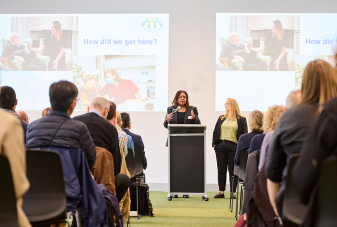
Giving aged care residents a voice in preventing healthcare-associated infections
People living in residential aged care homes are at high-risk of contracting healthcare-associated infections, which is the leading cause of morbidity and mortality in this setting.
The A-PRECISE project, co-led by Monash University’s Professor Phil Russo and Professor Helen Rawson, has been undertaking research since 2022. The team aims to develop, implement, and evaluate a tailored and innovative strategy to identify needs and priorities for intervention to reduce HAIs in RACHs. This will include education and other resources for consumers and staff, and the first electronic tool for point prevalence surveillance of healthcare-associated infections in RACHs in Australia.
Complexities involving medication management across transitions of care for older people
 Older people often experience many transfers across transitions of care because of the complexity of their healthcare needs. Transitions of care are the environments in which older people move to or from, and comprise the diverse health professionals involved in the care of these individuals.
Challenges in supporting medication management of older people across transitions of care
Professor Manias has led a recently completed Australian Research Council Discovery project (DP170100308) comprising completed ethnographic research at an acute care hospital and a geriatric rehabilitation hospital. In all, 182 older people, 44 family members and 95 health professionals participated in the project, and 203 hours of observations were undertaken. The project comprised interviews, observations of practice and reflexive focus groups. Key outcomes of the project were clarifying understandings about the complexities of making decisions about changing medications across transitions of care (Manias et al. 2024). There were varied medication policies across different clinical settings, which contributed to the production of adverse effects. Health professionals often did not provide older people with information about changes to their regular medications. Instead, older people were informed about new medications after decisions were made. Health professionals had rigid views about their own roles in medication decisions. Nurses asked older people to direct their medication queries to pharmacists. External medical specialists who visited clinical settings rarely involved health care teams of the parent units in medication decisions. Shared decision-making between older people, families and health professionals was rarely observed during medication changes.
Interventional work to enhance medication management, improve older people’s experience and reduce medication-related hospital readmissions
The results of this ethnographic research have informed the work activities of a recently commenced Medical Research Future Fund project (App no: MRFMMIP000049), in which Professor Manias is a chief investigator. This project focuses on optimising medication information handover after discharge of older people from hospitals. This work involves a three-phased, multi-method project design. Phase one involves the co-design of the intervention with stakeholders and end users. Phase two is the development of the intervention and phase three involves the conduct of a stepped wedge cluster randomised controlled trial. The anticipated intervention components for the trial comprise hospital navigators, optimisation of primary care medication management review services, and a digital solution for information sharing. The primary outcome of the trial is comparison of 30-day medication-related hospital readmissions between intervention and control clusters. A protocol for conduct of the project has been published (Hattingh et al., 2024).
Creation of Standard of Practice for transitions of care
Furthermore, the results of this ethnographic research have informed the development of the Standard of Practice for pharmacy services specialising in transitions of care (Phillips et al. 2024). While this Standard describes current best practice for pharmacy services, it also refers to the collaborative activities involving primary care clinicians and hospital teams, which includes nurses. Emphasis is placed on the importance of communication, collaboration, and person-centred care with people who have complex health conditions and vulnerabilities.
References
Hattingh HL., Baysari, MT., Foot, H., Sim, TF., Keijzers, G., Morgan, M., Scott, I., Norman, R., Young, F., Mullan, B., Jackson, C., Oldfield, L, & Manias, E. (2024) OPTimising MEDicine information handover after Discharge (OPTMED-D): protocol for development of a multifaceted intervention and stepped wedge cluster randomised controlled trial. BMC Trials, 25(1):632. doi: 10.1186/s13063-024-08496-w
Manias, E., Hughes, C., Woodward-Kron, R., Ozavci, G., Jorm, C., & Bucknall, T. (2024) Decision-making about changing medications across transitions of care: opportunities for enhanced patient and family engagement. Research in Social and Administrative Pharmacy, 20(5):520-530, doi: 10.1016/j.sapharm.2024.02.002
Phillips, KM., Criddle, D., Jordan, M., McInerney, B, Thiele, H. Manias, E. & Mellor, Y. (2024) Standard of practice for pharmacy services specialising in transitions of care. Journal of Pharmacy Practice and Research, 54, 417-435, doi: https://doi.org/10.1002/jppr.1957
-
-

Patient mortality and the neglect of vital signs’ assessment: What clues are in coronial data?
Associate Professor Malcolm Elliott
Vital signs assessment is a critical task performed by nurses. This surveillance helps ensure patient safety and is central to the success of medical emergency teams. Despite this, research has found that vital signs assessment is often neglected in clinical practice. The reasons for this are unclear as few studies have explored this issue. Those studies that have, are small, single site studies and found that culture and poor understanding are contributing factors.
Coroners’ reports represent an untapped source of information regarding shortfalls in vital signs assessment. Using a framework analysis, this study audited the Australian National Coronial Information System for cases where vital signs’ assessment was mentioned in Coronial reports. The aim was to explore the link between the clinical neglect of vital signs assessment and patient mortality and provide a better understanding of factors influencing vital signs assessment in the context of acute patient care. The study was part-funded by the Nurses Board of Victoria and is the first known international study to access Coronial data for this purpose.
Fifty-eight cases met the eligibility criteria, with deceased patients aged from 7 days to 93 years. Key themes related to absence of reassessment of vital signs, inappropriate delegation, passing responsibility to another staff member and not following policy. The findings reflect a combination of individual and institutional failings and suggest that vital signs assessment was not considered a priority aspect of care. Although vital signs assessment is a fundamental component of nursing practice, its importance needs to be emphasised across all domains of patient care.
This study was published in an international peer reviewed journal (Nursing in Critical Care). It was also cited in the local media (Herald Sun, and 3AW morning radio news).
Elliott, M., Williamson, R., & Endacott, R. (2024). Patient mortality and the neglect of vital signs' assessment: An audit of a national coronial database. Nursing in Critical Care, 29(6), 1636-1642. https://doi.org/10.1111/nicc.13037

Collaborative research to inform nursing workforce policies in Australian Primary Health Care settings
Primary Health Care (PHC) is an integral part of health system to ensure individuals and communities receive quality and continuous care in their own local areas. This is particularly important in the context of growing burdens of chronic conditions in Australia and worldwide. Alongside other healthcare professionals, nurses and midwives contribute significantly to a wide range of PHC services in chronic condition management, coordination of care, health promotion, pharmaceutical management and administrative tasks. Yet, the visibility and importance of nursing and midwifery workforce in PHC settings is of lesser emphasis in both scholarly literature, education and media which could affect their involvement in workforce decision making and policy design/reform. Monash Nursing and Midwifery therefore have been collaborating with Australian Primary Health Care Nurses Association (APNA) to investigate demographic and professional characteristics of nurses working in Australian Primary Health Care settings. More specifically, Dr Van Nguyen, Professor Julia Morphet, and Professor Gabrielle Brand scrutinised an extensive survey dataset collected annually by the APNA to select and collate the most comparable data together to explore longitudinal trends (or otherwise) in nursing and midwifery workforce characteristics and scope of practice in five consecutive years during 2015-2019.
In addition to demographic, education and employment characteristics of 8871 participants, we identified 26 unique workplace settings of PHC to demonstrate nurses and midwifes’ crucial contribution to a wide range of services from general practice to boarding houses and social services. We also identified why the participants chose a career in PHC and how these reasons varied among different sub-groups of participants [1]. Understanding what nurses and midwives of different age groups, qualifications, or registration status values is a critical step in improving nursing workforce promotion, recruitment and retention strategies.
Focusing further on only-registered-nurses, we also found that this workforce has been underutilised in PHC, reflected through nil significant changes over the course of five years in their scope of practice regardless of postgraduate qualifications and workplace localities. This underutilisation of these highly qualified nurses was possibly due to multiple factors, especially by interprofessional, organisational and institutional factors [2]. These factors could include conflicts of financial interest between registered nurses and doctors, Medicare fundings, and fee-for-service funding models. These findings will contribute significant and timely evidence in nursing and midwifery workforce policy reform, especially when the Australian Government is developing a National Nursing Workforce Strategy to strengthen workforce sustainability and workforce diversity to address challenges faced by nurses in rural, regional and remote areas.
1.Nguyen, V. N. B., Brand, G., Gardiner, S., Moses, S., Collison, L., Griffin, K., & Morphet, J. (2023). A snapshot of Australian primary health care nursing workforce characteristics and reasons they work in these settings: A longitudinal retrospective study. Nursing Open, 10, 5462–5475. https://doi.org/10.1002/nop2.1785
2. Nguyen, Van N. B., Brand, Gabrielle, Collison, Lisa, Griffin, Ken, Moses, Samantha, Morphet, Julia, Registered Nurse Scope of Practice in Australian Primary Healthcare Settings: A Retrospective Longitudinal Study, Journal of Nursing Management, 2025, 8882760, 15 pages, 2025. https://doi.org/10.1155/jonm/8882760
CLIMATE-RESILIENT MATERNAL AND CHILD HEALTH
Associate Professor Zerina Tomkins
 Climate change poses significant risks to the health of pregnant women, new mothers, and young children. These risks arise from heat exposure, air pollution, climate-induced food insecurity, malnutrition, the spread of infectious diseases, and increasingly severe extreme weather events. The ongoing failure to reduce greenhouse gas emissions highlights the urgent need to integrate maternal and child health considerations into climate change adaptation and resilience strategies. Our research focuses on developing practical solutions to support maternal and child health in the face of climate change. We use a participatory approach, ensuring that affected communities play an active role in shaping interventions. Our methods include surveys, analysing health trends and needs, studying policies, holding interactive workshops, and reviewing existing studies to identify effective strategies. Over the past two years, with the recent support of a $75,000 Monash Incubator Grant, we have laid the foundation for a regional network of experts and community members dedicated to strengthening maternal and child health resilience against climate change in the Indo-Pacific region. This funding enables us to bring together diverse stakeholders, including women of reproductive age, healthcare workers, researchers, and policymakers, to establish research priorities under the umbrella of maternal and Child health Climate Adaptation and Resilience (MCH-CARE) Network.
As part of this initiative, we have mapped global evidence on adaptation strategies for maternal and child health [1], and analysed national policy documents to assess their climate-related health provisions [2]. We are also implementing climate adaptation solutions, including climate and health education, expanding green spaces, and improving access to clean water, sanitation, and hygiene (WASH). To ensure these interventions are effective, we collaborate with communities in Indonesia (supported by a Knowledge Partnership Platform Australia-Indonesia (KONEKSI grant, Figure 1) and Malaysia, prioritizing local leadership and context-driven approaches. We also advocate for nurses and midwives as essential players in climate adaptation for maternal and child health, a perspective highlighted in The Lancet Planetary Health [3]. Additionally, we contribute to climate-sensitive curriculum development for nursing and midwifery programs in Indonesia [4] Figure 2), Fiji [5], and Australia [6,7], ensuring future healthcare professionals are prepared to address climate-related health challenges [8,9]. Another key aspect of our work is exploring how green digital health technologies and clinical terminologies, such as SNOMED-CT [10], can document climate change impacts on maternal and child health. By embedding environmental sustainability into digital health solutions [11], we aim to ensure that climate considerations are at the core of healthcare planning and practice, and community empowerment. Through these efforts, we are committed to building climate-resilient maternal and child health systems in the Indo-Pacific region, informed by research, community engagement, and sustainable healthcare innovations.
References:
1. Bhandari, D., Robinson, E., Pollock, W., Watterson, J., Su, T. T., & Lokmic-Tomkins, Z. (2025). Mapping multilevel adaptation response to protect maternal and child health from climate change impacts: a scoping review. iScience. https://doi.org/10.1016/j.isci.2025.111914
2. Bhandari, D., Robinson, E., Dhimal, M., Borda, A., Ebi KL. & Lokmic-Tomkins, Z. (2024). Maternal and child health climate change adaptation: a qualitative document analysis of South Asian National Adaptation Plans. Environ. Res. Lett. 19 084045 DOI 10.1088/1748-9326/ad5fa43.
3. Bhandari, D., Bi, P., Craig, J. M., Robinson, E., Pollock, W., & Lokmic-Tomkins, Z. (2024). Mobilising and evaluating existing heat adaptation measures to protect maternal and child health. The Lancet. Planetary health, 8(7), e424–e425. https://doi.org/10.1016/S2542-5196(24)00113-X
4. Cahyantati Merduaty, R., Almira Jacinta, H., Saputra, R., Sulistiana Susanti S., Wanda, D., Lokmic-Tomkins, Z., Integrating climate change education in preregistration nursing degree in Indonesia: A case study. Nurse Education Today (submitted).
5. Ashwen, Hill, D., Naidu, D., Prasad, P., Prasad A., & Lokmic-Tomkins, Z (2025). Nursing students’ attitudes, perceptions and educational needs on climate change impacts on public health in Fiji – a cross-sectional study. Nurse Education Today (submitted)
6. Levett-Jones, T., Catling, C., Cheer, S., Fields, L., Foster, A., Maguire, J., Mcintyre, E., Moroney Oam, T., Pich, J., Pitt, V., Whiteing, N., & Lokmic-Tomkins, Z. (2024). Achieving consensus on the essential knowledge and skills needed by nursing students to promote planetary health and sustainable healthcare: A Delphi study. Journal of advanced nursing, 10.1111/jan.16229. Advance online publication. https://doi.org/10.1111/jan.16229
7. Lokmic-Tomkins, Z., Barbour, L., LeClair, J., Luebke, J., McGuinness, S. L., Limaye, V. S., Pillai, P., Flynn, M., Kamp, M. A., Leder, K., & Patz, J. A. (2024). Integrating planetary health education into tertiary curricula: a practical toolbox for implementation. Frontiers in medicine, 11, 1437632. https://doi.org/10.3389/fmed.2024.1437632
8. Robinson, E., Bhandari, D., Donohue, R., & Lokmic-Tomkins, Z. (2025). Addressing healthcare professionals’ fatigue for effective climate action engagement. The Journal of Climate Change and Health., 21. https://doi.org/10.1016/j.joclim.2024.100366
9. Lokmic-Tomkins, Z & Bone A. (2024). Global health and climate action: achievements and imperatives from COP28. Public health research & practice. 34(2):e3422412., https://doi.org/10.17061/phrp3422412
10. Lokmic-Tomkins, Z., Block, L. J., Davies, S., Reid, L., Ronquillo, C. E., von Gerich, H., & Peltonen, L. M. (2023). Evaluating the representation of disaster hazards in SNOMED CT: gaps and opportunities. Journal of the American Medical Informatics Association: JAMIA, 30(11), 1762–1772. https://doi.org/10.1093/jamia/ocad153
11. Lokmic-Tomkins, Z., Bhandari, D., Bain, C., Borda, A., Kariotis, T. C., & Reser, D. (2023). Lessons Learned from Natural Disasters around Digital Health Technologies and Delivering Quality Healthcare. International journal of environmental research and public health, 20(5), 4542. https://doi.org/10.3390/ijerph20054542
-
-