
Research highlights
-
Enrolled Nurse (EN) and Registered Nurse (RN) Standards for practice review
 The Registered Nurse (RN) standards for practice and the Enrolled Nurse (EN) standards for practice set out the expectations of an RN or EN’s practice. The Nursing and Midwifery Board of Australia (NMBA) engaged a team from Monash Nursing and Midwifery to conduct a comprehensive review of the RN standards for practice (Nursing and Midwifery Board of Australia, 2016) concurrently with review of the EN standards for practice (Nursing and Midwifery Board of Australia, 2016b). Conducting the two separate reviews concurrently provided a unique opportunity to ensure the RN and EN standards for practice were aligned, complementary, and differentiated between the RN and EN roles within the nursing profession.
A sequential four-stage mixed methods research design was adopted incorporating a comprehensive review of national and international developments in nursing standards and practice and consultation with key stakeholders, the broader profession and community. Major stakeholders in RN and EN nursing policies, accreditation, education and employers were engaged nationwide, providing their insights and perspectives that shaped the content of the revised standards.
The sequential mixed methods research design used multiple sources of data (documents, literature, participant perspectives), data collection methods (database/website searches, interviews (n=77 participants), Delphi consultation), and analytical methods (gap analysis, descriptive statistics, content analysis, item-level content validity index). This approach ensured each stage of the project built upon the previous findings.
Major changes were made to the current EN standards for practice and current RN standards for practice, reflecting contemporary and future practice through inclusion of concepts such as planetary health and health-related technology, collaborative practice and cultural safety. Patient safety remains a priority, and leadership has been emphasised. The revised standards emphasise the complementarity and differences between the EN and RN roles.
The draft EN and RN standards for practice will undergo review by the NMBA, prior to being disseminated for public national and international consultation in early 2026.
The revised standards for practice will have nationally transformative impacts on the education, practice and professional development of more than 490,000 currently practicing nurses, as well as students, new graduates, overseas trained nurses, and those returning to work across Australia. The standards will also be used to inform course accreditation authorities, education providers and employers. Shaping nursing practice that is culturally safe and evidence-informed will enhance quality of care to all recipients of care, families, and communities across Australia.
-

Why women wait to call 000 when they suspect they're having a heart attack
Associate Professor Kathryn Eastwood
t is known that women who have heart attacks have a worse outcome than men – and a new study has found that one of the reasons might be that women are less comfortable calling 000 and more likely to hesitate when they have symptoms of a heart attack.
Calling emergency services is known to lead to better and more rapid diagnosis and treatment of heart attacks, reducing the time spent in hospital recovery. Paramedics can diagnose heart attacks and initiate treatment to resolve the heart attack and manage the symptoms prior to hospital which reduces the risk of fatal cardiac arrest.
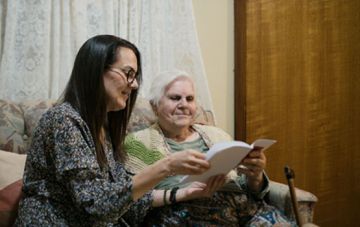
New co-designed resources supporting culturally diverse older adults leaving hospital
Associate Professor Jacqui Allen and Dr Yaping Zhong
Going home from hospital can be an anxious time for older people, their carers and family members. Yet limited resources exist to support culturally diverse carers to cope with this transition, despite Australia’s multicultural society.
o address this, a Living Labs project funded through the National Centre for Healthy Ageing (NCHA) – a partnership between Monash University and Peninsula Health – focused on creating co-designed multimedia resources with Greek, Italian and Chinese carers, and older adults, to support their interaction with health professionals and care providers.

Monash University gives paramedics a playful helping hand: new kits to calm kids in crisis
Associate Professor Kathryn Eastwood
Children facing a trip to hospital often experience not only physical pain but also fear and distress that can complicate treatment. Recognising this, a new research-led project is trialling specially designed paediatric distraction kits for use by paramedics in Victoria.
The initiative is led by Associate Professor Kathryn Eastwood ASM from Monash Nursing and Midwifery and Katrina Sedgwick paramedic and manager from Ambulance Victoria. While distraction therapy is already considered the gold standard for reducing anxiety in hospital emergency departments, little work has been done to determine which strategies are safe and effective in the prehospital setting.
Providing specialist cancer nurses with a tool to measure skills and evaluate learning – the development, psychometric testing and implementation of the Cancer Nurses Self-Assessment Tool (CaN-SAT)
Associate Professor Olivia Cook
 Despite advances in screening and treatment, cancer incidence and prevalence is rising in Australia - nearly 1 in 2 Australians will be diagnosed with cancer by the age of 85.1
In response, cancer nursing continues to develop with recent recognition of it as a nursing speciality by AHPRA in 2023 and unprecedented government and non-government investment in specialist cancer nursing roles. With this investment comes a need to further grow and develop a skilled and responsive cancer nursing workforce. Beyond registration and post-graduate qualification, specialist cancer nurses are responsible for their own continuing professional development. Whilst competence must be demonstrated in the attainment of post-graduate qualifications, there was no tool available for nurses working in specialist cancer nursing roles to measure their advancement or expertise in the various aspects of cancer nursing.
Building on previous tools developed for breast cancer nurses2, the Cancer Nurse Self-Assessment Tool (CaN-SAT)3 is a nurse and consumer-designed tool for the self-measurement of 93 skills across 15 elements of practice related to specialist cancer nursing. In a collaboration between Monash Nursing and Midwifery, McGrath Foundation, Cancer Nurses Society of Australia and people with lived experience of cancer, the tool was designed, validated, psychometrically tested, published and implemented in 2025. Designed for Clinical Nurse Specialist to Clinical Nurse Consultant level roles, the CaN-SAT allows nurses to rate their skills on Benner’s novice to expert scale with guidance statements on the skills that should be demonstrated at each level.
This practical tool takes nurses approximately 30 minutes to complete and allows them to identify their own individual learning needs and plan their education and professional development to meet those needs. It is recommended that cancer nurses complete the tool annually in conjunction with their performance appraisal. The tool can also be used to evaluate education interventions or for ongoing program evaluation.
Implementation of the tool is currently underway and to date McGrath Foundation have embedded the tool into their Cancer Care Nurse Education Program where McGrath Cancer Care nurses complete the tool as part of their onboarding program, and annually in February thereafter. Cancer Nurses Society of Australia (CNSA) will also make the tool freely available to all cancer nurses in Australia and internationally via their website in 2026. Health services and organisations are also able to use their own survey platforms to host the tool and distribute to their nursing teams. The CaN-SAT purposefully aligns with other current projects being led by CNSA – the Cancer Nursing Education Portal and the Comprehensive Cancer Nursing Framework and cancer nurses will be able to directly access education to meet their learning needs through the CNSA Cancer Nursing Education Portal.
A new project is being conducted in 2026 to develop supplementary elements of practice for breast, lung and haematological cancers and work is also being undertaken in China and Iran to translate the tool into Mandarin and Persian language. This multi-faceted approach to implementation will promote broad adoption of the CaN-SAT and foster a culture of continuous learning and development among cancer nurses in Australia and globally.
References:
1.Cancer Council Australia. Facts and figures: Cancer statistics in Australia [Internet]. Sydney: Cancer Council Australia; 2024 [cited 2026 Jan 7]. Available from: https://www.cancer.org.au/cancer-information/what-is-cancer/facts-and-figures
2. Kruss G, Dinh TTH, Van Huizen P, et al. Development and Pilot Psychometric Testing of the Cancer Nurse Self‐Assessment Tools for Early and Metastatic Breast Cancer. Journal of clinical nursing. 2025;34(9):3920-3932. doi:10.1111/jocn.17609
3. Dinh TTH, Crawford‐Williams F, Kruss G, et al. Development and Psychometric Testing of a Comprehensive Cancer Nurse Self‐Assessment Tool (CaN‐SAT) for Identifying Cancer Nursing Skills. Journal of clinical nursing. Published online 2025. doi:10.1111/jocn.70093
-
-

Simulations in ICU: an educational initiative at Peninsula University Hospital
Associate Professor Malcolm Elliott
Intensive care (ICU) nursing and medicine are constantly evolving with an increased demand for an elevated skill set and competency1. This puts intensive care clinicians under constant pressure to ensure they have the knowledge and skills needed to deliver safe care in a demanding clinical environment. To help ensure competency, simulations are a resource clinicians can engage in as they can evoke a distinctly different, more engaged response from the learner and better mastery of educational objectives compared with more reflective classical learning techniques2.
In response to this, in 2025 the ICU at Peninsula Health implemented a weekly simulation program for their staff. The programme has four specific goals:
- Upskill new ICU doctors in emergency procedures and protocols commonly encountered in the ICU.
- Familiarise staff with the ICU environment and foster positive working relationships among nursing staff, medical staff, patient services assistants (PSAs), and educators.
- Build confidence in delivering care and promote the appropriate use of support from other teams to optimise patient care.
- Encourage reflection and open communication between staff to strengthen safety culture.
These goals are achieved via 11 clinically-based simulation scenarios including cardioversion, emergency intubation, accidental extubation, tracheostomy emergency, bradycardia and seizure. New scenarios are developed by an Intensivist and Nurse Educator as needed. These staff also co-facilitate each simulation. Each simulation is evaluated using a validated tool3 which focuses on leadership, teamwork and task management. Once the program has run for 12 months, evaluation data will be analysed. Future projects include validating the simulation scenarios and developing a tool to determine the simulation’s impact on staff’s clinical competence.
1. Lemione T, Bilskey K & Weiss R. (2023). Simulations for critical care nursing. In Kutzin J, Waxman J, Lopez C & Kiegoldie D. (eds). Comprehensive healthcare simulation: Nursing. Springer.
2.Schreibman D & Bernstein W. (2020). Simulation in critical care medicine. In Mahoney B, Minehart R & Pian-Smith M (eds). Comprehensive healthcare simulation: anesthesiology. Springer.
3. Cooper S, Cant R, Connell C, Sims L, Porter J, Symmons M, Nestel D & Liaw S. (2016). Measuring teamwork performance: validity testing of the Team Emergency Assessment Measure (TEAM) with clinical resuscitation teams. Resuscitation, 101, 97-101.

Embedding research leadership
The joint Associate Professor role in Nursing and Midwifery Research is now firmly embedded within Peninsula Health, marking a significant milestone as the organisation prepares to merge into Bayside Health in 2026. This strategic integration strengthens the academic-clinical partnership, ensuring research remains central to improving patient care and outcomes.
A year of collaboration and innovation Over the past 12 months, numerous projects have been initiated through close collaboration with clinical teams. These teams have played a pivotal role in identifying issues within their specialties, shaping research agendas that are both practical and impactful. This approach exemplifies the value of clinical academic connections, bringing the bedside to the bench and fostering evidence-based innovation.
A highlight of the year was the inaugural Nursing and Midwifery Research Seminar, which provided an inclusive platform for sharing research initiatives and building networks among clinical researchers at all levels from honours students to PhD candidates and beyond. This event underscored the growing culture of inquiry and collaboration within the health service.
Further showcasing this commitment, Research Week featured nursing research prominently, with two Professors of Nursing delivering engaging and thought-provoking keynote addresses. Their contributions inspired attendees and reinforced the importance of research leadership in shaping the future of nursing and midwifery practice.
Co-designing a nursing and midwifery strategy Working closely with clinical leaders, a nursing and midwifery strategy has been co-designed, underpinned by the Fundamentals of Care Framework. This strategy places clear value on the importance of high-quality nursing care and empowers nurses to articulate the significance of their role at all levels of the organisation. By embedding this framework, the strategy ensures that nursing and midwifery care is recognised not only as a clinical function but as a cornerstone of patient experience and safety, reinforcing the voice of nurses and midwives in decision-making and leadership.
Future directions The new co-designed Nursing and Midwifery Strategy will be embedded into education and practice, ensuring sustainability and impact. Notably, the work in developing this strategy has been accepted for presentation at the International Learning Collaborative Conference in Oxford, 2026, highlighting the importance Peninsula Health places on nursing and midwifery care and its global relevance.
Planning is underway to explore the research readiness of the five merging organisations, with outcomes that will inform the development of frameworks committed to supporting research capacity and capability building in the nursing and midwifery workforce. These collaborative efforts aim to improve patient outcomes and elevate the profile of nurses as researchers within clinical environments.
As we close out this year, we reflect on the significant strides made in advancing nursing and midwifery research through collaboration, innovation, and strategic planning. Looking ahead, we are excited to build on this momentum, strengthening partnerships, expanding research capacity, and embedding evidence-based practice to improve patient outcomes. Together, we will continue to elevate the role of nurses and midwives as clinical researchers, driving meaningful change across our health services.