
Project background
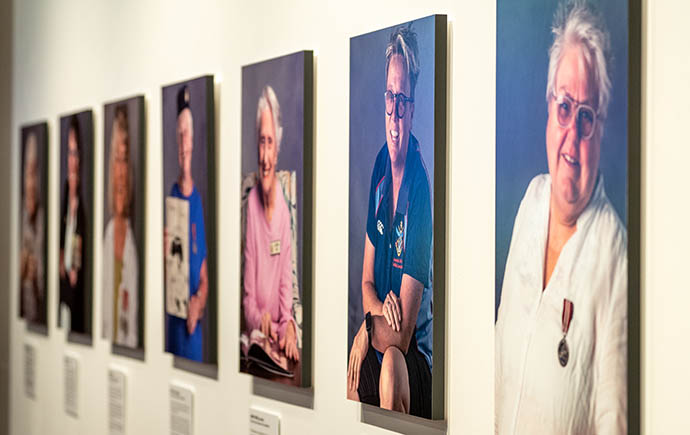
Women's Week 2024, Anzac Memorial. Photo by NSW Government
Traditionally, veteran wellbeing services have focused on men, making it harder for women to access and use these services. There’s now a growing awareness about the need for gender-sensitive care that considers the unique needs of all genders. However, we still don’t fully understand the challenges women veterans face when using these services, such as balancing caregiving responsibilities, dealing with women’s specific health needs, and managing service-related physical and mental health issues.
An increasing number of women in Australia are serving in the military and becoming veterans, and they have specific mental health and support needs.
Women veterans’ unique needs
- 14% of the veteran population in Australia are women. According to 2021 ABS Census Data, 21% of current full-time personnel and 18% of current serving Reservists are women.
- Ex-serving women are twice as likely to die by suicide than non-veteran women in Australia
- Research has shown experiences of Intimate Partner Violence (IPV) and Military Sexual Trauma (MST) are common amongst women veterans.
- IPV and MST are linked with housing and income insecurity, legal issues, and safety risks.
- Intersecting challenges for women veterans’ wellbeing
- Caregiving responsibilities
- Women’s physical and mental health issues
- Identifying and feeling visible as a veteran in the veteran community
- Experiences of stress and trauma
- Employment and meaningful activity post transition
To address the gaps in gender-sensitive and gender-specific care in NSW, the NSW Office for Veterans Affairs, RSL NSW and Monash University are working together on a new project which aims to understand and improve support services for women veterans in NSW. Researchers at Monash University will review existing literature and use surveys and interviews with women veterans to learn about their experiences, challenges, and what they need for better support.
To ensure this project is codesigned with advice on targeted and effective services for women veterans, an expert advisory group (EAG) was established to help guide decision-making around the project. The EAG provide knowledge and subject matter expertise and is comprised of members from ex-service organisations and associations that work directly with women veterans and their families to provide support services.
Many of these services fall within DVA’s Veteran-centric Wellbeing Wheel.
