FMNHS Platform Access Grants 2026

The FMNHS Platform Access Grants (PAG) scheme is an essential resource for research development — and a fantastic opportunity to access the cutting-edge genomics and bioinformatics services offered by the Monash Genomics and Bioinformatics Platform (MGBP).

PAG funding is designed to position individuals or small teams to secure external national and international competitive grants, including those from NHMRC, MRFF, and ARC. The scheme also supports Early Career Researchers (ECRs) in obtaining external fellowships and attracting competitive grant funding. While ECRs are strongly encouraged to apply, the PAG scheme is open to researchers at all career stages.

Applications for PAG 2026 are now open.

The Faculty invites proposals from individuals or small teams (maximum 3 members) seeking access to MGBP services and/or products. Grants provide up to $15,000 for access to up to two (2) FMNHS Platforms.

📅 Applications close Thursday 23 July 2026, 5:00 PM (AEST)

What can a PAG grant unlock at MGBP?

$15,000 goes further than you might think. Here are some examples of what a PAG grant could fund across our platforms.

Spatial Transcriptomics
Xenium In Situ

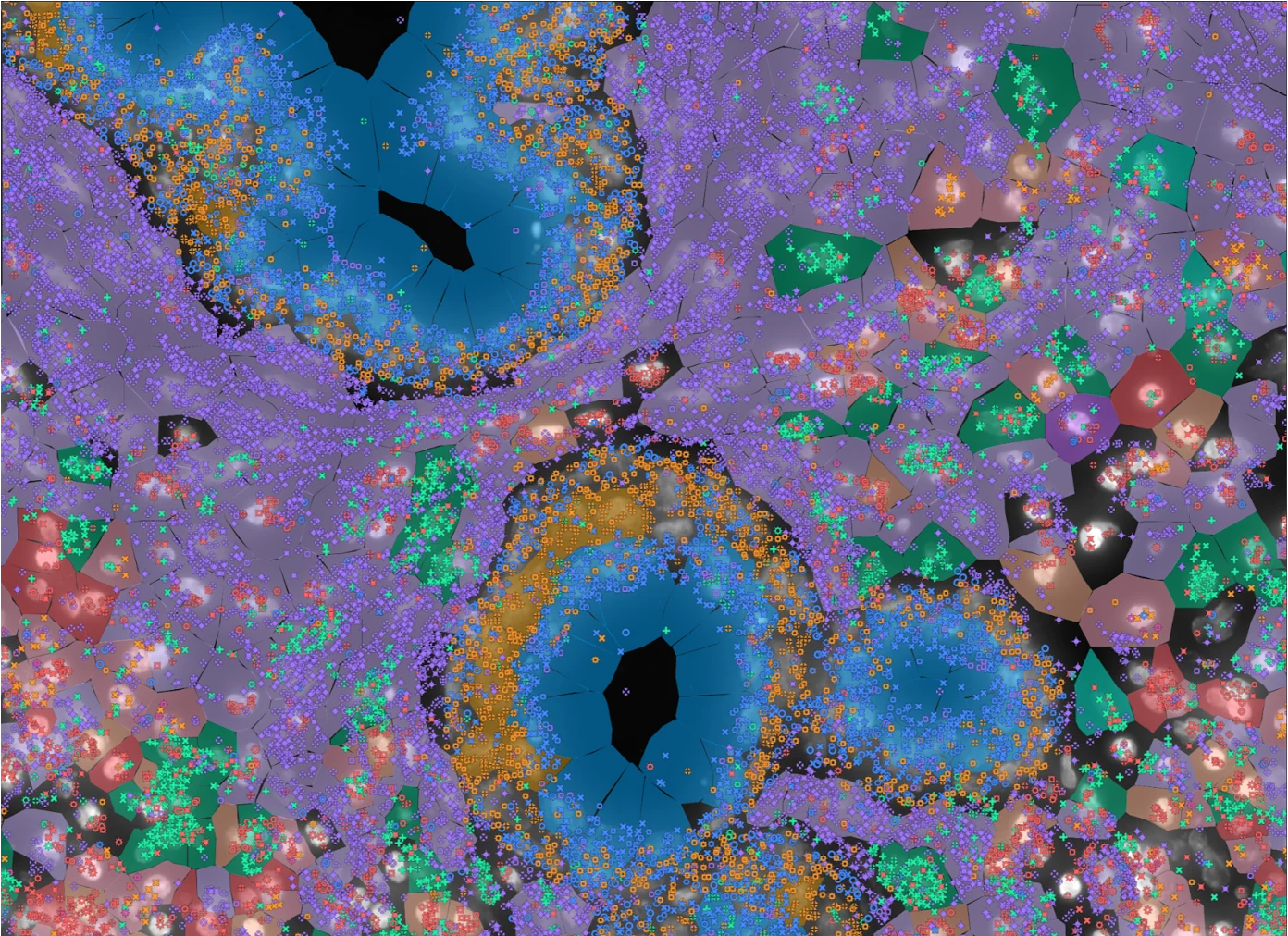
Simultaneously detect hundreds of RNA targets at subcellular resolution directly within intact tissue sections, combining spatial precision with morphological context.

What $15k could get you: Up to 2 Xenium slides (imaging area 10.45mm x 22mm) using a tissue-specific or custom panel, with slide preparation, instrument run, and image/transcript output files. Multiple tissue sections can be accommodated onto a single Xenium slide.

Example scenario: A cancer biologist mapping the spatial organisation of immune and tumour cell populations in a biopsy could resolve cell-to-cell interactions at subcellular resolution — generating figures directly suitable for a grant application or high-impact publication.

Ideal for: High-resolution spatial mapping, cell-cell interaction studies, biomarker validation in tissue, studies requiring subcellular transcript localisation. FFPE and fresh-frozen compatible.

Visium HD

Capture gene expression across intact tissue sections at near-single-cell resolution, retaining the spatial context of every transcript within the tissue architecture.

What $15k could get you: Up to 2 tissue slides of whole transcriptome (human, mouse, rat), with tissue preparation, library preparation, sequencing, and Space Ranger processing. Capture area per slide of 6.5mm x 6.5mm.

Example scenario: A neuroscientist studying regional gene expression changes in mouse brain following injury could map transcriptional responses across distinct anatomical structures in a single experiment, generating spatially resolved data to anchor a future grant application.

Ideal for: Tissue architecture studies, tumour microenvironment, neuroscience, developmental biology, FFPE, fresh-frozen or fixed-frozen tissue.

Single Cell RNAseq

  • 3' Gene Expression (3' GEX)

    The most widely used single-cell approach — profile gene expression in thousands of individual cells simultaneously to identify cell types, states, and rare populations within a complex sample. Ideal as a first-pass single-cell experiment or where broad transcriptional landscape rather than immune receptor information is the primary question.

    What $15k could get you: Up to 9 multiplexed samples targeting 10,000 cells per sample, with library preparation, Illumina sequencing and Cell Ranger processing.

  • 5' Gene Expression + Immune Profiling (5' GEX + VDJ)

    Simultaneously capture gene expression and full-length T cell receptor (TCR) or B cell receptor (BCR) sequences from the same cell. This paired readout links clonal identity to transcriptional state in a single experiment — something not possible with bulk immune profiling or 3' GEX alone.

    What $15k could get you: Up to 6 multiplexed samples with GEX + TCR or BCR libraries, library preparation, sequencing and Cell Ranger processing.

  • Fixed RNA Profiling (Flex)

    Profile gene expression in fixed or archived samples, including FFPE tissue . By eliminating the need for fresh, viable cells, Flex opens single-cell transcriptomics to sample types and biobanks that were previously inaccessible, while significantly reducing cost per sample.

    What $15k could get you: Up to 32 multiplexed samples (targeting 10,000 cells/sample), with library preparation, sequencing, and Cell Ranger processing.

PacBio HiFi Long-Read Sequencing

Facts and figures

  • Full-Length 16S rRNA Sequencing

    Characterise microbial communities at species and strain level by sequencing the entire 16S rRNA gene (~1.5 kb) with HiFi accuracy. Unlike short-read 16S approaches that target one or two hypervariable regions, full-length sequencing captures all nine hypervariable regions in a single read, dramatically improving taxonomic resolution and reducing misclassification at the genus and species level.

    What $15k could get you: Up to 288 barcoded samples (96 samples per SMRT Cell run), with library preparation and sequencing.

  • HiFi Metagenomics

    Recover near-complete microbial genomes directly from complex community samples — without culturing — by combining the accuracy of HiFi reads with the assembly length needed to resolve individual organisms from a mixed population. HiFi metagenomics produces metagenome-assembled genomes (MAGs) of far greater completeness and contiguity than short-read approaches, enabling functional annotation, strain tracking, and the discovery of novel organisms.

    What $15k could get you: Up to 120 barcoded samples (24 per SMRT Cell run) using the Ampli-Fi protocol, with library preparation and sequencing.

  • Iso-Seq Full-Length Transcriptomics

    Sequence complete, full-length RNA transcripts from a single read — no assembly required. Where short-read RNA-seq infers transcript structure by computationally assembling overlapping fragments, Iso-Seq reads span the entire transcript from 5' cap to poly-A tail, directly revealing alternative splicing events, novel isoforms, fusion transcripts, and transcript boundaries with base-pair precision.

    What $15k could get you: Up to 18 samples (3 samples per SMRTcell run) with library preparation and SMRT Cell sequencing. Additional samples can be accommodated by multiplexing, with a trade-off in read depth per sample.

Short-Read Sequencing

  • Bulk Transcriptomics (RNAseq)

    Measure gene expression across whole tissue or cell populations to identify differentially expressed genes, pathways, and regulatory networks.

    What $15k could get you: Up to 150 samples (mRNA capture) sequenced to 20 million reads each, with library preparation and Illumina short-read sequencing.

  • Metagenomics

    Sequence all microbial DNA in a sample to characterise community composition, functional capacity, and novel organisms — without the bias of amplicon-based approaches.

    What $15k could get you: Up to 130 samples with library preparation, Illumina short-read sequencing to 20M reads per sample.

  • Whole Genome Sequencing (WGS)

    Sequence the entire genome of an organism to detect variants, structural rearrangements, copy number changes, and mutation signatures without the target bias of panel- or exome-based approaches.

    What $15k could get you: Up to 10 human samples (30× coverage) or 11 mouse samples (30x coverage) with library preparation and Illumina short-read sequencing.

Apply Now

Submit Expression of Interest

For further details please contact the Monash Genomics and Bioinformatics Platform.