
Crystallisation
Crystallisation of macromolecules
The use of robotics allows the miniaturisation of crystallisation experiments and enables us to screen a wide range of conditions from limited sample volumes. To increase the probability of growing crystals suitable for X-ray diffraction studies, our team uses many well known optimisation techniques to improve on initial hits.
■ Drop dispensing
- Vapour diffusion - for traditional single-pin diffraction or in-tray diffraction
- Lipidic cubic phase (LCP)
■ Hit optimisation
- Custom (fine) screen making
- Additive screening
- Seeding
■ Liquid handing robots
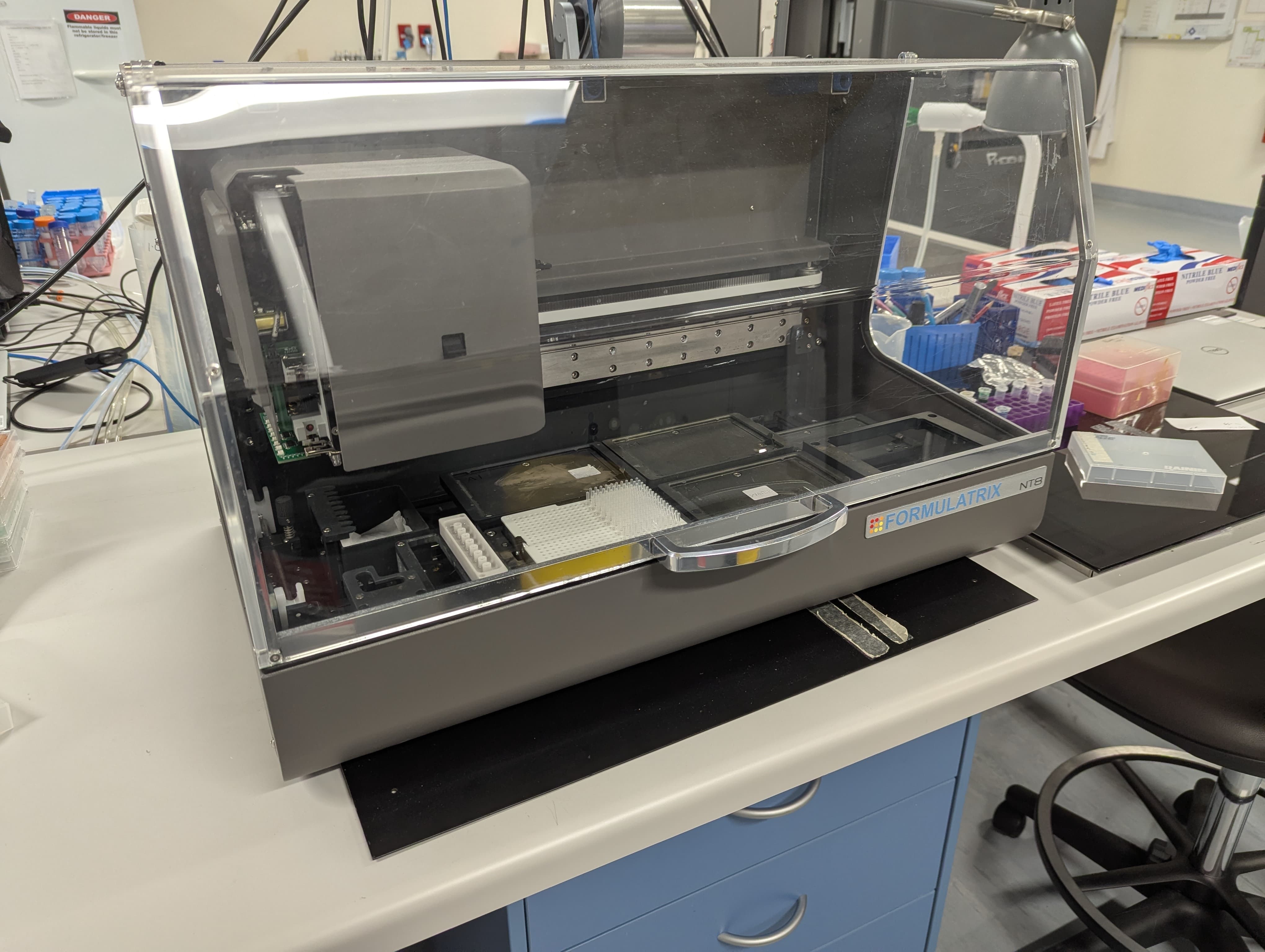
- NT8 (Formulatrix) – nanolitre-volume liquid handler for dispensing all crystallisation drops, including LCP.
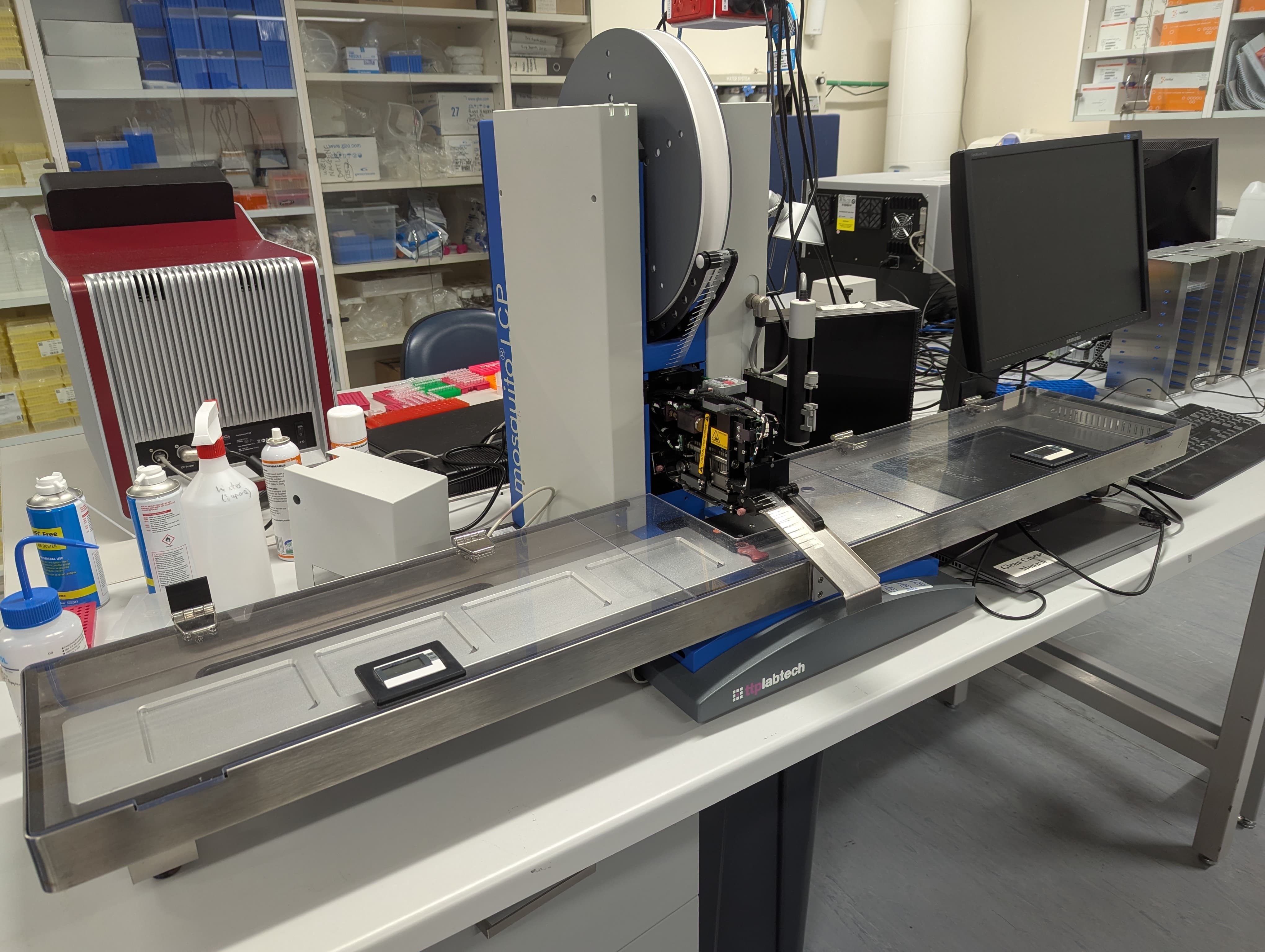
- Mosquito LCP (STP Labtech) – using positive displacement technology for dispensing crystallisation drops and LCP.
- Crystal Phoenix (Art Robbins) – featuring nano-dispensing capability and 96 syringe head for simultaneous transfer of screen solutions.
- Formulator (Formulatrix) – liquid handler that uses microfluidic technology, for dispensing custom optimisation screens.
Incubation and automated plate imaging
We house four automated Rock Imagers 1000 (Formulatrix), with a combined capacity to incubate and automatically inspect up to 4000 crystallisation plates, providing visible, UV and SONICC technology imaging at either 20℃ or 4℃.
Remote access to drop images
Users can inspect crystallisation drop images remotely via a web link to MMCP’s Rock Maker system.