
Embracing the AI Evolution: How Generative AI Is Shaping Our Learning and Working Worlds
It started with a prompt
When I first embarked on my IT career in the late 90s, the digital landscape was on the cusp of a revolution. The internet was somewhat of a novelty, Google had just entered the scene, and our office marveled at the cutting-edge technology of Windows 95 desktops and the Weezer "Buddy Holly" easter egg video that was shipped with it. I recall the painstaking patience required to download a single song, a process that took about 30 minutes with a 56k modem. Back then, it felt the world was moving fast, but by today's standards, it was at a glacial pace.
The arrival of the millennium was particularly notable, with fears surrounding the Y2K Bug causing IT folk around the globe to scramble to ensure systems would survive the stroke of midnight on January 1, 2000. This period marked a significant shift in the technology sector, birthing demand in new roles that had never previously existed while others gradually faded away into insignificance. Interestingly, many of us in IT back then came from educational backgrounds that were far removed from technology. The market for these emerging tech skills was nascent, and navigating it was a challenge, underscoring a stark reality: we were amid a paradigm shift, courtesy of the internet and computing, and adapting our skills was imperative to remain relevant in a rapidly evolving world.
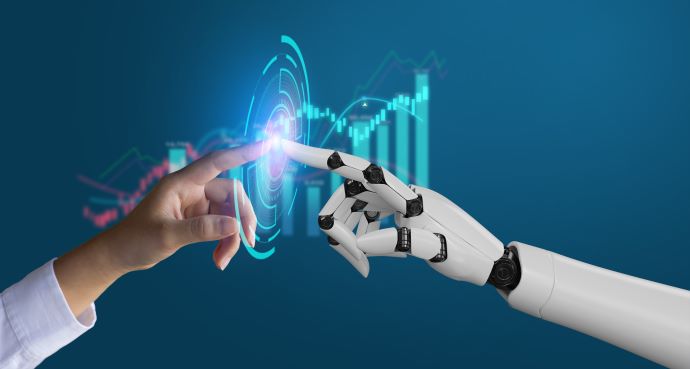
Today, we find ourselves at the threshold of another monumental shift, driven by Generative AI. This evolution isn't just about enhancing our operational efficiency or expanding our digital connectivity; it's about redefining the very essence of creation and collaboration. Generative AI has captured the world's imagination and brought on a new era where the demarcation between human ingenuity and machine intelligence becomes increasingly blurred.
Reflecting on the transformational journey from the dawn of personal computing and the internet to today's generative AI landscape, we see parallels in the disruptive nature of these technologies and how we need to adapt.
Generative AI and Education
From the green screen Apple IIe computers that graced the classrooms of my childhood to the sleek tablets and laptops of today, technology has steadfastly held a key role in education. These tools have evolved from modest aids in the learning process to fundamental pillars of our educational infrastructure. The personal computer ushered students into the digital age, while the internet unlocked a universe of information, making the sum of human knowledge accessible with a simple Google search. The days when the world's secrets were confined to the brown leather bindings of the Encyclopedia Britannica are long past. These technological advancements have shifted learning from a localised experience to a global one, infusing classrooms worldwide with diverse and contemporary perspectives.
As we advance into 2024, Generative AI has emerged as a new trendsetter, swiftly imprinting its mark on educational methodologies and content. Schools and universities are integrating AI into their curricula, transcending its role as a mere subject of study to become a fundamental educational tool. AI-driven tutoring, for instance, offers bespoke support to students, tailoring assistance to their unique learning rhythms and preferences. These systems could soon discern when a student grapples with a concept and suggest targeted resources, challenging the traditional one-size-fits-all method of teaching.
Yet it's not just about personalised learning experiences. Generative AI is also fostering creativity and innovation within the classroom. AI tools can now assist students in writing code, composing music, or even generating art, providing a virtual sandbox for experimentation and a practical understanding of AI’s capabilities and limitations.
However, this integration has not come without its challenges. The educational system is wrestling with issues such as plagiarism and the ethical deployment of AI in classrooms. The ability of Generative AI to compose essays, resolve complex equations, and even create art has sparked a nuanced debate surrounding academic honesty and the authenticity of students' work. Furthermore, there's a palpable sense of resistance and trepidation within the academic community regarding this untested technology. Critics express concerns over the potential of Generative AI to erode essential critical thinking and problem-solving abilities, and its propensity to generate misleading or fabricated information. These issues have ignited discussions on how to pragmatically introduce AI usage in a manner that bolsters, rather than compromises, the foundations of educational integrity and the learning journey.
To meet the demands of this new AI-infused world, numerous courses and workshops on AI literacy, prompt engineering, and ethical AI use have burgeoned. These programs aim to demystify AI, making it accessible to a broader demographic and ensuring that future generations are not merely passive consumers of AI technology but active and informed participants in its evolution. Courses on ethical AI encourage learners to question not just how AI can be used, but whether it should be used in certain contexts, instilling a sense of responsibility towards the development and deployment of these technologies. We are rapidly approaching an ethical crossroads not limited by technology but defined by our values. It's no longer a question of whether we can do something, but whether we should.
The role of educators has also transformed to become guides in a world where information is abundant, but wisdom is scarce. They are facilitators of knowledge, helping students navigate the complexities surrounding AI while fostering critical thinking, creativity, and ethical reasoning.
Generative AI is not just changing what we learn, but fundamentally altering how we approach learning. As the lines between human and machine intelligence continue to blur, our educational systems are adapting to prepare the architects of tomorrow's AI-driven society.

The Changing Job Landscape
The job market has consistently adapted and evolved in the wake of new technological breakthroughs. Workforces have demonstrated remarkable flexibility, with skill sets transforming over time to align with evolving demands. As we embark on what is likely to be known as the AI era, we are observing a parallel transformation, occurring at a pace that is unprecedented. Roles such as Prompt Engineer and AI Consultant have rapidly gained prominence, ranking among the fastest growing and most sought-after positions in 2023. According to the World Economic Forum's May 2023 report, the role of 'AI and Machine Learning Specialist' has been declared the fastest-growing job across all sectors, with technology, AI, and robotics featured within seven of the top ten roles.
Generative AI has spawned a diverse range of new professions. AI consultants, specialists, and prompt engineers are now as prevalent as web developers were at the dawn of the internet age. These roles hinge on the skill of interfacing with AI, steering it towards achieving the desired outcomes, and confirming its operations are in line with human intentions. As AI systems evolve, become more sophisticated and engrained in our everyday routines, the demand for experts capable of navigating the convergence of human requirements and machine functionalities is becoming increasingly indispensable.
AI’s impact on the job market, however, stretches well beyond the confines of the tech industry. There is an observable shift where insight into AI and its practical applications is turning into a prized asset across various sectors. Marketing professionals are employing AI to sculpt campaigns that resonate with unique consumer preferences, while the accounting and finance sector is harnessing its potential to inform predictions, decisions, and form strategies. Even sectors traditionally removed from the digital world, such as agriculture and manufacturing, are recognising the value of AI in driving efficiency and fostering innovation.
This widespread adoption of AI is leading to a reevaluation of professional skill sets on a global scale. Job descriptions are being redefined, and workers are realising that an understanding of AI and tools like ChatGPT can unlock new opportunities. Mastery in AI extends beyond mere coding or data analysis; it involves leveraging AI to amplify one's existing expertise and carving out new avenues for professional growth and development.
Future Skills in an AI-Dominated World
Generative AI is becoming a cornerstone of innovation and efficiency, and the skills required for the future workforce are shifting dramatically. Creativity, critical thinking, and AI literacy stand out as the triad of capabilities that will dominate the job market. These skills will act as currency in a world where machines can perform tasks that were once the exclusive domain of people.
Creativity is becoming ever more valuable as AI handles routine or even complex tasks, leaving humans to push the boundaries of creativity and innovation. It is still the uniquely human ability to be able to think outside the box that will continue to be in high demand. Professionals who can merge their expertise with AI will find themselves at the forefront of their fields.
Critical thinking, is another skill that enables individuals to analyse and evaluate situations to and make decisions, will be crucial in navigating the AI landscape. With the deluge of information and possibilities that AI brings, discerning the validity, relevance, and significance of AI-generated content and decisions is paramount.
AI literacy, or the understanding of how AI works and can be applied, is akin to computer literacy in the 90’s. Just as the ability to operate computer systems became essential then, fluency in AI will be a non-negotiable aspect of professional competency.
The constant here is the need for continuous learning and adaptability. The pace of technological change is constantly increasing, and lifelong learning is no longer a luxury but a necessity for those looking to keep up. Professionals and students alike must adapt to a mindset geared towards continuous education and flexibility to pivot when necessary.
To prepare for this new reality, it’s imperative to embrace interdisciplinary learning. Combining AI knowledge with domain expertise will form the building blocks for the most successful careers. This approach not only creates a deeper understanding of AI’s potential impacts within various fields but also equips individuals with a versatile skill set.
Staying abreast of advancements in AI is also key. Engaging with new developments, participating in forums, and taking courses in emerging AI technologies will keep professionals relevant and proactive in their careers.

Universities and Workplaces Adapting to Change
Universities are at the vanguard of this AI transformation, recognising the necessity to not only teach about AI but to integrate it within the learning experience itself. Curriculums are being overhauled to go beyond theoretical knowledge, embedding practical AI applications that reflect real-world scenarios. Data science, AI ethics, and machine learning are now as much a part of a modern curriculum as traditional subjects like economics or biology. This shift ensures that graduates are not just conversant in AI terminology but are proficient in wielding AI tools as they enter the workforce.
Within the corporate realm, the push towards AI is equally vigorous. Businesses are not just adopting AI technologies; they're actively investing in the AI fluency of their workforce. Training programs dedicated to AI and data competencies are becoming more common, with companies often partnering with educational platforms or institutions to provide tailored learning experiences. This upskilling is not restricted to tech-centric roles; it's permeating every level of the organisational structure, from customer service and support to the CEO.
Moreover, job roles are also being revised to synergise with AI-driven efficiencies. There's a growing understanding that AI can augment human performance, not merely replace it. As such, roles are being evolved to capitalise on this, fostering an environment where human creativity and strategic thinking partner with AI's analytical and computational prowess.
Conclusion
The past 12 months have made it clear that Generative AI is not just a fleeting trend but a pivotal force that’s sculpting the educational and professional landscapes of our future. We've observed how AI is revolutionising the way we learn, the jobs we will perform, and the skills we require to survive. The potential for positive change is huge, with AI fostering unprecedented levels of personalisation in education and driving efficiency and innovation in the workplace.
However, to borrow from Uncle Ben, “With great power comes great responsibility”. Embracing Generative AI necessitates a balanced approach, one that recognises its vast potential while also acknowledging the ethical implications of its application. As we integrate AI into the very fabric of society, we must also commit to the principles of lifelong learning, ensuring that our human intelligence continues to evolve alongside the synthetic mind.
Reflecting on the journey ahead, it's hard not to feel a sense of excitement about the possibilities that Advanced AI brings. We are at the cusp of an era where our creative and intellectual horizons can expand beyond what we've ever imagined. This is a moment in history where our collective future will be shaped not just by the technologies we create but by the wisdom, empathy and compassion though which we wield them. In doing so, we will harness the full potential of AI to not only transform our world but elevate it.