
Monash Infrastructure signs $3.6 million deal to develop sponge city technologies
Monash Infrastructure signs $3.6 million deal to develop sponge city technologies
Monash University has signed a multi-year research and capacity-building deal, worth up to $3.6 million, with Chinese development company Jiangsu Easthigh Enivronmental Holdings (Easthigh), together with the University of New South Wales, for the advancement of technologies to manage urban water in Chinese cities.
The agreement establishes a new Sino-Australian Centre on Sponge City, which was facilitated by Monash Infrastructure. Monash Infrastructure aims to partner with international organisations to create cutting-edge solutions in infrastructure that are deployed globally. The Centre will be managed by the University of New South Wales and the Monash University node will be led by Monash Infrastructure’s water theme coordinator, Associate Professor Xiwang Zhang.
The project leader, Professor Ana Deletic, Foundation Director of Monash Infrastructure and the incoming Pro Vice-Chancellor (Research) of University of New South Wales, said the partnership demonstrated the potential for world class research excellence and the strength of Monash Infrastructure in forming international alliances.
Under the agreement, a team drawn from leading urban water researchers at Monash University and University of New South Wales (UNSW) will deliver high-quality research to develop technologies and planning tools to help China deploy sponge city green infrastructure. The research and capacity program deal follows a Memorandum of Understanding that Monash Infrastructure signed with Chinese companies in November 2016.
Sponge city infrastructure includes green systems such as raingardens and wetlands that enable cities to act as sponges, soaking up rainwater and capturing water for reuse.
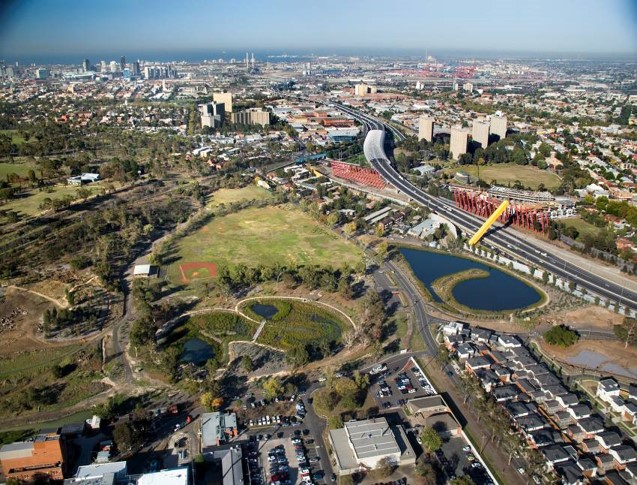 | 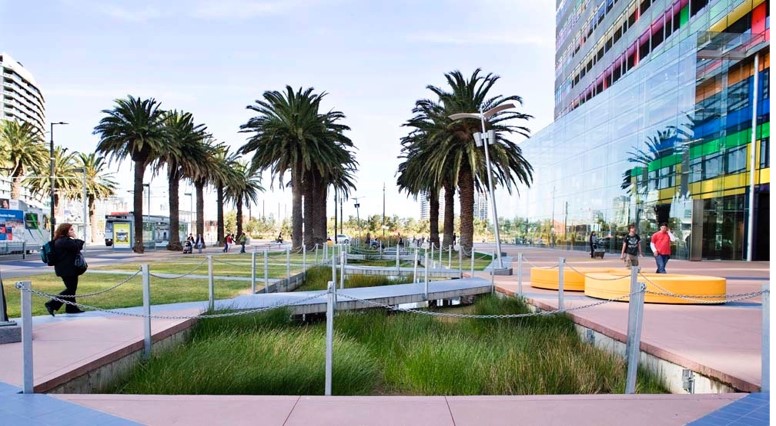 |
Sponge cities are designed to manage stormwater through detention, infiltration, and enhanced evapotranspiration, as well as treatment and harvesting. Sponge cities are similar in concept to Australia’s Water Sensitive Urban Design.

Sponge City concept
China has an ambitious plan to solve its issues of urban flooding, water pollution and water shortages through its Sponge City agenda. The Chinese government is providing financing of $10 billion for pilot activities across 30 sites.
Monash and UNSW will assist Easthigh with the Sponge City agenda with research, development and training of staff in:
- Green technologies such as stormwater constructed wetlands, biofilters, swales, green walls and roofs, all tailored for Chinese conditions.
- Modelling tools for planning and design of sponge cities in Chinese urban areas
- Novel solar-driven technologies for urban water treatment.
Work has already commenced with key researchers from Monash visiting the Sino-Australian Centre on Sponge City to advise on establishing research laboratories, located in the Water Research Institute on the Sino-Singapore Nanjing Eco Hi-Tech Island in Nanjing, Jiangsu Province.