
Our research
Research areas in Software Engineering (SE)
Our SE research team collaborates with multiple faculties and disciplines to analyse current system problems, predict risk and change the way software is developed. This presents a unique opportunity to leverage the power of SE in areas such as mobile apps, blockchain, data analytics, digital health management, smart cities, sustainable energy and efficient transport systems.
Read about our research

Design Way Finding Systems for Cognitive Impairments
Effective navigation and spatial information interpretation are essential for daily activities in our increasingly complex and information-rich environments. Whether determining one’s location within a building or finding the fastest route across a city, wayfinding plays a crucial role in personal autonomy and mobility. This process involves a complex interaction of cognitive skills, environmental awareness, and the use of technology. However, for individuals with cognitive impairment (IwCI), this situational awareness and navigation process can pose very significant challenges, as such impairments can affect memory, spatial reasoning and decision making, making navigation a daunting task. This research seeks to fill these gaps by examining the navigation requirements and challenges encountered by IwCI and their carers, and exploring ways to support the shared presence of multiple stakeholders in wayfinding decisions, involving health professionals, support workers, and caregivers.

Development and Evaluation of Web-based Tool for the SE-oriented Empathy Scale
The tool development focuses on creating a web-based application to support the practical implementation of the SE-oriented empathy scale. This tool is designed to automate the calculation of empathy scores and provide tailored recommendations to software practitioners, making the empathy scale accessible and actionable in real-world SE contexts.
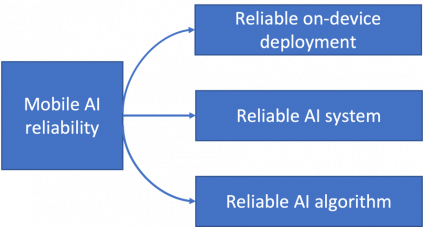
Improving the Reliability of Mobile AI Models
For the current machine learning model deployment strategy, developers first use training data to train the ML model, then deploy the training on devices/software. However, the ML model file contains detailed information on the model architecture and weights that allow attackers to steal the IP or generate attacks. Based on the above problem, we developed a new model deployment strategy that generates a secured model file to run the ML model.

AI-Driven Software Defect Intelligence in the Age of DevOps
Project Lead: Chakkrit Tantithamthavorn Developing an end-to-end AI-Driven Software Defect Intelligence platform to detect and remove critical software defects. The cost of automated software testing has become a burden for software companies in the era of rapid release development. Specifically, the execution time of test suites is a major bottleneck in the overall velocity of the pipeline. If no test prioritisation/selection strategy is used, large amounts of testing resources can be wasted while not impacting artefacts, and delaying the delivery. This platform will be integrated into GitHub and Bitbucket ecosystems.

Addressing Age-Related Accessibility Needs of Senior Users Through Model-Driven Engineering
One of the main reasons that cause seniors to face accessibility barriers when trying to use software applications is that their age-related needs (e.g., physical and cognitive limitations) are not properly addressed in the design of software user interfaces (UI). Therefore, we propose a model-driven accessible-adaptive UI development approach that is WCAG compliant.
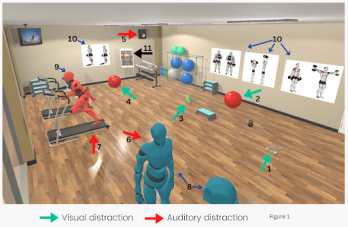
An Empathetic Approach to Human-Centric Requirements Engineering Using Virtual Reality
People who use software applications are different, including with significant cognitive differences such as neurodiversity. Capturing requirements for software that addresses these cognitive differences is hard for software engineers, especially when they do not have the same cognitive challenges. We explored the use of virtual reality (VR) in assisting software engineers to better understand the perspectives of the end user for the purpose of human-centric requirements elicitation, with a focus on users diagnosed with attention- deficit/hyperactivity disorder (ADHD).

Artificial Intelligence for Automated Repair of Complex Software Systems
Project Lead: Dr Aldeida Aleti
When a modern car has 100 million lines of software code, and counting; if there’s a software fault, testing and repairing is an extremely difficult and expensive task. We are developing a novel methodology that employs AI techniques to automatically generate test cases to localise a software fault, generate patches that fix the faults, and verify the repair and reliability. These steps constitute Automated Software Repair. ASR has been identified as the grand challenge in software engineering research, which 10 years ago started a new area known as Search-Based Software Engineering (SBSE).
Despite many studies introducing various SBSE techniques, much remains to be learned about the effectiveness of these problem-dependent techniques. Our work seeks to understand the problem characteristics impacting effectiveness and help software engineers select the most appropriate technique for their software system.

Emerging Technologies in Higher Education
The use of emerging technologies such as Virtual Reality VR, Augmented Reality AR and Artificial Intelligence AI has proliferated in recent times. This project seeks to understand the opportunities and challenges these emerging technologies present in education to build empathy for human needs and design more inclusive technology. The project aims to develop a human-centred framework and practical approaches to integrate these cutting-edge technologies into real-world educational settings for effective learning and teaching.
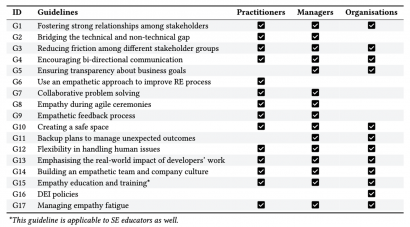
Software Engineering Empathy Guidelines
These guidelines focus on leveraging the positive effects of empathy to enhance software development practices, foster better collaboration, and improve outcomes. Additionally, they aim to support the mental health and well-being of practitioners by emphasising the benefits of empathy and addressing the challenges that arise from its absence.
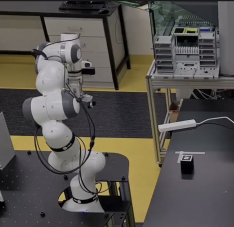
AI for Pharmaceutical Development
Project Lead: Dr Aldeida Aleti In partnership with CSL, this project develops advanced AI and software engineering solutions to support pharmaceutical formulation development. By integrating machine learning models with domain-specific software systems, the project aims to accelerate the design, testing, and optimization of drug formulations. The collaboration enhances CSL’s R&D capabilities through intelligent automation, predictive analytics, and data-driven decision-making in early-stage product development.

Smart Cities and Suburbs: i-sense Oakleigh
Project Lead: John Grundy A collaborative project with Monash City Council, Victoria, Australia funded by Dept. Infrastructure, Regional Development and Cities. This project is supporting the delivery of innovative smart city projects to improve the livability, productivity and sustainability of cities and towns across Australia.