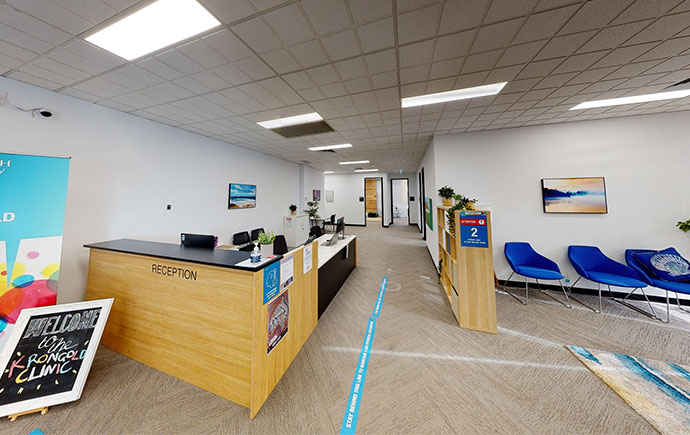
About the Krongold Clinic
The Krongold Centre for Exceptional Children was established in 1976 out of a generous donation from Dinah and Henry Krongold to Monash University. Initially it provided direct services to preschool and school-aged children, including therapy and hydrotherapy.
Over the past 50 years the Centre has transformed to the Krongold Clinic with two integrated elements: Krongold Services for children and adolescents, and their families; and Krongold Research Programs.
Our vision
Our vision is to support children, young people, families and communities, shape future psychologists and professional practice, and create evidence-based approaches that respond to real-world needs.
Our values: The Krongold Commitment
These commitments guide how we work with clients, families, students, communities and partners.
Clinic remit
We deliver high-quality, evidence-based psychological services across the lifespan, with a focus on children, adolescents, and underserved communities. Our remit includes:
Clinical services
We provide tailored assessments and interventions that support learning, development and wellbeing across psychoeducational, developmental and vocational domains. Our services promote inclusive practice in schools, homes and communities, including evidence-based literacy and numeracy support. We also work with parents and carers to strengthen their children’s learning, emotional wellbeing and development.
Student training
We provide immersive clinical training for Master of Educational and Developmental Psychology students, connecting academic learning with supervised, hands-on experience. Students develop the ethical, reflective and practical skills to assess needs, deliver targeted interventions and work effectively with families. Where appropriate, fourth-year, master’s and PhD students also undertake supervised research and clinical skill-building, helping develop the next generation of practitioner-researchers.
Research and innovation
We conduct practice-based research at the intersection of education, development and wellbeing. Using co-design and rigorous methods, including randomised controlled trials where appropriate, we develop and evaluate evidence-based services and interventions with measurable outcomes. This work strengthens training and supervision, addresses inequities in access and outcomes, and contributes to policy, professional practice and academic knowledge.
Community impact
We translate research and clinical insight into practical knowledge, resources and partnerships that strengthen community wellbeing, educational outcomes and access to services. Our work supports families, informs policy and practice, and improves public understanding of mental health, development and learning. We share findings through peer-reviewed research and accessible resources, and explore opportunities to scale or commercialise promising tools where appropriate.
Our staff
More about us
What is Educational and Developmental Psychology?
Educational and developmental psychology focuses on how people develop, learn and participate throughout their lives. Educational and developmental psychologists work with individuals, families, groups and organisations across a range of settings, including private practice, schools, research and training, and community and health services. Their work may include assessment for learning and development, mental health and wellbeing support, counselling and psychological support, and consultation with families, schools and other organisations.
Services provided by supervised provisional psychologists
As a university-based clinic, the Krongold Clinic provides services informed by current research. Our services are provided by provisional psychologists enrolled in the Master of Educational and Developmental Psychology at Monash University. They work under the supervision of experienced registered psychologists, who review and oversee their work.
As part of a university, the Krongold Clinic also contributes to research and teaching. During your time at the clinic, you may be invited to take part in research or teaching activities. Taking part is voluntary and will not affect the services you receive. Your clinician will provide more information and ask for your permission before you take part.
Learn more about our services: