
Leadership for the SDGs






Our global report card
After four years of extensive consultation, research and contribution through MSDI’s Associate Professor Shirin Malekpour and her team, this year saw the successful publication of the UN’s Global Sustainable Development Report. The report finds that, with only seven years to go, the world is unlikely to achieve the 2030 sustainable development goals (SDGs) and that we need an urgent systemic and strategic approach to accelerate progress. The report provides a framework for understanding acceleration as a unique phase in the transformation process, as well as strategies, actions and tools to enable success. MSDI also led the publication of a Nature article, What scientists need to do to accelerate progress on the SDGs which was written by GSDR co-authors. The paper sets the agenda for research on SDG implementation in the second half of the SDGs timeline.
At MSDI, we are driven to achieve the SDGs and help others contribute to these shared goals. In 2023, MSDI’s work on Leadership for SDGs was selected by the United Nations Academic Impact as one of 25 global best practice examples of implementation of the SDGs in higher education institutions.
Our regional and local focus
MSDI is championing our region’s needs and opportunities as we accelerate progress to the SDGs. MSDI is a member of the Pacific Urban Partnership and co-organised the Sixth Pacific Urban Forum in Suva, Fiji in September, bringing together important stakeholders to advance action for inclusive, safe and climate resilient urbanisation in our region.
As we continue to look at how to localise the SDGs, in 2023 we had three PhD students exploring how different societal actors – including local governments and universities – adopt the SDGs to create change.
Bringing together our knowledge
MSDI representatives moderated and participated on panels at the International Conference for Sustainable Development (ICSD) 2023, contributing expertise on the topics of ‘Pathways to Achieve the SDGs’ and ‘University Action to Achieve Net Zero’.
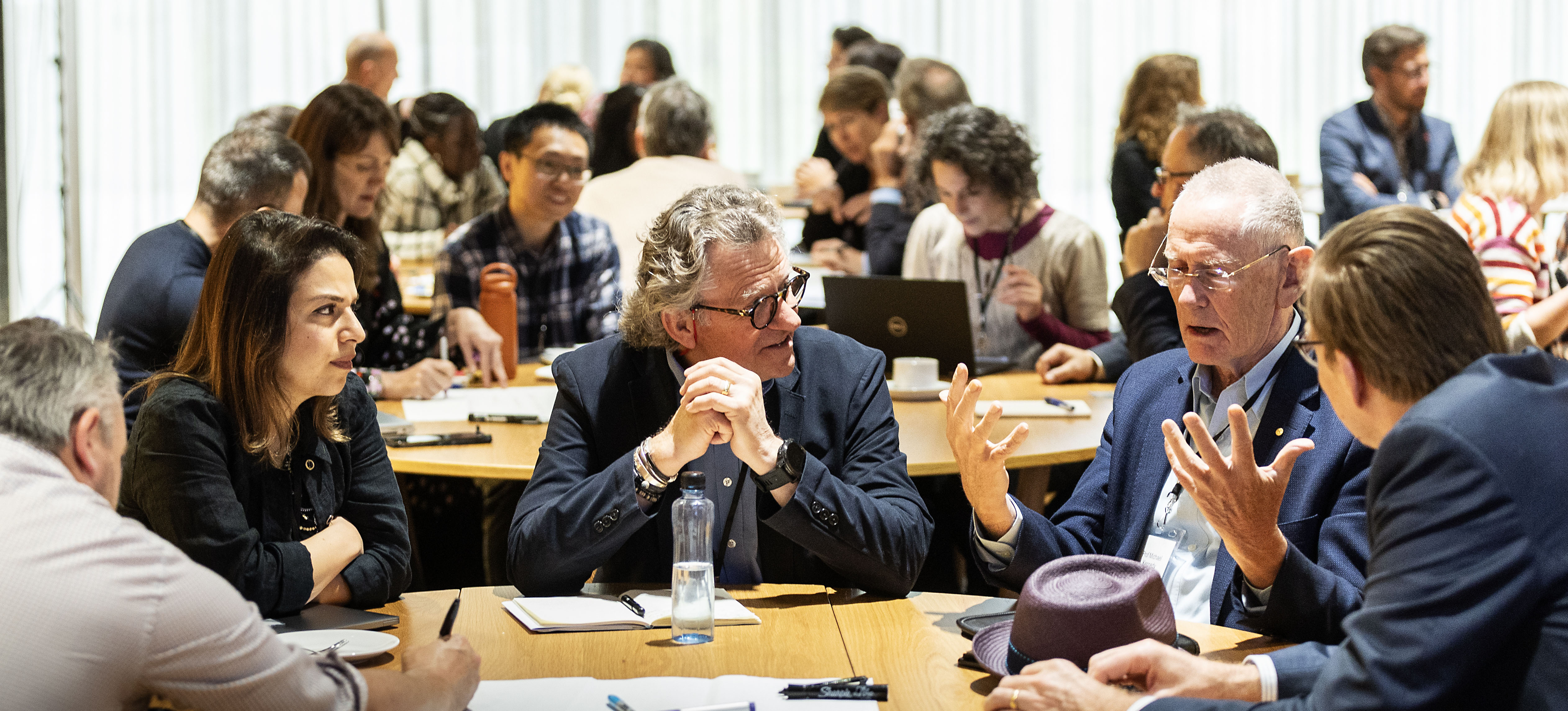
Participant discussion at the inaugural Affiliates event.
This year we also launched our Affiliates program, a network of researchers, educators, professionals, and PhD students from across all Monash faculties and campuses with an interest in sustainable development, in order to foster interdisciplinary and cross-faculty collaboration and knowledge sharing.
BehaviourWorks Australia’s Changing Behaviour for Sustainable Development Massive Open Online Course celebrated its first year, in partnership with the SDG Academy. The course is ranked in the top 10 out of the 41 Academy courses. Over 3,000 participants have signed up to the course and our data suggests that this is because they believe behaviour change is a useful tool in sustainable development and they want to build their behaviour change skills and knowledge.


Activating our networks
Mobilising different stakeholders in our region to address the SDGs is a key focus of the Sustainable Development Solutions Network Regional Network for Australia, NZ and Pacific (SDSN AusNZPac), which is hosted and led by MSDI. To mark the mid-point of Agenda 2030, the network collaborated with the UN Global Compact Network Australia on two workshops involving over 50 participants from different sectors, which reflected on Australia’s SDG progress and identified opportunities for accelerating action in the next 12 months. In addition, the network ran a session on best practices in SDG Reporting in Higher Education with the Australasian Campuses Towards Sustainability, which was attended by representatives from 27 higher education institutions in the region.
SDSN AusNZPac Youth also launched the Towards and AusNZPac Youth SDG Index, a youth-led report that is the first in the world to use the SDGs framework to measure young people’s progress towards sustainable development.
The report has been used as an advocacy and education tool across the country by Australia’s UN Youth Ambassador to ensure that no one is left behind.
MSDI and SDSN AusNZPac co-hosted SDSN president and globally eminent leader in sustainable development, Professor Jeffrey Sachs, in October, where he delivered a public lecture co-hosted by the City of Melbourne. Over 500 people attended the lecture and over 3,000 people have watched the online recording of the event. During his tour, Jeffrey also met with around 300 key stakeholders in industry, government, academia and civil society to intensify conversations in Australia on progressing climate action, the SDGs and wellbeing for the country.