Climate action




Global and regional impacts
Transitioning to net zero emissions is more than ensuring our fast-growing region decarbonises its systems, it’s also about ensuring a just transition that leaves no one behind. Climateworks Centre is designing a framework to demonstrate what ‘good’ looks like for Just Energy Transition Partnership implementation plans. These plans will accelerate greater emission reduction and drive investment towards the targets set in the Paris Agreement by providing an interdisciplinary perspective for policy-makers, financial institutions and societal actors to contribute to a successful transition.
Our Southeast Asia team at Climateworks Centre has been a trusted advisor to Indonesia’s ASEAN chairmanship, producing policy briefs and convening a series of dialogues that bring together ASEAN member states, policy-makers, industry, think tanks, financiers and the general public in order to build regional and country-wide roadmaps for a just energy transition based on best practice. We’re also helping Australia’s governments understand their role in the transition from carbon-intensive to zero-emissions industries.
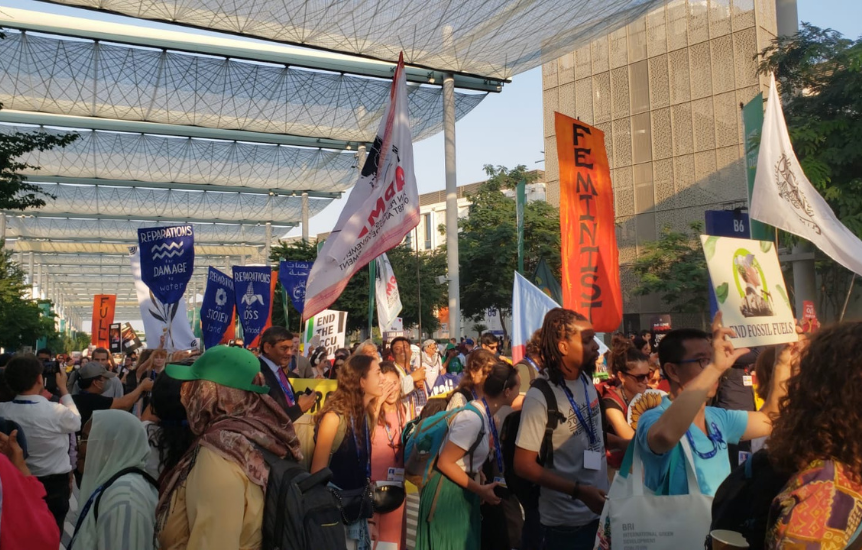
Drawing on its climate initiatives and networks, MSDI organised and participated in over 30 events at the 2023 United Nations Climate Conference (COP28) in Dubai as part of the first-ever Monash Pavilion in the UNFCCC blue zone. We facilitated conversation between thought leaders and key actors to explore how to advance just climate action across Australia and Asia Pacific. The events explored issues such as green economy transitions in the region, sustainable healthcare, youth empowerment, community disaster resilience, ocean action and more. MSDI also coordinated the first-ever COP ministerial side-event on health and climate change in the Pacific, co-hosted with the World Health Organization, as well as a discussion on the future of COP with past COP presidents and global climate leaders.
In the lead-up to COP28, MSDI and UNICEF Australia also hosted the Australian Local Conference of Youth 2023, empowering young people and developing their capacity to address climate change and contribute to the Global Youth Climate Statement, which was presented to the climate negotiations at COP28.
Decarbonising Australia
In January, the federal Minister for Climate Change and Energy, the Hon Chris Bowen spoke at the launch of the Climateworks Centre and Climate-KIC Australia’s Pathways to Industrial Decarbonisation report, the culmination of a multi-year effort with Australian heavy industry to model 1.5℃-aligned decarbonisation pathways in iron and steel, aluminium, other metals, chemicals, and liquefied natural gas. The work showed that, while challenging, the decarbonisation pathway is possible and has since been referenced as part of national discussions on changes to Australia’s Safeguard Mechanism and hydrogen strategy.
In April, Climateworks Centre released a brief for policy-makers centred on implementing renewable energy industrial precincts, with Australian governments going on to announce several initiatives that correspond with the pillars and recommendations of our work. The most impactful of these initiatives was the creation of the national Net Zero Authority, with Climateworks Centre’s CEO, Anna Skarbek, invited to be on the advisory board.
Climateworks Centre’s Renovation Pathways project is helping Australian governments create climate-ready homes based on existing, affordable, and accessible technology and design. Our research has filled gaps in knowledge by defining a zero carbon home and offering a suite of policies that can create change and opportunities for the housing industry. Our briefings with Federal, State and Territory Ministers continue to influence action. In partnership with CSIRO, Climateworks Centre modelled two possible decarbonisation pathways to show how Australia can reduce emissions by 85 per cent by 2035.
In October, Climateworks Centre's Delivering freight decarbonisation: Strategies for reducing Australia's transport emissions report underscored the transport sector’s pivotal role in helping Australia meet its climate goals. In particular, the report outlines strategies for freight decarbonisation and collaboration between government and industry stakeholders to address implementation and financial aspects of decarbonisation. The report is referenced in the National Road Transport Association’s Australian Road Freight Transport Decarbonisation and is also available on the Clean Energy Finance Corporation Insights page.
Net Zero Transitions
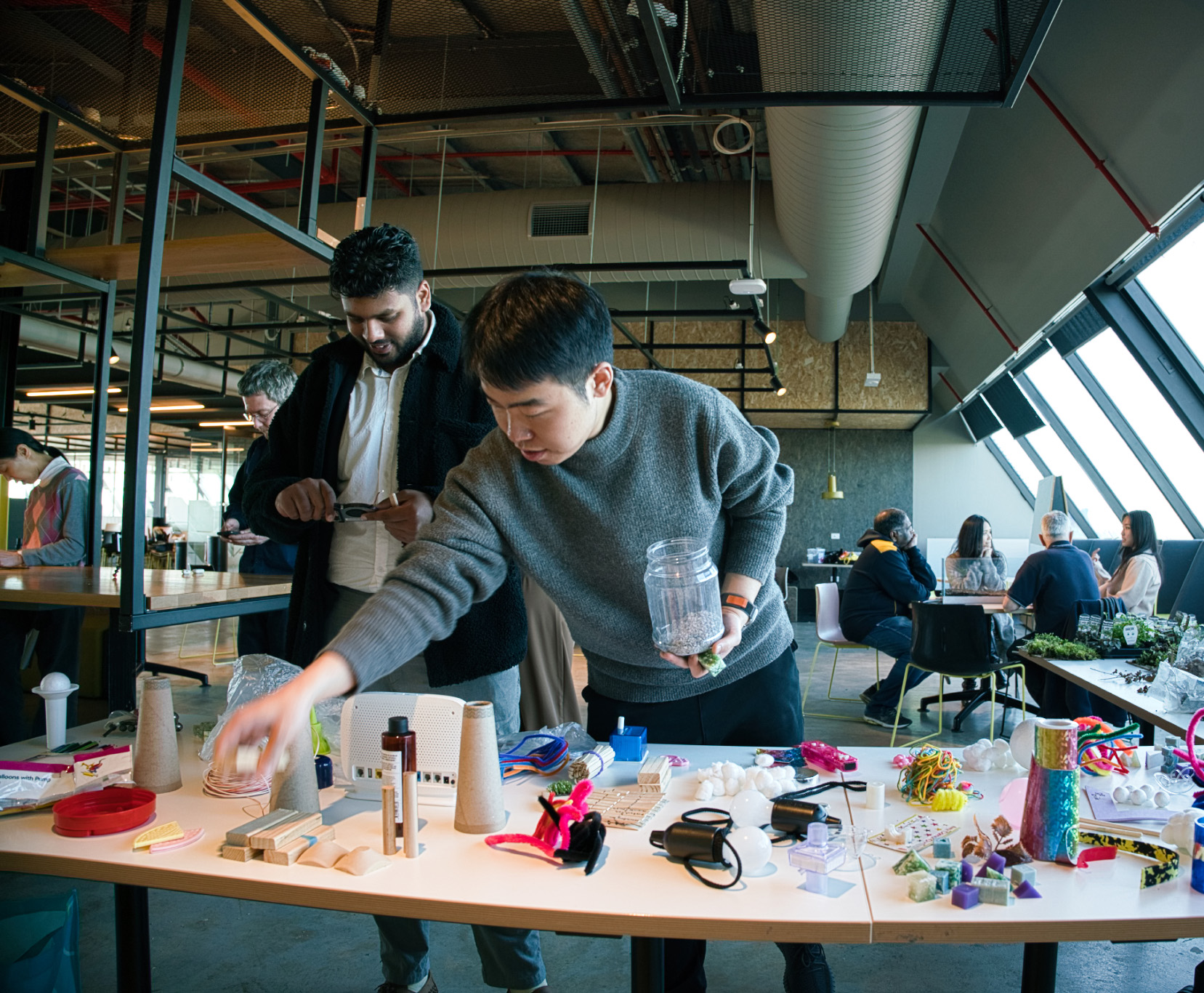
This year, the Net Zero Precincts Australian Research Council Linkage team has further developed and tested its innovative and interdisciplinary approach that brings together transition management and design anthropology to experiment with net zero transitions at the precinct scale. Following the release of the Stage 1 ‘Orienting’ report, Stage 2 workshops were held with over 50 stakeholders to envision net zero futures through walking tours and the creation of living worlds that encompass nature-based solutions, the circular economy, renewable energy infrastructure, and active transport solutions. In Stage 3, we will activate the Net Zero Precincts Living Lab portfolio to demonstrate the potential for net zero transitions in the Monash University Clayton Campus and surrounding precinct, with the support of five PhD students, industry and government partners.
As part of Monash’s Net Zero Living Lab, MSDI examined the governance of University Living Labs across the world to understand critical success factors for impact. A first of its kind, the study’s lessons will support other MSDI living lab initiatives, such as Fire to Flourish and the Citarum Action Research Program.
The Net Zero Carbon Urban Water Cycle project is providing practical recommendations to support the Victorian Government’s commitment to net zero. Our research offers policy, infrastructure and behaviour change solutions that benefit communities and water utilities in addressing two of the biggest issues we face today, climate change and the cost of living.