Thrive HDR Findings

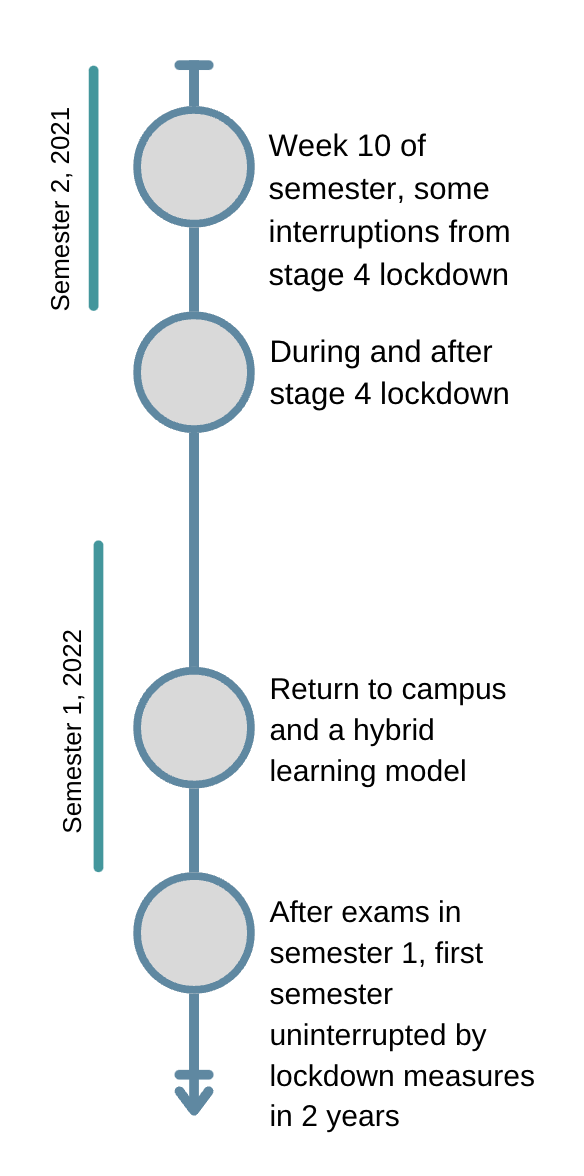
Our higher degree by research students were surveyed throughout the end of 2021 and the first half of 2022 as part of the THRIVE@Monash survey series for students. Below are a summary of our findings.
Understanding stress and well being
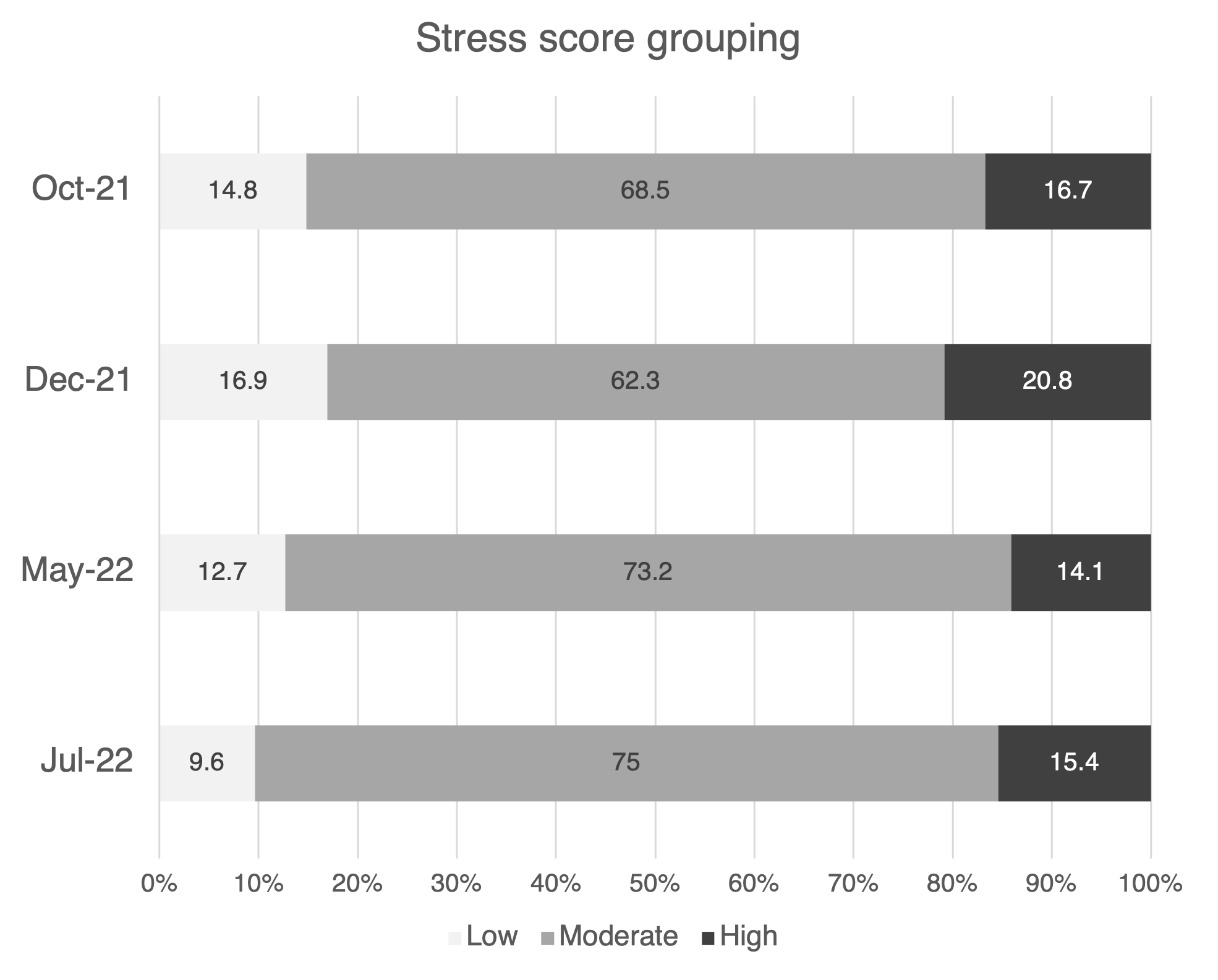
Throughout our surveys we checked in with how stressed our HDR students were feeling. Stress findings were collected using the Perceived Stress Scale, these findings can then be broken down into three groups including low, moderate and high levels of stress.
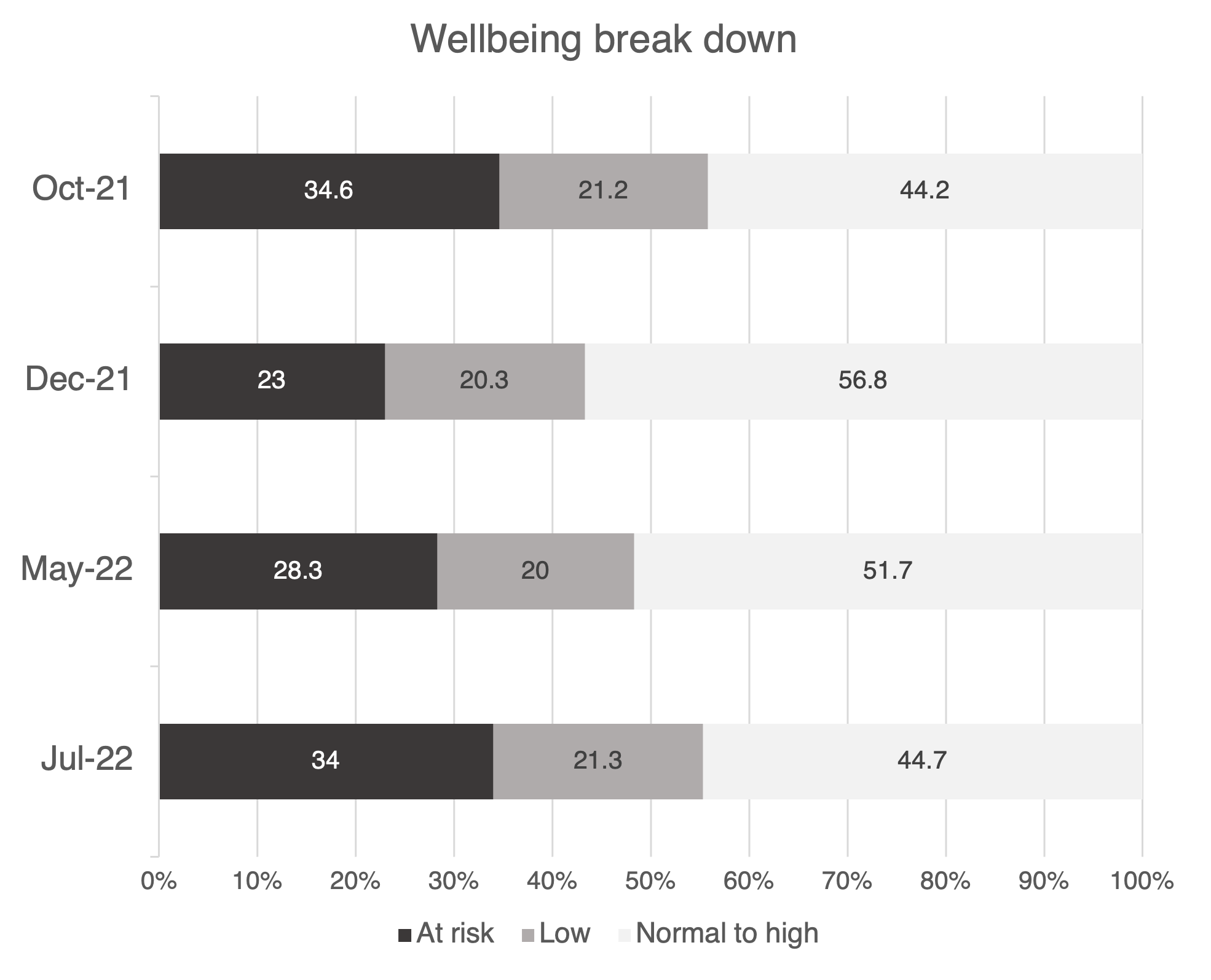
We measured wellbeing using the WHO-5 wellbeing scale. This scale includes 5 wholistic items exploring how rested, calm, energetic, and interested in daily life someone feels in the previous 2 weeks, ranging from 'not at all' too 'all of the time'. The WHO-5 wellbeing score can also be broken down into three groups including normal to high, low, and at-risk (of poor mental health).
COVID-19 related concerns for students
To understand how concerned HDR students were about COVID-19 and COVID-19 restrictions we explored a range of specific COVID-19 concerns with our students who responded with how concerned they felt from 'not at all' to 'extremely. Shown in the figure below is the percentage of HDR students who responded with 'very' or 'extremely' at each time point.

Cognitive concerns
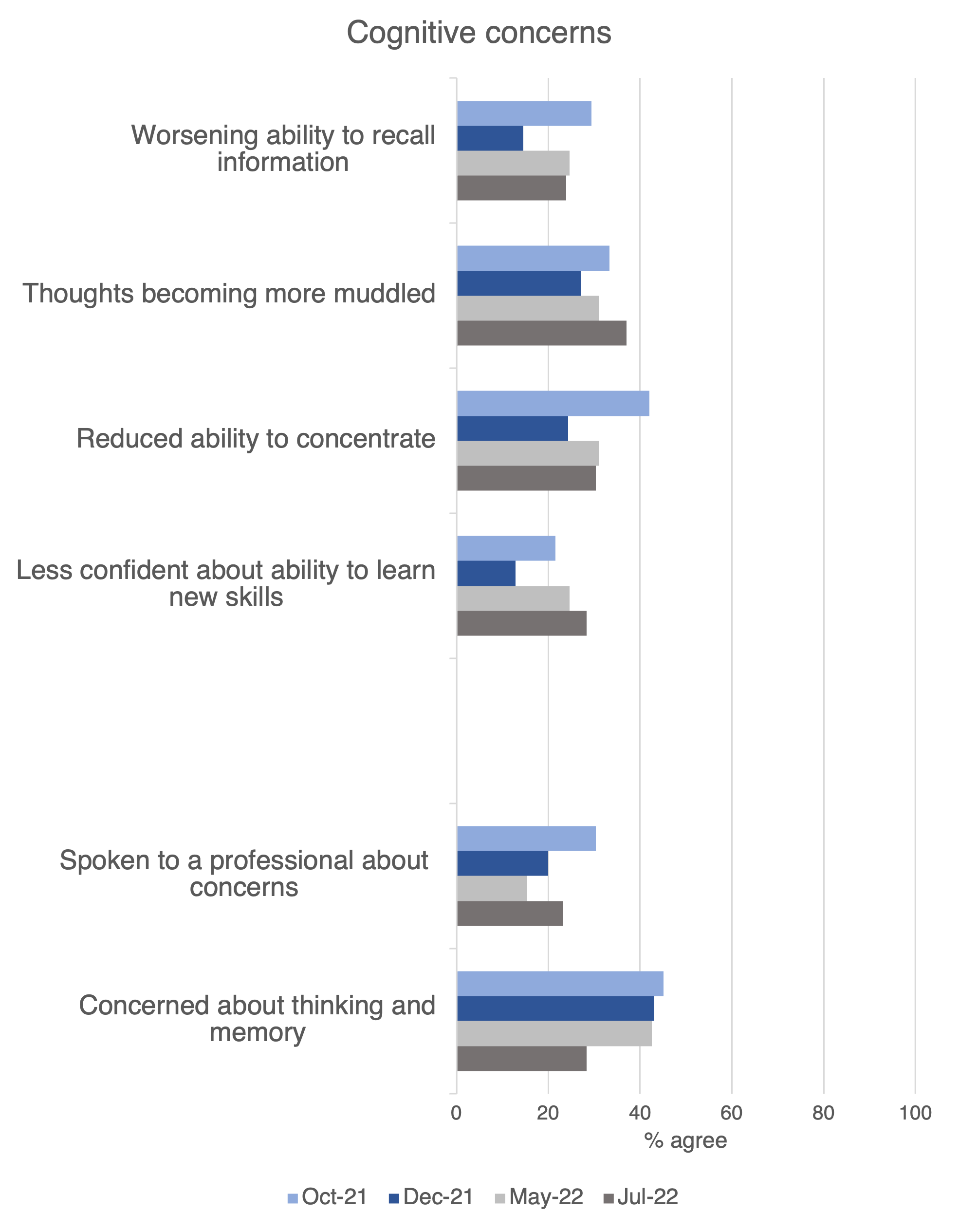
Stress, and every changing restrictions can have a significant impact on our cognitive health. With the help of cognitive health experts within the Turner Institute for Brain and Mental Health we created a series of subjective cognitive health questions to better understand if students noticed a change in their cognition throughout the pandemic. The findings below outline the percentage of students who reported each area of their cognition had worsened, if they were concerned about their cognition, and if they had sought help for these concerns.
Help seeking
Although always important to understand what is causing stress and worry for our HDR students, a key area of concern is understanding when and if our students seek help when they are struggling. We asked our HDR students at each time point how likely it would be for them to seek help from a range of different providers if they were experiencing emotional or personal distress, students could then respond on a scale of "extremely unlikely' to 'extremely likely'. Findings shown outline the percentage of students who indicated they were likely to seek help from each type of provider.

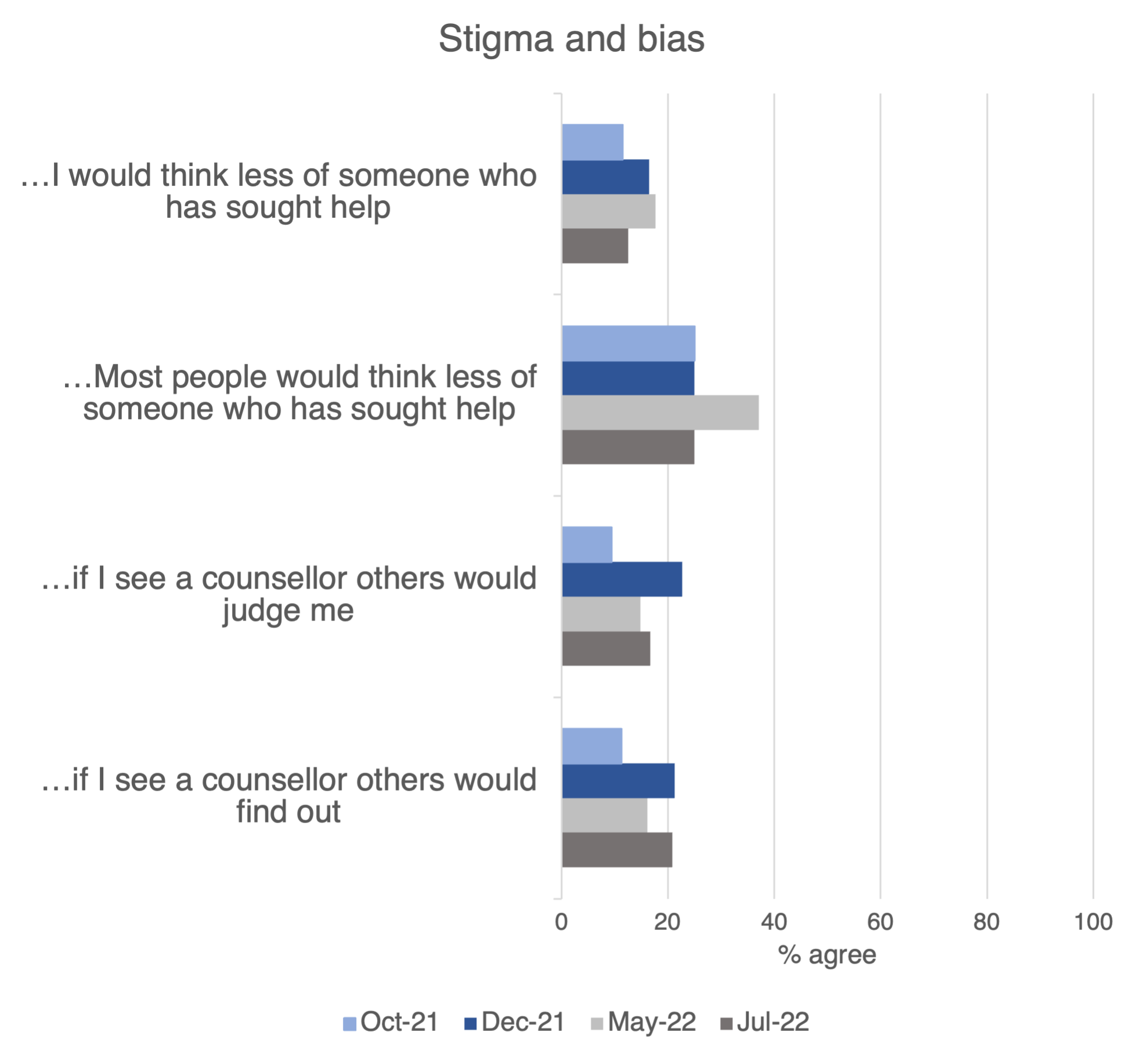
Often barriers to seeking help, particularly from friends and family, stem from stigma or misconceptions about mental health and mental health support. We asked our students more about mental health stigma including perceived (what we think society thinks) and personal (what we think) to better understand how HDR students experience stigma towards seeking help for mental health concerns. Our findings below outline the percentage of HDR students who agreed with the following statements.