
Eating “Rich Man’s Food” on Barrang Lompo
A highlight of the recent GEM team trip to Makassar was a visit with our friends from the MAREGE institute to the island of Barrang Lompo.
A coral island situated around 12 kilometres (or a 45 minute boat ride) to the west of the Port of Makassar, it is one of the most densely populated islands in the region.
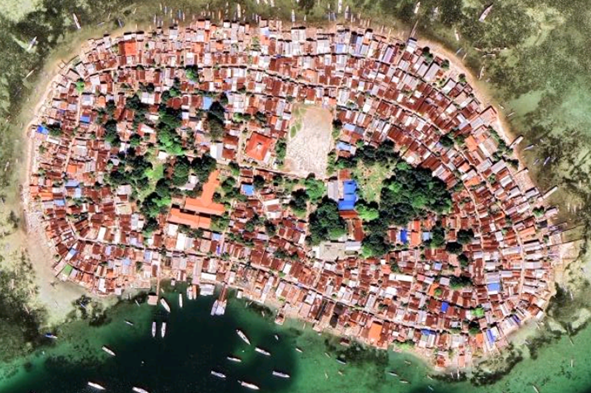
Google Maps image, showing Barrang Lompo
Barrang Lompo is also, traditionally a stopping point for the crews of trepang (sea cucumber) hunters on their way back to the Port of Makassar.
It is a vibrant and colourful island, with a strong, active and vocal community who made us very welcome. The streets were busy with people, bikes, and life conducted in shared spaces. There was a constant sense of a community on the move, with bikes everywhere and two community bus vehicles doing a constant circuit of the ring road.
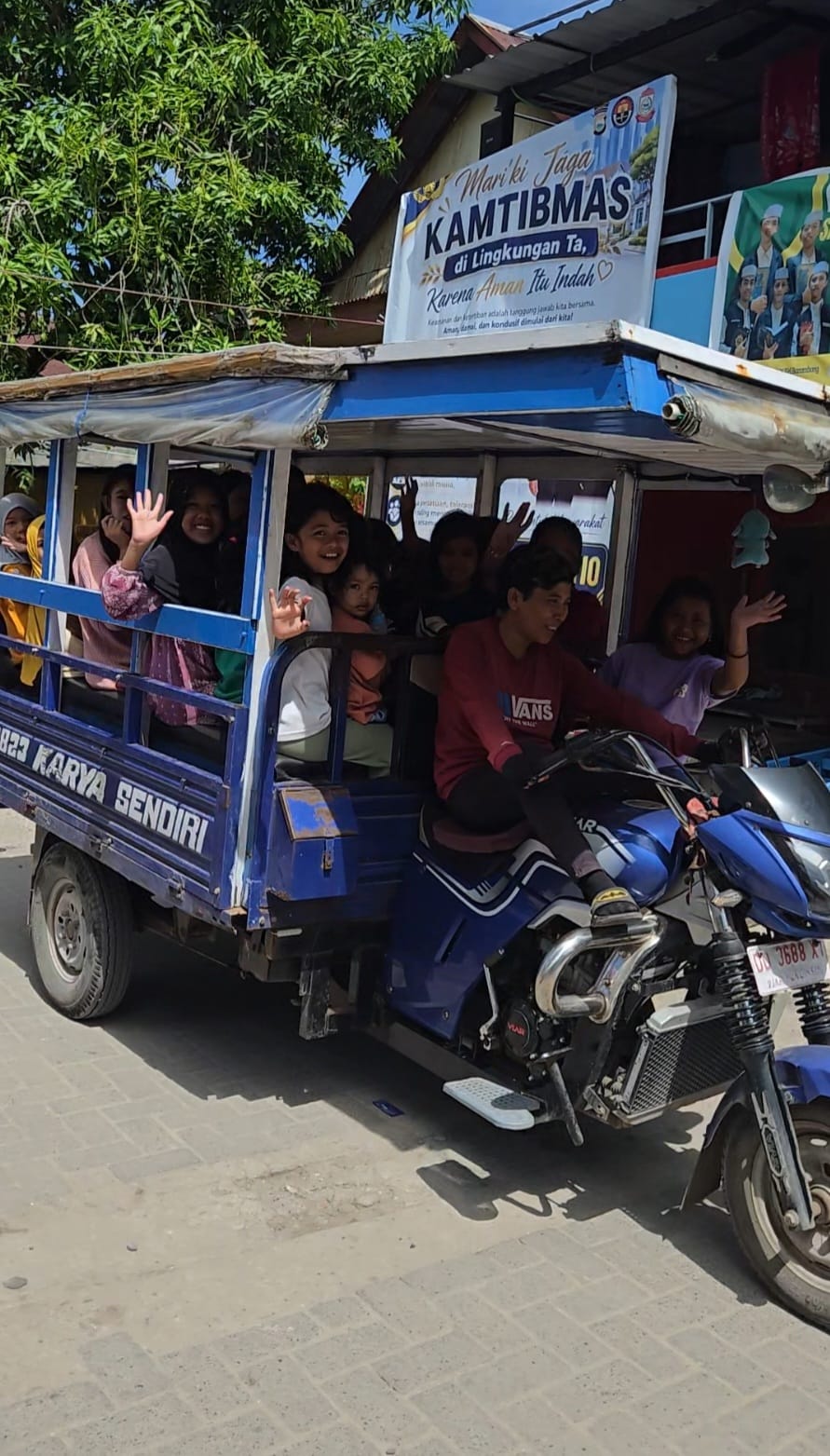
The Barrang Lompo community bus. Photo by author.
These buses were not just a form of transport from one point to another, but an end in themselves as a chance to get together, enjoy a breeze, and lull babies to sleep. It is a small island, but its social life, and outlook, is big.
Barrang Lompo has a long history as a multicultural hub. Its cemeteries trace a history dating back to Gowa–Tallo kingdom days, and point to a complex tradition of visitors coming to Barrang Lompo to trade, and sometimes remaining. Recent work by Indonesian researchers from Hasanuddin University and BRIN identified a Chinese Muslim grave features three writing systems – Chinese, Arabic and Lontara.
There is a separate Malay cemetery, Islamic graves of important early traders, and one remarkable ancient grave, overtaken by an enormous banyan tree. The identity of the individual interred is lost to time, but it is certain they were important.
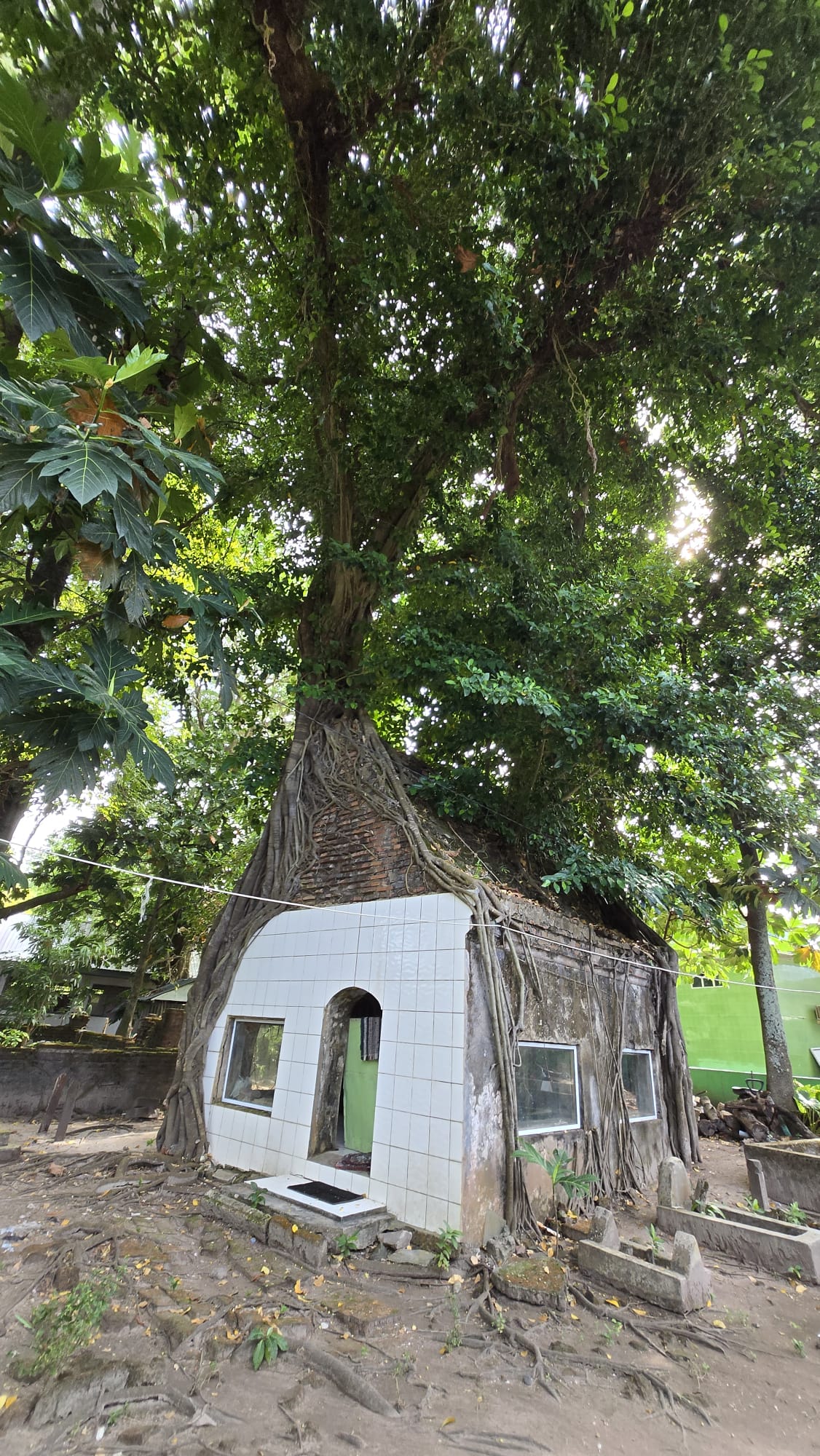
Tomb of an unknown, important person, covered with banyan tree. Photo by author.
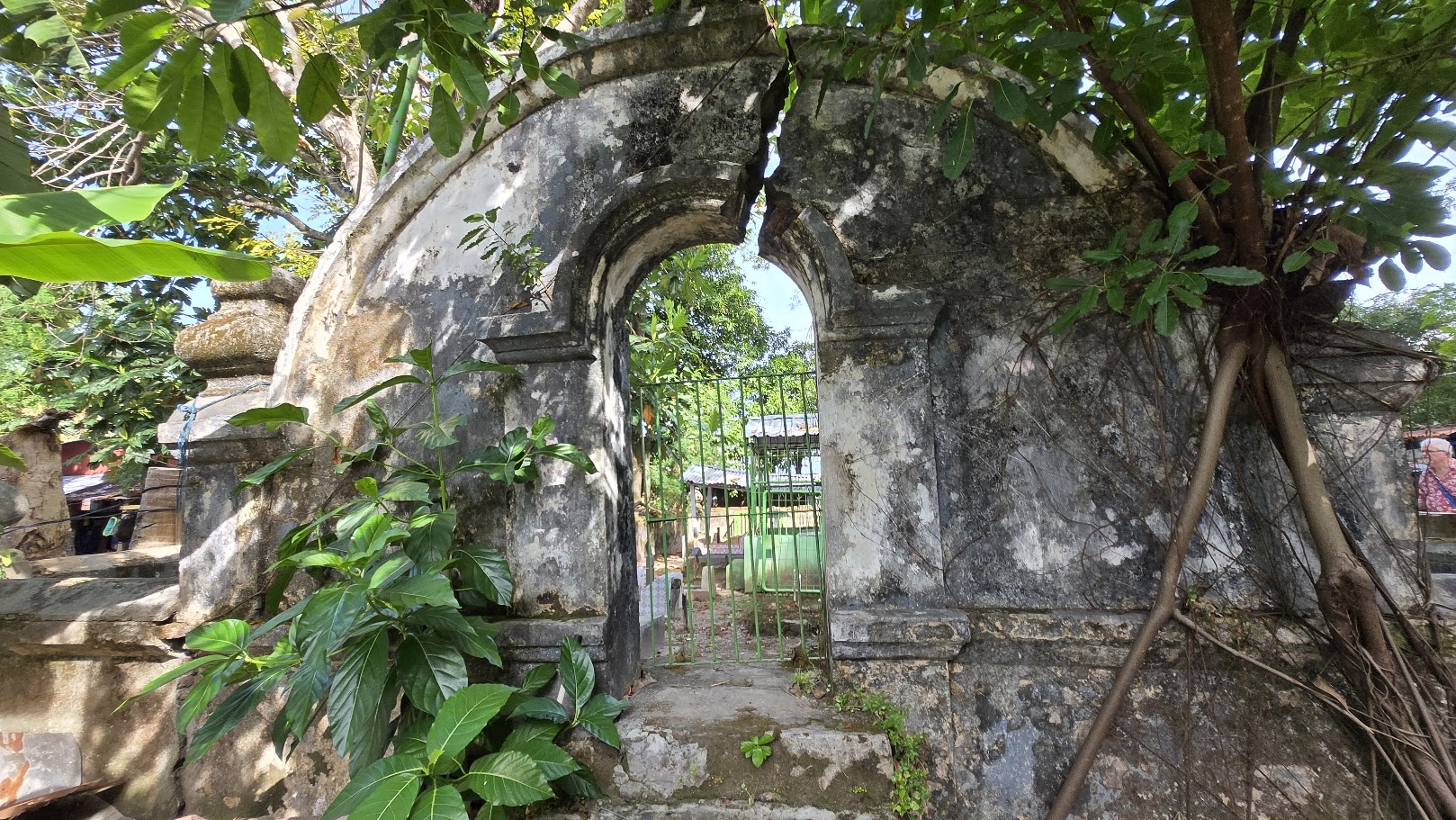
The gate to the Malay cemetery. Photo by author.
On the day of our visit, we were privileged to gain insight into two key areas of our research, which proved that the trepanging industry – which has a historical link to Australia of perhaps up to 1000 years – is alive and well.
Firstly, we witnessed a trepanging vessel returning to port after 58 days in Kalimantan. It was not a prau or padiwakan, the traditional sailing vessel used on the trips to northern Australia in the years before British colonisation: for the sailors, it would have been much safer, being motorised.
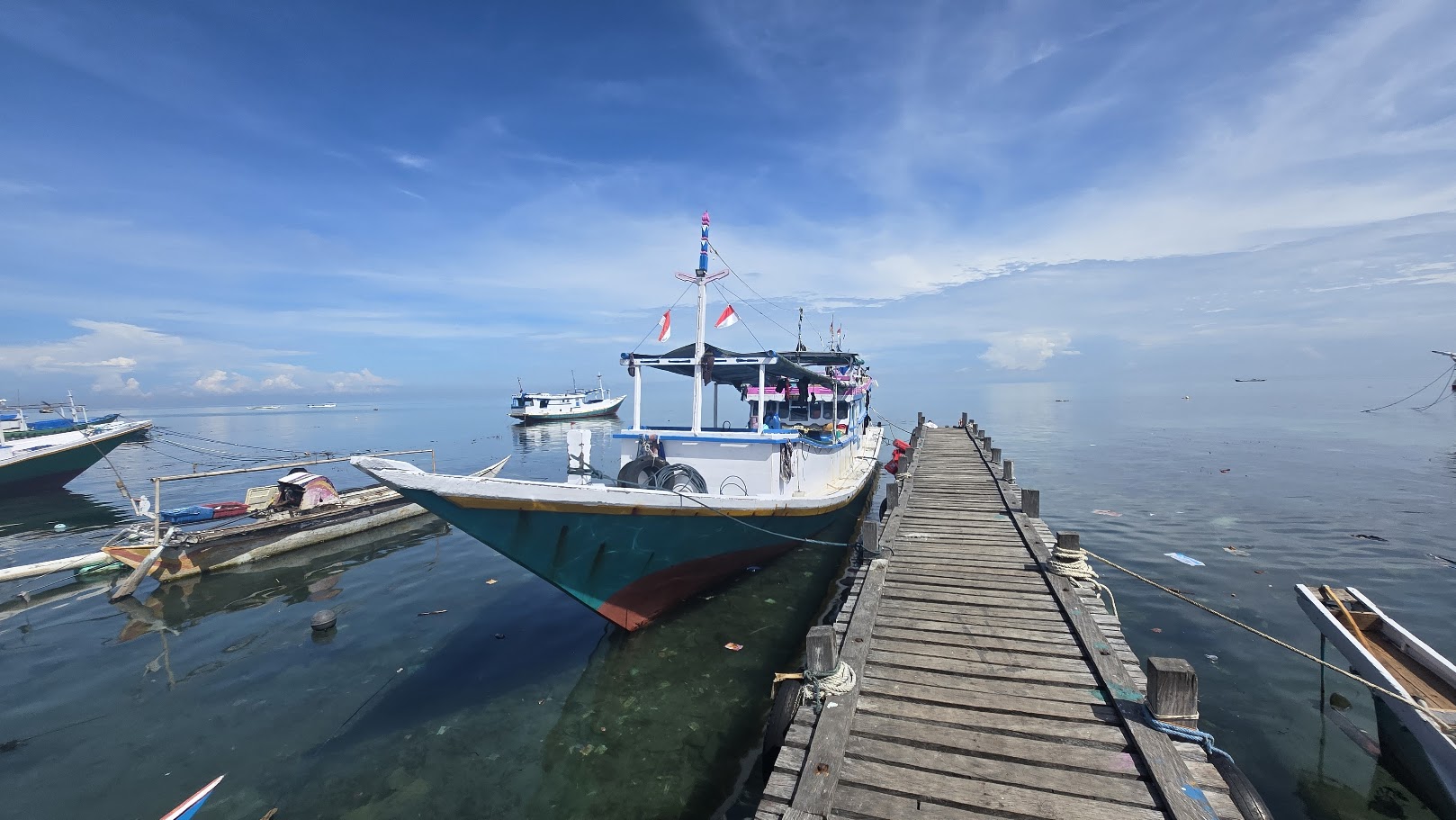
The trepanging vessel, after being unloaded. Photo by author.
The sailors disembarking were from a range of communities, including Samu Bajau. Watching the unloading of the vessel – the people and their goods – there was a strong sense of continuity of culture.
The second highlight of the day was a feast of trepang prepared for us by the local community. This was a very special event, as the teripang – being such a prestigious and expensive food – is not something the islanders were able to usually eat. The meal was prepared from sea cucumbers which had already been processed - boiled, smoked and dried. They were then soaked to reconstitute them, then included in the soup and satay sticks presented to us.
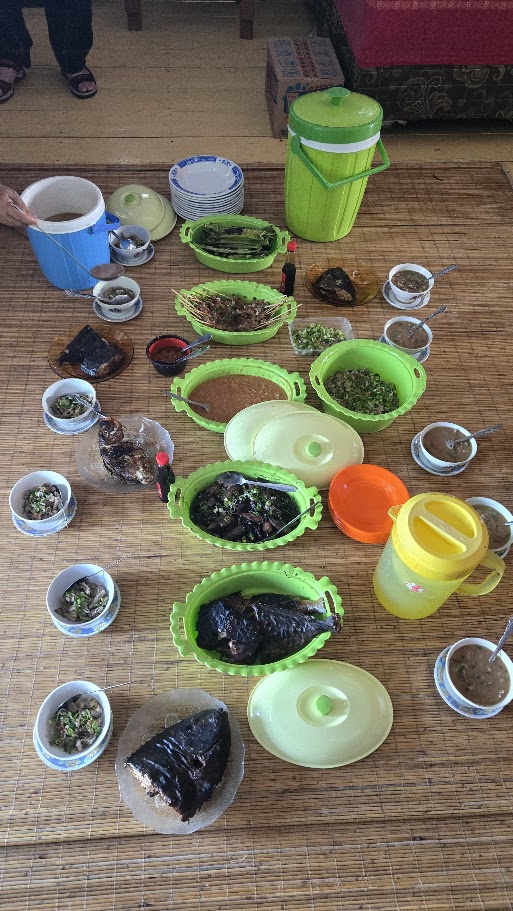
The teripang feast, including teripang soup, teripang satay skewers and fish heads, plus perhaps the hottest sambal ever tasted. In the top right, the broth is seen being ladled into the cooked teripang bowls. Photo by author.
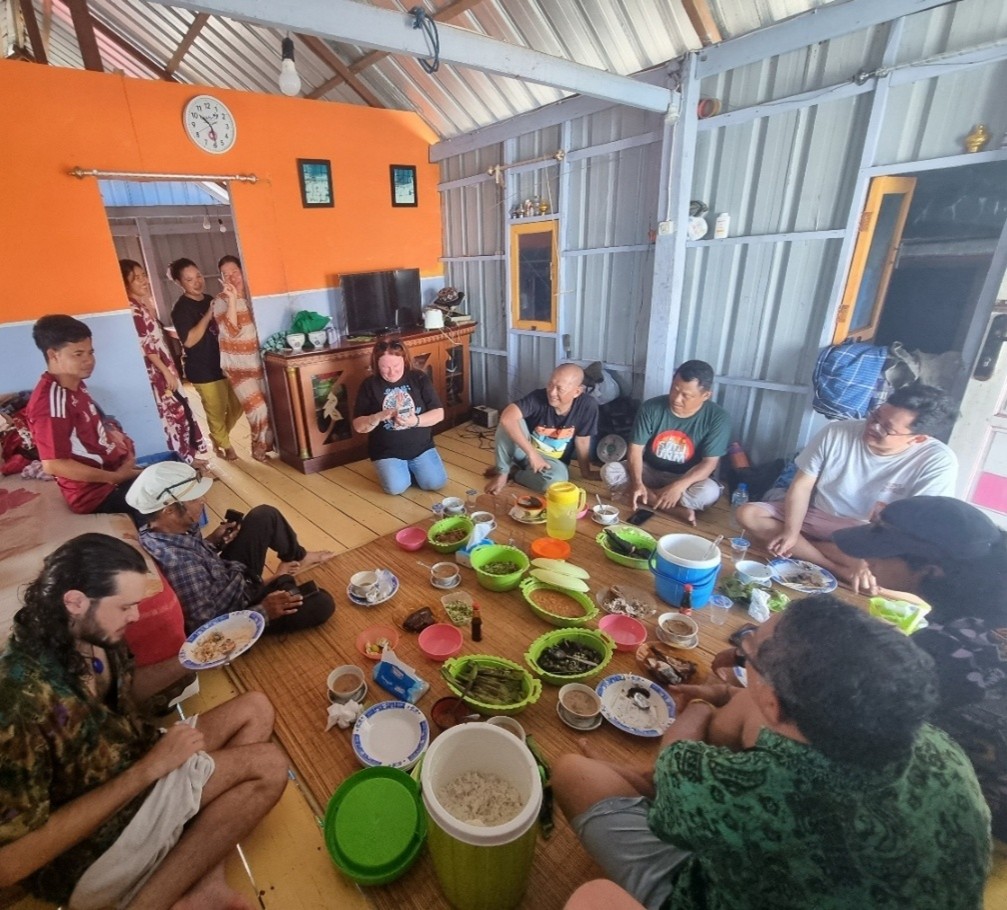
The GEM/Marege Institute team, with chefs watching over from the doorway. Photo by Ian McNiven.
Those of us who had eaten sea cucumber before (as Haisam in Korea, eaten raw with simple seasoning) were amazed at how tender and delicious the teripang soup and satay was. It was a culinary revelation, and we became fully aware of why the trade in this humble sea product was so important. Though often dismissed (in somewhat racist terms) as a mere aphrodisiac for the Chinese market, this prestige product is a nutritional powerhouse. It is known, in Korea, as Ginseng of the Sea. They are rich in antioxidants, collagen, vitamins and minerals.
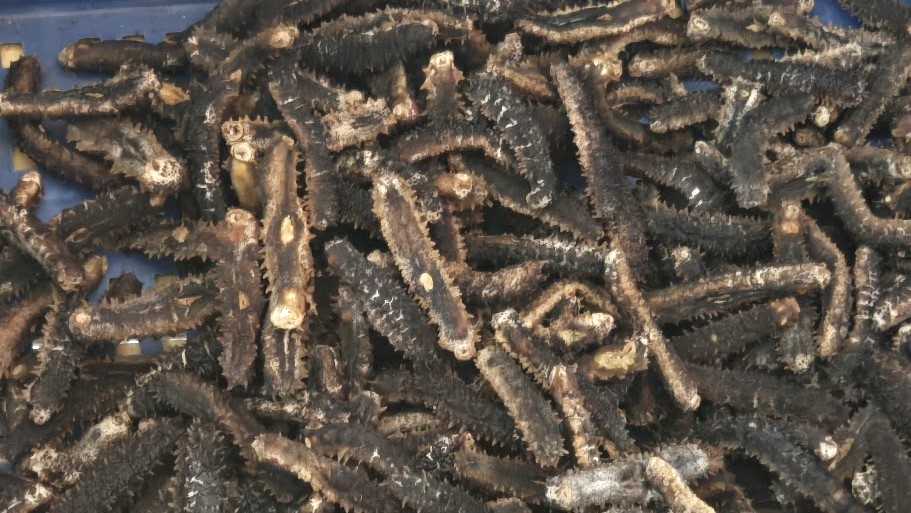
The processed teripang from which our soup was made. Photo by author.
The bitter irony is that the people who harvest the sea cucumbers – and their home communities – are rarely in a position to actually eat them, given their high export value which remains to this day. Trepang, or teripang, remains as it was hundreds of years ago, when traded from Northern Australia, a luxury. In the words of locals, it is still “rich man’s food”.
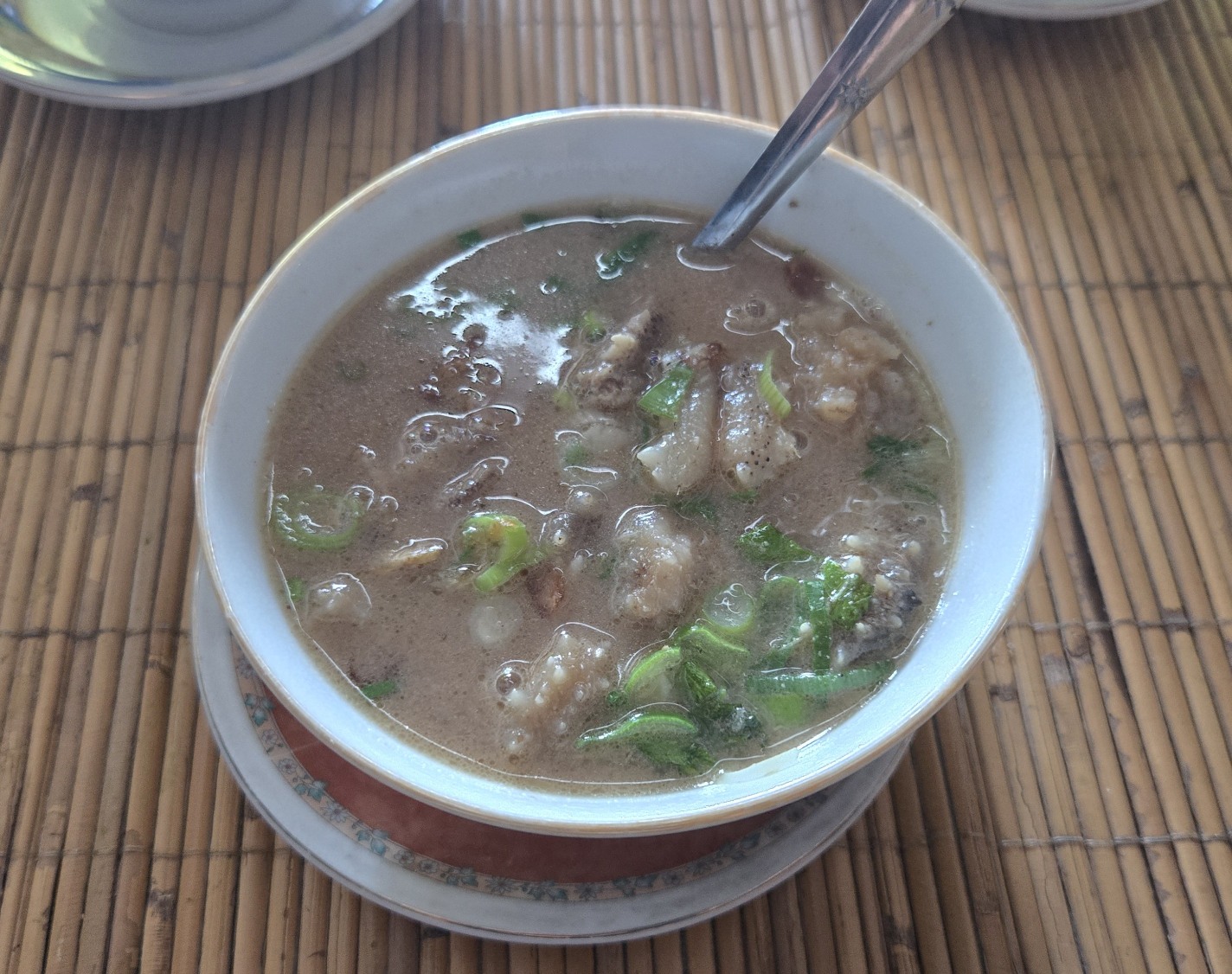
“Rich man’s food”: Teripang Soup, made of processed sea cucumbers, in a tamarind-based broth. Photo by author.
The teripang feast we enjoyed – while undeniably delicious – was also a fitting example of the importance of food in world history. The humble sea cucumber – and its not-so-humble (profit-wise) processed form – tells a story which links northern Australia into a thriving regional trade for centuries before European encroachment on Indigenous lands. Witnessing the processes of hunting, cooking, and then sharing a meal of teripang is immersive, experiential research.
For this researcher, it was a pity it took until the very end of our Global Encounters project to actually have a bowl of teripang soup. We had been researching its lifeways for many years. But at the vibrant island of Barrang Lompo, it all made sense. It was an unforgettable moment, which tied us in to many generations of mariners, their families and business connections.
Leonie Stevens