
Research collaboration to inform the next global for sustainable development agenda beyond 2030
Twenty-five thought leaders from different countries and research institutions, with expertise and a strong track record in Sustainable Development Goal (SDG) research, science, and policy met at Monash Indonesia in December 2024 to discuss priorities for the next global sustainable development agenda beyond 2030.
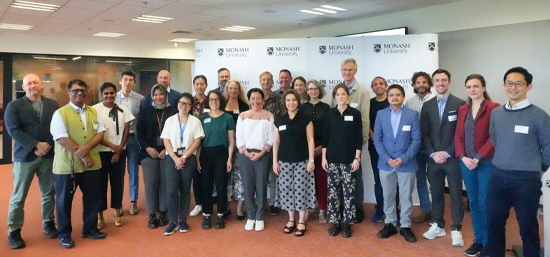
Workshop presenters and participants.
Building on the 2023 United Nations (UN) Global Sustainable Development Report, Monash Sustainable Development Institute (MSDI) is now advancing a new research collaboration with the Stockholm Environment Institute (SEI) and Monash Indonesia to accelerate implementation of the Sustainable Development Goals (SDGs) and explore options for the post-2030 sustainable development agenda.
2030 Agenda and the Sustainable Development Goals
The UN’s 2030 Agenda for Sustainable Development and the SDGs aim to eliminate poverty and hunger, reduce inequalities, rescue the impacts of climate change and sustain life on Earth, all by the ambitious deadline of 2030. As the world crossed the halfway point in 2023, the prognosis was that none of the 17 goals would be achieved globally by 2030.
Despite the slow progress, the SDGs remain essential to sustainable development as they combine social and economic aspirations with environmental ones to form one set of integrated and transformative goals. And so, the focus remains on making the greatest possible gains towards the current goals by 2030, while thinking about future enhancements.
Beyond 2030
The political declaration of the UN Summit of the Future – Pact for the Future 2024 encourages UN member states to consider how to advance sustainable development beyond 2030 at the SDG Summit in 2027, and to outline key considerations ahead of that. Policymakers, researchers and the UN are now starting to consider what should come after 2030.
While initial indications suggest that it’s unlikely there will be political appetite to reopen negotiations on the set of goals which could be extended for a post-2030 timeframe, there are also opportunities for policymakers to learn from experience and the growing research and evidence on SDG implementation to make potential enhancements to any post-2030 framework.
MSDI’s Leadership for the Sustainable Development Goals initiative and SEI have been leading research and advising on the implementation of the SDGs since their adoption in 2015. We have the scientific expertise, as well as international convening power, to provide input for the post-2030 agenda.
The post-2030 sustainable development agenda
The workshop was called Beyond 2030: Shaping the post-2030 sustainable development agenda, and discussions included:
- the successes and shortcomings in the implementation of the SDGs so far
- global trends likely to impact the post-2030 agenda
- ideas for reforms or strengthening the SDGs beyond 2030.
As we progress these discussions further, we are expecting to see increasing cross-fertilisation, coordination, and messaging from leading SDG research communities, as well as other stakeholders in governments, industries, businesses and civil society organisations in different regions.
Monash, through its global campus networks, is in a strong position to capture the voices of communities and stakeholders in different regions, mobilise international expertise and help shape the next global sustainable development agenda beyond 2030.
An outcome report from the thought leadership workshop at Monash Indonesia, and a high-profile journal article are expected to be published in 2025.
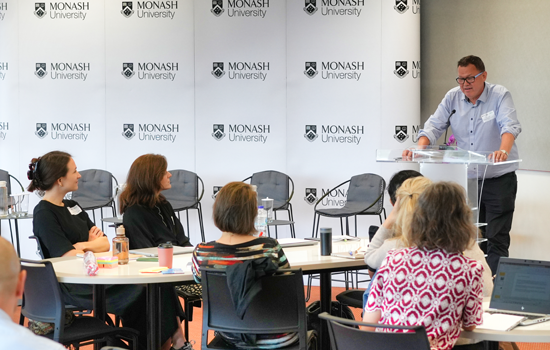
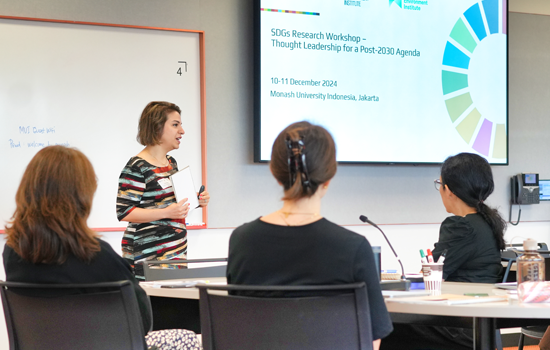
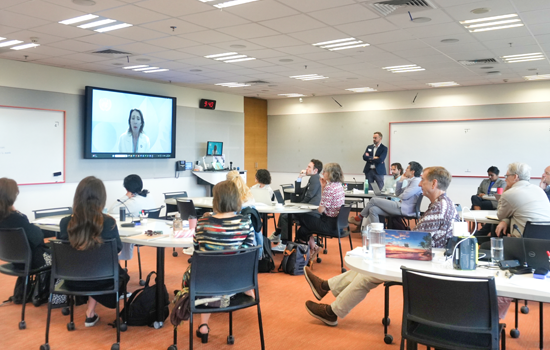
Workshop presenters included ( from top to bottom) Tony Capon, Director of MSDI; Shirin Malekpour, Director of Graduate Research Program, MSDI; Cameron Allen, Senior Research Fellow and DECRA Fellow, MSDI.
– – This article was originally published on the MSDI website.– –