
Egyptology Society of Victoria

The Egyptology Society of Victoria (ESV) promotes and supports the study of ancient Egypt in Victoria and more broadly in Australia and Egypt. The Society is affiliated with the Archaeology & Ancient History Department at Monash University. We run a regular series of public lectures and seminars throughout the year, and support Egyptological research, teaching and exchange. Established in 1990, the ESV brings scholars, students, and the general public together to celebrate, share and explore the fascinating culture of ancient Egypt.
Join and Support
- Follow us on Facebook to learn more about the Society and keep up to date with our activities.
- Become a member of the ESV and support Egyptology in Victoria.
- Membership is available at the rates below and can be paid online through Shop Monash.
Membership Costs:
- Standard annual* membership: $45
- Student/Pensioner annual* membership: $30
*Rates are inclusive of GST. The annual membership period runs from 1 July to 30 June; payments made between April 1 and June 30 will cover the coming financial year.
ESV members receive:
- Advance notification and booking for all ESV events
- Discount rates on all events organised by the Society that carry a cover charge.
Donations:
The ESV welcomes donations, which can be made online through Shop Monash and are tax deductible. Since the founding of the Society, memberships and gifts from ESV members have funded an annual weekend symposium with international visiting scholars, subsidised student research in Egypt, assisted in the development of research library collections in Victoria, and supported Monash University excavations in the Dakhleh Oasis. Your annual membership and/or gift allows us to continue these important activities.
Current Events
2026 Egyptology Society of Victoria Study Day
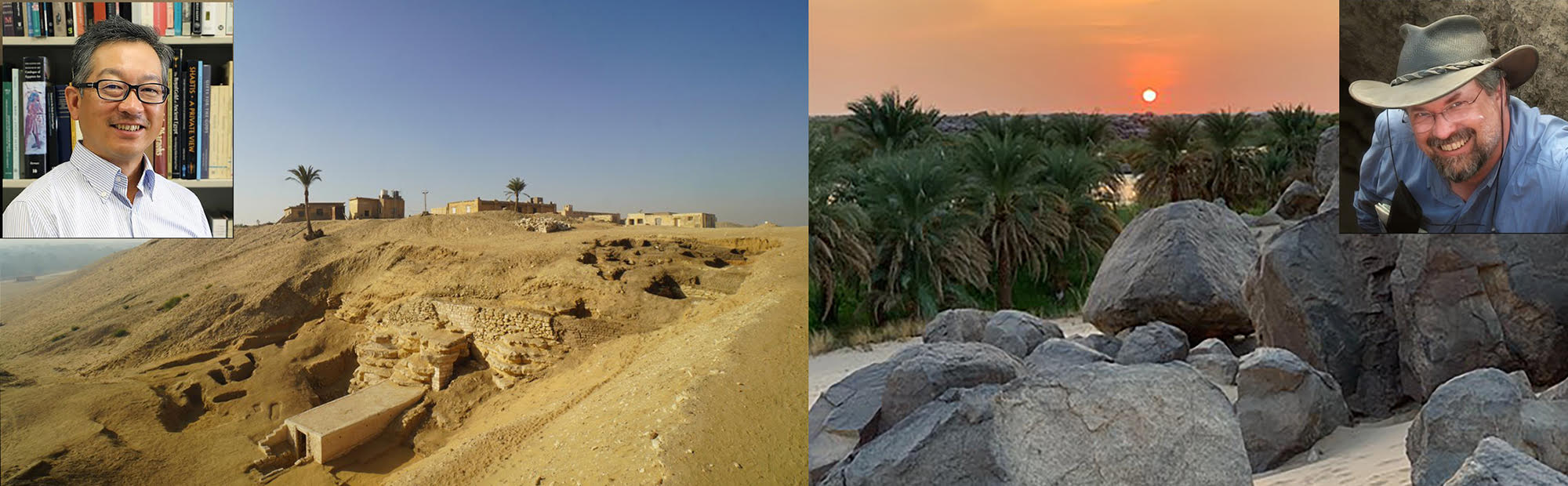
Into Egypt's Eastern Desert: Archaeology, Amethyst, and Inscriptions at Wadi el-Hudi
This is a free event, but please REGISTER HERE if you plan to attend
Session 1
10:00-10:15: Welcome
10:15-11:15: The Journey of Egyptian Amethyst: From Desert Mine to Royal Jewelry (Dr Kate Liszka)
11:15-11:30: Break and refreshments
11:30-12:30: Epigraphy on the Run: Recording the Inscribed Spaces of Wadi el-Hudi (Dr Bryan Kraemer)
12:30-1:30: Lunch
Session 2
1:30-2:30: Building Egypt’s Amethyst Industry: Archaeological Perspectives from Wadi el-Hudi (Dr Kate Liszka)
2:30-2:45: Break and refreshments
2:45-3:45: ‘Fear the Watchman upon the Wall’: The Fortified Frontiers of Egypt’s Middle Kingdom and the Example of
Wadi el-Hudi (Dr Bryan Kraemer)
3:45-4:00: Final questions and discussion
Past Events
Space, Place, and the Human experience in ancient Egypt: Three studies by emerging scholars
Lectures by: Tracy Lakin (Monash University)
Alexis Green (Monash University)
Basil Biar (Monash University)
Free event and open to all
Three short talks will explore the relationship between the spaces of ancient Egypt and the people who inhabited, created, and experienced them. Hear three emerging scholars share their research on the human experience of Amarna’s busy streets and neighbourhoods, the residents of Amarna’s emotional and social attachment to their houses, and the changing nature of domestic religious practice in the multicultural milieu of Roman Egypt.
Talks:
"Reconstructing lived experiences of street space at urban Amarna: Toward a new approach" (Tracy Lakin)
"From space to place: An interdisciplinary approach to Amarna houses" (Alexis Green)
"Household gods? Reconsidering multicultural religious practice in the houses of Roman Egypt" (Basil Biar)
2025 Egyptology Society of Victoria Study Day
The ancient Egyptians and their world: Saqqara, Sudan and beyond
This is a free event, but please register HERE if you plan to attend.
10:00am–10:20: Doors open
Session 1
10:20am–10:30am: Welcome
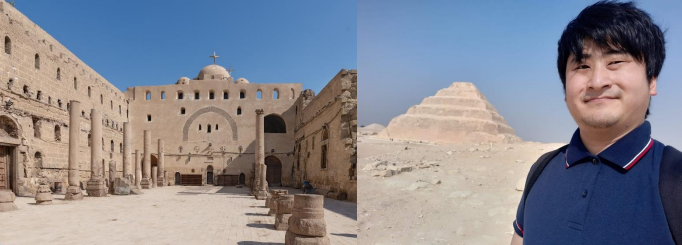
10:30am–11:30am: Prof. Nozomu Kawai – Recent excavations at the Eastern Escarpment at North Saqqara
11:30am–11:45am: Break (tea, coffee and biscuits provided)
11:45am–12:45pm: Prof. Stuart Tyson Smith - Death at Tombos: Egyptian-Nubian entanglements during the New Kingdom and beyond.
12:45pm–1:45pm: Lunch (pizza will be provided, or make own arrangements)
Session 2
1:45pm–2:45pm: Prof. Nozomu Kawai - The new reconstruction of the canopied chariot from Tutankhamun’s Tomb
2:45–3:00pm: Break (tea, coffee and biscuits provided)
3:00pm–4:00pm: Prof. Stuart Tyson Smith - Through the Stargate: Receptions of ancient Egypt in film
Bad Greek and Bad Behaviour in Early Ptolemaic Egypt
Lecture by A/Prof. Trevor Evans (Macquarie University)
Free event and open to all
How did ordinary Egyptians engage with their new masters after the establishment of Ptolemaic rule? How competent were they at communicating in Greek, now the principal language of administration and social mobility? The pioneers of modern papyrology have tended to entrench the idea that they were rather bad at it. This presentation examines the evidence of texts associated with Egyptian authorship in the Zenon Archive, a massive assemblage of papyri from the third century BCE. Just how bad at Greek were these Egyptians? And what were they writing about?
Biblical Quotations in the Early White Monastery: Intertextual Practices of Shenoute and Besa
Lecture by A/Prof. So Miyagawa (University of Tsukuba)
Free event and open to all
The White Monastery in Upper Egypt, founded in the late 4th century CE, was an important center of Coptic monasticism and literary production. This study examines the use of biblical quotations by the monastery's early abbots, particularly Shenoute (4th-5th centuries) and his successor Besa (5th century). As prolific authors writing in Coptic, Shenoute and Besa made extensive use of Scripture in their monastic rules, sermons, and letters.
Through close analysis of their surviving works, this research explores how these abbots employed biblical quotations as a rhetorical and authoritative tool to instruct and admonish their monastic communities. It examines their quotation practices, including frequency, accuracy, and introductory formulae. The study finds that while both abbots quoted extensively from nearly all books of the Bible, they showed particular affinity for the Psalms, Gospels, and Pauline epistles. Shenoute often blended biblical phrases seamlessly into his own prose, while Besa tended to introduce quotations more explicitly. By comparing their usage to contemporary Greek and Latin authors, this analysis sheds light on Coptic quotation techniques in late antique Egypt. It also provides valuable evidence for the Coptic biblical text used in Upper Egypt in the 4th-5th centuries. Overall, this study demonstrates the central role of Scripture in shaping monastic discourse and authority at the White Monastery in its formative period.
Images of Power: The Art of Kingship in Pharaonic Egypt
Lecture by A/Prof Colin Hope
Free event and open to all
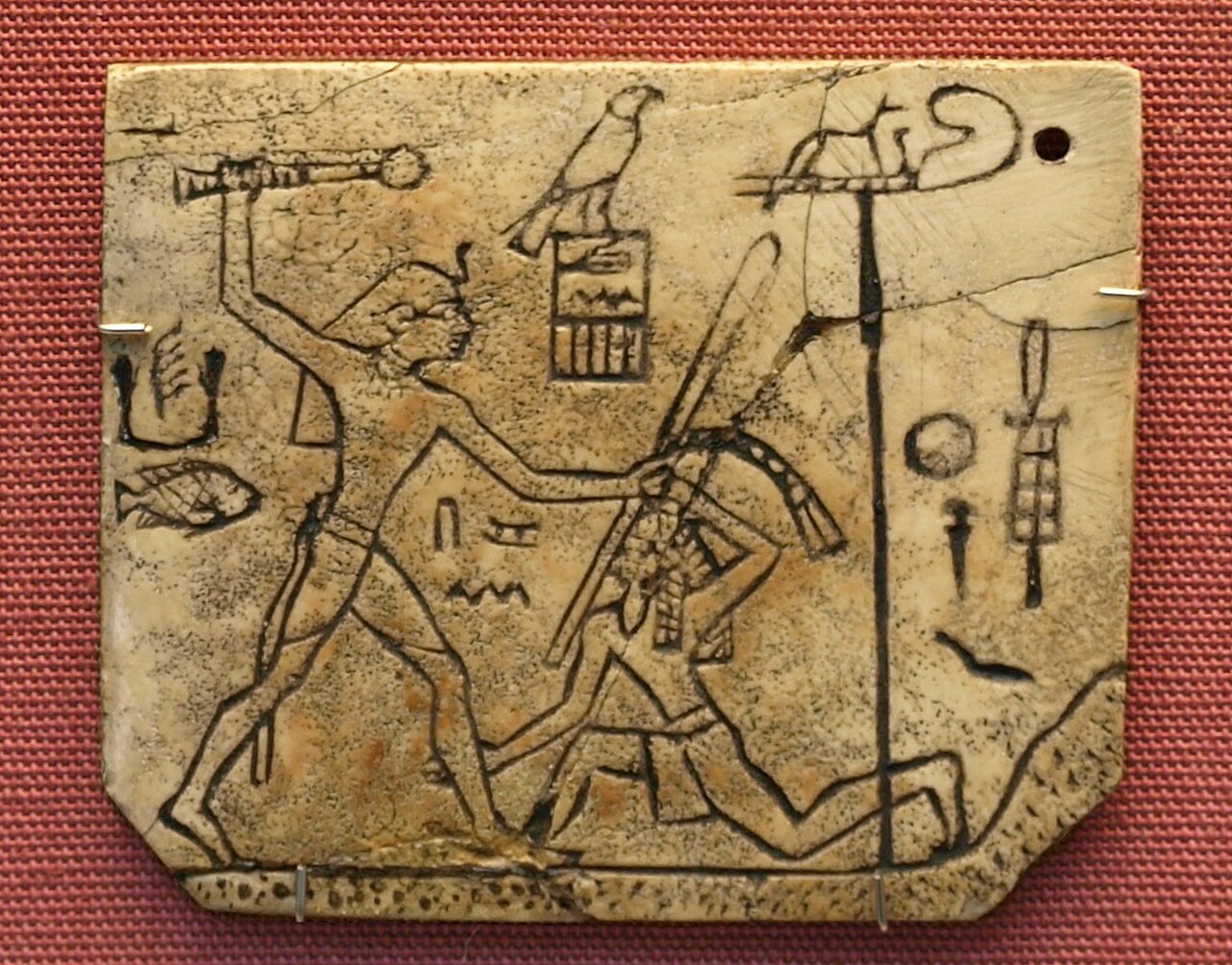
The exhibition entitled Pharaoh, currently on display at the National Gallery of Victoria, emphasises the centrality of the king in all aspects of ancient Egyptian culture, with reference to a diverse array of artefacts from the collection of the British Museum that cover more than 3000 years.
This talk focuses upon a small number of those items and explores the significance and context of the imagery as it illustrates concepts of royal power, so: 'The first time of smiting the Easterners' on the miniature label of King Den of Dynasty 1, Amenhotep III of Dynasty 18 seated beneath the rays of the Aten on a small stela from a private house at Amarna, the ageless perfection of a head of Thutmose III also of Dynasty 18 contrasted with the caricature of a head of Amenhotep III and the monumental head of the 12th Dynasty king Amenemhat III with its pensive expression. These and others illustrate the deliberate construction of different images of power in the presentation of the king.
The life cycle of Theban Tomb 16
Lecture by Dr Suzanne Onstine (University of Memphis)
Free event and open to all
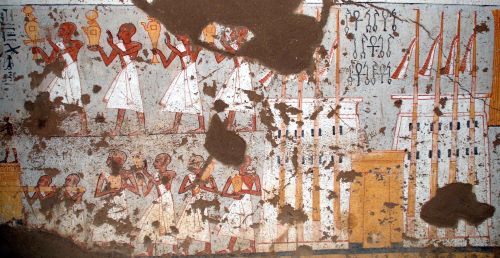
As a cultural resource, many may find Theban Tomb 16 to be primarily a site that will answer questions about Ramesside elites, the original owners. But if we look further, we find it connected to a bigger contemporary landscape, layered with cultic meaning, familial contexts, practical concerns, and memory. Theban tomb 16 gives us an opportunity to examine issues of cultural memory and reuse of motifs and space as ways of expressing specific funerary beliefs. The reuse of the tomb, and the analysis of the individuals buried there after the 19th dynasty, give us a broader perspective on funerary behaviour and the connectedness of Thebans from the New Kingdom and after.
Archaeology and its legacies – from Egypt to Georgia
Free event and open to all
As part of National Archaeology Week, join Monash University’s Jessie Birkett-Rees, Andrew Connor and Anna Stevens as they explore the history of archaeological excavations in Egypt and Georgia. From the large-scale clearance of pharaoh Akhenaten’s city in the early 1900s, to thoughts and actions centred on medieval fortresses in Georgia, to the ways scholars have used archaeology and papyrology to reconstruct a looted Ptolemaic burial – we’ll examine some of the legacies of past fieldwork, and how these shape research today.
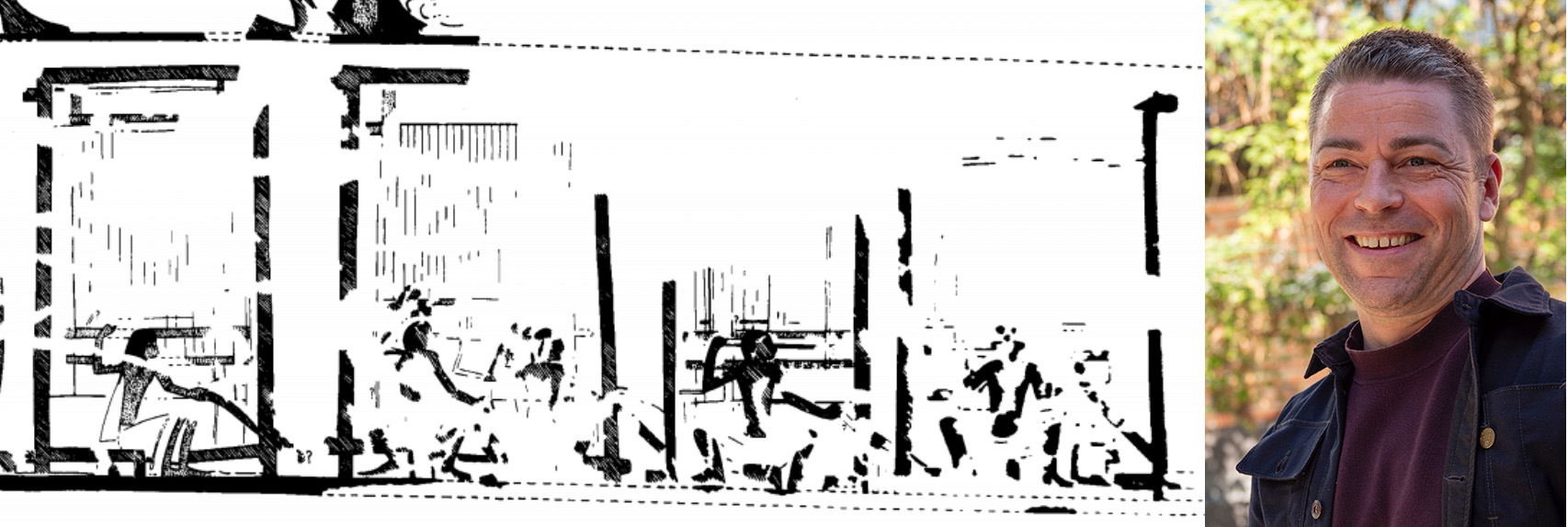
Women’s work? Production and circulation in the New Kingdom textile industry
An online lecture by Dr Reinert Skumsnes
Abstract: Contrary to representations of most crafts in ancient Egypt, those of textile production indicates an overt female presence. Scholars, in fact, argue that the majority of those involved in the production of textiles in ancient Egypt were women, even that women had monopoly on all aspects of linen manufacture. They also explain how the records change and, indeed, how the gendered division of labour evolved over time. This paper takes a closer look at some of the argued changes, in particular, the argued split between 1) middle- to large- scale production by men and foreigners in state, temple and private elite workshops, and 2) small-scale domestic production by women. It questions the assumption that women, as opposed to men and foreigners, were restricted to small-scale domestic production and instead focus on textile production and circulation as a collective enterprise, bridging small-, middle- and large-scale, by foreigners and Egyptians alike.
Seeking Seth: New Discoveries at Mut al-Kharab
An online lecture by Colin A.Hope
2023 Egyptology Study Day

Text and power in ancient Egypt
In-person Egyptology Study Day, co-presented with the Monash Centre for Ancient Cultures.
Program
Registration open from 10:00am
Session 1
10:20am – 10:30am: Welcome
10:30am – 11:30am: Dr Julia Hamilton – Embodied and enlivened: How ancient Egyptians named themselves and things in their world
11:30am – 11:45am: Break (tea, coffee and biscuits provided)
11:45am – 12:45pm: Dr Andrew Connor – Coexisting with the Empire? Reconstructing the worldview of an Egyptian temple under Roman rule
12:45pm – 1:45pm: Lunch (pizza will be provided, or you can make your own arrangements)
Session 2
1:45pm – 2:15pm: Saskia Moorrees – “This strip of papyrus becomes reality”: Writing magic in Greco-Roman Egypt
2:15pm – 2:45pm: Erin Casey – Object and text: The non-elite production of written culture in urban Amarna
2:45pm – 3:00pm: Break (tea, coffee and biscuits provided)
3:00pm – 3:30pm: Dr Andrew Connor – Scar (t)issue: What can we learn from ancient Egyptians' scars?
3:30pm – 4:00pm: Dr Julia Hamilton – Material girls: Reusing a princess’ tomb at Saqqara in the First Intermediate Period
Amarna's North Desert Cemetery: the 2022 Excavations. A lecture by Dr Anna Stevens
Abstract: In late 2022, the Amarna Project undertook a final season of excavation at the cemeteries of Akhetaten (modern Amarna), the city founded by king Akhenaten. The excavation of Amarna’s cemeteries has provided one of the largest assemblages of non-elite burials from ancient Egypt. Their study sheds important new light on health, quality of life and burial customs in ancient Egypt, and on how the people of Amarna reacted to Akhenaten’s religious reforms. Lecture attendees will be the first public audience hear the results of the 2022 season, held at the North Desert Cemetery, one of the most unexpectedly diverse of the Amarna cemeteries. With large shaft- and- chamber tombs, a unique assemblage of burial goods, and a surprising bioarchaeological find, the North Desert Cemetery showcases the richness of Amarna’s burial grounds as a source for understanding the lives and deaths of the people of ancient Egypt.

Early Christianity at Kellis in Egypt’s Dakhleh Oasis: the archaeological evidence. A lecture by Dr. Gillian Bowen
Abstract: Kellis, in Egypt’s Dakhleh Oasis, was home to a vibrant Christian community from at least the late third century CE. When the village was abandoned at the end of the fourth century, the residents left behind a wealth of documentary evidence detailing all aspects of their everyday life. Over the centuries the village was engulfed in sand, which preserved the community’s churches and burial grounds. The main basilica is the earliest surviving purpose-built church known in Egypt and its excellent state of preservation has led to a better understanding of the development of Egyptian church architecture. Almost 800 graves have been excavated and these throw considerable light on Christian burial practices, their mortality rate, and their diseases. The talk summarises the findings and their importance for our understanding of early Christian Egypt.

2022 Egyptology Study Day

Tutankhamun’s Egypt – A Century of Research
In-person Egyptology Study Day, co-presented with the Monash Centre for Ancient Cultures, and with an array of talks celebrating Tutankhamun, his tomb, and the Egypt he ruled.
Program
Registration open from 10:00am
Session 1
10:30am –10:45am: Welcome
10:45am – 11:45am: Prof. Colin Hope – Tutankhamun and his tomb
11:45am – 12:00pm: Break (tea, coffee and biscuits provided)
12:00pm – 1:00pm: Dr Gillian Bowen – Tutankhamun’s Wardrobe
1:00pm – 2:00pm: Lunch (pizza will be provided, or you can make your own arrangements)
Session 2
2:00pm – 2:30pm: Dr Anna Stevens – Approaching death in Tutankhamun’s Egypt: The cemeteries of Amarna
2:30pm – 3:00pm: Tracy Lakin – Gurob in the time of Tutankhamun
3:00pm – 3:15pm: Break (tea, coffee and biscuits provided)
3:15pm – 3:45pm: Prof. Colin Hope – Tutankhamun’s Wine Cellar
3:45pm – 4:00pm: Closing remarks

A/Prof Colin Hope - In the palace of Egypt’s Dazzling Sun: Amenhotep III and the palace complex at Malkata in Thebes
Online lecture, Wednesday 29 June 2022 at 7pm
Zoom details: in an exclusive talk for ESV members and Monash University students.
Abstract: In 2021 the discoveries made by a team of Egyptian archaeologists under Zahi Hawass were revealed for the first time. Huge quantities of objects including inscribed jars, elaborately-painted vessels and even a gilded fish have been found within the well-preserved remains of a settlement on the West Bank at Luxor. Various claims have been made about the significance of the discovery, including that it is the most important since the finding of the tomb of Tutankhamun! This talk will place the discovery within the context of the building programme of King Amenhotep III, Tutankhamun's grandfather, and his palace at Malkata.

Membership renewals: It’s that time of year when ESV membership is due for renewal. We are extremely grateful for your support over the past couple of years, and invite you to renew your membership to allow us to continue to bring the latest research on ancient Egypt to the Victorian public, including what we hope will be an exciting array of talks in the coming year. The annual membership period runs from 1 July to 30 June; payments made between April 1 and June 30 cover the coming financial year.
For further details and to renew, please visit: https://www.monash.edu/arts/philosophical-historical-international-studies/centre-for-ancient-cultures/egyptology-society-of-victoria
Supporting the Dakhleh Oasis Project: The Dakhleh Oasis Project is running an online fundraiser to help cover the costs of maintaining their dig house and research base in Egypt’s western desert. To learn more, please visit: https://gogetfunding.com/dakhleh-oasis-project-towards-a-better-future/
Celebrating Tutankhamun: Finally, we are excited to announce that in-person events are once again permitted on campus, and we hope to run an ESV Study Day celebrating the centennial of the discovery of the Tomb of Tutankhamun later in the year. We’ll be in touch with more details by email soon. Don’t forget to also join our Facebook page @EgyptologyVic to keep up with latest ESV news.
Dr Serena Love – From Tomb to Table: The Ancient Egyptian Yeast Project
Online lecture, Wednesday 30 March 2022 at 7pm
Please note that this lecture will be open to the general public, as well as ESV members.
Zoom details:
Please click this URL to start or join. https://monash.zoom.us/j/85067909138?pwd=UGFEaGxQSlRTRE9NS3c2YVR2aWV0Zz09
Or, go to https://monash.zoom.us/join and enter meeting ID: 850 6790 9138 and passcode: 700005
Dr Serena Love will join us for an update on the Ancient Egyptian Yeast Project, an experimental project to test whether ancient yeast might be extracted to produce bread and beer today.
Abstract: The project began with a simple premise: could we successfully extract and revive yeast from ancient Egyptian vessels to make bread and beer? This presentation will outline the motivation, methods and outcomes of the ancient yeast project, including the results of sourdough bread making, experimental baking and attempts with brewing beer. Do we actually have a strain of ancient yeast? Unfortunately, the media jumped ahead of the science on this project and the DNA results are still pending. However, the circumstantial evidence for ancient yeast is positive. The most successful result so far is the experimental bread baking that has provided a new interpretation for Old Kingdom baking practices.

Challenging the narrative: Collaborative archaeology in Egypt and Sudan
Online lecture, Wednesday 17 November at 7pm
This lecture is offered as a special session for Monash staff and students and ESV members.
Collaboration and co-production between heritage practitioners and source communities is vital in addressing archaeology’s colonial roots and their contemporary ramifications. This lecture will explore the history of collaborative archaeology in Egypt and Sudan. By drawing on a range of case studies, which bridge three decades and multiple heritage contexts, the presentation aims to explore innovations and ongoing challenges within the discipline and to situate Egypt and Sudan within the wider movement of collaborative archaeology.
Dr. Gemma Tully is a community archaeologist, heritage consultant and museum professional who works to enhance mutual understandings of heritage between diverse stakeholders in Europe and North Africa. Her PhD (University of Southampton, 2010) focused on collaborative approaches to the representation of ancient and modern Egypt in museums. She has worked in the museum sector in learning, visitor services and curatorial roles, as well as co-ordinated participatory archaeology projects in the UK, Sudan and Egypt. Gemma has published widely, currently teaches Museum Studies for the University of Bergamo and works as a freelance heritage consultant.

Egypt under Kushite Rule
Online lecture, Wednesday 13 October at 7pm
The ESV and Monash Centre for Ancient Cultures are delighted to host a free online public lecture by Dr Chris Naunton.

Speaker bio: Dr Chris Naunton is author of Searching for the Lost Tombs of Egypt and Egyptologists' Notebooks and presenter of numerous television documentaries including The Man Who Discovered Egypt, Tutankhamun: Mystery of the Burnt Mummy, and Egypt’s Lost Pyramid. He is a former Director of the Egypt Exploration Society and President of the International Association of Egyptologists and is now Director of the Robert Anderson Trust.
How to attend: The lecture will be held by Zoom. Attendance is free and open to all. For more details, please visit our Facebook page at https://www.facebook.com/EgyptologyVic