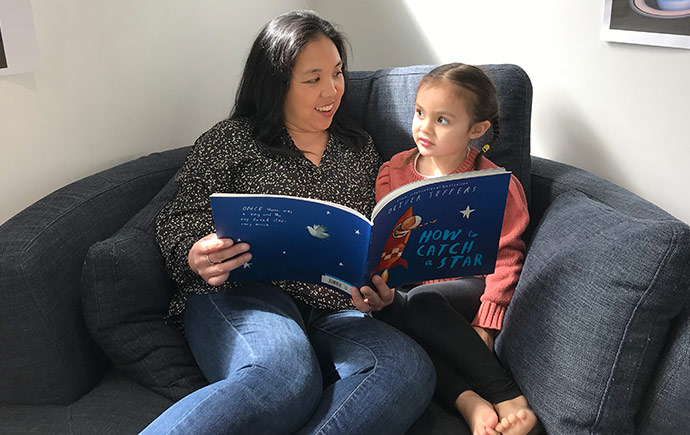
How to catch a star by Oliver Jeffers

This is a whimsical story with beautiful illustrations about a boy who loves stars so much and dreams of catching one.

  • This PlayWorld stars

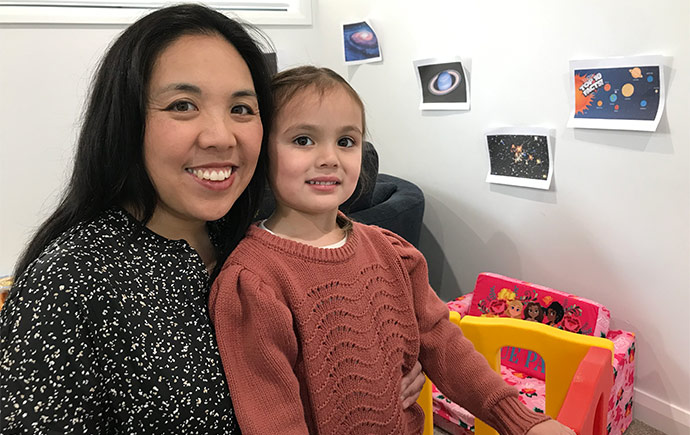
    Thea and her mum Alice who zoom through space to meet Alpha Centuri’s brightest star and help them solve a big problem.

  • STEM learning

    Space and distance

  • Great for supporting

    Belonging and wellbeing

STEP 1: Read your book (or watch it read on Play School Story Time)

The boy in this story tries all different kinds of ways to catch his star. As you read, explore why his ideas may not have worked.

Stars must be really far away!  You can also use this book to talk about the different ways you can feel when you persist with a task.
STEP 2: Plan your play

You are about to go on an adventure with your child to to the star system Alpha Centuri:

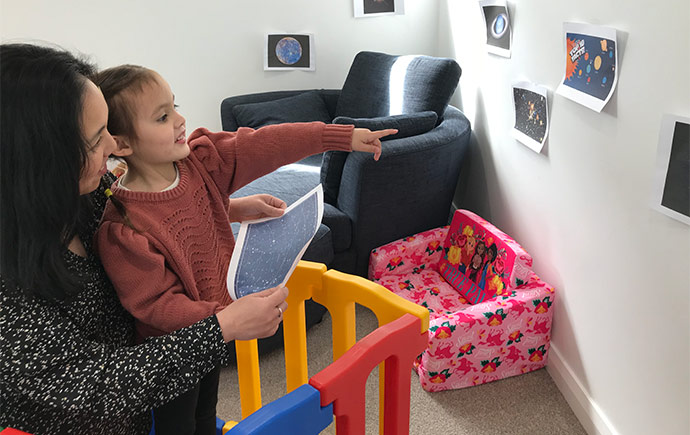
  • Make or print out our galaxy (sun, the planets and moon).
  • Print out a picture of the Milky Way.
  • Print out a picture of the star system Alpha Centauri.
  • Designate something to be a rocket ship.
  • Put the printouts up around the house.

Record two ‘crackly’ messages:

  1. Hello! I am the brightest star in the Alpha Centauri system, which is the closest system to your earth.

    There are two other stars in our system, and we all need your help to find better names. The astronomers on earth just call us “A” “B” and “C”. We think this is TERRIBLE. Could you come to visit and think of some new names?
  2. Silly us! We forgot to tell you. We are very far away but still in the Milky Way. Play this special code (beep bop boop) into your space computer for our space address, then use your space zoomer so it doesn’t take 75,000 years to get here!

Step 3: Go on your adventure

Jump into your rocket ship and set off. You are now in your PlayWorld.

Zoom around your house, noticing all the planets, their different colours and sizes.  Dodge some comets. Notice the order from the sun, and how this is our solar system.

Then notice the milky way which is a galaxy and go even faster. Start to zoom in a spiral, like the arms of the spiral.

Step 4: Encounter a problem

At some stage the adult notices a message is coming in over the space-radio. It’s a message from Alpha Centauri!

What will you do? Let’s go help! But how will you get there? Where is Alpha Centauri?  Send a message on your space radio and ask.

While you are ‘waiting’ for an answer, wonder which star it might be. Notice how many stars there are. Can you see the earth?

Soon, you hear a crackle and the new message arrives. Wow! It must be a long way away if it would take 75,000 years to get there. Repeat your space code and hit your imaginary space zoomer to go visit Alpha Centauri.

Step 5: Learn about baking as an everyday chemical reaction

When you get there you will see three stars. Which one is the brightest? Zoom there and say hello.

Decide what the new names will be. Should Alpha Centauri A start with an A sound? Whatever you decide, Alpha Centauri loves them. Now, how will you let the astronomers on earth know?

Head back to earth, and get out of your rocket ship and leave the PlayWorld.

It’s time to let the astronomers know the new names. Where do astronomers work? Should we do a drawing? Write a letter? Send a video message on an email?

Then send it!

What did we learn?

In this PlayWorld you are activating your child’s learning  about space, our place in it, and getting a glimpse of its scale.

You expand their scientific vocabulary using words like planets, solar system, galaxies and astronomers.

You are also helping support early literacy by associating sounds of the planets with the new names, and sending messages.

Through this PlayWorld your child is building a sense of belonging to more than just their family, but to the solar system. This is important for their wellbeing.