
First Nations Sovereignty: Indigenous Data Sovereignty and Living Archives of People and Place
Supported by a Whyte Fund Grant 2022-2026, this Indigenous-led research program is a response to the Indigenous Data Sovereignty movement linked to First Nations Sovereignty
Research Themes
- Indigenous Data Sovereignty and Data Governance: Frameworks, models, and protocols in the context of Voice, Treaty and Truth Telling.
- Indigenous Living Archives on Country - Case Studies.
- Repatriation: Frameworks, models and protocols.
- Co-design of knowledge management and information systems to support Living Archives and Repatriation.
Indigenous data sovereignty is central to First Nations sovereignty

Part of a wider global initiative, the First Nations sovereignty and self-determination movement in Australia is associated with a claim for Indigenous data sovereignty.
In 2017, the ULURU Statement from the Heart to the people of Australia called for a First Nations Voice in the Constitution, a Makarrata Commission to supervise treaty-making processes and truth-telling about First Nations history.
First Nations peoples around the world are claiming data sovereignty and taking a lead in defining data extensively. They emphasise how data has been weaponised against them in colonial-settler societies:
‘In the digital age, governments are increasingly dependent on data and analytics to inform their policies and decision-making. However, Indigenous peoples have often been the unwilling targets of policy interventions with little say over the collection, use and application of data about them, their lands and cultures.’
In Australia, records held in government, non-Indigenous organisations and institutional archives are repositories of data (broadly defined) created by, and about, First Nations people from the time of invasion.
Conventional, western colonial data, information and recordkeeping practices dispossessed Indigenous people of their cultural material and knowledge, and have been instruments of colonialism. Data has been used against indigenous peoples since colonisation and this continues today – only accelerated by technology.
The Communique on Indigenous Data Sovereignty (IDS)
The IDS Maiam nayri Wingara 2018 addresses all individuals and entities involved in the creation, collection, access, analysis, interpretation, management, dissemination and reuse of data and data infrastructure in Australia.
It defines Indigenous data, data sovereignty and data governance broadly as:
- Indigenous Data: Information or knowledge, in any format or medium, which is about and may affect Indigenous peoples both collectively and individually.
- Indigenous Data Sovereignty: The right of Indigenous peoples to exercise ownership over Indigenous Data.
- Indigenous Data Governance: The right of Indigenous peoples to autonomously decide what, how and why Indigenous Data are collected, accessed and used.
Similar protocols have been adopted in other countries with national IDS networks established in New Zealand, Australia, Canada and the United States, with growing interest in the Pacific, Scandinavia and Mexico.
Together, the Indigenous scholars, practitioners and activists involved with these networks have advanced the increasing recognition of IDS as an expression and enabler of Indigenous rights, wellbeing and self-determination.
IDS offers an alternative and potentially transformative vision of ‘good data’ practices with benefits extending far beyond Indigenous communities.
Related projects
IDSLA Research Themes
- Indigenous Data Sovereignty and Data Governance: Frameworks, models, and protocols in the context of Voice, Treaty and Truth Telling
- Indigenous Living Archives on Country – Case studies
- Repatriation: Frameworks, models and protocols
- Co-design of knowledge management and information systems to support Living Archives and Repatriation
Indigenous Data Sovereignty and Data Governance
This project:
- explore the interrelationship between First Nations sovereignty and data sovereignty, and the creation of synthesised and unifying approaches to data, information, records and archives
- develop foundational understandings of Indigenous data sovereignty
- work with Indigenous partners and communities to research and co-design data, information and recordkeeping governance structures, rights charters, policy frameworks, protocols and models for transformative participatory practice in government and non-Indigenous organisations.
Living Archives of People and Place
Imagine … if we could bring all records relating to a particular community together in a new, radical form of Living Archive, one that turns the assumptions behind the institutional and collecting archival model on their head. What if the dispersed and fragmented archival records relating to an Indigenous community were repatriated to Country to become accessible on and embedded in Country. Instead of visiting institutional archival silos or trolling through numerous web pages to search for often poorly indexed and contextualized records relating to a community, imagine accessing them on Country. And what if the records are not so much ‘read’ as ‘experienced’ in the context of other records that have always been connected with that place, including those embodied in the landscape and in the community through remembrancing, storytelling, dance, art and artefacts? (Chandler,Faulkhead, McKemmish, 2019, p. 84).
This research explores a radical and new technology-enabled form of community-centred, participatory archive. Either virtually or through repatriation it aims to embed or re-embed dispersed data, information, records and archives in Country – reconnecting them with the tangible and intangible records of place and people that continue to exist there.
It will also:
- Develop the functional requirements for an online Registry of Living Archives of People and Place
- To identify, contextualise and connect digital, physical, tangible and intangible records and archives of Aboriginal and Torres Strait Islander organisations, communities and individuals.
- Include records created on, or embedded, in Country and people, with records and archives held by government agencies and non-Indigenous organisations developed by, or about, Aboriginal and Torres Strait Islander people.
- Undertake innovative ‘proof of concept’ prototyping of a Registry of Living Archives of People and Place
- Including testing the capacity of existing software (eg. Mukurtu) to provide registry functionality and support a network of Living Archives of People and Place.
Charter of Lifelong Rights in Recordkeeping for Children in Care Version 2 (2025)
every child placed in the custody and control of a welfare agency should absolutely expect that the agency will keep full and accurate records about their experience in Care … and in a contemporary situation the child should participate in the process of making and keeping those records) ‘ (Dr Frank Golding OAM)
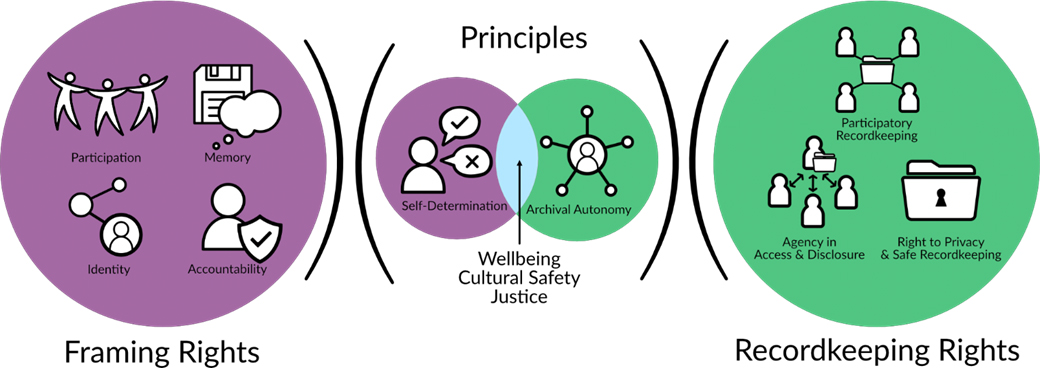
Addressing the critical, lifelong and diverse information needs of:
- Australian and Indigenous Australian children and young people in Care
- Care leavers, including Stolen Generations
Exposure Draft of the Charter of Lifelong Rights in Recordkeeping for Children in Care Version 2 (2025). An Implementation Toolkit for Version 2 is under development.
Version 1 of the Charter and its Implementation Toolkit is available here.
Funding
The Charter research was funded by an Australian Research Council Discovery Grant ‘Rights in Records by Design’ (2017-2021), a partnership between Monash and Federation Universities led by Associate Professor Joanne Evans, and the Whyte Philanthropic Fund (2021 continuing)

‘Cultural Reflections — Continuous Connections 2022’
photographic print on aluminium, acrylic paint
Kent Morris, Barkindji man
Image credit: Andrew Curtis
Researchers

Dr Shannon Faulkhead
Adjunct Senior Research Fellow, Faculty of Information Technology and Head, First Peoples Department, Museums Victoria
Dr Faulkhead is the first Indigenous person in Australia to achieve a PhD in archival studies and Indigenous knowledge management – and one of only a handful internationally.
Before Museums Victoria, Dr Faulkhead directed the Monash Country Lines Archive. And prior to Monash, she was CEO of the Koorie Heritage Trust Inc. Dr Faulkhead’s unique research contributions relate to the positioning of Indigenous Australian peoples and their knowledge within Australian society and collective knowledge. She’s passionate about working with communities, particularly where academia and community collaborate to produce research that meets the goals of all partners equally.
The innovative aspects of this research format lie in the creation of a shared research space by developing a relationship where differing knowledge, experiences and world views are respected, and the ability to create shared concepts and terminology. Every research project Dr Faulkhead has undertaken has been in partnership with community members and groups, and academ
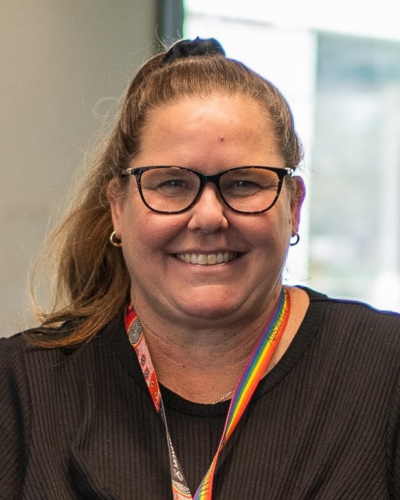
Dr Narissa Timbery
Faculty of Information Technology, Monash University
A First Nations woman descended from the Yuin Nation (NSW South Coast), Narissa has been an ABI indexer at the Australian Institute of Aboriginal and Torres Strait Islander studies, and worked at the National Archives of Australia. She has a background in education, including teaching an Aboriginal and Education elective to Diploma of Education students at the University of Wollongong for five years. Narissa completed her Master of Information Management and Systems and PhD at Monash. Her doctoral studies, Beyond the animations: A sustainable living digital heritage archive, explored the creation of a sustainable living digital heritage archive. Using the Monash Country Lines Archives’ virtual 3D models as a case study, research outcomes include a deeper understanding of how to respectfully represent Aboriginal knowledge, cultural protocols and community archiving requirements when creating a sustainable living digital heritage archive. Narissa’s research provides an exemplar for the use of yarning as a method of data collection and data analysis in information systems research. Firstly, through reflexivity, journalling and mind mapping, it provides a personal reflection upon my research journey that has been informed by critical theory, exploring archival concepts through records continuum theory and the archival multiverse. Further, it presents findings in the form of a Framework, proposed Model and Principles that provide considerations for others in the field when creating sustainable Living Digital Archives that prioritises community voices and reflects a participatory approach to archiving with Aboriginal Communities and Groups.
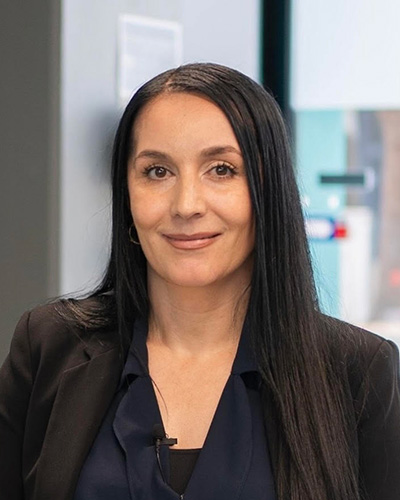
Dr Rebecca Lyons
Research Fellow for the Indigenous Data Sovereignty and Living Archives on Country research project at the Faculty of Information Technology, Department of Human Centred Computing, Digital Equity Group and a member of the Information Empowered Communities Lab at Monash University
Dr Rebecca Lyons is a proud Wiradjuri / Ngiyampaa / Ngunnawal woman based in Narrm (Melbourne).
Rebecca works as a Research Fellow for the Indigenous Data Sovereignty and Living Archives on Country research project at the department of Human Centred Computing for the Faculty of Information Technology. She is contributing to the understanding of the importance of Indigenous Data Sovereignty as it offers an alternative and potentially transformative vision of ‘good data’ practices with benefits extending far beyond Indigenous communities. She has an unwavering commitment to addressing issues affecting Aboriginal and Torres Strait Islander communities. As an Academic, she is deeply passionate about advancing Indigenous knowledge systems, decolonising research methodologies and fostering a more inclusive research environment.
In her doctoral thesis titled “Challenges to Aboriginal Identity Construction in Australia: Stolen Generations Responses to the Absence of Identity Documents”, she employed a combination of personal narratives and archival research to amplify the voices of Stolen Generations survivors and their families. Her research aimed to shed light on the challenges associated with obtaining primary identification documents, specially birth certificates, a consequence of historical structural and administrative violence in Australia.

Professor Gillian Oliver
Faculty of Information Technology, Monash University
Gillian Oliver, the current Chair of iSchools.org, is Professor of Information Management and co-Director of the Information Empowered Communities Lab at Monash University, Australia and also Adjunct Professor at Victoria University of Wellington, New Zealand.
The dominant theme running through her research and teaching relates to cultural influences and the need to represent cultural diversity in the systems and technologies that are developed to create and capture data and information. She is currently leading research investigating the meaning of digital citizenship for marginalised communities in Bangladesh, and exploring initiatives relating to Indigenous data sovereignty in Australia and New Zealand.

Associate Professor Tom Chandler
Faculty of Information Technology, Monash University
Tom Chandler is an Associate Professor teaching in Games & Immersive Media in the Faculty of IT at Monash University. His research explores the interdisciplinary applications of virtual world building, with project collaborations ranging from archaeology and zoology through to industrial design and landscape ecology. His primary research endeavour, the Visualising Angkor Project, examines the evidence-based virtual reconstruction of Cambodia’s medieval capital in the year 1300. Tom’s university teaching resource www.virtualangkor.com was awarded the Innovation in Digital History prize by the American Historical Association in 2018, and the Digital Humanities and Multimedia Studies Prize by the Medieval Academy of America in 2021.
Emeritus Professor Sue McKemmish
Faculty of Information Technology, Monash University
Emerita Professor McKemmish is Australia’s leading recordkeeping and archival educator and researcher, and an internationally-recognised expert in the field. Her initial research centred on Records Continuum theory and conceptual modelling, and recordkeeping metadata, which has continued throughout her career. More recently, she is focused on community-centred, participatory recordkeeping and archiving, and rights in record in social justice and human rights contexts.
Emerita Professor McKemmish’s is currently working with those with lived experience of Out of Home Care on Charters of Lifelong Rights in Childhood Recordkeeping in the Indigenous and non-Indigenous Child Care Sectors. It is is part of the Indigenous Data Sovereignty and Living Archives research team. Developing inclusive, reflexive research design and practice in collaboration with communities has been a critical part of her research.

Barbara Reed
Barbara is a research consultant on the Indigenous Data Sovereignty and Living Archives on Country program. As an independent archives and records consultant, she has collaborated with a range of government, non-government, private and non-profit organisations in Australia and internationally.
In her career, Barbara has worked on issues empowering access to records for the Care Leaver Community and the Stolen Generation. Much of her consulting work has been focused on developing recordkeeping practices and competencies, transforming recordkeeping into digital practice and working with a range of stakeholders to create strategic interventions through standards and best practice guidelines.

Professor Kiera L. Ladner
Canada Research Chair, Miyo we'citowin, Indigenous Governance and Digital Sovereignties
Professor Kiera L. Ladner, Adjunct Professor in the Faculty of IT at Monash University, is Canada Research Chair in Miyo we'citowin, Indigenous Governance and Digital Sovereignties, and Professor in the Department of Political Studies at the University of Manitoba, as well as former Canada Research Chair in Indigenous Politics and Governance. Her research focuses on Indigenous Politics and Governance; Digital Sovereignties and Archiving (MMIW, PARSD, and CLIP); gender (diversities); women and governance; and resurgence (in terms of both women and youth). Professor Ladner’s publications include This is an Honour Song: Twenty Years Since the Blockades (Arbeiter Ring Press) co-edited with Leanne Simpson, and Surviving Canada: Indigenous Peoples Celebrate 150 Years of Betrayal co-authored with Myra J. Tait, as well as numerous articles and book chapters on a wide variety of topics.
Currently, Professor Ladner is working on projects with Dr. Shawna Ferris on a community centred digital archive project which is compiling three archives (Missing and Murdered Indigenous Women and Girls database, Post-Apology Indian Residential Schools Database, the Sex Work Database). She is also working on project on including the comparative constitutional law and Indigenous peoples project (CLIP project), a digital sovereignties and a comparative treaty project focussing on Anglo-settler societies.
Research Partners

Dr Kirsten Thorpe
Jumbunna Centre UTS
Dr Kirsten Thorpe (Worimi, Port Stephens) is a Senior Researcher at Jumbunna Institute for Indigenous Education & Research, University of Technology Sydney (UTS). Kirsten leads the Indigenous Archives and Data Stewardship Hub, and has broad interests in research and engagement with Indigenous protocols and decolonising practices in the library and archive fields, and the broader GLAM sector, including the 'right of reply' to records and capacity building and support for the development of Living Indigenous Archives on Country. Kirsten has extensive experience working in major collecting institutions across public libraries and archives. She is a member of the International Council on Archives Expert Group on Indigenous Matters and a co-founder of the Indigenous Archives Collective.
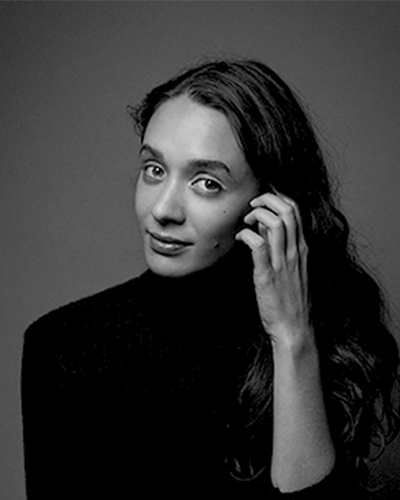
Dr Lauren Booker
Researcher, Jumbunna Institute for Indigenous Education & Research
Dr Lauren Booker (Garigal) has worked across the museums and archives sector on language and cultural revitalisation projects supporting Aboriginal communities to access their cultural and intellectual property held in collecting institutions. This includes working in consultation with the public library network in regards to language documentation identification and use in language revitalisation.
Lauren’s works also focuses on facilitating the digitisation of recorded and documented cultural materials and the organisation of digital community archives. She is a strong supporter of post-custodial archives, repatriation, Indigenous Cultural and Intellectual Property rights and Indigenous Data Sovereignty. Lauren is also a member of the Indigenous Archives Collective.

Dr Monica Galassi
Researcher, Jumbunna Institute for Indigenous Education & Research
Dr Monica Galassi is a Researcher at Jumbunna Institute for Indigenous Education & Research and PhD student at the School of International Studies and Education, Faculty of Arts and Social Sciences (FAAS), University of Technology Sydney (UTS) in Australia. Monica’s research interest focuses on rights to access and management of cultural heritage as a key driver for social justice, and she is passionate about finding ways to foster culturally safe and community-driven initiatives across the cultural sector through research-led practice.
Over the last decade, Monica has been working on several projects and across different organisations in Australia and internationally to support Aboriginal self-determination and sovereignty in collecting institutions. In 2020, she was awarded a Research Excellence Scholarship to undertake a PhD in the field of Aboriginal and Torres Strait Islander archival records which are held in Italian cultural organisations.
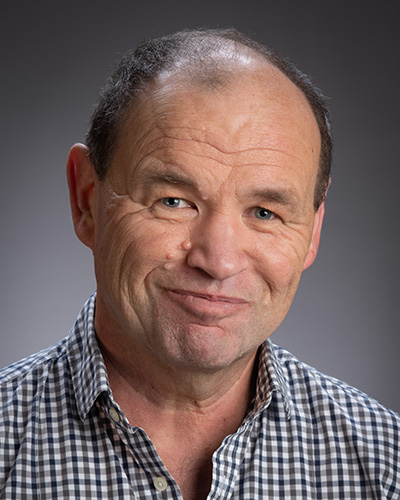
Spencer Lilley
Associate Professor
Spencer is an Associate Professor in the Information Studies programmes in the School of Information Management. He has genealogical affiliations to Māori (Te Atiawa, Muaūpoko and Ngāpuhi), Samoa and the United Kingdom. His research on Māori and Indigenous engagement with libraries and other cultural heritage institutions is internationally recognised. Spencer is a recipient of three Royal Society of New Zealand Marsden Awards (2 as a Primary Investigator, and 1 as an Associate Investigator). His research is currently focused on decolonisation and Indigenisation of galleries, libraries, archives, museums and records (GLAMR) institutions.
Prior to commencing his academic and research career, he worked as a library professional for 23 years in special and academic libraries. He is a former President of the Library and Information Association of New Zealand Aotearoa (LIANZA). In recognition of his outstanding service to LIANZA and the wider library and information profession, he was awarded a Fellowship in 2010. Spencer is also a founding member, and honorary life member of Te Rōpū Whakahau (Māori in Libraries and Information Management).
Golding, F., Lewis, McKemmish, S., Rolan, G. and Thorpe, K. (2021) ‘Rights in Records: A Charter of Lifelong Rights in Childhood Recordkeeping in Out-of-Home Care for Australian and Indigenous Australian Children and Care Leavers’, International Journal of Human Rights
Faculty of Information Technology, Monash University and Jumbunna Institute for Indigenous Education and Research (July 2022), Joint Submission to the Review of the Queensland Public Records Act 2002 (PDF, 0.5 MB)
Researchers
-
Dr Shannon Faulkhead
Adjunct Senior Research Fellow, Faculty of Information Technology and Head, First Peoples Department, Museums Victoria
-
Dr Narissa Timbery
Assistant Lecturer
-
Dr Rebecca Lyons
Associate Dean (Indigenous)
-
Professor Gillian Oliver
Adjunct Professor and PROTIC II lead
-
Associate Professor Tom Chandler
Director, Work Integrated Learning
-
Emeritus Professor Sue McKemmish
Chief Investigator, Leading Recordkeeping and archival educator and researcher
-
Barbara Reed
Research Consultant