
End of year update
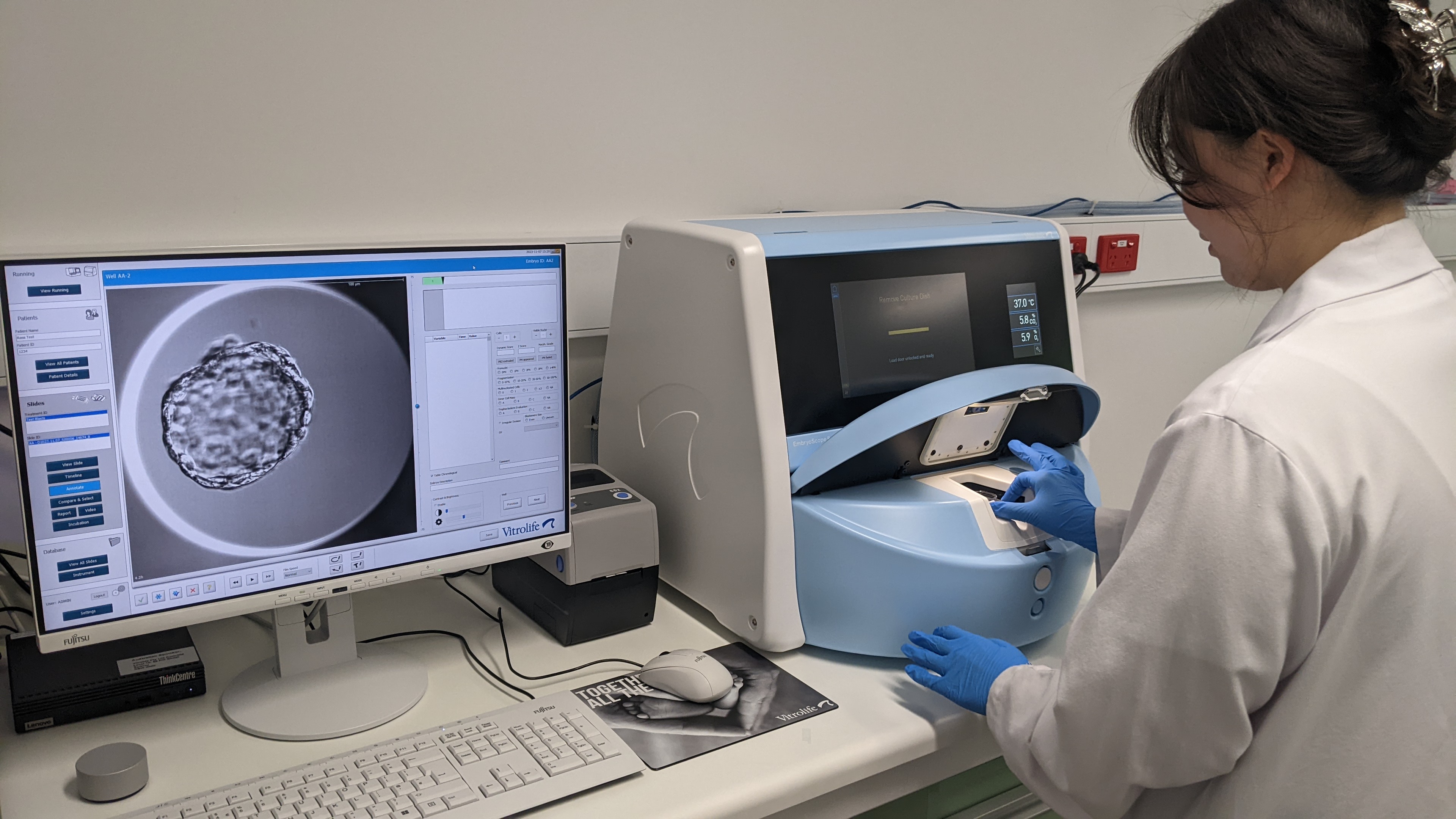 The mitoHOPE Program is now 6 months old, and the entire team has been pleased to see the program really starting to come together. We are establishing the new mitoHOPE laboratory, applying for ethics approval, establishing the clinical pathway, and we also have started to bring members of the mito community into the planning process.
If all goes according to plan–and the team is working hard to make sure that it does– enrolment into the program will commence mid-2024.
If you think mitochondrial donation may be suitable for you, we suggest you talk to your health professionals about this. They can help you understand the reproductive options that are most relevant to you. We encourage anyone who is a candidate for mitochondrial donation to register their interest via the mitoHOPE website.
If you are interested in becoming an egg donor for research or for treatment, please register your interest via the mitoHOPE website.
Progress report
The embryologists we introduced in our August ‘23 update have now started their training in the techniques of mitochondrial donation.
Our embryologists are using new, dedicated equipment in the mitoHOPE laboratory, including an EmbryoScope from Vitrolife. EmbryoScopes can create videos that track embryos as they develop. This video was created by Ross Stocker. Ross is a PhD candidate and mitoHOPE research embryologist. The video shows a mouse embryo created through mitochondrial donation. Watch the video on YouTube.
We have also been working on the ethics application for the preclinical research program. Our application has been submitted to the Monash Health HREC and we await our first round of official feedback. The preclinical research program will ensure the embryologists can train appropriately in clinical conditions, as well as refine and improve existing mitochondrial donation techniques. The information learned through this research will be used to inform many aspects of the clinical trial. Once the application is approved, the team will apply for the required licences from the National Health and Medical Research Council’s Embryo Research Licensing Committee so that we can start the preclinical research and training.
The clinical pathways team is preparing the pathways for entry into the mitoHOPE clinical trial. This includes considering how best to make the program as efficient and easy to navigate for mito families and their health teams, what level of psychosocial support will be needed, and how to bring all the relevant clinical expertise together to provide the best possible experience for participants.
The ethics application for the clinical trial is also in preparation so that it can be submitted early in 2024.
We have also been spreading the word about mitoHOPE amongst health professionals with talks being presented at the Fertility Society of Australia 2023 Annual Conference, ASPIRE 2023, SEED 2023, the Monash IVF Annual Network Meeting.
Mito Foundation Community Summit
In October, we were pleased to have mitoHOPE team members present at the recent Mito Foundation Community Summit. The team attended the two-day summit to present on the mitoHOPE Program and work with members of the mito community to gather insights that will inform a number of activities from the mitoHOPE Program.
Learn more about what happened at the summit on the Mito Foundation website.
mitoHOPE team walks 35km for mitochondrial disease research
In October, a group of more than 30 mitoHOPE team members and their friends walked 35km along the Mornington Peninsula as part of the Bloody Long Walk. Our team members tapped on shoulders, took to social media and even held bake sales to raise more than $14,000 for Mito Foundation’s important work.
Professor David Thorburn from the Murdoch Children’s Research Institute was even given the honour of wearing the #1 bib, in recognition of the 14 other Bloody Long Walks he has participated in.
Congratulations to everyone who took part in the Bloody Long Walk, it really was a bloody long walk!
Team updates
 In November we welcomed Dr Yuko Takeda (left) and Dr Molly Johnston (right) to the mitoHOPE team.
Dr Yuko Takeda is a postdoctoral research fellow within the preclinical research team. Yuko has a PhD from University of Cambridge (UK) and has worked in mitochondrial donation research since 2015. At mitoHOPE, Yuko will be working to optimise the two kinds of mitochondrial donation procedures that mitoHOPE will use: pronuclear transfer and maternal spindle transfer.
Dr Molly Johnston is a research fellow at Monash University’s Monash Bioethics Centre and will be contributing to the mitoHOPE egg donation program. Molly’s work with mitoHOPE will include conducting research with people who donate eggs, as well as those in need of donor eggs, to understand their experience with donation, their attitudes towards donating for mitochondrial donation and their views on different models of donation.