
April 2024
Welcome to the mitoHOPE Program’s latest update.
Input from the mito community is vital to mitoHOPE's success. In February, we held focus groups with the mito community. The focus groups helped us to understand the kinds of support that mitoHOPE participants will need during the program. These understandings will contribute to the design of the mitoHOPE Program.
An Information Review Panel made up of mito community members is also being established. The panel will provide feedback on items such as the documents given to clinical trial participants.
Progress report
In exciting news, our preclinical research program has received approval from the Human Research Ethics Committee. The team is now applying for licences from the Embryo Research Licensing Committee. Once these are granted, our preclinical research can begin.
The preclinical research will help us refine and test mitochondrial donation techniques before the clinical trial.
The mitoHOPE team is working hard so the clinical trial can start as soon as possible. At this stage, we aim to begin enrolling participants in the trial in late-2024. This may change depending on when the required licences and ethics approvals are granted.
Several things need to take place before the clinical trial can start:
- the preclinical research needs to show that mitochondrial donation techniques work safely,
- a human research ethics committee needs to approve the clinical trial research program,
- the Embryo Research Licensing Committee needs to approve the clinical trial research program.
Is mitochondrial donation suitable for you?
If you think mitochondrial donation may be suitable for you, talk to your health professionals. They can help you understand the reproductive options that are most relevant to you.
Find your local genetics service on the Centre for Genetics Education website. You can also contact the Mito Foundation for information and support.
If you would like to support the program or find out more information, please contact us.
The mitoHOPE Program is particularly interested to hear from you if:
- you are interested in learning more about donating eggs for our research or for the reproductive use of mitochondrial donation in the clinical trial
- your family is affected by mitochondrial disease and you want to learn more about mitochondrial donation
- you are a health professional and you have a patient that may want to learn more about mitochondrial donation.
Embryologist training
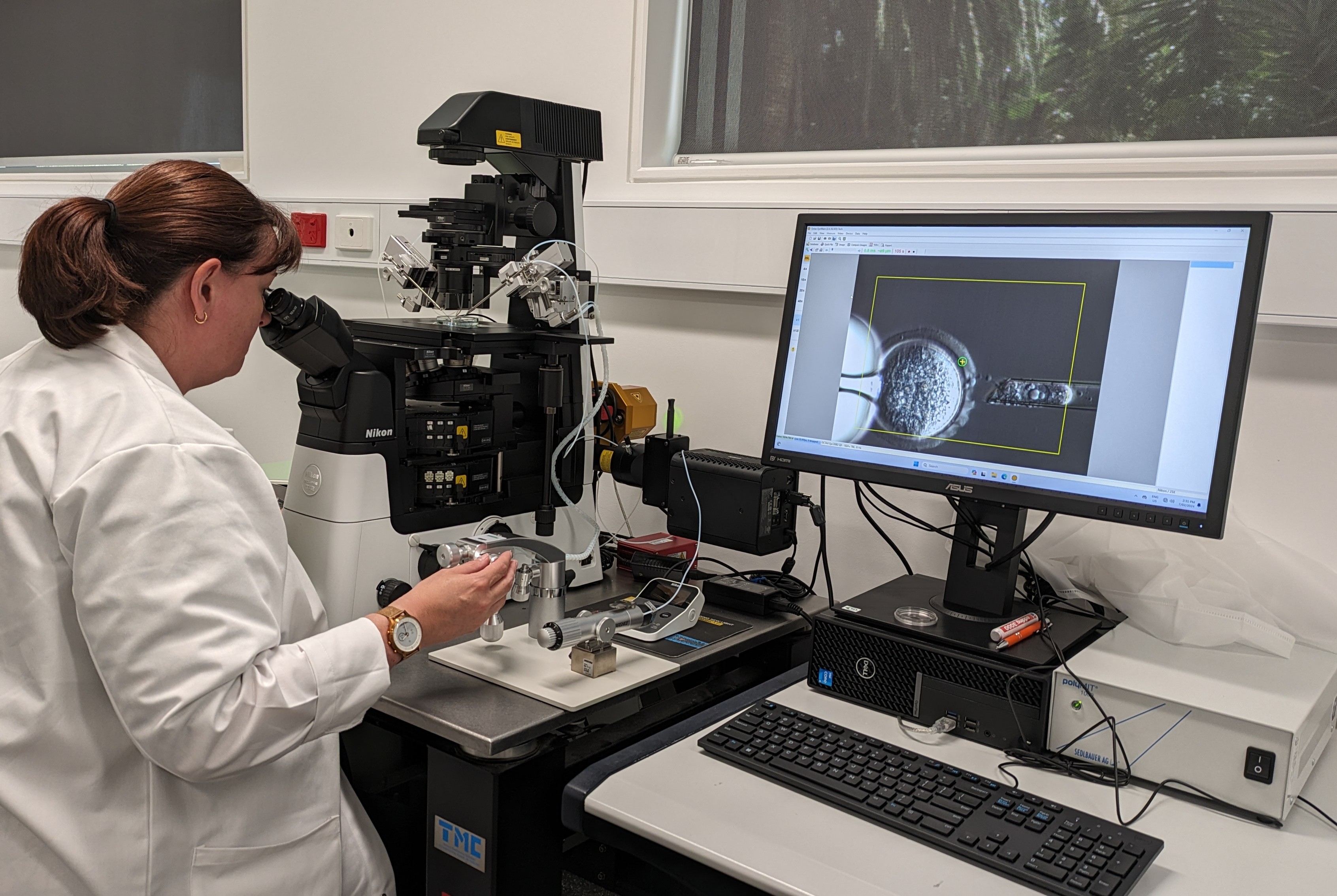
In recent months, some preparatory work has started in the mitoHOPE labs. Melissa Caddy, one of our embryologists, is being trained in mitochondrial donation techniques. To learn these techniques, Melissa has been practising on mouse eggs. Melissa will practise on human eggs once the required approvals are in place. The mitoHOPE clinical trial will use these techniques to generate pregnancies. Watch the video below to see a mouse embryo created through mitochondrial donation. (Credit: Ross Stocker).
At the beginning of the video, small pronuclei are shown next to a large fertilised egg.
Pronuclei come from the egg and sperm. When they join together, they combine the DNA from both the egg and sperm and create the first complete cell of the embryo.
Soon after the video starts, the pronuclei fuses with the egg and cell division begins. Four days later, at the end of the video, the divided cells have formed a blastocyst. A blastocyst is a hollow ball of cells. Pregnancy occurs when the blastocyst attaches itself to the womb’s lining.
A visit from Western Australia
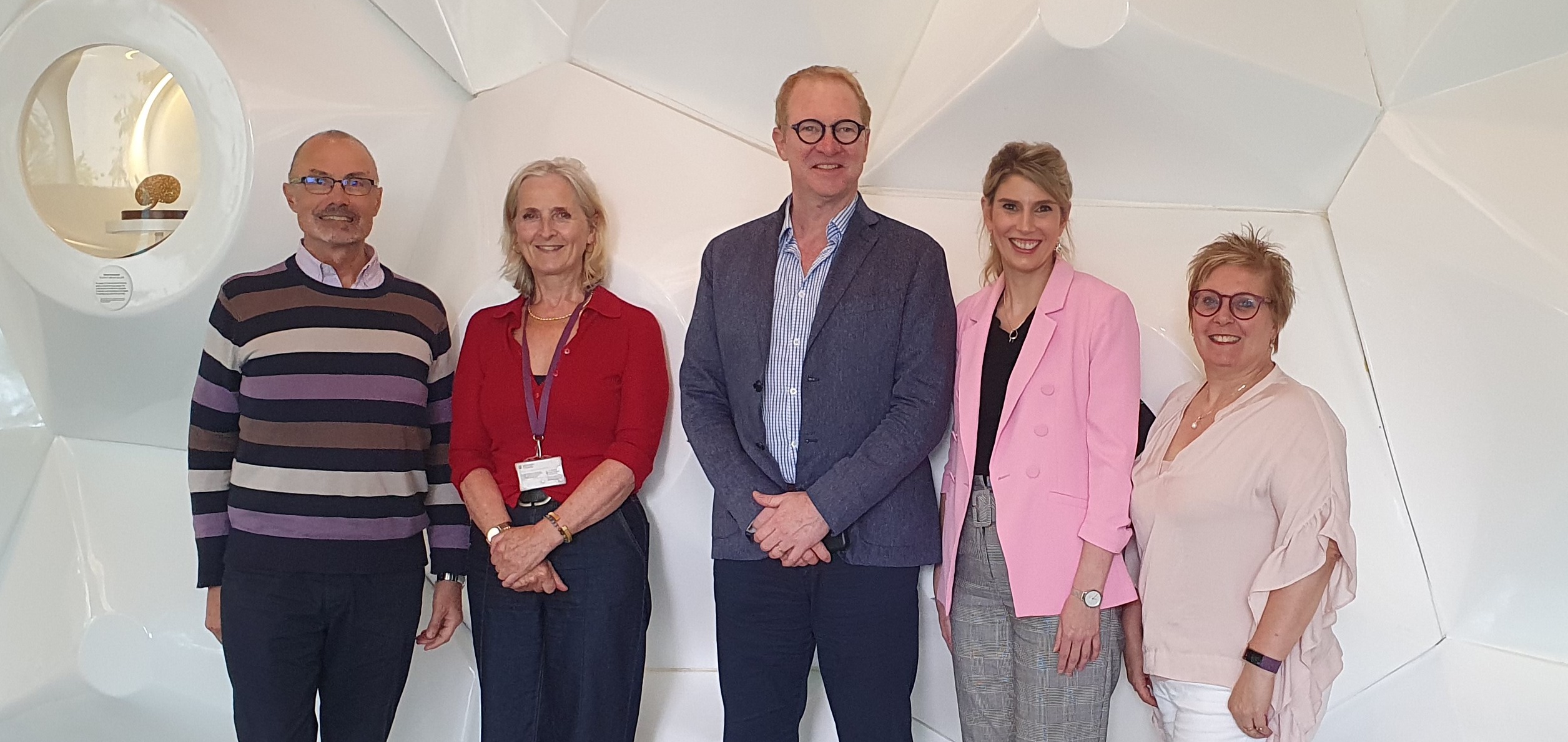
In March, mitoHOPE team members from Western Australia visited the mitoHOPE labs at Monash University. The group discussed their work in Leber’s hereditary optic neuropathy (LHON) and genetic counselling.
LHON is a rare mitochondrial disorder that affects the optical nerve, causing sudden and irreversible blindness. Learn more about LHON on the Centre for Eye Research Australia website.
Genetic counsellors have specialised knowledge and skills in human genetics. They provide education and support to people and families impacted by genetic conditions. Participants in the mitoHOPE clinical trial will have access to genetic counsellors throughout the program. Learn more about genetic counselling on the Mito Foundation website.