
Meet the team: mitoHOPE’s mitochondrial donation clinical pilot lead and genetics lead
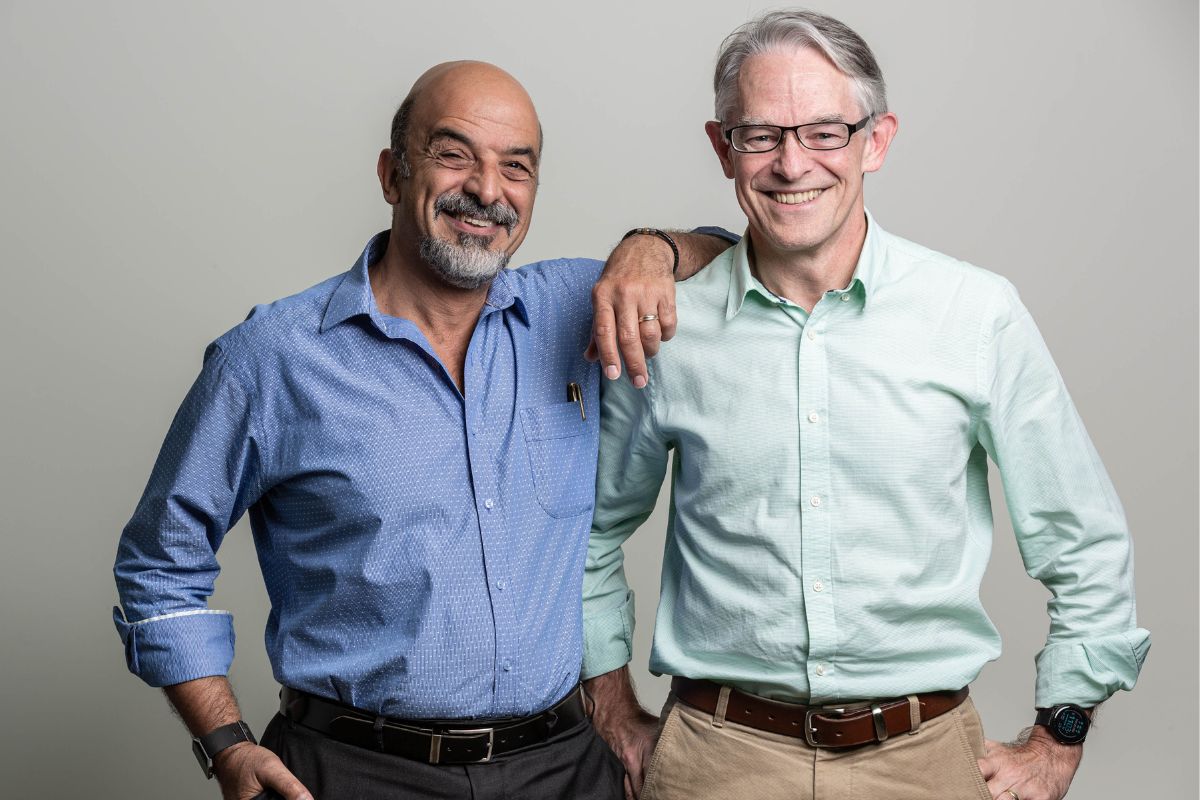 L-R: Mitochondrial Donation Clinical Pilot Lead Professor John Christodoulou and Mitochondrial Donation Genetics Lead Professor David Thorburn. Photo: Supplied
In this edition of our Meet the Team series, we introduce two of Australia’s leading experts in mitochondrial disease, Professor John Christodoulou and Professor David Thorburn.
They co-lead the Brain and Mitochondrial Research Group at the Murdoch Children’s Research Institute.
John is also Director of the Genomic Medicine Research Theme at MCRI and Chair of Genomic Medicine in the Department of Paediatrics at the University of Melbourne. He is a clinical geneticist and researcher who focuses on the genetic causes of rare and complex conditions, including mitochondrial disease. He uses advances in genomic medicine to provide clearer answers for families and, where possible, improve care.
David is a researcher and Head of the Mitochondrial Laboratory at the Victorian Clinical Genetics Services. He leads the team that identifies how well patient mitochondria can generate energy. He also supports the VCGS Genomics team that identifies DNA changes responsible for mitochondrial disease and helps families reach an accurate diagnosis.
Together, they have helped shape how mitochondrial disease is diagnosed and understood in Australia.
What is your role within the mitoHOPE pilot program?
John: David and I co-lead the mitoHOPE clinical trial team, which is establishing the end-to-end pathway for participants to join the clinical trial once we receive approval to proceed. We are fortunate to draw on the experience of the UK team that has pioneered this research, and to have Professor Mary Herbert working with us in Melbourne.
David: John focuses primarily on clinical pathways for participants and the follow-up of children, while I focus on mitochondrial DNA (mtDNA) genetics and testing. This includes routine clinical samples, as well as developing more sensitive tests to study human eggs and embryos.
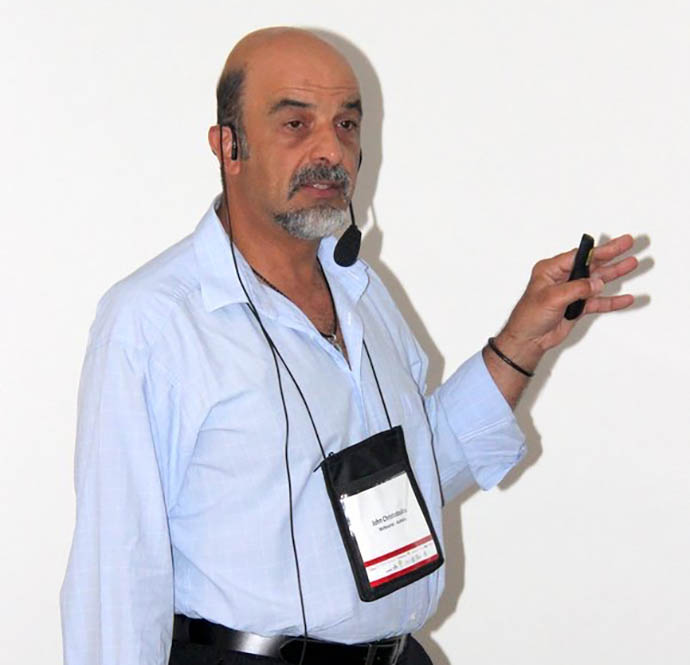
Professor John Christodoulou presenting at Porto Alegre in Brazil. Photo: Supplied.
What does a clinical geneticist do?
John: I initially trained in paediatrics and then in clinical genetics, with my primary area of interest being genetic metabolic disorders. I worked in that capacity for over 30 years, and as such, I was involved in the diagnosis and management of children with a range of genetic disorders, with mitochondrial disorders being a particular focus of my clinical and research interests. In my role, I coordinate investigations for children suspected of having a genetic disorder and interpret results from genetic and genomic testing. I then discuss the findings with the family, including the diagnosis, treatment options, and potential reproductive implications for the family.
What does a mitochondrial disease researcher do?
David: For the past 35 years at MCRI, my research has focused on diagnosis, gene discovery, and the prevention of mitochondrial disease. Throughout this time, my diagnostic laboratory has acted as a national referral centre for respiratory chain enzyme assays, which are laboratory tests used primarily to diagnose mitochondrial disorders in children and often require invasive samples such as muscle biopsies. With the rapid advances in DNA sequencing technologies over the past 20 years, one of my goals has been to reduce the need for muscle biopsies in children with mitochondrial disease. I have often said that I have wanted to put my enzyme laboratory out of business!
What drew you to work in rare diseases like mitochondrial disease?
John: As a paediatric specialist in genetic metabolic medicine, I have regularly worked with families affected by mitochondrial disorders. Establishing a mitochondrial diagnosis was challenging for everyone involved, although this is now made easier with the availability of genomic testing. While there is much we can do to support the general care and management of children affected by mitochondrial disease, a major challenge we still face is the lack of effective targeted therapies for most mitochondrial disorders.
David: Mostly serendipity rather than planning. I am a scientist and did my PhD in biochemistry in Sydney. It focused on a specific enzyme pathway in red blood cells, and I ended up working out how much each enzyme activity needed to change before it impacted the overall flow through the pathway.
That work sparked my interest in inherited metabolic diseases, which I continued during a postdoctoral role in San Diego in the US.
I then moved to Melbourne in 1990, just a year or two after mitochondrial DNA disease was discovered, so it was an exciting time in the field. My skill set suited mitochondrial diagnostics, and this work led me to study the genetic basis and prevention of mitochondrial disease caused by either nuclear or mitochondrial DNA mutations.
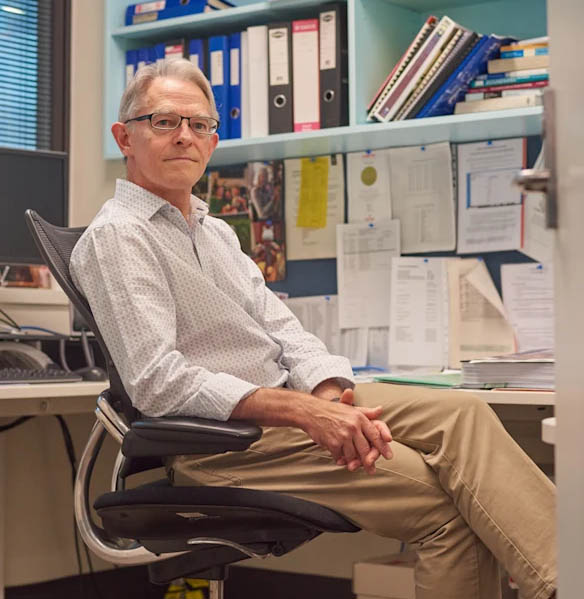
Professor David Thorburn at the Murdoch Children’s Research Institute. Photo: Supplied.
What excites you about the mitoHOPE Program?
John: Being in a position to bring an advanced reproductive technology to the clinic that might allow families affected by mito to reduce the risk of having a child with a severe mitochondrial disorder will be one of the most rewarding highlights of my career.
David: The really exciting thing about mitoHOPE is that it could enable women at high risk to increase their chances of having a healthy child.
From your experience working with families, what challenges do people living with rare diseases face that most of us don’t realise?
John: The first challenge families face is getting a genetic answer that explains the cause of the rare disease. In the past, the diagnostic odyssey often took years, but new testing technologies have transformed how we reach a diagnosis.
The next challenge is accessing up-to-date, evidence-based expert care for their affected loved one. The Mito Foundation, in partnership with clinicians nationally, is making strong progress in addressing this gap in care for families affected by mitochondrial disease.
Another major challenge is the development and delivery of targeted or precision therapies for mitochondrial disorders. There is significant activity in this area, so watch this space!
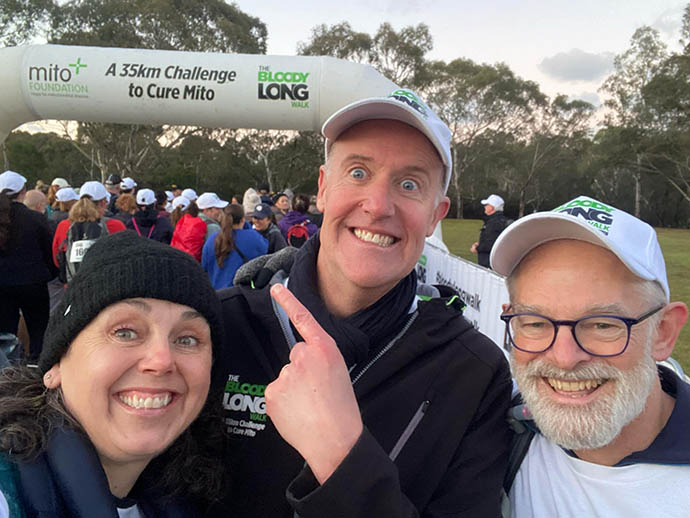
L-R: mitoHOPE’s project officer, Angelique, Mito Foundation CEO, Sean Murray, and Professor David Thorburn at The Bloody Long Walk in Melbourne.
How many Mito Foundation Bloody Long Walks have you participated in and why?
David: I think it’s about 18: one in Queensland, three in New South Wales, three on the Mornington Peninsula, and all but one of the Melbourne BLWs, as I was overseas for one year. I was a founding board member of the Mito Foundation and think the Bloody Long Walk is a great event to raise funds, raise awareness, help build and maintain the mito community, and have a good time chatting to people.
I am also a lifelong bushwalker, and the Bloody Long Walk is hard enough to be a challenge but, if you are healthy and can avoid blisters, it is very doable. It is a bit like giving blood when you have good veins and no needle phobia.
If you could have dinner with any historical figure in medicine, who would it be and what would you ask?
John: Hippocrates. I would ask him how he convinced the medical establishment at the time to view health and disease in a scientific way, rather than as divine punishment. I would also like to show him what modern medicine has achieved.
What’s one question about mitochondria that keeps you up at night?
David: How can we find and prove the evidence for better ways to treat mito?
What achievement/s in your work have been most meaningful to you?
John: During my clinical career, it has been a great honour to have a positive impact on the lives and health of my patients, and to support their families through very difficult times.
David: My team and collaborators were the first to identify more than 30 new mitochondrial disease genes. I am proud that our diagnostic and gene discovery work has helped hundreds of Australian families and thousands internationally end their diagnostic odyssey, and in many cases have a healthy child.
I also never expected to become involved in politics, but it was very rewarding to support the Mito Foundation in the passage of Maeve’s Law. It was encouraging to see how many politicians championed the cause, and the impact of people visiting their local MP or senator.
Another rewarding aspect has been working with colleagues in the international mitochondrial clinical and academic community. I have also enjoyed seeing students and postdoctoral researchers engaged and inspired through their interactions with the Mito Foundation and the mito community.