
Teaching & learning


-
-
-
-
Learning in 2022

NEW - Master of Advanced Midwifery
A new postgraduate midwifery course has been developed in response to the needs of the healthcare industry. Monash Nursing and Midwifery’s midwifery experts conducted extensive consultation with partner health services to ensure this new course not only met, but exceeded their requirements.
The Master of Advanced Midwifery’s units will further the development of midwives in meeting the requirements of the increasing number of childbearing women with complex needs. Furthermore, the Master of Advanced Midwifery will prepare midwives for leadership roles in midwifery management, education, and research.
Commencing in 2023 the course will run in conjunction with the Master of Advanced Nursing and will explore contemporary issues around midwifery practice, dilemmas in maternal and newborn health in Australian and global contexts and will enhance midwives evidenced-based women-centred midwifery care.
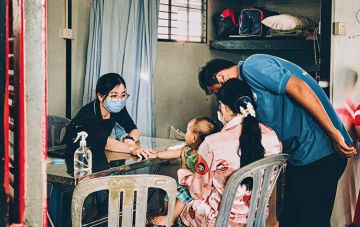
The Indo-Pacific Program
A four-week, interprofessional health immersion program in Cambodia and Vietnam allowed our students to gain a unique perspective on international health and cultural capabilities, all while developing their inter-professional skills. Working as part of a comprehensive, holistic healthcare team nursing and midwifery students joined physiotherapy, radiography and medical imaging OT, paramedicine, nutrition sciences, health sciences and medicine students and took part in a series of placements and project work, healthcare site visits, local university lectures and cultural excursions.
Across the two countries, the students also heard from industry experts to learn more about local healthcare with the aim of allowing them to make real and sustainable contributions as part of their program activities. In Vietnam, these activities included an official visit to the Australian Embassy and a trip to a museum of traditional Chinese medicine, as well as work with the Saigon Children Project and Dengue Fever Prevention. In Cambodia, there was a sobering trip to the Choeung Ek Killing Fields and the Tuol Sleng Genocide Museum and contributions to the work of Daughters of Cambodia and the Cambodia Physiotherapy Association.
Clinical Placement Model
A result of recent Federal policy and funding changes is the increasing demand for clinical placements, and as result we are building increased capacity through the development of innovative supervision models which increase placement capacity without compromising quality.
Traditionally students have been supported under models such as, but not limited to, the facilitator model, preceptor model, facilitator-preceptor model, and dedicated education unit model. Where the preceptor provides one-to-one supervision, there is also a clinical educator who oversees the clinical placement, but this is all dependent on the clinical placement provider. These models of supervision support, whilst effective, leave very little room for expansion and growth of clinical placements. The requirement for clinical placement growth has been a source of discussion for many years and has yet to be solved.
Within Allied health a peer assisted learning model has been explored for a number of years (Sevenhuysen, Nickson, Farlie, Raitman, & Keating, 2013; Sevenhuysen et al, 2014;) and more recently within nursing (Stenberg, Bengtsson, Mangrio & Carlson, 2020; Carey, Chick, Kent and Latour, 2018).
Peer Assisted Learning model within the clinical setting is one which “involves students learning with and from each other” (Sevenhuysen, 2016 p8). The Eastern Health and Monash University collaboration is exploring an innovative clinical placement model piloting a Student Nurse Peer Assisted Learning (PAL) Clinical Placement Model. This model enables students to work and learn with and from each other, whilst being supervised by one preceptor. Students on clinical placement are paired as part of the clinical allocation. They are able to undertake a discreet list of tasks under indirect supervision. Students are allocated to an experienced Registered Nurse preceptor (Supervisor) who will provide educational opportunities and supervision when the students are not undertaking the indirect supervised tasks. Benefits reported by clinical educators of PAL included reduced educator burden, with an increase in students building professional skills such as teamwork, communication and feedback capabilities (Sevenhuysen, 2016). Students reported a greater sense of psychological safety which enabled them to raise concerns whilst on placement (Sevenhuysen, 2016) as well as setting them up to be “active learners through reduced dependence on the clinical educator” (Sevenhuysen, 2016). This project will evaluate the Nursing student and supervisor experience of PAL in an acute ward.
Danielle NajmLead, Work Integrated Learning
-
Teaching areas summary
-