
Research
What treatment outcomes matter from the perspective of people who live with mood disorders? How can we best design and disseminate psychological interventions to address these unmet needs?
People who live with chronic mood disorders value improvements to quality of life as much as (if not more than) changes in symptom severity. Optimal treatment of mood disorders therefore involves both symptom management and restoration of quality of life. However, research to date on the impacts and treatment of mood disorders has focused on traditional clinical outcomes – attention to patient-valued outcomes such as wellbeing, functioning, and personal recovery is urgently required.
Our lab uses a combination of qualitative and quantitative research methods to address three intersecting topics:
- Measuring and predicting patient-valued outcomes in mood disorders,
- Developing and evaluating psychological interventions for mood disorders
- Improving access to and delivery of psychological interventions.
Our lab values the input of people who live with mood disorders, and we draw on community-based participatory research frameworks to ensure our research focuses on what’s important to people with these diagnoses, that we conduct research in a way that is acceptable to the community, and that we share findings from our research in a timely and accessible manner.
Much of our research focuses on people who live with bipolar disorder, a chronic and serious mental health condition that involves the experience of both extremely low and elevated mood states. However, our research also encompasses related conditions such as unipolar depressive disorders, and psychosis spectrum disorders.
Areas of research/projects
|
|
|
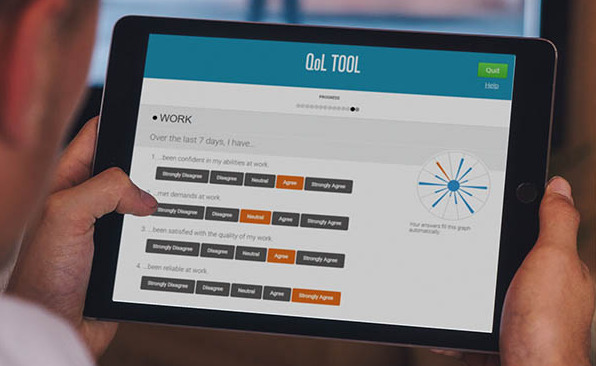 Measuring and predicting patient-valued outcomes in mood disorders
 Developing and evaluating psychological interventions for mood disorders
 Improving access to and delivery of psychological interventions