Sleep and Circadian Rhythms
Sleep and Circadian Rhythms Program

-
Sleep is increasingly recognised as the third pillar of good health, alongside diet and exercise. Our Sleep and Circadian Rhythms Program investigates the role of internal biological clocks and sleep in the general population, as well as in specific groups such as shift workers, elite athletes and clinical populations (e.g. insomnia and sleep apnoea).
Across our 9 lab groups we explore how disruptions to sleep and circadian rhythms contribute to impairments in mood, memory and cognition, and disorders such as depression, posttraumatic stress disorder, and traumatic brain injury. Other areas of investigation include optimising sleep and circadian rhythms to enhance recovery and performance in athletes.
Through our clinics we provide advanced treatments for sleep disorders. We are also continuously developing and testing new interventions ensuring that our findings are rapidly translated into improved sleep health.
We work in collaboration with industry to develop novel therapies to treat various sleep disorders, and develop technologies to optimise productivity and performance across various sectors (aviation, healthcare and sport).
-
Directors Statement
|
|---|
Program focus areas
 Applied Sleep and Circadian Neuroscience (Clare Anderson Lab)
View
Applied Sleep and Circadian Neuroscience (Clare Anderson Lab)
View

 Our group is interested in understanding how addictive disorders change the brain and goal-oriented behaviour. We also apply this knowledge to create and test new interventions to improve goal-based decision-making.
Circadian Misalignment and Shift Work (Tracey Sletten Laboratory)
View
 Our research program is focussed on sleep and circadian disruption in shift workers, the adverse implications for health, safety and productivity, and on targeted interventions to improve sleep health in occupational environments. We specialise in translational research to understand and improve sleep health challenges in unique industry settings including healthcare, Defence, commercial aviation, heavy vehicle transport, manufacturing and Antarctic expedition. Novel interventions to support shift workers at both the organisational and individual level, are continuously informed by direct industry and consumer engagement.
Clinical and Cognitive Neuroscience of Sleep (Sean Drummond Lab)
View
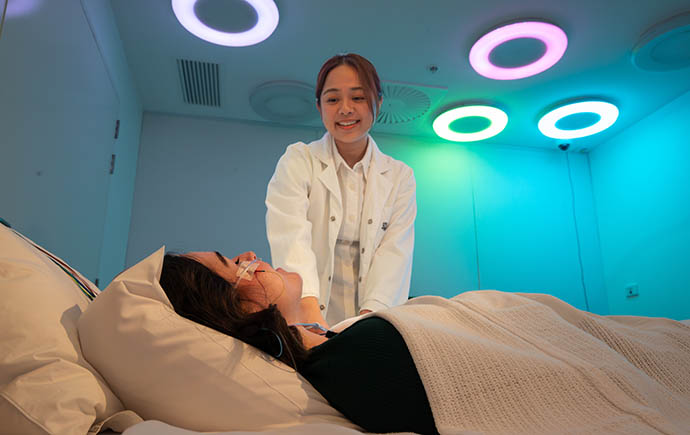
 Broadly speaking, we examine the role of sleep and sleep loss in cognition, behaviour, and mental health. We assess sleep both in the Sleep and Circadian Rhythm Program Area’s state of the art sleep lab and at home, using polysomnography (EEG-based sleep studies), actigraphy (non-invasive, motion-based assessment of sleep), and self-report.
Sleep and Cancer (Joshua Wiley Lab)
View
 Our lab vision is to partner with the community and use cutting-edge scientific and quantitative methods to understand and improve sleep and mental health, particularly after cancer. We work with hospitals and community cancer organisations to identify community and clinical needs and strive to deliver research that addresses those needs. We conduct both basic research, such as daily ecological momentary assessment studies, and intervention research with a focus on brief, scalable interventions such as bright light therapy, cognitive behavioural therapy for insomnia, and cognitive behavioural therapy to build emotion regulation capacity.
Sleep and Circadian Health (Shantha Rajaratnam Lab)
View
Sleep and Mental Health (Bei Bei Lab)
View
 Our group harmonises strengths from clinical psychology, sleep and circadian rhythms, and data sciences to shed new lights on the relationship between sleep and mental health, and to improve the treatment of sleep and circadian rhythm disorders.
Sleep and Performance (Elise Facer-Childs Lab)
View
 The aim of the Facer-Childs lab is to increase the understanding of sleep and chronobiology in the real world, with a focus on elite athletes, exercise, recovery and performance. We run studies with the wider sporting community as well as doing more tailored research with established industry partners who are elite sporting organisations (AFL, NRL and WNBL). We investigate a wide range of outcome measures, including sleep, biological rhythms, mental health and athletic performance. Within the elite groups the aim is to provide direct feedback to aid organisations with their management of mental and physical health of their athletes. A key component of our research program is the integration with industry, translation of research and community engagement.
Sleep, Cognition and Mental Health (Melinda Jackson Lab)
View
Sleep and Occupational Health (Alex Wolkow Lab)
View
 Our goal is to better understand, and counteract, the impact of poor sleep and other workplace stressors on health, safety, and performance in high-risk occupations.
Sleep-Related Breathing Disorders in Adults and Children (Brad Edwards Lab)
View
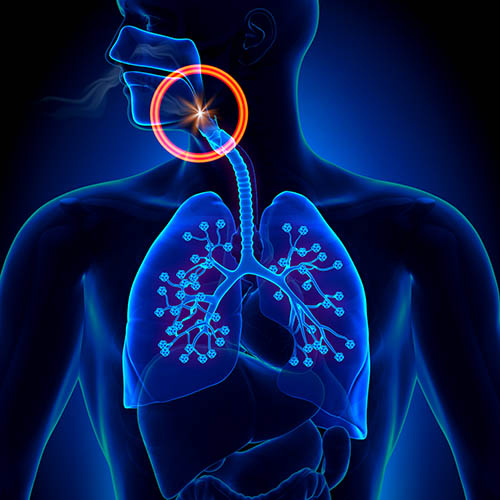 Our mission is to understand the physiological processes responsible for a variety of common sleep disorders, in order to develop better and more personalised treatment options for the many Australians suffering from the consequences of poor sleep. Specifically the Edwards lab's current research focusses on understanding the pathophysiology (endotypes) responsible for both pediatric and adult sleep apnea, examining the bidirectional relationship between sleep apnea and insomnia and testing novel combination therapies to treat these disorders.
-
Industry and clinical practice partners
Our research program is delivered in collaboration with industry and clinical partners to advance new ideas, exciting technologies and discoveries.