
Finding purpose through placement: Tehnan’s Radiography journey
Finding purpose through placement: Tehnan’s Radiography journey
A tight-knit cohort | Patient-care education in Radiography | Clinical placements | Access Monash mentoring | Favourite spots at Monash Clayton | Advice to future students | Open Day advice
"I used to think radiography was all about technical skills – just positioning patients and capturing images. But once I stepped into the field, I realised it was so much more than that." For Tehnan, studying Bachelor of Radiography and Medical Imaging (Honours) has been a journey of discovery that's reshaped her understanding of healthcare and her place within it.
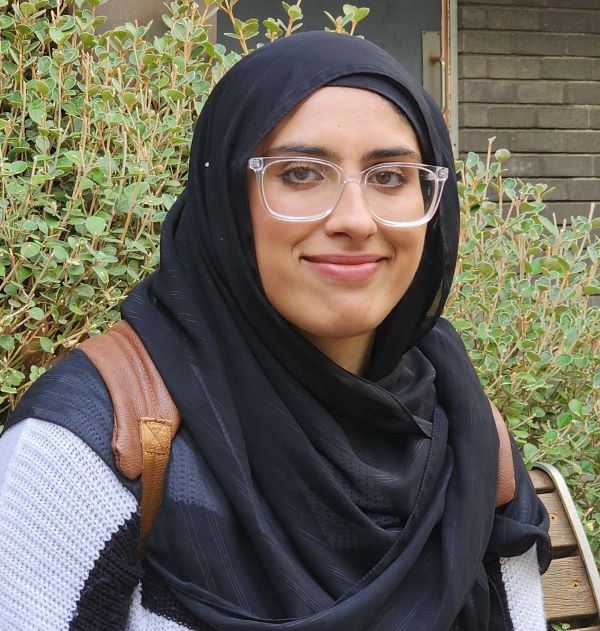 Tehnan was always drawn to healthcare, but radiography wasn't part of her original plan. "It came up through the way my VTAC preferences were arranged when offers were released. In a way, radiography chose me! I decided to give it a semester." That decision changed everything. Her first clinical placement became the turning point where she realised the profound impact of her future profession. "CT scans and X-rays are often the starting point of a patient's diagnostic journey. Capturing clear images means I make a meaningful contribution to someone's vital care."
Now pursuing honours research on the impact of fragmented healthcare legislation on radiography practices, Tehnan has found her passion. "It's made the two-hour commute to Monash for three years worth it – it's the only uni that offers honours for my degree in Victoria."
A tight-knit Radiography cohort
The radiography program's intimate size creates unique connections. "It's a very tight-knit community because there's probably only around 200 of us across the whole degree. As we rotate through six different clinical sites, we become familiar with those in years above and below us." These connections often happen in unexpected ways. "I sat next to someone on a bus during my first week, and we've been best friends ever since," Tehnan shares, highlighting how the program naturally fosters lasting relationships.
Patient-care education
One clinical workshop experience opened Tehnan's eyes to the emotional complexity of healthcare. She participated in a scenario where she interacted with someone acting as a grieving relative of a deceased patient. "Their loved one had passed away, and they were unaware that the patient wished to donate their heart. Discussing a pre-surgical chest X-ray with them felt incredibly real. The emotions – both theirs and mine – were overwhelming, and it opened my eyes to the complexity of the clinical environment." This safe learning environment helped her understand that "radiography isn't just about the images we take, but about the people behind them."
Having a safe learning environment to explore these conversations reminded Tehnan that radiography isn’t just about the images they take, but about the people behind them. “Patients and their families are often in vulnerable positions, and as healthcare professionals, we are not just technicians; we are part of their experience.” The patient-care education at Monash helped Tahnan be more empathetic, confident and better equipped to handle any conversations.
Real-world learning through clinical placement
Clinical placement has been pivotal in Tehnan's development. Across 48 weeks, she completed full-time placements at three private and three public sites, including a rural rotation. These experiences taught her that theory and practice work hand in hand.
"Being in that hands-on environment, exposed to real patients and the chaos of hospital life, really pushes you to think on your feet," she explains. "Just the other day, there was an emergency while I was with a patient, and I was actively following the emergency protocol I answered on an exam a few years ago. While learning theory can feel like mere memorisation, you'll be grateful in the moment you need it."
These diverse placements ultimately influenced her career direction, leading her to choose to intern at a public hospital for its variety of cases and fast-paced environment.
Access Monash mentoring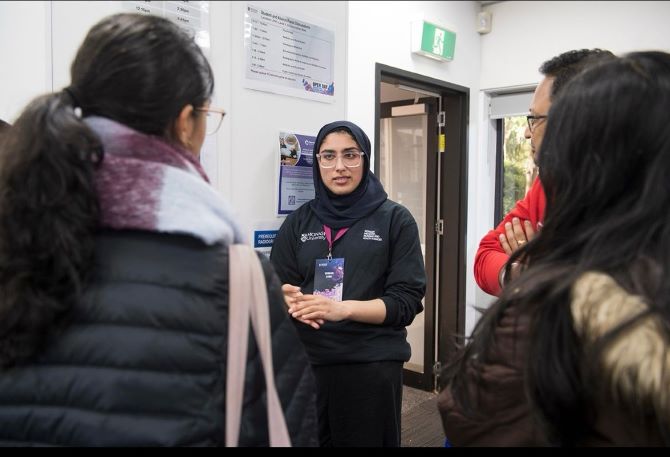
Since her second year, Tehnan has been involved in the Access Monash mentoring program, which she describes as "absolutely one of the best things I've done for myself." As a mentor, she supports Year 11 and 12 students from low socio-economic backgrounds in their university transition.
The impact of mentoring is meaningful and rewarding. Recently, she encountered a former mentee who is now studying their dream course and mentoring someone else in the program. "I love that my positive influence on someone's life is passed on." Now as a mentor leader, she helps other mentors through their journey, running workshops and events that support professional development, skills that complement her healthcare training beautifully.
Tehnan's favourite spots on the Clayton campus
Tehnan spends a lot of time in the queue for Share Tea during exam season – "Everyone deserves a treat after long study sessions, right? Or maybe two treats?!”
Her favourite spot for winding down is the Women's Lounge, which she discovered in her second year. "It's a space where I often came across people from all walks of life, and there was always such an inclusive and comforting vibe. Some days I'd cosy up under the weighted blanket and sneak in a nap between classes; other times, I'd make myself a coffee and quietly recharge."
The space fostered spontaneous connections too. "Once, a girl I'd just met asked if she could rehearse her presentation with me, and we ended up chatting for ages. That kind of spontaneous connection felt so natural."
Tehnan's advice to future students
"If you’re feeling nervous about starting university, remember that most people aren’t entirely sure what they want to do. “Sometimes, even if they think they know, their plans can turn out differently. There are many opportunities available in every direction, and if you look closely, you’ll find a place where you belong."
How to make the most out of Open Day
Tehnan also emphasises the importance of asking practical questions during Open Day. Reflecting on her own experience, she wishes she'd known about the financial realities of clinical placement. "I didn't realise that the 48 weeks of placement, including the six-month rotation in the final year, were completely unpaid. This is something you should be made aware of early on, so you can plan ahead and take care of yourself along the way."