News and events
News and events
CryoEM used to solve mystery about diseases driven by uncontrolled cell growth, including cancer and epilepsy
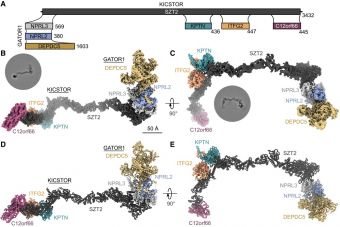
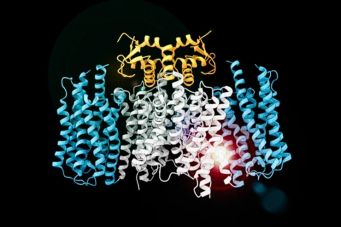
Monash University researchers have uncovered how the KICSTOR–GATOR1 complex acts as a cellular “brake,” switching off growth when nutrient levels fall. Using advanced cryo-EM imaging, the team—co-led by Monash BDI’s Professor Andrew Ellisdon and MIPS’ Associate Professor Michelle Halls, with first authors Dr Chris Lupton and Dr Charles Bayly-Jones—revealed how KICSTOR positions GATOR1 to halt cell growth. The discovery, published in Cell, sheds new light on why growth control fails in diseases such as cancer and certain childhood epilepsies, offering a powerful foundation for developing therapies that restore healthy cell regulation.
Using AI to develop a way to keep CRISPR in check
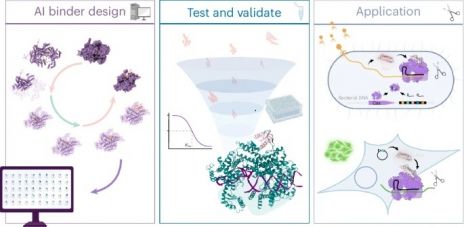
A team led by Snow Medical Fellow Associate Professor Gavin Knott at the Monash University Biomedicine Discovery Institute (BDI) in collaboration with Dr Rhys Grinter at the Bio21 Molecular Science and Biotechnology Institute at the University of Melbourne have published a study in the journal, Nature Chemical Biology, that describes the use of AI technology to develop a highly successful and rapid approach to create anti-CRISPR molecules. Lead author and protein designer, Monash University’s Dr Cyntia Taveneau, says that “using AI-accelerated protein design, we rapidly produced functional inhibitors of CRISPR that function in bacterial and human cells”.
BDI Advancing Research Excellence by Platform Staff Award
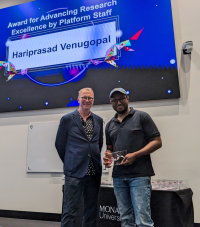
Hari Venugopal received the inaugural BDI Advancing Research Excellence by Platform Staff award at the 2025 Monash BDI Celebration and Awards for Outstanding Achievement ceremony. Hari was recognised for driving global accessibility in cryo-electron microscopy and his contribution to multiple high-impact publications. Congratulations, Hari!
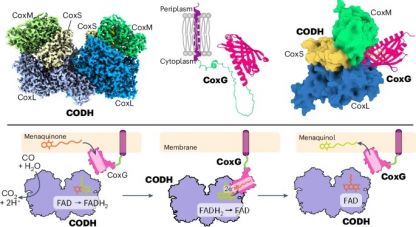
Study reveals how microbes help detoxify our atmosphere
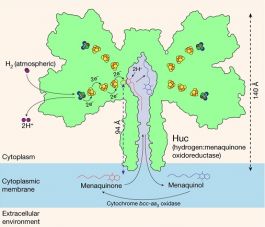
Diverse bacteria and archaea use atmospheric CO as an energy source. This study uses cryo-electron microscopy to show how microbes use CO dehydrogenase to extract energy from CO. This enzyme is used by trillions of microbes in soil and waterways and helps to reduce levels of CO in the atmosphere. (Kropp, A., Gillett, D.L., Venugopal, H. et al. Quinone extraction drives atmospheric carbon monoxide oxidation in bacteria. Nat Chem Biol (2025). https://doi.org/10.1038/s41589-025-01836-0)
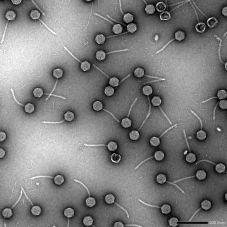
Telomere phages are more prolific than we thought
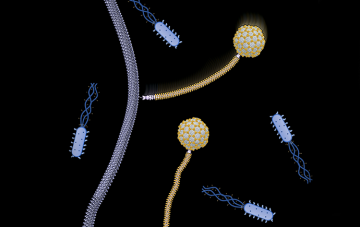
This study looked at bacteriophages (phages), which are viruses that infect bacteria and come in many forms. In particular, researchers investigated telomere phages, a type of phage that until now was considered a ‘curiosity’. Only their unique DNA replication mechanism had been studied. For more than 20 years of intensive bacterial genomics, telomere phages remained hidden in plain sight. "We have missed an entire aspect of biology" said Professor Lithgow from Monash BDI. (Byers et al (2025) Telomere bacteriophages are widespread and equip their bacterial hosts with potent interbacterial weapons. Science Advances DOI: 10.1126/sciadv.adt1627)
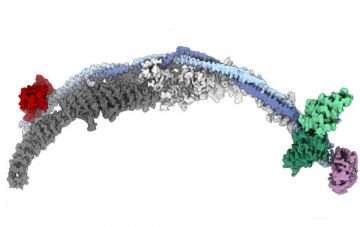
World first: Map of the structure of cell growth regulator
Researchers from Monash BDI and the Ramaciotti Centre for Cryo-EM used state-of-the-art cryo-electron microscopy to determine the structure of the human tuberous sclerosis complex (TSC) molecule. TSC acts as a molecular 'handbrake' to ensure our cells stop growing when required.

ARC LIEF funding for in situ structural biology
A/Prof Georg Ramm has led a successful application for funding to establish an Australian facility for in situ structural biology. The addition of a dedicated cryo-plasma focused ion beam microscope to the existing suite of instruments will enable cryo-electron microscopy on a large range of samples from bacteria, plants, animal cells, tissues and organs to soft materials. This project expects to reveal new structural information in situ - generating knowledge in the fields of microbiology, cell and developmental biology and in bioengineering and materials science. Expected outcomes are fundamental discoveries, training opportunities, international collaborations, and high impact publications. This project should provide significant benefits through underpinning innovation in renewal energy generation and storage, drug delivery, and nanotechnology.
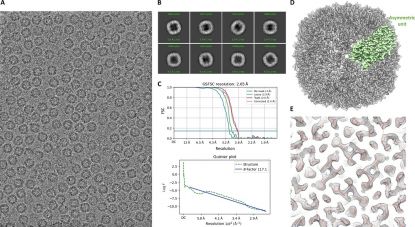
High-resolution cryo-EM using a common LaB6 120KeV TEM
Experiments done in the Ramaciotti Centre for Cryo-EM show that a common 120-keV LaB6 TEM (such as the Tecnai G2 Spirit TWIN) can be retrofitted with a sub-200KeV optimized direct electron detector to massively boost its performance level. This could provide a pathway to cryo-EM for institutions that currently do not have the capability, and improve the screening and optimization of samples intended for use in dedicated central cryo-EM facilities. [Venugopal et al (2025) Science Advances DOI: 10.1126/sciadv.adr0438]
2023 Frank Fenner Prize for Life Scientist of the Year
The Ramaciotti Centre for CryoEM congratulates Professor Chris Greening. Professor Greening has redefined life through his world-first discovery that microbes live on air.
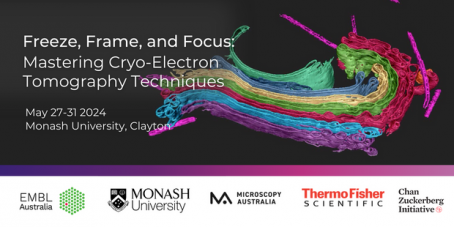
Freeze, Frame & Focus: Mastering Cryo-Electron Tomography Techniques
May 27 - 31 2024 Monash University, Clayton Join us as we plunge deep into the world of Cryo-ET. This course offers a unique opportunity to deepen your understanding of Cryo-EM techniques, with a mix of lectures and workshops delivered by world-class researchers. Cost $500 Apply here: https://www.emblaustralia.org/events-speakers/cryo-em-training-workshop/