Projects

Additive manufacturing and materials for new energy
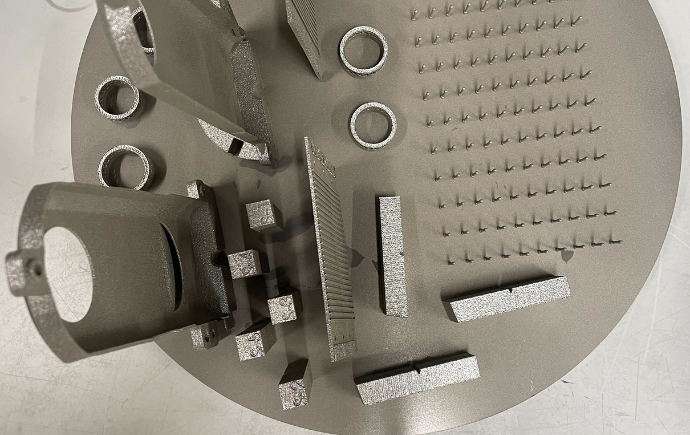
Creating the AM part pathway
Stage 2 of the seawater electrolysis program.Additively manufactured part request system, 3DAM, brought online at Woodside Energy, with over a dozen requests lodged in the first quarter.
Preferred AM vendors assessed and onboarded for consistent part supply.
Broadened relationships with metal powder manufacturing companies, securing the supply chain for Australian AM production capabilities.
Ensured part quality across a range of different 3D printing systems.
Compilation of the Woodside Energy Engineering Standard: Additive Manufacturing.
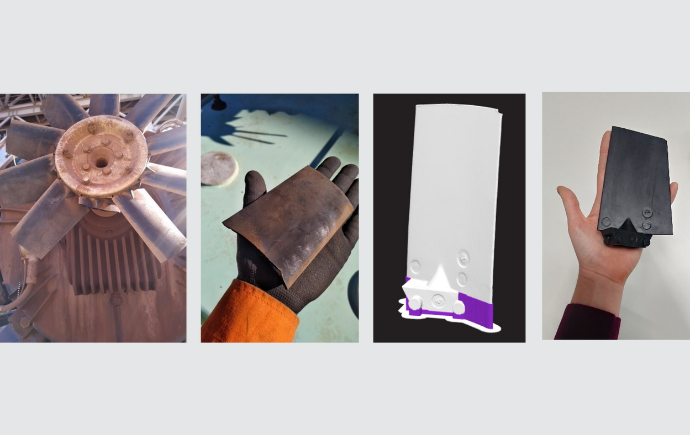
Fast turnaround AM polymer parts
Cooling fan blade, 3D scanned by vendor, manufactured at Monash and supplied to site in under 1 week. Fast turnaround superseded conventional manufacturing lead time by 6-8 weeks, de-risking significant production loss.Fast prototyping of carbon fibre composite hollow ball to replace a cork ball valve unable to be conventionally sourced.
Over 50 parts, ranging from walkie talkie holders to camera mounts, manufactured for Woodside Energy’s robotics team, assisting with the Spector project.
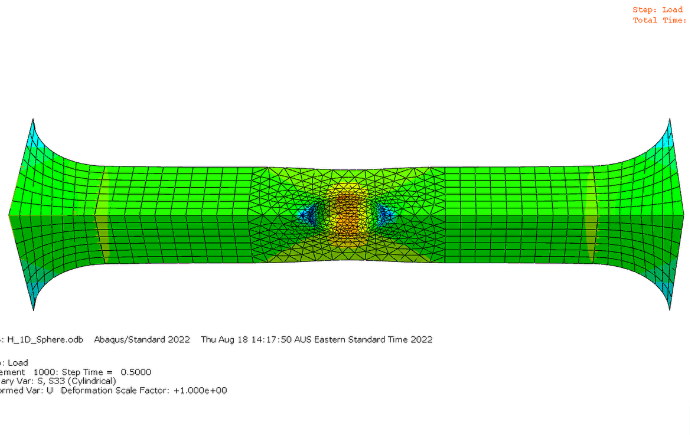
Effects of print anomalies on electro-chemical and mechanical performance
An FEA simulation was constructed to visualise internal stress and strain concentrations surrounding potential anomalies in virtual tensile samples. The simulation was validated by introducing matching artificial anomalies to 3D printed tensile samples.To understand the corrosion of potential near-surface and surface anomalies, which tend to have significantly rough surfaces, polarisation tests were conducted on as-built and finished surfaces to measure the difference in passive film breakdown.
In-situ monitoring on the new EOS M 290 at the University of Western Australia was paired with X-ray CT data to detect real and artificial anomalies to assess the suitability of current detection capabilities of in situ print monitoring.
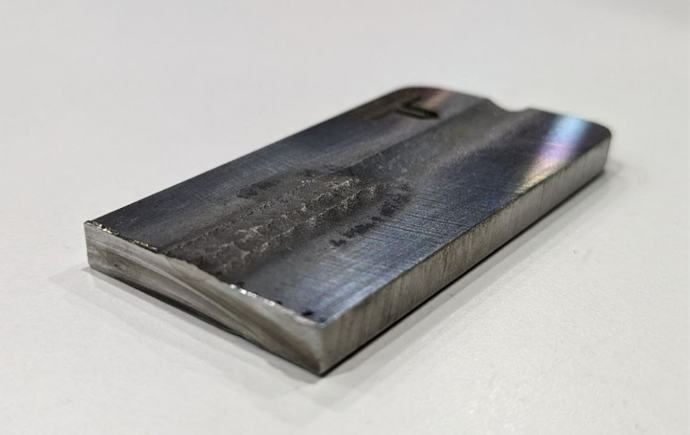
Broadening AM to large parts and part repair
Investigating Wire Arc Additive Manufacturing (WAAM) as a method for large part manufacture (eg. tonnes of material) through mechanical and eletro-chemical testing of a range of potential alloys.Exploring cold spray as a method of repair for thermally sprayed aluminium parts.
Welded AM material assessed across multiple alloy classes to ensure welding as a suitable joining method, widening the implementation potential for AM parts.
AM alloy development for new energy applications
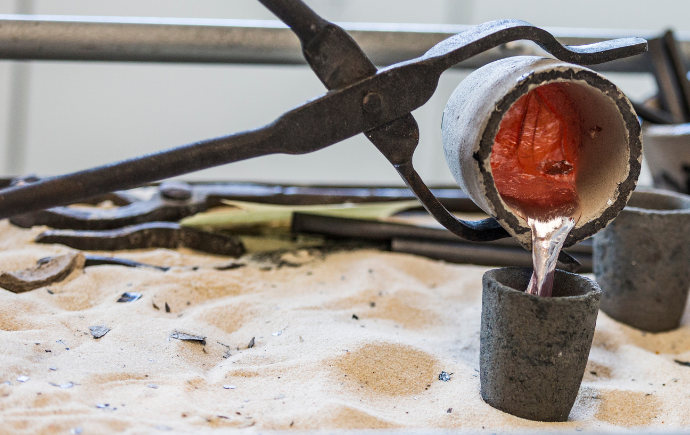
Brand new alloy composition created to cover all service requirements (cryogenic temperatures and highly corrosive environments) and to reduce cost and time of acquiring, developing, servicing and joining separate materials.New composition tested mechanically and chemically against existing alloys certified for AM.
Further iterations to the new alloy composition made and sheet cast and rolled in the US.
In parallel to the above, a commercially available tungsten containing alloy test manufactured by L-PBF to assess the laser processing capabilities of tungsten containing alloys.
Smart engineering alloys
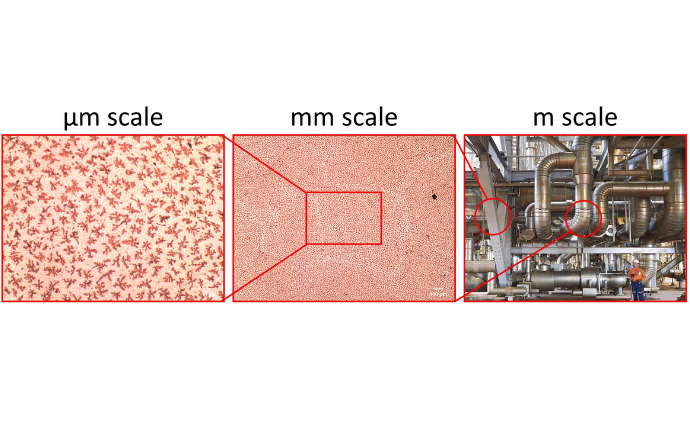
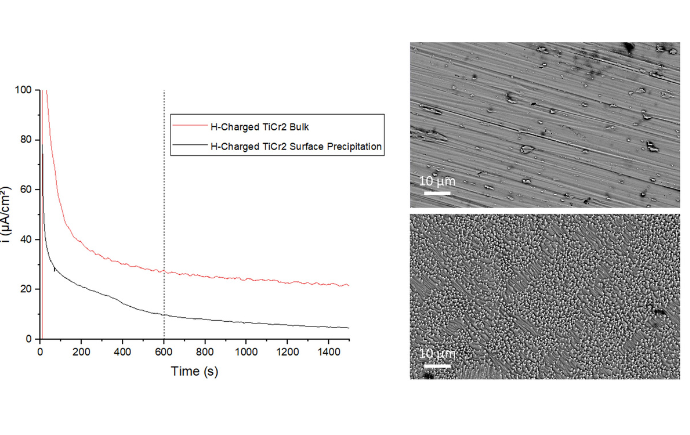
Investigating smart structural alloys which could provide scalable solutions to CO2 conversion, hydrogen storage and anti-microbial surfaces.A trial alloy was arc melted and heat treated to create surface precipitates specifically suitable for hydrogen absorption. Lower hydrogen diffusion from the sample with surface precipitate indicated trapping of H within the surface precipitates. To be validated with other characterisation techniques.
ARC Early Career Industry Fellowship grant application submitted to further support this work. Outcome expected Q2 2023.
Hydrogen effects in metals
Exploring hydrogen induced damage, caused when hydrogen atoms diffuse into metals, resulting in embrittlement.AM 316L assessed in direct comparison to conventionally manufactured 316L for hydrogen absorption and desorption.
Samples mechanically deformed to assess hydrogen impact during damage.
Project in collaboration with and running simultaneously to a Curtin University PhD project, exploring the effects of hydrogen on conventional and AM Ni alloys.
Data science
H2 network optimisation challenge
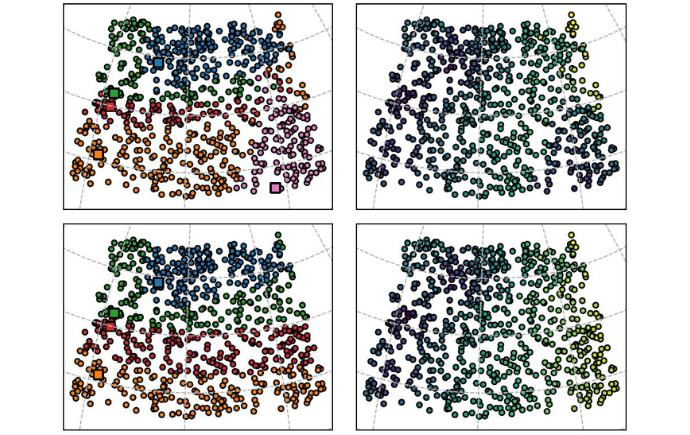
Expanded the interactive optimisation/visualisation software system for optimising H2 networks to include different electricity providers, gas and liquid storage, boiloff, exact latitude/longitude locations rather than state, minimum and maximum production capacity constraints per plane, production change rates for liquefaction units, and the map style requested by Woodside Energy.
Significantly improved the efficiency of the system to handle 700+ demand locations; achieved by modifying the system to use data and/or constraint approximations that allow it to find solutions of very similar quality, orders of magnitude faster.
Added the capability for users to provide a diversity criterion (e.g. different locations for supply plants, significantly different production capacity, etc.) to obtain a given number of near optimal solutions.
Implemented a Continuous Integration software development process that ensures the solutions obtained by the system are correct; achieved by developing several new network models whose solutions must coincide for all available benchmarks, and running the process every time the system is modified.
Implemented a sophisticated User Interface that allows users to explore each solution in detail (by plant, by component, or as a network), to modify the input data obtaining alternative solutions, to obtain diverse solutions for the same input data, and to compare them.
System demonstrated to the Woodside Energy USA team and fully functioning prototype installed in a Woodside Energy server to be tested and evaluated by the Woodside Energy team.
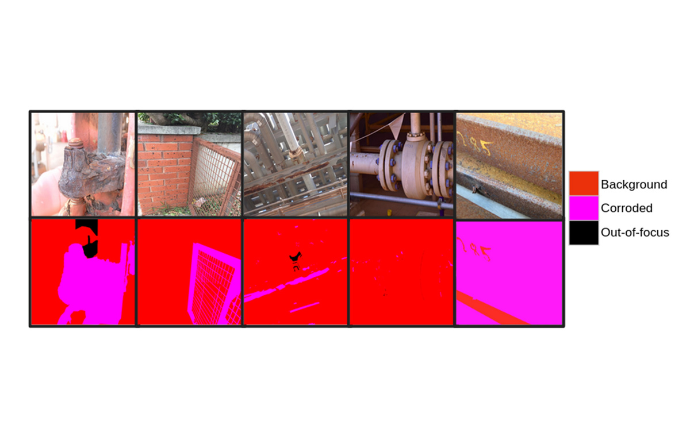
Machine learning for corrosion detection
Received access to 4 data sets of image-spheres from the North West Shelf project (Karratha Gas Plant, North Rankin A, North Rankin B, Goodwyn A) and extracted a large set of standard images from it to increase our (unlabeled) corrosion data set.Explored the use of VQ-VAE neural networks for anomaly localisatio at the image pixel level, as they are suitable for learning from unlabeled data with quality on par to GANs but without the risk of model collapse, easier training and better explainability.
Implemented a semi-supervised VQ-VAE neural network with a novel anomaly score calculation and performed an extensive evaluation of its supervision/accuracy trade-off on several datasets, significantly outperforming other state-of-the-art methods. Paper submitted to IEEE ICME conference.

Pipe routing
Extended the 2D state-of-the-art Jump Point Search (JPS) algorithm used widely in the gaming industry to 3D and made it suitable for computing pipe routes (as opposed to classical paths in 3D game path finding); achieved by developing powerful new path-symmetry breaking rules capable of dealing with both confined and large open spaces.Proved that the Corner-Cutting methods proposed by others in the literature are non-optimal, may produce incorrect solutions, and are difficult to repair, confirming the need for the more complex rules used by our 3D JPS algorithm.
Developed three large datasets to be used by the research community for evaluating progress in the new area of 3D path finding algorithms; our creation method ensures the datasets are complex, diverse and fair
Results published (Nobes, Thomas K., et al. “The jps pathfinding system in 3d.” Proceedings of the International Symposium on Combinatorial Search. Vol. 15. No. 1. 2022.)
Decommissioning
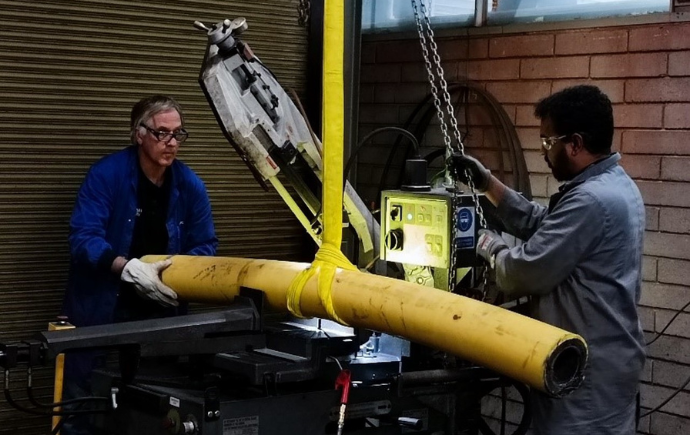
Separating and processing of flexible flowlines
Image digitialisation for pipe workability established, recognising the difference between non-damaged and damaged pipelines, to ensure the success of robotic material separation.
Large pilot pyrolysis rig constructed for processing polymer at atmospheric pressures and circularity of processing confirmed. Further samples required to ensure robustness of rig across a variety of flowline types and sizes.
Hosted academics from Melbourne University, RMIT and Swinburne to form a decommissioning thought hub in Melbourne.
Energy partnership collaborations
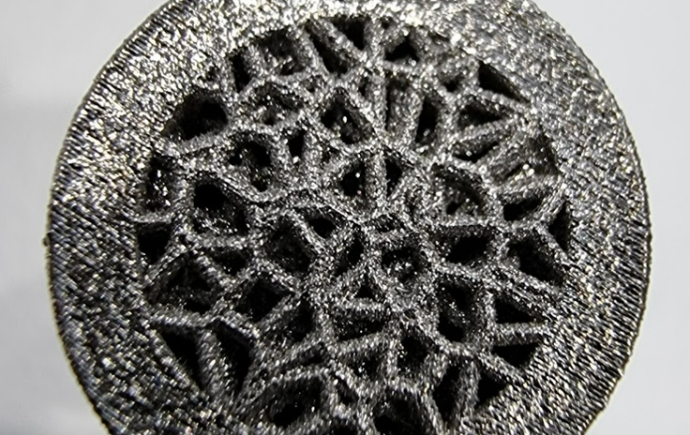
Fast pilot plant part design and prototyping
Bacteria counting device prototyped and manufactured to assist the conversion of waste gasses into sustainable animal feeds.
Linkage Project awarded for $405,591 over 3 years (2023-2025 inclusive) for ‘3D Printed Catalytic Monoliths for Energy Efficient Carbon Conversion’, using FutureLab AM design and prototyping capabilities.
AM design used to explore high surface area scaffold designs for new catalysts.