Projects

New energy technologies
Efficient electrodes
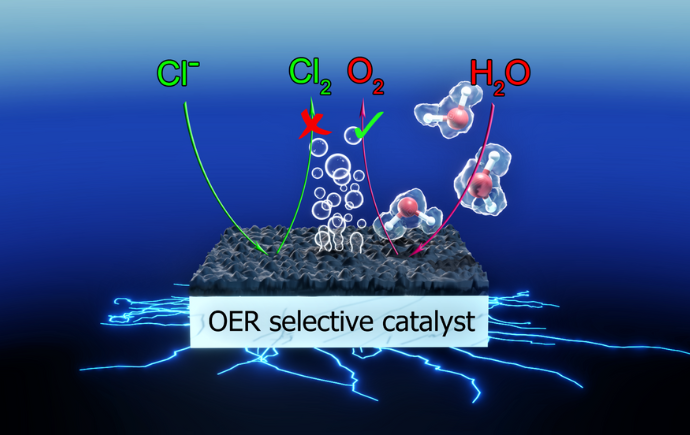
Stage 2 of the seawater electrolysis program.Project is designing an electrolyser capable of splitting purified sea water to H2 and O2, by development of electrocatalysts.
Current works has demonstrated enhanced mass-activity of oxygen evolution catalysts by oxidatively induced etching (ACS Energy Lett. 2022, 7, 3910−3916). A new family of electrocatalysts operating with ~90% selectivity for the oxygen evolution reaction in simulated seawater has been developed.
New electrolyser design for electrolysis of seawater without the use of expensive ion-selective membranes has been proposed.

Liquid H2 boil-off gas management
Current liquid hydrogen storage tanks rely on complex double-shelled configurations with active cooling to minimise boil off.This project is assessing the feasibility of utilising para-ortho conversion for boil-off gas reduction through modelling and experimentation.

Ultra-low cost photovoltaics
Re-imagining solar photovoltaic PV at a utility-scale to drive down the levelised cost of energy by maximising the energy density of shipped PV and reducing the deployment costs.This project is developing streamlined ultra-thin and low weight Si-PV, alongside novel deployment and solar tracking solutions to drive down the levelized cost of energy.
A 10kW pilot plant has currently been developed and deployed as a proof of concept.
Solid oxide electrolysis
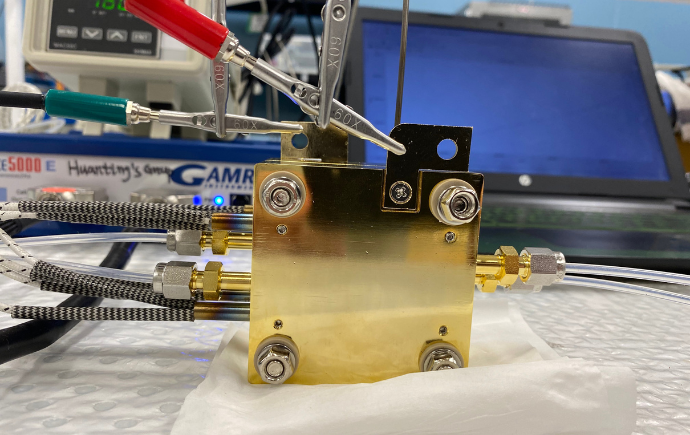
Solid Oxide Electrolysis (SOEC) is an all-ceramic device, which operates at high temperature for applications such as hydrogen production via water splitting and carbon dioxide conversion into CO and other chemicals.Significant efforts have been made to develop SOEC technology and demonstrate SOEC systems from lab to pilot scale over the last decades.
This project is prototyping next generation SOEC for water splitting and CO2 conversion.
Viable pathways for green methanol in the energy transition
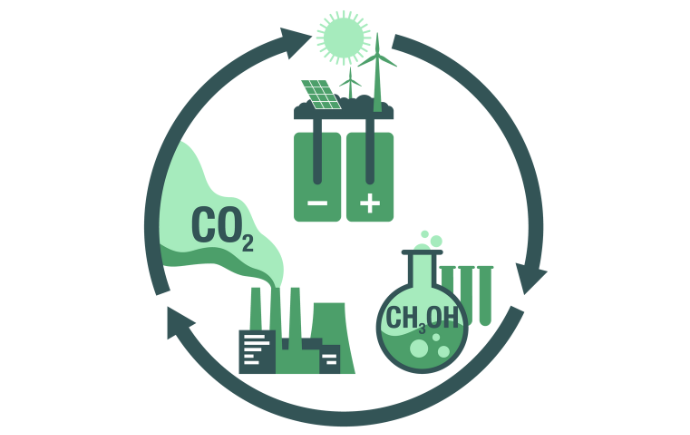
Methanol has been identified as a key chemical industry feedstock and alternative fuel for decarbonization.There are many synthesis routes for methanol from biomass sources or captured CO2, creating potential for small- and large-scale production in a variety of scenarios.
This project’s aim is to develop a comprehensive and adaptable sustainability assessment framework to determine the viability of green methanol production and use by case.

Process integration of net zero energy, hydrogen and ammonia production
Modelling stand-alone process for Net Zero cycle, hydrogen and ammonia production.Sensitivity analysis and optimisation in order to fully analyse the system’s behaviour.
Investigating different scenarios of integration and processes by energy and exergy analyses.
Carbon capture, conversion, and utilisation
CO2 conversion by plasmonic catalysts
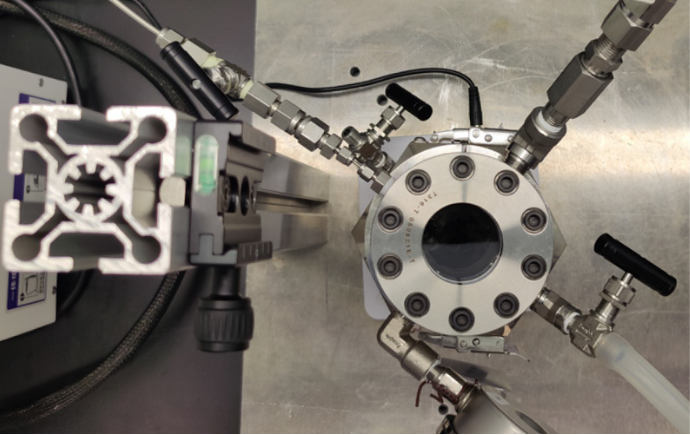
Conventional catalysts for the conversion of CO2 to value-added products require high reaction temperatures and pressures, prohibiting a cost-effective solution.This project is developing new multifunctional nanocatalysts that can efficiently and cost effectively convert CO2 into value added products using plasmonics.
Designed to be readily integrated with renewable energy, this approach will enable the production of chemicals under near.
Gas phase CO2 conversation
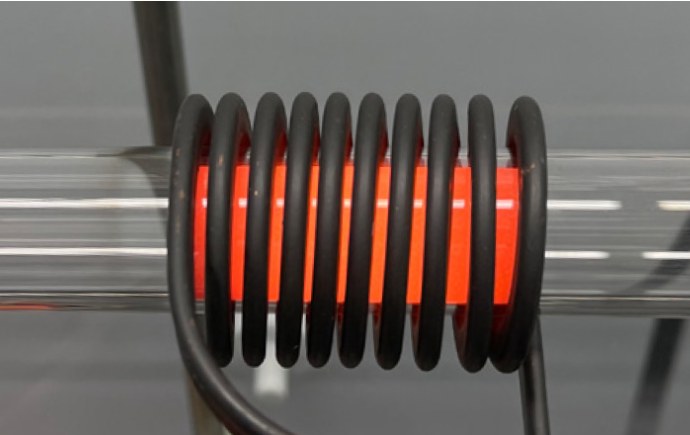
An attractive option for CO2 utilisation into fuels and chemicals is the conversion of CO2 into synthesis gas (CO+H2) via dry or tri-reforming of methane.These reactions however are highly endothermic, have associated catalyst coking issues and hence pose challenges for large scale applications.
This work is using novel heating technologies to reduce energy requirements, while also incorporating.
Direct air capture of CO2
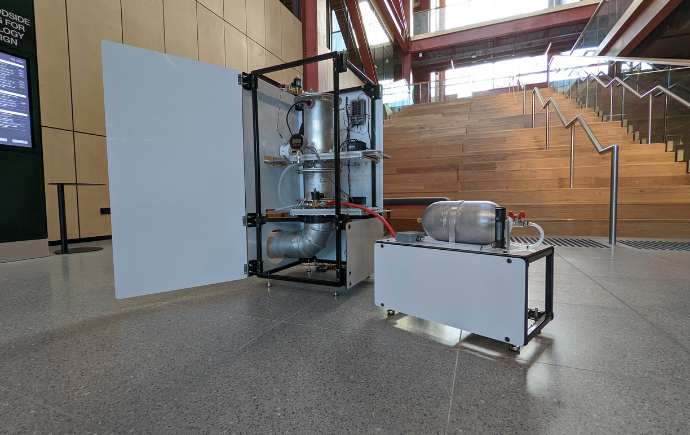
Direct air capture (DAC) of CO2 has been identified as a prospective pathway to mitigate the effects of global warming.The aim of this development is to design an energy and cost-efficient DAC technology that is economically scalable and will cost less than $150 per tonne of CO2 captured.
Current work has developed prototypes for testing adsorbents, contactors, and process conditions for both feed and regeneration conditions.
The final solution will be scalable to 1000t/day either through sizing or modularity.
Conversion of waste gases into sustainable feeds
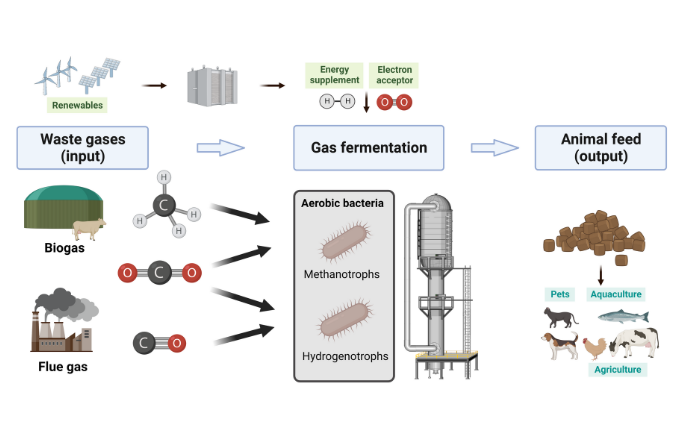
Synthetic biology is turning biology into the manufacturing paradigm of the future.This project uses chemoautotrophic bacteria to efficiently convert waste gases into protein-rich biomass.
By utilisation of waste gases, including CO2, CH4, and CO, it provides a novel biological process to convert waste gas emissions into sustainable feeds.
Acetic acid production by CO2 conversion
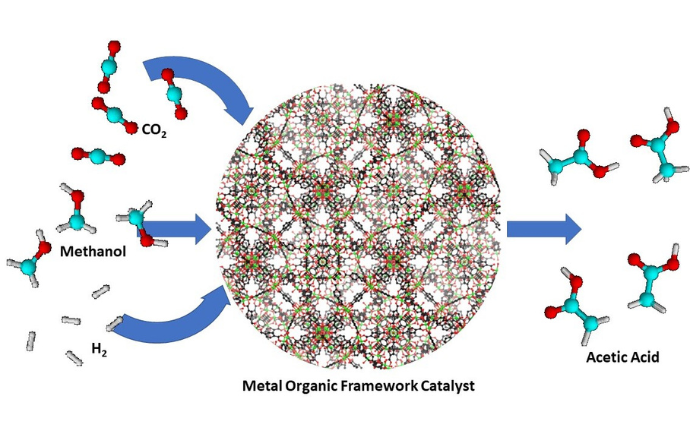
Acetic acid is produced with high conversion and selectivity over novel metal organic framework catalysts.Hydrocarbonylation reaction of methanol with CO2 and hydrogen as the reactants.
Energy leadership

Green energy on the global stage. Technical and economic potentials of hydrogen production
A multi-disciplinary and multi-stakeholder approach that examined inter-related thematic dimensions that impact the future green hydrogen market.The project developed insights into policies, initiatives and market development for green hydrogen, with reference to specific global regions.
For those specific global regions investigated, regional characteristics were also investigated using geospatial approaches.
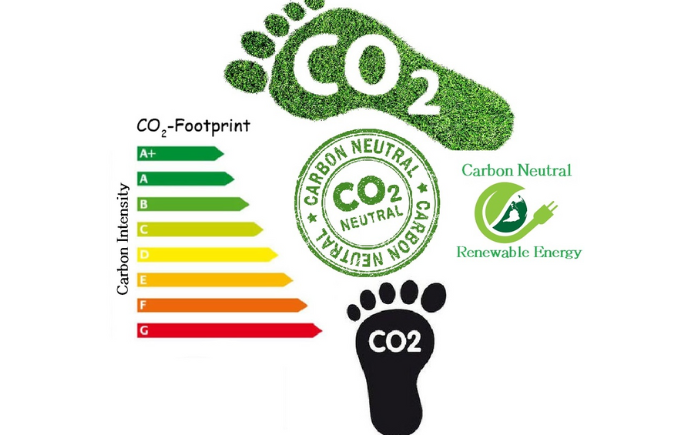
Analysing the impact of carbon labelling and carbon neutral certificates on consumer behaviour
Focussed on carbon labelling schemes in the Australia energy sector.Explores how market mechanisms, socio-economic factors and policy tools can influence sustainable consumer choices.

Evaluating Australia's commodity export pathways in the green hydrogen economy
Development of a novel shipping cost toolbox, "Xporter", capable of computing optimal shipping routes for green commodities from any origin port to any destination port globally.
Shaping Australia's hydrogen market
This project investigated the development of hydrogen markets in Australia.More specifically, focusing on the forces influencing hydrogen energy adoption for business customers and the potential role of hydrogen hubs in the energy transition.
Life cycle analysis for energy pathway scenarios
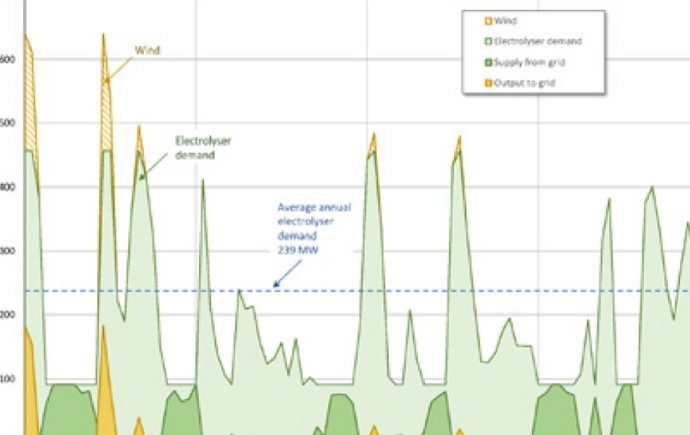
Using a prior developed tool, this project extended current work and conducted a detailed life cycle analysis for energy export scenarios for two locations in Australia.In this phase the model was extended to incorporate information for carbon intensity of grid-based electricity under a range of scenarios as an important requirement for certification of hydrogen production for grid-connected projects.

Optimising Australia’s Electricity System: The Role of Blockchain Technology
This project aims to develop a novel framework with a set of emerging solutions, such as blockchain technology, that can effectively improve existing operational modes, such as making a sustainable long-term investment, maximising the utilisation of multiple energy resources, optimising electricity capacity allocation and coordination, and designing flexible pricing schemes.