
Turn climate passion into impact: Monash launches new Bachelor of Climate, Society and Economy
Monash University has a new degree, the Bachelor of Climate, Society and Economy, designed to shape the next generation of climate leaders for a rapidly transforming economy.
Commencing at Clayton in February 2027, the degree is a collaboration between the Faculties of Arts, Science and Business and Economics. Rather than siloed study, it delivers a holistic, interdisciplinary model to equip graduates to lead Australia’s urgent climate transition.
Young people want careers that deliver real-world impact
Dr Svenja Keele, Director of Teaching and Learning at Monash’s School of Social Sciences, said the Bachelor of Climate, Society and Economy directly addresses the findings of the 2025 Mission Australia Youth Survey, which show that climate change is a mainstream concern for a majority of young people in Australia.
“Students told us they want a career that makes a genuine difference. They want skills and opportunities to contribute to solutions but often lack the confidence to pursue clear career outcomes in a new professional landscape being reshaped by climate risk. This degree is the ‘climate multiplier’ they’ve been looking for. We are helping young people catalyse frustration into meaningful action.”

Dr Svenja Keele, Director of Teaching and Learning, Monash School of Social Sciences
Addressing Australia’s green skills shortage
Australia is facing a critical shortage of 'green' talent. According to the LinkedIn Global Green Skills Report 2024, global demand for green skills is growing at 11.6%, while supply is lagging at just 5.6%. The degree directly targets this gap, preparing a new wave of climate-capable professionals who can operate seamlessly across scientific, economic and social dimensions.
Mrs Caroline Sanz-Veitch, Senior Lecturer (Practice) in the Faculty of Business and Economics, noted that employers across every sector are actively seeking graduates who understand climate change from scientific and social-economic perspectives and can translate that knowledge into strategic decision-making. As extreme weather losses in Australia average $4.5 billion annually, navigating climate risk has evolved from a niche specialty into an essential function across business, government and international organisations.
Curriculum overview: a dynamic, hands-on student experience
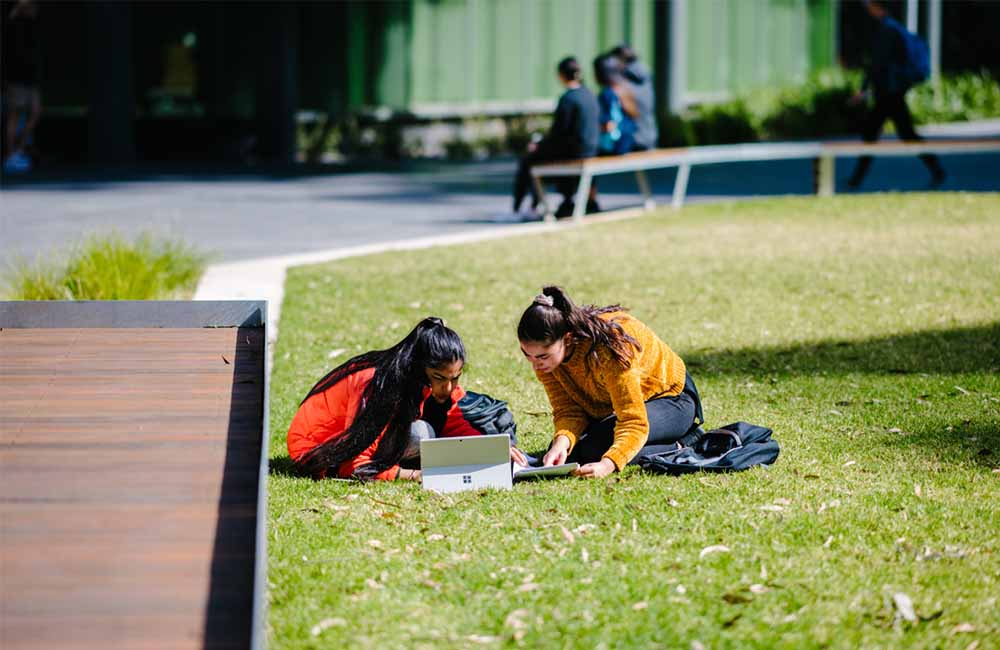
Monash students collaborating outdoors at the Clayton campus
Unlike degrees that focus on isolated aspects of sustainability, the Bachelor of Climate, Society and Economy addresses the whole challenge through an immersive, practical learning model. The core curriculum integrates climate science, policy, economics, communications, statistics, and ethics, giving students both breadth and depth.
Core learning pillars and experiences
- Applied learning: industry mentoring, field trips, study tours, and hands-on industry projects designed to build real-world problem-solving skills.
- Global exposure: opportunities to participate in Flagship Rich Educational Experiences (FREE) and Collaborative Online International Learning (COIL) climate justice projects alongside Monash Malaysia.
- Customisable pathways: tailored specialisations allowing students to align their degree with specific passion areas, including:
- sustainable business
- global insecurity and international development
- climate science
- ecosystem resilience and conservation
- climate policy
Where can this degree take your students?
The program equips graduates with versatile, human-centric skills that modern workforces demand. Professor Richard Reina, Deputy Dean Education, Faculty of Science, said graduates will be prepared for high-demand, high-salary career pathways, with entry-level roles in government policy, corporate sustainability, Environmental, Social and Governance (ESG) reporting, climate consulting, and clean energy transition.
“As AI automates routine analytical tasks, workforce demand is shifting toward distinctly human skills that are difficult to automate: critical thinking, ethical judgment, stakeholder engagement, and problem-solving. This degree sits precisely at that intersection, preparing students to blend technological change with social, environmental, economic, and policy expertise.”
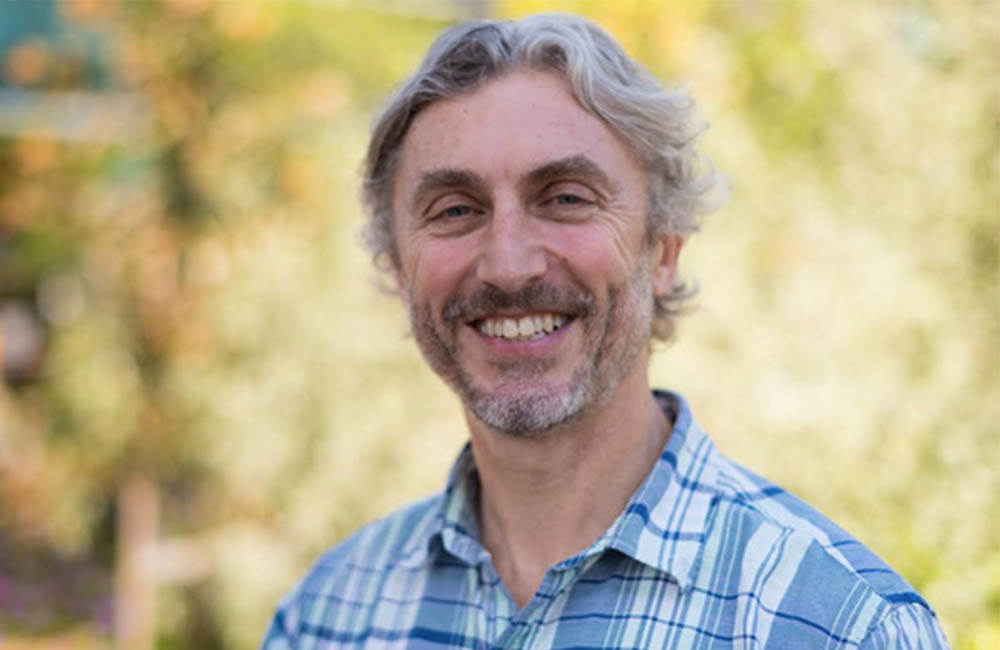
Professor Richard Reina, Deputy Dean Education, Monash Faculty of Science
Career pathways by sector
Graduates of the Bachelor of Climate, Society and Economy will be positioned for diverse roles across consulting, government, corporate, and NGO sectors, including:
1. Consulting and corporate sustainability
- climate change and sustainability consultant (e.g., Big Four and niche firms)
- sustainability strategist
- ESG analyst
- net-zero strategist
- carbon accountant
- climate risk manager
2. Government, policy and energy
- policy implementation officer (e.g., Department of Climate Change, Energy, the Environment and Water)
- climate policy advisor
- environment reporter
- disaster recovery planner
- ecosystem resilience planner
- net-zero program lead
3. NGOs, global networks and sustainable operations
- senior coordinator (e.g., UN Global Compact Network Australia)
- customer and operations coordinator (e.g., Sustainable Choice Group)
- climate education and community engagement officer
- campaigner
- international development officer
- climate justice advocate
Help your students lead the future
By uniting scientific rigour, economic strategy and social insight, the Bachelor of Climate, Society and Economy ensures graduates step directly into high-value roles where they can drive real-world transformation.
Explore full course details and entry requirements
...
...