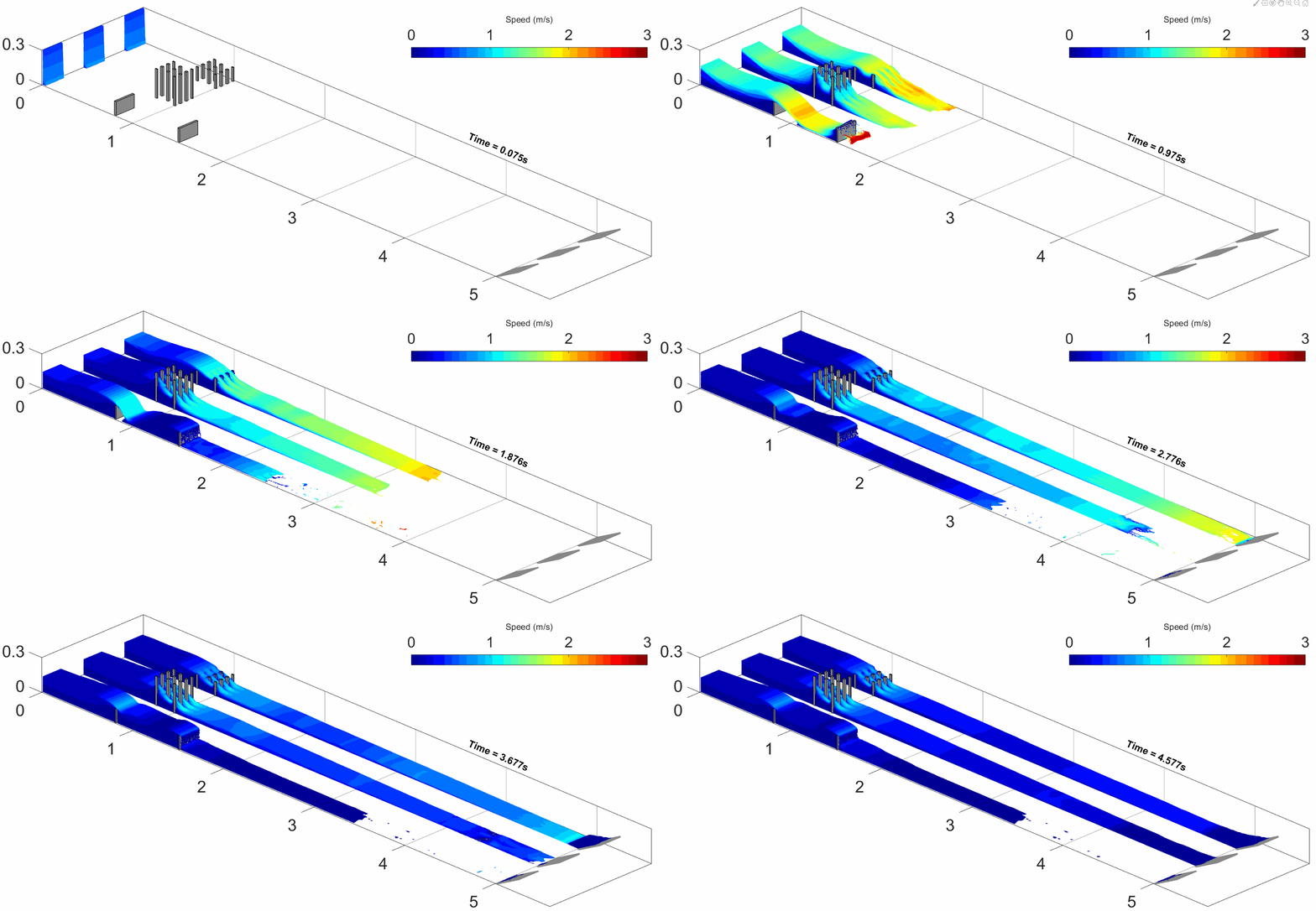
Digital twin modelling of tailings facility
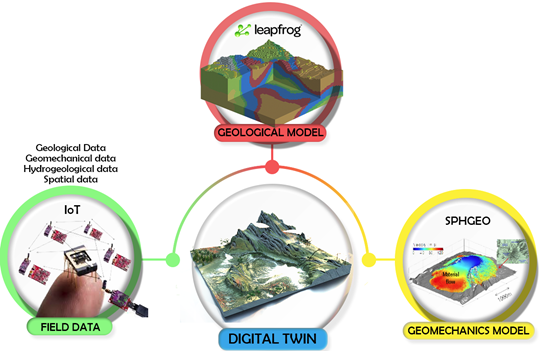
Tailing storage facilities (TSFs) are among the largest earth structures built to store tailings materials from processing of mined ore. The fundamental difference between TSFs and other earth structures is that TSFs grow with the life of mining cycle to accommodate increased tailings, making the safe management of TSFs challenges and is a huge concern to the mining industry. As one of the key requirements, the safe management of TSFs requires a dynamic and transparent process capable of documenting the evolution of TSFs and their performance, including continuous changes of sub-surface data and how these changes affecting the safety or even potential failures of TSFs. Digital twin modelling is one of the emerging modern modelling technology that can fulfil the above need for TSFs. Based on the data-driven approach, digital twin models can incorporate various data sources to bridge the physical and digital worlds, providing virtual representations of TSFs that can be constantly examined and tested across their lifecycle without real-world interaction.
One of the critical missing components in all existing digital twin models for TSFs is a novel and reliable analysis tool capable of taking real-time field monitoring data and weather forecast information to predict the possibility of TSF failures as well as to foreseen the impact of such failure on the surrounding environment should they occurs (i.e. foreseen destructive zone for mitigation and planning).
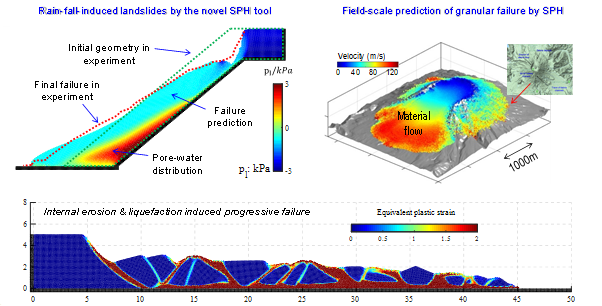
At Monash University (MCG-Lab), such a novel analysis tool has been developed for many years and demonstrated to be capable of predicting the entire failure process of granular materials, from the onset of failure to the post-failure process. This novel analysis tool is now ready to be combined with existing digital twin models to establish a unique and reliable digital twin model for TSFs, which can predict the possibility of TSFs’ failure well before they happen as well as to foreseen destruction zones caused by those failures should it happen, thereby providing sufficient time for planning evacuation as well as to minimising damages caused by such disasters.
Our novel computational tool alone has been well validated and demonstrated its capacity to provide reliable and efficient solutions for predictions of the large-scale failure of earth structures failures and the outbursting flows of granular/muddy materials. This analysis tool has been uniquely developed at Monash over the past ten years and is not available in any existing commercial software packages.
Animations
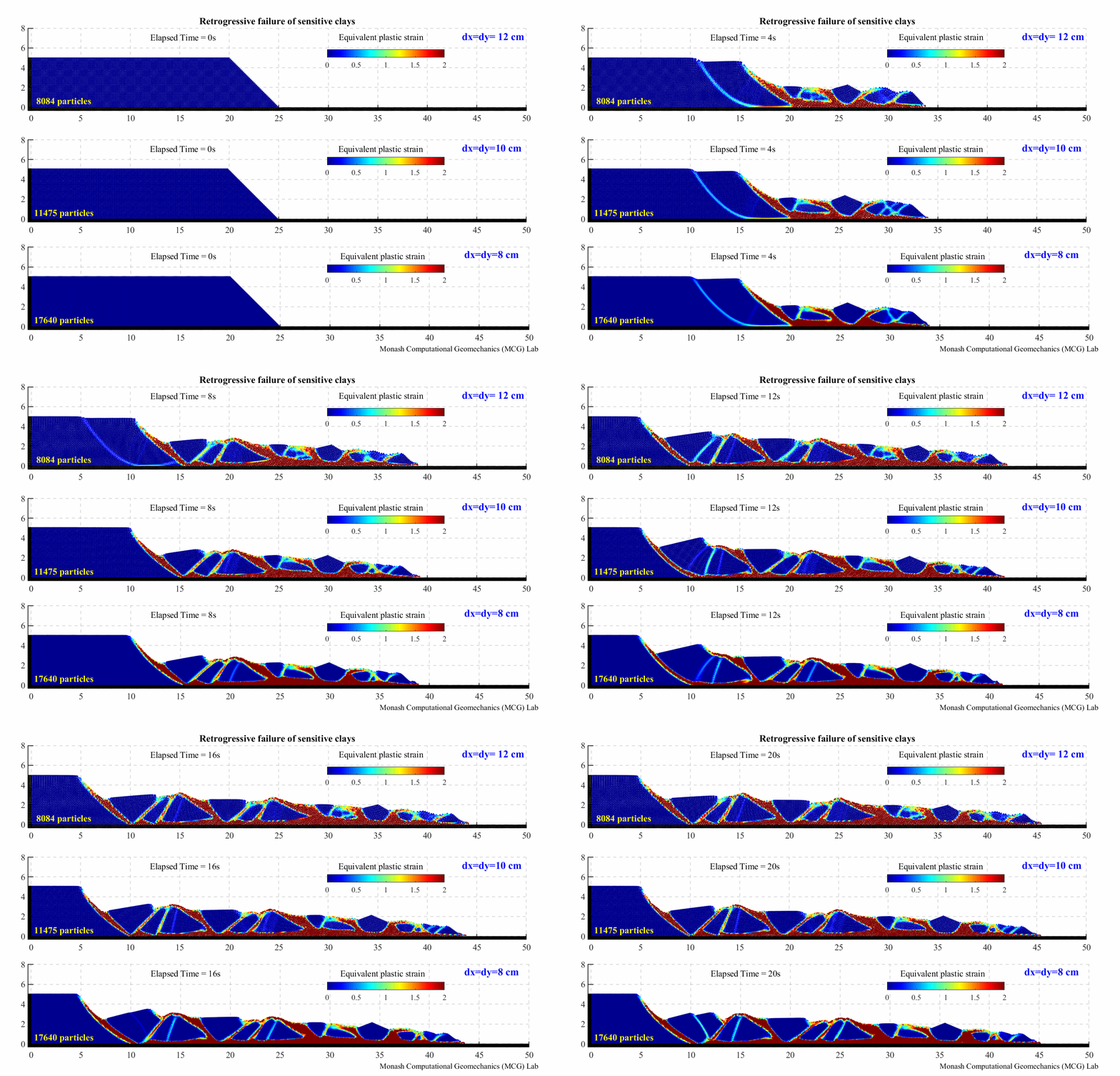
Retrogressive failure of sensitive clays
Lavar flow
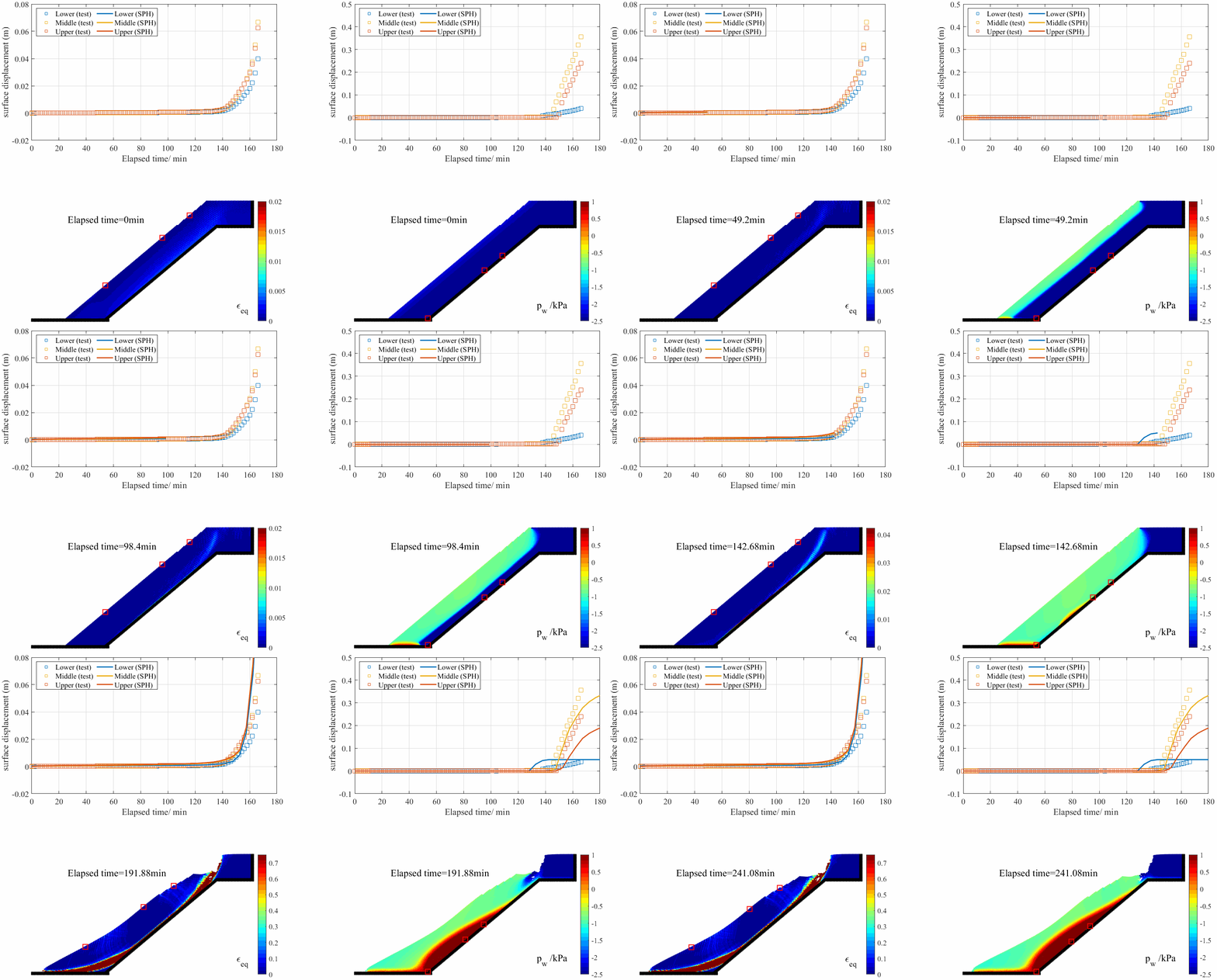
Rainfall-induced slope failure
Interaction between debris flow against control structures