
Research
The Movement and Exercise Neuroscience Laboratory conducts research at the intersection of cognitive neuroscience, neurophysiology, and exercise science. We use cognitive neuroscience tools including transcranial magnetic stimulation, electroencephalography, and brain imaging, to stimulate and record from the brain. These tools are used to gain insight into the neural mechanisms of movement, learning, and decision making. We research the impacts of ‘priming’ the brain with cardiorespiratory exercise to improve learning and cognition. Our goal is to determine exercise parameters that can optimise brain function, in healthy older adults and in those living with neurodegenerative diseases such as Parkinson’s disease.
Exercise and the brain
How does physical exercise affect brain function?
What neural mechanisms underpin the effect of exercise on learning and memory?
What intensity of exercise is optimal for preventing cognitive decline and reducing motor impairment?
Our current focus is to understand the effects of cardiorespiratory exercise on brain function. We are particularly interested in how exercise affects processes that are responsible for learning and memory.
Figure 1
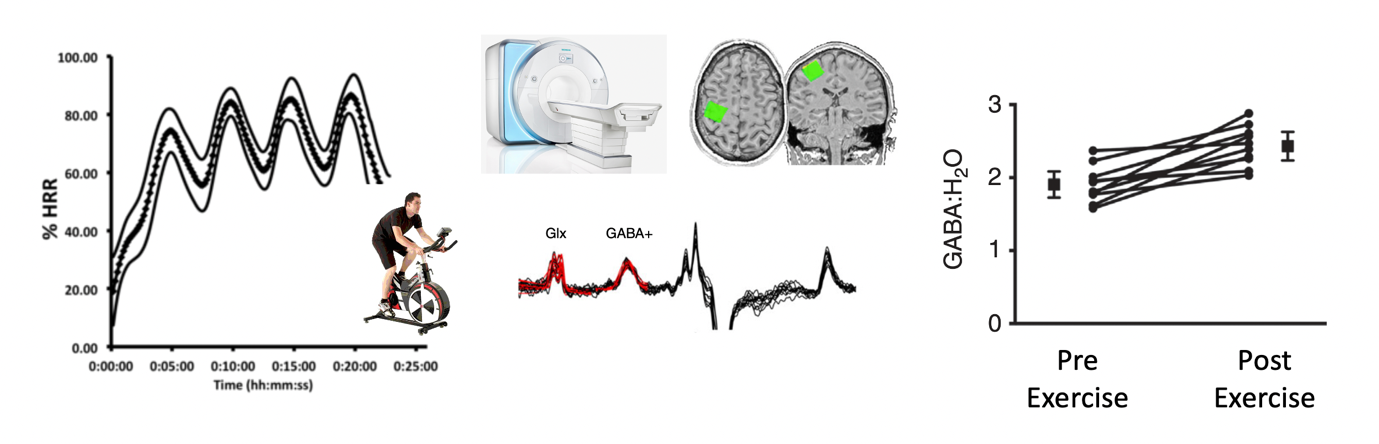
Imaging the effects of high-intensity interval training (HIIT) on neurometabolite concentrations using magnetic resonance imaging. In this line of research, brain images and spectroscopy sequences are obtained before and after a bout of HIIT exercise. This figure shows that exercise is associated with a 20% increase in the inhibitory neurotransmitter gamma-aminobutyric acid, GABA. Source: Coxon et al., (2018) Journal of Physiology.
Figure 2
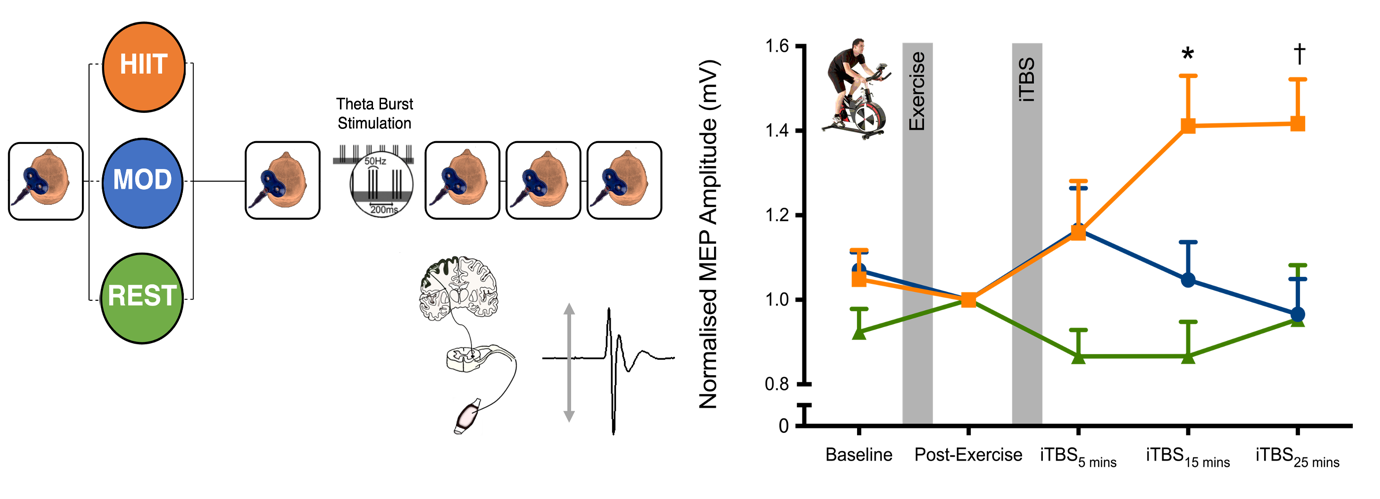
Testing the effect of exercise at different intensities on neuroplasticity. Transcranial magnetic stimulation (TMS) is used to stimulate motor cortex and measure the size of the resulting motor evoked potential in skeletal muscle. A stimulation pattern (‘theta burst’) is delivered to induce long-term potentiation effects. Priming the brain with HIIT exercise boosts synaptic plasticity. Source: Andrews, Curtin et al., (2020) Cerebral Cortex.
Figure 3
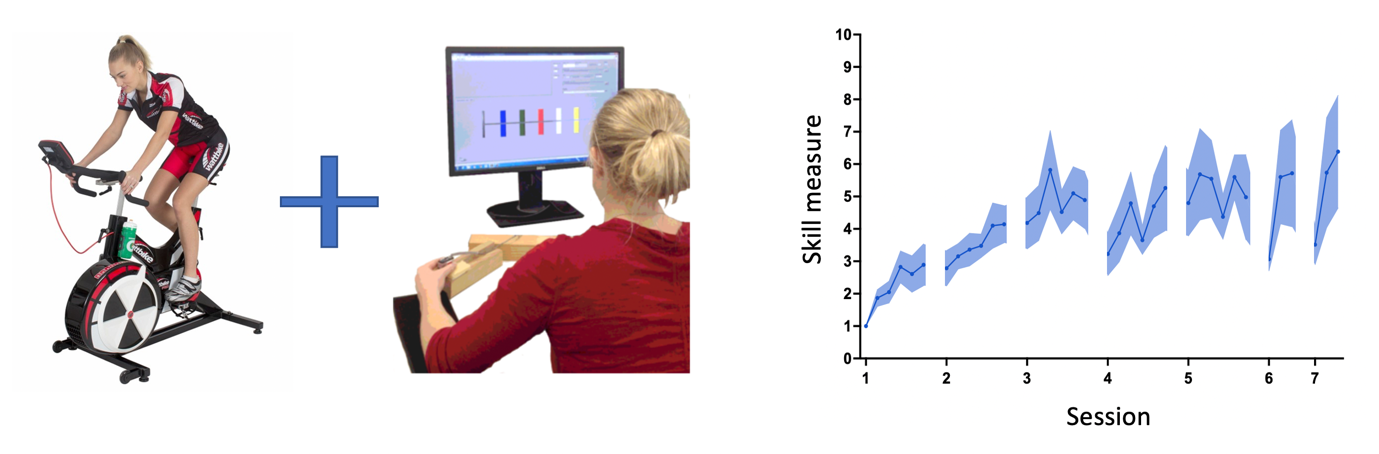
Can this time window of enhanced neuroplasticity help us to learn new skills? We are investigating the effect of repeated coupling of exercise and skill learning.
Cognitive Neuroscience
How do we decide to make one action instead of another?
How does cognition interact with the motor system to guide behaviour?
How does the brain ‘slam on the brakes’ to stop an initiated action?
What neural circuitry underpins the process of accumulating evidence in favour of one alternative over another?
Figure 4
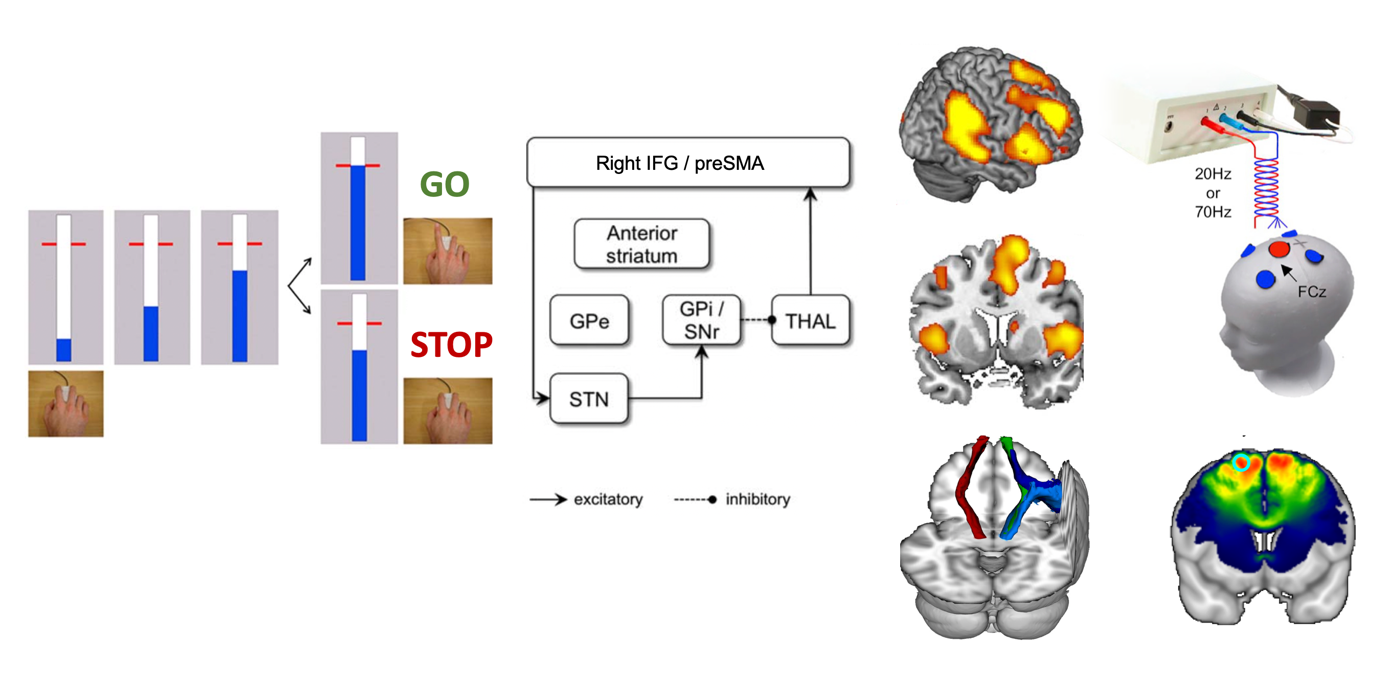
Investigating the neural circuitry of response inhibition (stopping). On most trials, participants make an anticipated Go response at the target line. A Stop cue is infrequently presented signalling the participant must inhibit the response. Successful stopping is thought to involve the cortico-basal ganglia ‘hyperdirect’ pathway. Driving cortical oscillations by delivering 20Hz ‘beta-band’ stimulation during task performance improves motor inhibition. Source: Leunissen et al., (2016) Human Brain Mapping, Coxon et al., (2016) Cerebral Cortex, Leunissen et al., (2022) iScience.
Figure 5
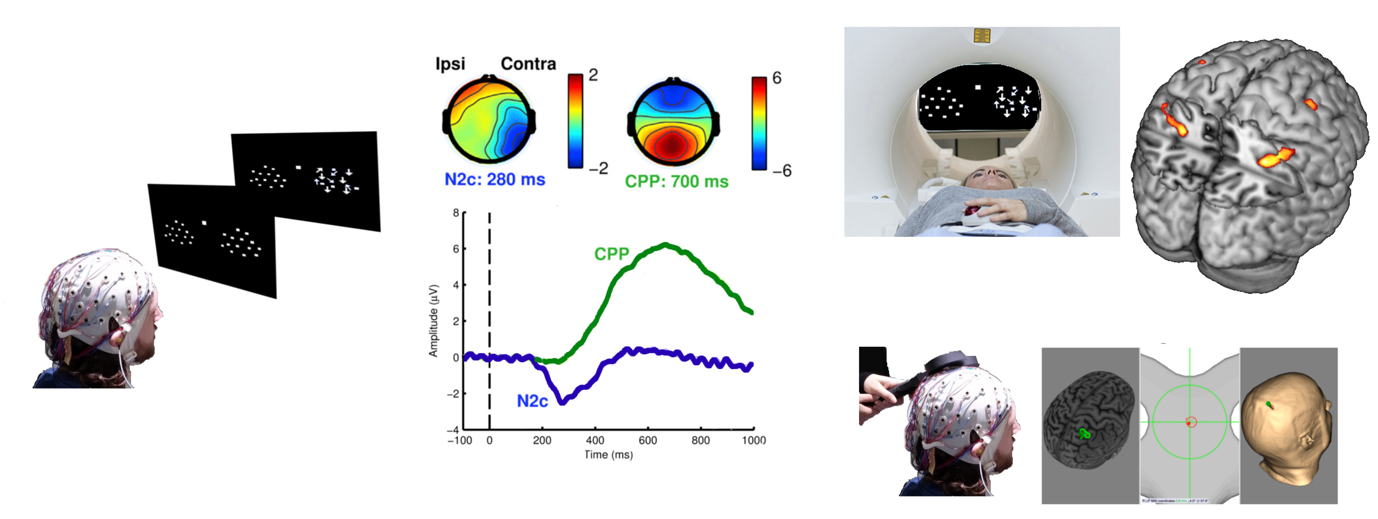
Investigating how the brain accumulates evidence to make decisions. Accurate perceptual decisions can still be made in the presence of noisy sensory information, for example a snowboarder can quickly turn left to avoid colliding with a skier during heavy snowfall. Here, participants view clouds of random dot motion to detect instances of coherent motion in a proportion of the dots. We are combining computational models of behaviour, with signatures of evidence accumulation in electroencephalography (the centroparietal positivity, CPP), and with functional magnetic resonance imaging and brain stimulation. Through this multimodal approach we seek to better understand the neural basis of decision making.