
Research reveals silver lining for teens learning in lockdown: more sleep and lower anxiety
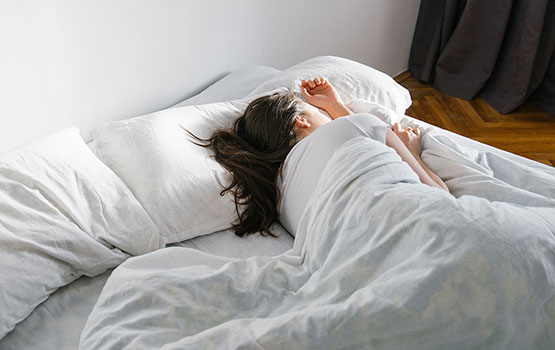
A world first study of the impact on early adolescent sleep and mood caused by COVID-related homeschooling has found that when the school commute was removed, teens had more sleep, and less self-reported anxiety.
The findings may have implications beyond COVID-19, adding further evidence to the idea that later school start times benefit students.
The study, led by Dr Julia Stone, from the Monash University Turner Institute for Brain and Mental Health and published in the Journal of Pineal Research, looked at sleep, circadian timing and mood in 59 adolescents aged 12-13.
The researchers used a wrist worn actigraphy monitor to measure sleep, body clock timing, and mood in students before lockdowns during usual in-person school, and again during remote learning in lockdown
The study found that students undertaking home schooling (on school days) compared to pre-pandemic in-person school days:
- Had 22 minutes more sleep (went to sleep 26 minutes later and woke up 49 minutes later)
- Woke at a more appropriate body clock time, as measured by melatonin
- Reported less sleepiness
- Reported less anxiety, which was related to less stress
- No difference in reported depressive symptoms
As teenager’s body clocks change, they tend to sleep less than the recommended nine hours a night, as they sleep later but still have to get up early for school in the morning. According to Dr Stone, this sleep restriction and body clock disruption can lead to reduced cognitive function and learning, daytime sleepiness, poor emotion regulation and negative mood.
“The particularly stringent COVID-19 lockdown in Melbourne, Australia, provided a unique opportunity to look at the effect of learning from home on sleep duration, circadian timing and mood,” she said.
“Our findings support the hypothesis – which has been a topic of theoretical debate – that if more time is provided before school in the morning, adolescents will use some of it for sleep, which can be beneficial to learning,” Dr Stone said.
While school start times didn’t change during lockdown, the need to get up and travel to/from school was removed. These findings support other similar studies that show later school start times increase the amount of time available for sleep, and improve school performance, daytime functioning, mood and school attendance.
While there have been studies on self-reported sleep and mood in students, globally, during various lockdowns, this is the first to use rigorous, objective measures of sleep and circadian timing.
The findings point to some unexpected benefits of remote learning for teens, who got more sleep, slept in better alignment with their internal body clock, and felt less sleepy and less anxious.
Read the full paper in the Journal of Pineal Research titled: In-person vs home schooling during the COVID-19 pandemic: Differences in sleep, circadian timing, and mood in early adolescenceDOI: 10.1111/jpi.12757