Herb Feith Indonesian Engagement Centre hosts Australia Awards Fellows
By Annika Ramasamy, Herb Feith Intern, 2025
On May 17, six Fellows from Indonesia arrived in Melbourne for two weeks of climate change workshops. The Australia Awards Fellowships are a government-funded program that aims to foster long-term partnerships between Australian organisations and overseas partner organisations.
The funding supports a variety of professional development activities including study tours and program meetings. During their stay, Monash’s Herb Feith Indonesian Engagement Centre arranged series of networking events, cultural immersion opportunities, and intensive workshops designed to equip the fellows with the skills necessary to combat climate change in their own communities.
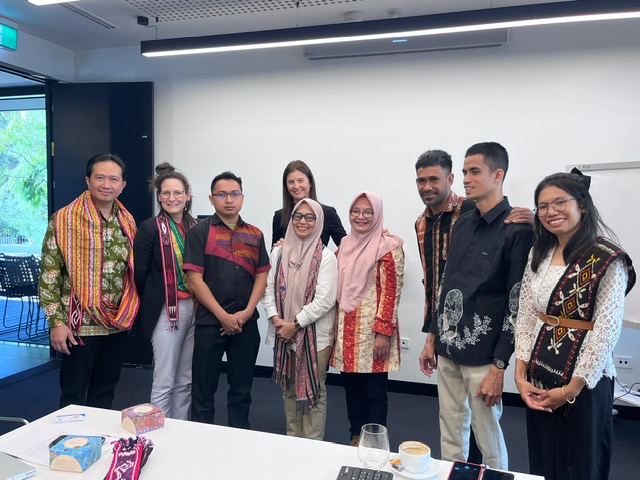
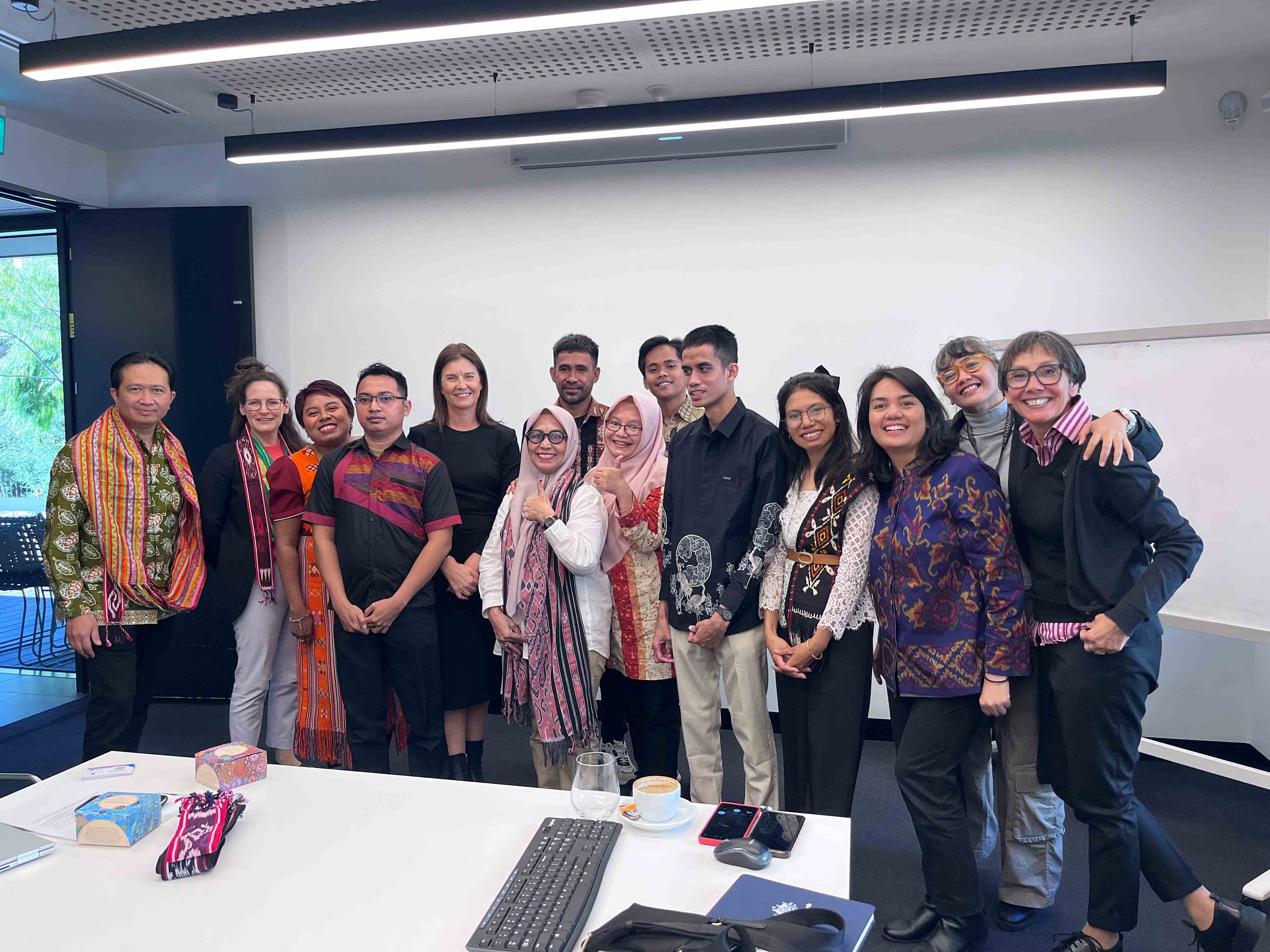
Pictured Left to right: Consul General Hanung Nugraha, Margalit Levin, Tamhid Chand, Sharyn Davies, Rosmiati Sainand, Suryani eke Wijaya, Yafas Lay, Nur Syarif Ramadhan and Liani Nainatun
The Fellows included Liani Nainatun, Yafas Lay, Suryani eka Wijaya, Tamhid Chand, Rosmiati Sainand and Nur Syarif Ramadhan. They come from a diverse range of professional backgrounds: from local government and women’s legal aid organisations to disability NGOs and advocacy. In addition to the Centre’s director Sharyn Davies, Herb Feith’s postdoctoral Fellows Dr Welmince Djulete and Dr Miya Irawati also accompanied the group during their stay.
Welcoming the Fellows
On May 19, the Fellows visited Monash Clayton campus for the first time, participating in icebreakers, exploring the Monash campus centre, and taking part in a Welcome to Country and bush tucker walk hosted by the William Cooper Institute. The experience provided an introduction to indigenous Australian culture and concluded with attempts to throw a returning boomerang on Monash’s Campus Park lawn.
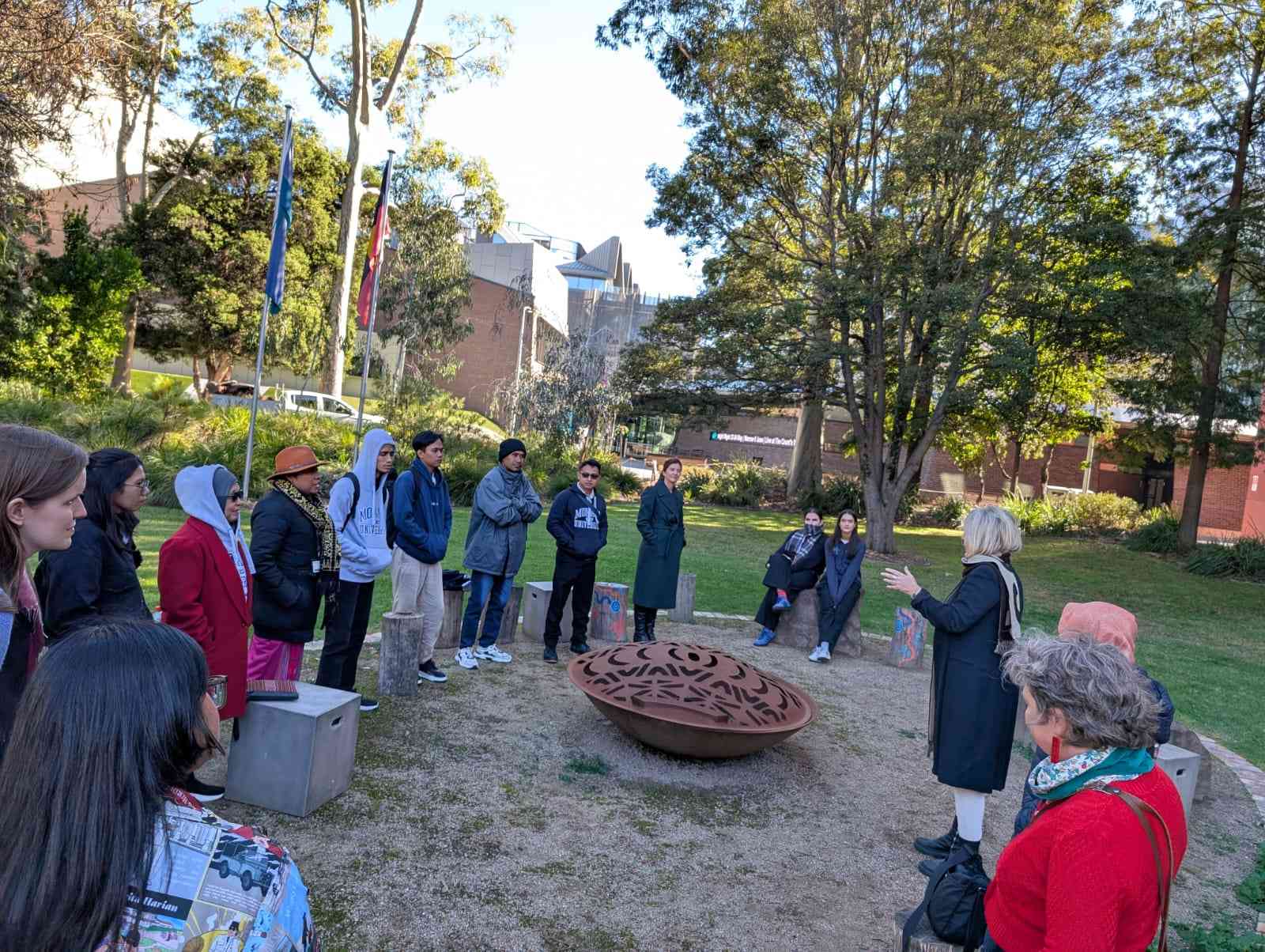
A Welcome to Country ceremony organised by the William Cooper Institute.
The Workshops
Over the course of two weeks, the Fellows participated in workshops spanning a range of topics relating to the impacts of climate change in their home country.
Preliminary workshops involved discussing the importance of education in establishing climate resilience. Fostering an inclusive, community-centred climate change education program was determined to be one of the most important steps in combatting climate change. Identification of local sustainability initiatives and other stakeholders such as government agencies and community networks who might contribute towards climate change education was a topic of debate.
Further workshops presented by Sharyn outlined step-by-step strategies for integrating climate education. The Fellows reflected on the importance of assessing community needs, tailoring educational content for different age groups as well as how to engage stakeholders and develop an action plan.
Another guest to the Centre, Solange Mouthaan, an Associate Professor from Warwick University specialising in international law, presented on the feasibility of using international criminal law to deter and prevent climate injustices. The Fellows identified legal challenges such as determining perpetrators of environmental crimes, political headwinds, and calculating proper reparations.
Assistant professor Yulisna Mutia Sari ran a workshop detailing the health costs of climate change, particularly among vulnerable populations. Increases in extreme weather events which cause heatstroke and dehydration, vector-borne diseases, and food insecurity have become a reality. The Fellows learnt about funding shortfalls and lack of data surrounding the impact of climate change on the health sector in Indonesia, and brainstormed action plans for mitigating these climate-caused health problems.
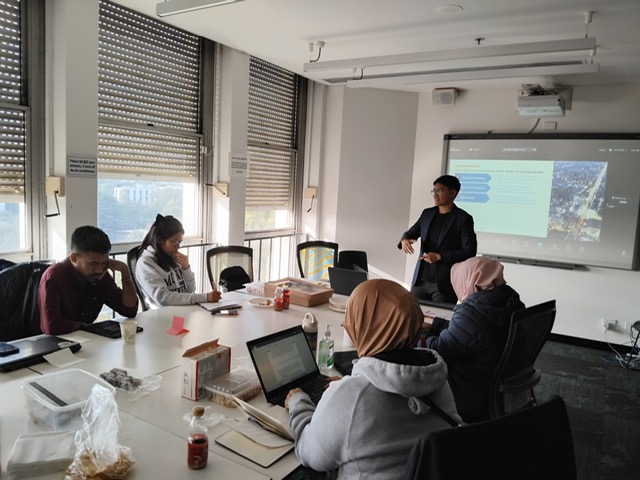
A workshop facilitated by Sabina Satriyani Puspita, Deputy Director of the Herb Feith Centre
Networking with Australian Academics
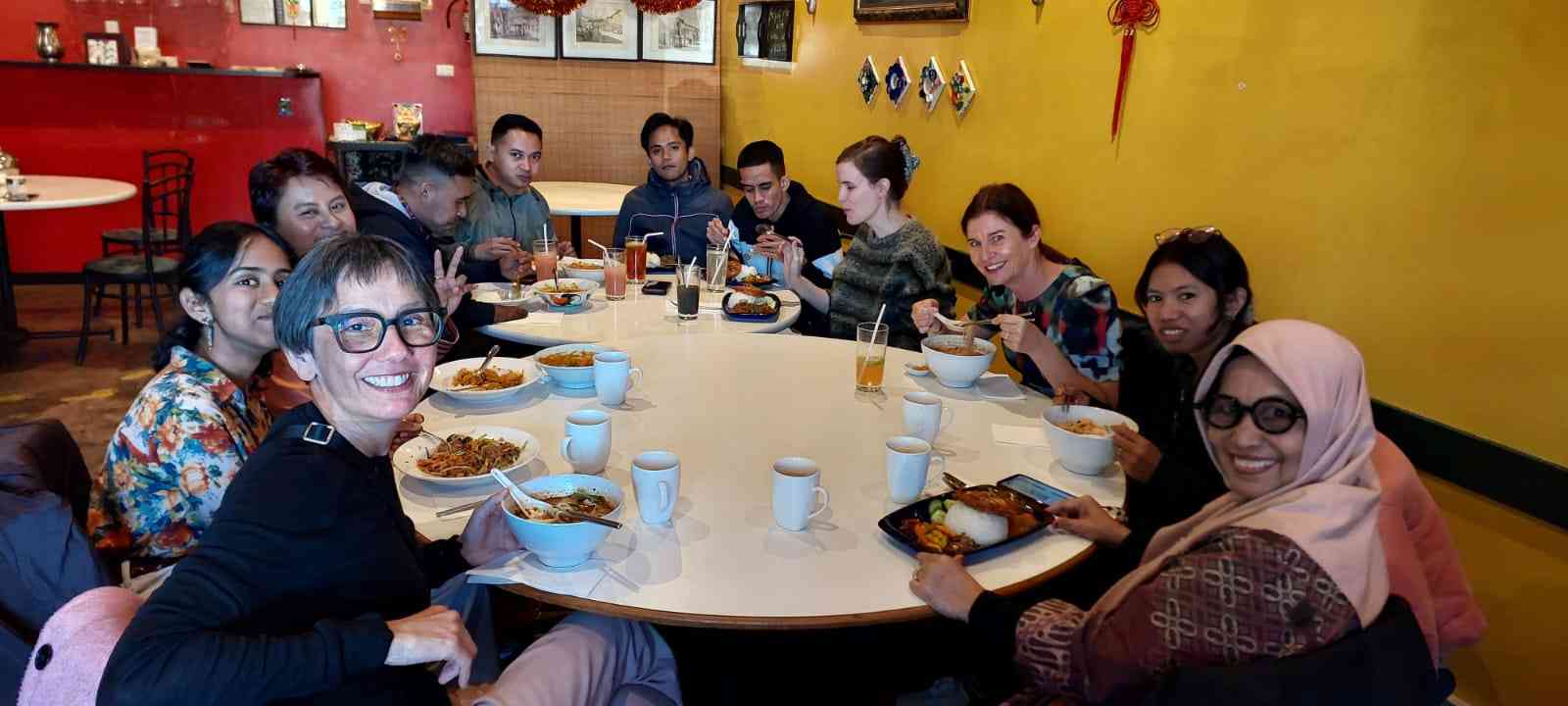
There was also ample opportunity for the Fellows to network with Monash academics. This included attending a morning meet and greet with current Monash PhD students and connecting with other members of the Herb Feith centre including Deputy Director Sabina Satriyani Puspita, academics from other Monash departments, as well as other visitors to the Centre.
Fellowship highlights
The Fellows’ work culminated in a series of presentations on May 26, a formal event that allowed them to showcase their projects to a host of prominent guests including acting Consul General of Indonesia Hanung Nugraha, Consul for socio-Cultural Affairs Geovannie Palembangan, the Dean of Arts Professor Katie Stevenson, Head of LLCL Professor Jo Winning, and Margalit Levin, Acting director of the Climate Diplomacy branch at DFAT. Presentations covered topics such as water literacy, climate education for people with disabilities, and the impacts of climate change on vulnerable groups such as women and children.
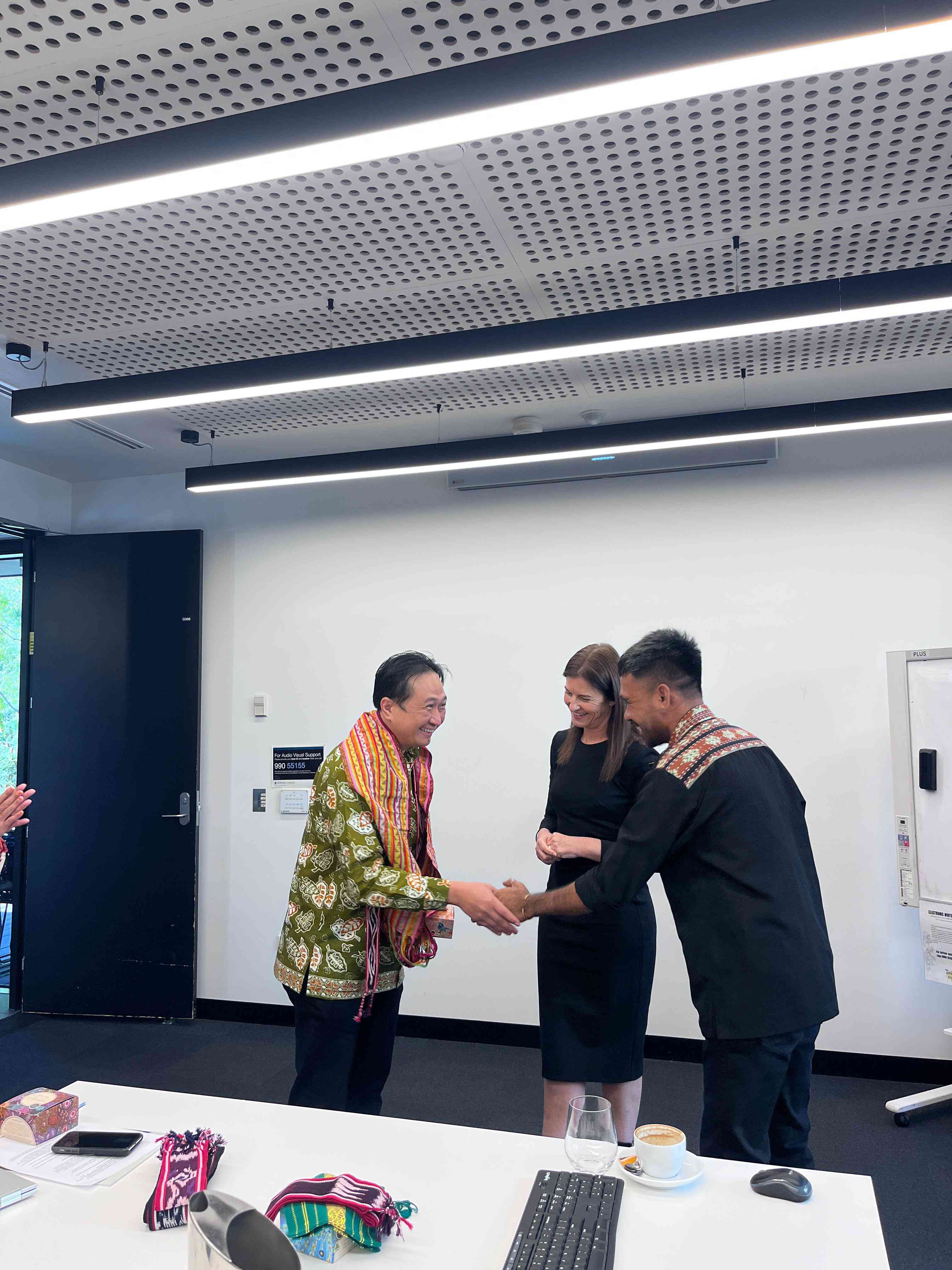
Australia Awards Fellow Yafas Lay shaking
hands with acting Consul General Mr. Hanung Nugraha
Cultural highlights
During their stay, the Fellows took part in various cultural activities to connect with and learn about Australian culture. This included a walk along the Yarra, hosted by an indigenous guide from the Koorie Heritage Trust. During the tour, the Fellows learnt about the cultural and historical significance of the Yarra River to the Kulin Nations, and the hunting and foraging tools used by indigenous people at the time.
Other highlights included visits to Melbourne tourist spots such as Melbourne Zoo, Queen Victoria Market and the State Library.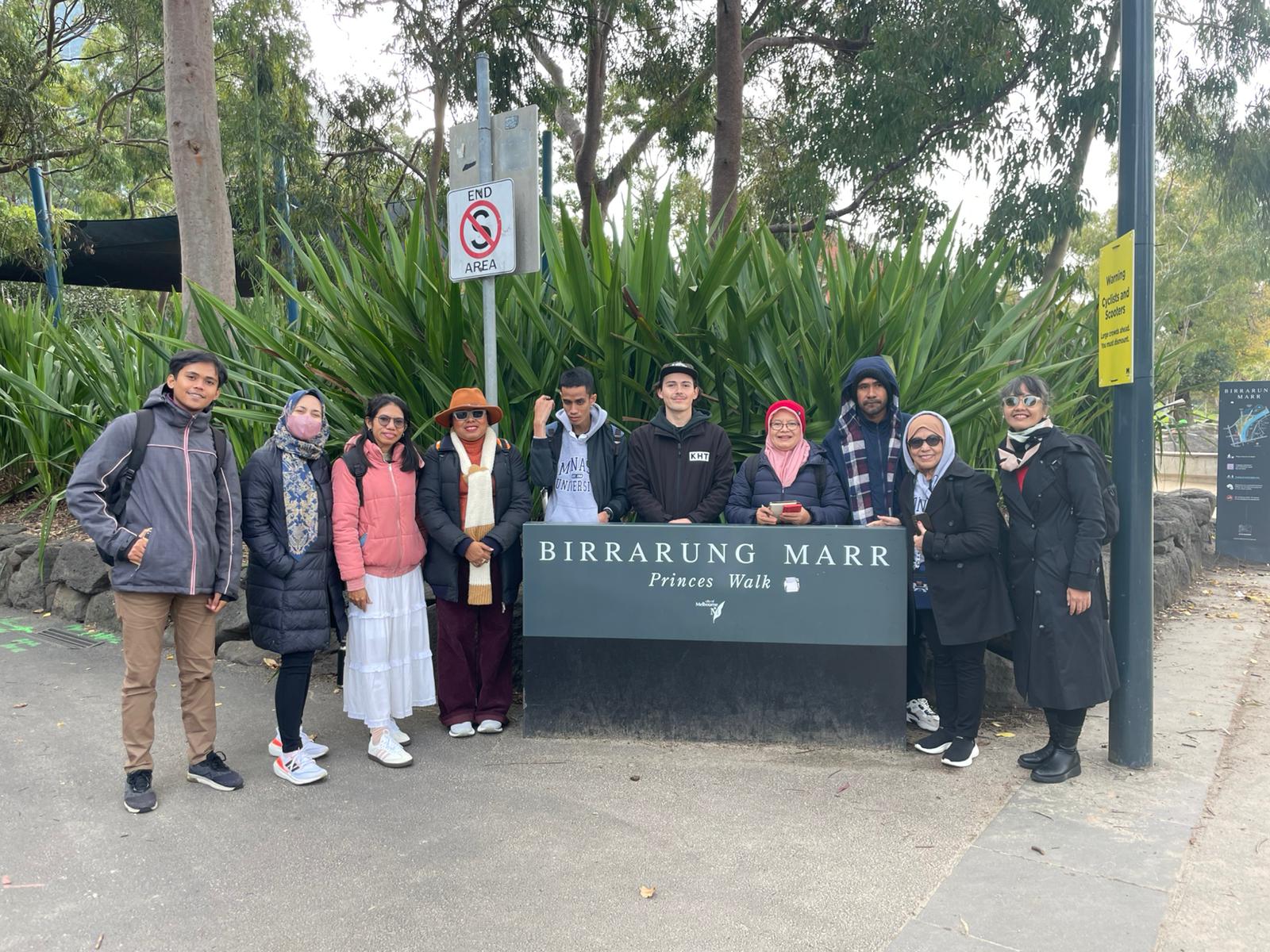
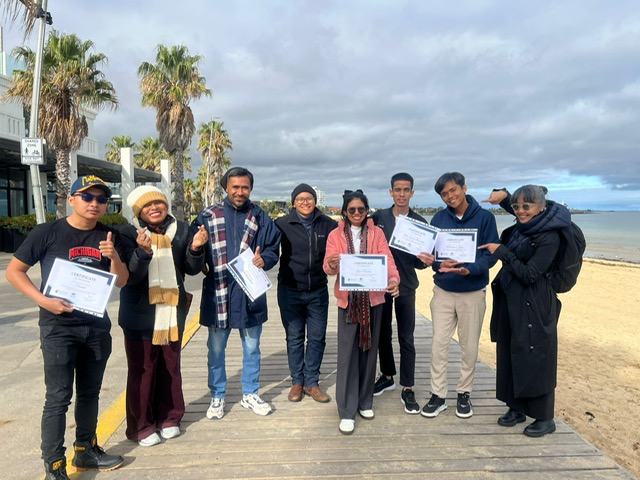
The Fellows’ stay in Melbourne was concluded with a farewell dinner and a walk along the St Kilda Pier. As one Fellow, Liani Nainatun reflected, “[the program] was one of the most rewarding times of my life, I learned so much at Monash. Thank you so much for the experience.”