
Events and media
The SCRN runs events featuring with leading international scholars to deepen our understanding of the challenges and opportunities facing the social contract today. Past seminars and symposia can be found on our YouTube channel.
Upcoming Zoom Seminars
Emerging Questions in AI Welfare
Geoff Keeling, Staff Research Scientist, Google
Tuesday 31 March 2026, 8pm Melbourne time. 10am London. Time conversions here.
Register here for the Zoom meeting.
This talk investigates whether artificial intelligence (AI) systems could ever be welfare subjects, understood as entities for which things can go better or worse. Some people argue that AIs could plausibly have or soon have features like consciousness, agency, and the capacity for social relationships, which could in principle provide a basis for AI welfare. These arguments have massive significance for the societal conversation on AI, raising profound ethical and political questions about what if anything we owe to these new technologies. I will provide some philosophical groundwork for a scientific, philosophical, and ultimately democratic inquiry into the potential for AI welfare, addressing key questions that cut across different arguments: what welfare is, how to interpret behavioural evidence of AI welfare, what kinds of entities might qualify as candidate AI welfare subjects, the potential grounds for welfare in AI, and the practical ethical and political challenges that arise from our uncertainty.
Dr. Geoff Keeling is a Staff Research Scientist at Google (Google Research). He is a philosopher working on the ethical and societal impacts of AI, with interests including alignment, manipulation, trust, digital minds, and human–AI relationships. Prior to Google, he held a postdoctoral fellowship at Stanford University, and he completed a PhD in Philosophy at the University of Bristol.
Slaves to the algorithms? Algocracy and republican liberty

Robert Sparrow, Professor of Philosophy, Monash University
Monday 4 May 2026, 8pm Melbourne time. 11am London. Time conversions here.
Register here for the Zoom meeting.
Increasingly, governments are relying on artificial intelligence to make, or inform, important decisions—a phenomenon that John Danaher has styled, “algocracy”. Republicanism implies that there are at least four different reasons to be concerned about algocracy. First, decisions made using AI will often be impossible for citizens to contest because the reasons for the decisions will be inscrutable, which calls into question the legitimacy of these decisions. Second, the inability of citizens to contest the outcomes of government decisions made using AI and/or the justification for the use of AI will render these arbitrary and inimical to liberty on a republican account. Third, overreliance on AI is likely to undermine civic virtues that are necessary to the defence of liberty. Fourth, AI is such a powerful technology that it may free governments from any fear of revolution. If we wish to benefit from the use of AI in government without sacrificing liberty, we must: ensure that decisions made by AI can be publicly contested; investigate ways to mitigate the impact of algocracy on the political culture of democracies; and resist the temptation to develop AI for applications that would grant governments too much power over their citizens.
Robert Sparrow is Professor of Philosophy at the Monash Data Futures Institute. His work focuses on the ethical implications of adopting new technologies, ranging from artificial intelligence to genetic engineering, with an emphasis on formulating ethical arguments that contribute to public and political debate. He is also an Associate Investigator at the ARC Centre of Excellence for Automated Decision-Making & Society (ADM+S) and is listed as a Chief Investigator at the ARC Centre of Excellence for Electromaterials Science.
Inclusive Economics: How Could AI Technologies Shape a New Inclusive Economy?

Simon Angus, Professor, Impact Labs, Monash University
Monday 27 April 2026, 8pm Melbourne time, 8pm Melbourne time. 11am London; 6am New York City. Time conversions here.
Register here for the Zoom meeting.
Sometime in 2017, Google researchers developed and demonstrated the 'transformer' architecture, a fundamentally new way to overcome the human--computer representation problem. Fast forward to 2026 and we see the rapid integration of AI systems through all aspects of modern economic life. I will argue that more than the typical economic lens of general purpose technology, we should also conceptualise AI systems as a new kind of institutional infrastructure -- a mediating layer that shapes who can participate in the economy, and on what terms. There is huge potential here for new kinds of economic inclusion, but also great risks around bias, dependency, surveillance, and power concentration. My aim is not to bring answers but prompt a discussion about governance, autonomy, and human flourishing in this new Age of AI.
Simon Angus is a Professor in the School of Business and Economics at Monash University, Australia, and is affiliated as Professor with Impact Labs. He describes his work as computational and complexity science, applying methods such as numerical simulation, data science/engineering, machine learning, and agent-based modelling across the social, biological, and physical sciences, with increasing focus on projects at the intersection of empirical social science and applied machine learning.
Rethinking the Social Contract: A Ricœurian Perspective

Laure Gillot-Assayag, JSPS-CNRS postdoctoral researcher, Keio University, Japan
Tuesday 12 May 2026, 8pm Melbourne time. 11am London; 6am New York City. Time conversions here.
Register here for the Zoom meeting.
This presentation examines the contribution of Paul Ricœur’s political philosophy to the social contract tradition. It shall explain how Ricœur’s notion of the “political paradox” highlights the fundamental ambiguity of political power: the state exists to establish justice and protect citizens yet simultaneously contains the potential for domination and violence. Drawing on Ricœur’s understanding of justice as requiring both interpersonal ethics and institutional structures, the presentation further highlights how Ricœur conceives institutions as essential mediations, extending solicitude beyond face-to-face relationships. His framework for understanding ethics and institutions as necessary for actualizing the good life provides resources for reimagining the social contract, by grounding political legitimacy in a distinctive type of relationality and the dynamic pursuit of just institutional arrangements, rather than mere hypothetical, rational, and abstract consent.
Dr. Laure Gillot-Assayag is a postdoctoral scholar at the Institute for Advanced Studies in the Humanities at Goethe University Frankfurt, Germany (Democratic Vistas). Former visiting scholar at Monash University (Prato campus), she published her research in political philosophy in the Ricœur Studies, the Journal of French and Francophone Philosophy, the Journal of Philosophy of Education, and soon Democratic Theory. Her book on Paul Ricœur is forthcoming with SUNY Press. In 2025, she received the Paul Ricœur Excellence Prize for the best paper on Paul Ricœur.
Past events
Michel Foucault and the Social Contract
Speakers:
 Stuart Elden (Warwick University), 'The Yoke of Law and the Lustre of Glory'
Perhaps surprisingly, Foucault does not talk about social contract theory very often. In this talk I will briefly survey his discussions of the term and the tradition of political thought, especially in his Collège de France lecture courses – his discussion of civil war and the contract in The Punitive Society; the challenge to the tradition in ‘Society Must Be Defended’; and his indication of a shift from the implicit contract of security in territory to population security in his work on governmentality. The main focus, however, will be on a remark Foucault makes in ‘Society Must Be Defended’ about the dual nature of sovereignty, of the relation between political, juridical power and magical, supernatural power. These two faces or aspects are the power to bind and command, and the power to dazzle and petrify. He calls this the “yoke of law and the lustre of glory”. I will explore the links between this understanding of contracts and Georges Dumézil’s work on Indo-European mythology.
 Mark Kelly (Western Sydney University), 'Social Contract as Norm'
While Foucault's own direct engagements with the social contract are few and far between, I want to offer a Foucauldian critique of social contract theory qua normative political theory. Contractarianism is notoriously premised on a profound ontological individualism, on the idea that individuals are prior to society, and can therefore either (on a strong reading) constitute civil society based on their free contracting to bring it into existence or (on a weak reading) change the form of society in accordance with their wishes. Against this, Foucault argues that the individual (and thus discourses of individualism like social contract theory) is an invention of disciplinary modernity. I will seek to progress this line of critique by combining it with Foucault’s critique of utopianism to suggest that social contract theory represents an incipient normalisation of society itself, indeed one that precedes and provides the background for the intense normalisation of individuals in late modernity.
Feminist Perspectives on Social Contract Theory
 Janice Richardson (Monash University), 'Feminist Perspectives on Social Contract Theory'
With the notable exception of Hobbes, the classic social contractarians made two claims: 1) that relations of subordination and domination were not natural but occurred by convention; and 2) that women’s subordination was natural. In her ground-breaking work on the social contract theorists, Carole Pateman explains this contradiction and highlights the link between the following relationships: traditional husbands/ wives, employers/employees and sovereign/subjects. This comparison was initially jarring but also very fruitful. By juxtaposing these relationships, she argues that it is through contracts for the exchange of property in the person that relations of subordination became managed in modernity. In this paper, I consider Pateman’s analysis in the context of Mary Anne Case’s conclusions about women in the workplace in “Pets or Meat” and David Graeber’s Bullshit Jobs.

The Most Absolute Authority: Rousseau’s Divided Legacy
 Peter Hallward (Kingston University) , ‘The Most Absolute Authority: Rousseau’s Divided Legacy’.
‘The most absolute authority’, Rousseau writes, ‘is that which penetrates to man's inmost being, and affects his will no less than it does his actions.’ The famous account of a ‘general will’ that Rousseau then develops as a way of understanding the depth and breadth of such penetration can be understood in two ways. On the hand, Rousseau’s emphasis on political psychology seems to cross a threshold in the long history of modern power, from a Hobbesian emphasis on forceful compulsion and outward obedience through Marx’s analysis of the ‘golden threads’ of capitalist coercion to Foucault’s analysis of the mechanisms whereby power comes to work directly on the inward dynamics of the psyche. On the other hand, Rousseau’s account of a general will also helps to clarify what needs to be done, in situations structured in dominance and hierarchy, to acquire and sustain a capacity for collective, egalitarian and autonomous self-determination. Rousseau can either be denounced as the architect of a newly sinister ‘soulcraft’, or embraced as the revolutionary prophet of mass emancipation. Which path should we choose? And how far do they diverge?
Restoring Catharine Macaulay’s Enlightenment Republicanism?

Karen Green (University of Melbourne, Philosophy)
This paper falls into two parts. In the first I sketch two broad contrasting attitudes to political theory, within one of which, Catharine Macaulay’s republicanism should be situated. Both broad attitudes have problems. The first is realist and pessimistic, foreclosing the possibility of the promise of enlightenment. The second is utopian and optimistic but faces a fundamental epistemological challenge. Macaulay’s thought belongs to the second of these traditions and fails the epistemological challenge. In the second part of the paper, I propose a way of restoring her optimistic utopianism, in a reconciliation, grounded in a revision of natural law, of the two attitudes to political theory, thus making her republicanism serviceable for the present age. The guiding question of the paper is whether, or to what extent, a rearticulation of her idea of a representative democracy, grounded in a social contract, can retrieve something of the moral underpinnings of her enlightenment republicanism, without falling back, as she did, on suspect theological assumptions.
Badiou, Rousseau, and the Social Contract

Justin Clemens (University of Melbourne, Literary Studies)
The question of the transition between a pre- or non-political situation and a properly political situation has proven a frustrating enigma for the greatest of the social contract theorists themselves. How does one move from a ‘state of nature’ to ‘a state of obedience’? How can authority be implemented on the basis of natural freedom? What sort of residues of nature survive in the new order or orders? Such questions have proven intractable, not least due to their circularity. Rousseau himself admits it: ‘How did this change come about? I do not know.’ In his own meditation on Rousseau in Being and Event, Alain Badiou reuptakes the question, focusing on the peculiarities of the ‘general will.’ In doing so, he makes a distinction between what is apparently a functioning contractual situation, for instance, the actuality of sovereignty and its structures, and the power of establishment, that is, the event of the general will that founds the chance of politics. This distinction has significant consequences for thinking the state, as it confirms that ‘the State is not founded upon the social bond which it would express, but rather upon un-binding, which it prohibits.’ This talk will introduce and discuss these distinctions and claims in some detail.
Symposium: Crime Fiction and the Social Contract
Andrew Pepper (Queen’s University Belfast); Stewart King, Barbara Pezzotti, Carlos Uxó (Monash University)
Chaired by Dr Stewart King (Monash University)
Andrew Pepper (Queen’s University Belfast, English)
In this talk, I take as my starting point the turn by a number of crime writers towards the apocalypse and apocalyptic themes: namely, Lauren Beukes’s Afterland (2021), Hanna Jameson’s The Last (2019), Deon Meyer’s Fever (2017), Hye-Young Pyun’s The City of Ash and Red (2018), Chuck Wendig’s Wanderers (2019), and Ben Winters’s The Last Policeman (2012). In part, and looking at the long history of the genre, crime fiction has always been interested in the benefits and problems of the social contract: as I have argued, even the earliest crime stories ‘end up responding to the threat of social anarchy by justifying a Hobbesian move from the state of nature into the social contract while at the same time hinting, intentionally or otherwise, at the inadequacies of the state’s provisions for law enforcement’ (Unwilling Executioner, 24). These contemporary crime/apocalypse novels allow us to think about how much and how little has changed: in response to the spectres of global pandemics, nuclear explosion and climate emergencies, the states in these novels have evolved/crumbled and with this their imperfect mechanisms for maintaining order, law and justice. As such I am interested in teasing out and interrogating three related lines of critical enquiry: first the potential to read these texts as world literature, given the global nature of the threats and the breakdown of national traditions and borders; second, the issue of how the unravelling of the social contract occasioned by the apocalyptic threat is dealt with by or within the parameters of the crime story; and third, the extent to which this social unravelling presupposes and indeed produces an unravelling of genre or at least the emergence of new hybrid forms.

How the social contract has failed women
Barbara Pezzotti (Monash University, European Languages)
Crime fiction has been long accused of being a conservative genre that reaffirms the social order and endorses a patriarchal society. This view has been challenged by a number of crime novels which successfully denounce violence against women, and the evil of patriarchal societies that feeds such violence. In my talk I will analyse the representation of gender violence and femicide in Dacia Maraini’ Voices (1997), Maria-Antònia Oliver’s Study in Lilac (2001), and Stieg Larsson’s Men Who Hate Women (2005). I will show how these crime novelists use the crime fiction genre to shift the readers’ attention from an individual crime and an individual culprit to point to a systematic failure of Western States, and the social contract that pinpoints them. Throughout their narrative, these writers historicise the evil of femicide, arguing that far from being merely a matter for psychiatrists, it has profound roots in Western culture. They describe it as a pervasive evil in contemporary society and a gangrene very difficult to eradicate as it concerns everybody, and is not only identifiable with deviant personalities. Ultimately, I show how crime fiction can act as a privileged genre for exposing how the social contract has failed women.
 Maintaining the Revolutionary social contract: the role of Cuban television police shows
Carlos Uxó (Monash University, European Languages)
Social contract theory is concerned with the legitimacy of authority over the individual and discusses to what extent, and why, individuals consent to surrender some of their freedoms in exchange for a social order from which they benefit in one way or another, and in which they feel protected. For the social contract to work, therefore, a body of laws must be created and shared by all members of a given society. But, do all members of a society enter into the social contract consensually? And how do the authorities remind citizens of their duty to abide by the social contract? Taking these issues as my starting point, in my talk I discuss the role Cuban television police shows have played in the maintenance of the Revolutionary social contract, by constantly reminding citizens of the rules they had to follow, and the penalties they would otherwise face. To that end, I analyse the television series Tras la huella, broadcast in Cuba since 2005.
Surveillance capitalism meets the pandemic: Surveillance challenges to the social contract
 David Lyon (Queen’s University, Canada; Emeritus Director, Surveillance Studies Centre)
Data-dependent ‘solutions’ to problems posed by the COVID-19 pandemic gave surveillance capitalism fresh opportunities to reduce freedom and fairness in the name of extraordinary emergency measures. This singular conjunction highlighted the need for a contemporary reset of any notion of a social contract, as government-and-business partnerships on the one hand, and digitally-disempowered citizens and consumers, on the other, struggle to recognize each other, let alone to develop a meaningful modus vivendi for a global and planetary future.
States of Intoxication and the Limbic Capitalocene

Gerald Moore (Durham University, Modern Languages and Cultures)
In his best-selling Sapiens, Yuval Noah Harari poses the question of what on Earth led Neolithic hunter-gatherers to accept city-living and the switch to settled agriculture that went hand-in-hand with the so-called Neolithic, or Agricultural, Revolution. The brutalising culture of work that agriculture entailed, accompanied by worsened diet and life expectancy, were exacerbated by the rampant disease of living in densely packed, multispecies cities, making for levels of likely chronic stress that would have been unfamiliar to our ancestors. Other participants in this debate, notably the Yale agrarian theorist James C. Scott, argue that the adoption of settled living must have been compelled, with compulsion facilitated by state-imposed regimes of taxation and visibility. Drawing on a range of recent work in anthropology (Edward Slingerland, Kim Sterelny, David Graeber and David Wengrow), neurobiology (Fred Previc) and social philosophy (Georges Canguilhem, Bernard Stiegler, Catherine Malabou), the paper will revisit this question of the Neolithic social contract from the standpoint of intoxication. I will start by drawing on the 'beer before bread' hypothesis to consider the role that intoxicants and addictogens could have played in expanding our margins of tolerance for the new environmental stressors, before going on to consider their relationship to resilience and environmental perturbation over the much later history of capitalism. Drawing on histories of wheat, sugar, coffee, alcohol, and digital screens, among others, I will argue that intoxication and generalised addiction may have played a far larger role in the manufacture of compliant societies that we tend to imagine - right up to the point where we can see both climate change and our inability to deal with it as an outcome of the intersection of capitalism and the reward, or 'limbic', system of the neuroplastic brain.
Gerald Moore studied Philosophy & Politics and Continental Philosophy at the University of Warwick before completing a PhD on contemporary French philosophy at the University of Cambridge (Downing College), in 2007. He then spent two years teaching at Université Paris-Est Créteil (formerly Université Paris-12) and three at the University of Oxford (Wadham and University Colleges), before moving to Durham in 2012. He was appointed to Associate Professor at Durham in 2017, before promotion to full Professor in July 2020. https://www.durham.ac.uk/staff/gerald-moore/
Cultivating the State of Nature: Neoliberal Statecraft as Gardening

Jessica Whyte (University of New South Wales, School of Humanities and Languages [Philosophy]; School of Law)
In 1990, as former socialists increasingly sought to rehabilitate the market as the primary means of social and economic coordination, Fredric Jameson argued that there was one proposition that could not be allowed to stand unchallenged: “The market is in human nature.” Here I show that support for Jameson’s challenge could be found in a surprising place: for the strands of neoliberalism emerging from the Austrian School of Economics and German Ordoliberalism, the market was anything but a reflection of human nature. In this paper, I focus on Friedrich Hayek’s account of the evolution of competitive market societies and show that, far from trying to legitimize the market through reference to a state of nature, Hayek portrayed human nature as a barrier to the competitive market. The development of a market economy, he argued, required the suppression of ‘natural’ human inclinations towards egalitarianism and collectivism, conditioned by millennia of tribal existence. And, against the contractualism and voluntarism of those he disparaged as ‘design’ theorists, Hayek argued that “man has been civilized very much against his will.” In this paper, I examine the distinctive form of statecraft entailed by this vision. For Hayek, governing a market society was neither a matter of laissez-faire nor of deliberate design. Rather, it required eternal vigilance to prevent the resurgence of what he called “suppressed primordial instincts”. My focus is on Hayek’s use of the metaphor of the gardener, which I suggest reveals the distinctiveness of much neoliberal thinking about the relation between politics and markets. The liberal attitude to society, Hayek argued, was akin to that of a gardener, who must create the conditions for optimal growth. As innocuous as this process of cultivation may sound, I argue that it licensed authoritarianism and violence to “weed out” egalitarian forms of sociality that were seen as threats to the market order.
Jessica Whyte is Scientia Associate Professor of Philosophy at the University of New South Wales, with a cross-appointment in the Faculty of Law. Her work integrates political philosophy, intellectual history and political economy to analyse contemporary forms of sovereignty, human rights, humanitarianism and militarism. She is author of Catastrophe and Redemption: The Political Thought of Giorgio Agamben, (SUNY 2013) and The Morals of the Market: Human Rights and the Rise of Neoliberalism (Verso, 2019) and an editor of Humanity: An International Journal of Human Rights, Humanitarianism and Development. More of her research is available here: https://unsw.academia.edu/JessicaWhyte
How to Do Things with a Social Contract

Peter Gratton (Memorial University of Newfoundland, Philosophy)
Social contract theory begins in Hobbes in modernity in a Real Politik attempt to negotiate political difference and delineate a politics capable of dealing with human being, and it comes to be summed up in Rawls by a very different attempt to remove any metaphysics or ontology from its account, all the better to detail abstracted norms that could be universalized for any given community. Born as something of a stopgap measure in Hobbes—better to accede to the sovereign than the brutal life we would have otherwise—by Rawls’ time, the contract no longer answers to base human instincts and drives, but is a means of enjoining a reconciliation with the state of things. If the contract’s philosophical status has been at issue for centuries—is it ontological or normative, metaphysical or metatheoretical?—its linguistic status has been just as puzzling. Most books on the matter call the contract a “metaphor,” but in fact the contract, as guaranteeing all other contracts, plays no such role. Nor is it a constative utterance, since, of course, that the social contract exists is less than clear anytime one states the fact. What I want to show is that hidden behind the rationality of every contract is the structure of a Leviathan found in Hobbes and then brought all through social contract theory. No matter their differences, since social contracts are performative and since they must have force of law, there is no contract theory that does not, in the end, provide ample place on the stage for performance of sovereignty, which, as we’ve seen time and again, is no giant to be tied down by lilliputian laws and rules. Rawls is correct when he says rationalist philosophers look for rationality in political institutions and find them mirrored back at them, since the contract ultimately is a rationalist fable disavowing the continuing Leviathans whose existence has been the real story of political modernity. Key thinkers discussed will be Rousseau, Arendt, and Mbembe.
Peter Gratton is in the Dept of Philosophy at Memorial University of Newfoundland. He has published numerous articles in political and Continental philosophy and is the author of The State of Sovereignty: Lessons from the Political Fictions of Modernity (SUNY Press, 2012) and Speculative Realism: Problems and Prospects (London: Bloomsbury Press, 2014).An area editor for the Internet Encyclopedia of Philosophy, Peter has also edited three works: Traversing the Imaginary (Northwestern University Press, 2007), co-edited with John Mannousakis, and Jean-Luc Nancy and Plural Thinking: Expositions of World, Politics, Art, and Sense (SUNY Press, 2012), co-edited with Marie-Eve Morin, and The Meillassoux Dictionary, co-edited with Paul Ennis (Edinburgh University Press, 2014). Peter is also a board member of Society and Space (Environment and Planning D), book editor and board member of Derrida Today, and executive board member and treasurer for the International Association for Philosophy and Literature. https://philosophyinatimeoferror.wordpress.com/about/
American Evangelicals, Victims, and the Social Contract

Bruce Ellis Benson (University of Nottingham, Theology)
In the Hebrew Bible, the clearest moral measure of the health of Jewish society is its treatment of widows, strangers, and orphans. It stands as a contract between God and His chosen nation. As a Jewish rabbi, Jesus constantly talks about society’s duty to those who are marginal, economically and socially. Fast forward to today: we think of ourselves as living in a post-Christian society. Yet the marginalised in western society are now demanding a stronger respect. Thus, we are not nearly as post-Christian as we assume. Yet the flip side of this development is that American Evangelicals, who have largely failed in following Jesus’ emphasis on care for the marginalised, now consider themselves to be victims. While that claim has a tiny bit of truth, Christianity in general has come to be seen as a major source of oppression, with Evangelicals playing a major role. They have failed to show genuine support to the marginalized and are judged by society to be Unchristian.
Bruce Ellis Benson teaches in theology at Nottingham University. https://bruceellisbenson.com/
[there were problems with the Zoom link during Bruce's talk, and we didn't get a recording]
Hiding God in the State of Nature

Alan Levinovitz (James Madison University, Department of Philosophy and Religion) [Twitter]
Nature and natural sound secular, and the state of nature seems like a secular idea. In reality, appeals to the state of nature are inherently theological. Such appeals are cross-cultural and transhistorical, revealing a deep human need for a benevolent organizing force that provides the foundational pattern for well-ordered lives and institutions. This talk will examine the theological basis of appeals to nature in a variety of contexts, from sexuality to economic theory, and demonstrate how the insights of religious studies help to explain the allure of “naturalness” in supposedly secular contexts.
Dr. Alan Levinovitz is an Associate Professor of Religion at James Madison University. He focuses on the intersecting relationships between religion, philosophy, and science, with additional expertise in classical Chinese thought. Alan received his undergraduate degree from Stanford and his PhD from the University of Chicago. His most recent book, Natural: How Faith in Nature's Goodness Leads to Harmful Fads, Unjust Laws, and Flawed Science, examines the meaning of “natural” and argues that modern Western culture has divinized nature. He is currently working on another book project, The Gentleman and the Jester, which develops a binary typology of ethical education. Other interests include the tension between paratext (introductions, footnotes, etc.) and primary text, the significance of play, and the role of genre in ethical discourse. In addition to his scholarship he has published extensively on how people’s attitudes toward food, medicine, and technology are shaped by myths and rituals, resulting in everything from vaccine avoidance to the adoption of extreme fad diets. Alan has been featured in publications such as Wired, The Washington Post, the Atlantic, Aeon, Slate and elsewhere.
The state of nature: the meanings and promise of a legal fiction

Mark Somos (Max Planck Institute for Comparative Public Law and International Law) [Twitter]
As a concept and term, the ‘state of nature’ has been around for a millennium. It refers to savagery, innocence, heaven and hell, lack of cultivation and nudity. Even more exciting than the last is the state of nature as humanity’s pre-political condition, the locus of rights and obligations, individualism and sociability – a scientifically and historically informed but speculative glimpse at the real nature of our species, and a detailed bet on the best international and domestic legal arrangements this species is capable of. Analyses and recommendations based on the state of nature by Thomas Aquinas, William of Ockham, the School of Salamanca, Hugo Grotius, Thomas Hobbes, John Locke, Samuel Pufendorf, Emer de Vattel, Immanuel Kant, Carl Schmitt or John Rawls continue to influence our legal systems in underappreciated ways. This talk will survey past, current and potential future uses of the state of nature as a powerful legal fiction, and the ways in which it has shaped and can shape our reality.
Mark Somos, Ph.D. (2007 Harvard, 2014 Leiden), holds the Deutsche Forschungsgemeinschaft’s Heisenberg position. He wrote Secularisation and the Leiden Circle (Brill, 2011) and American States of Nature: The Origins of Independence, 1761–1775 (Oxford, 2019).
From Natural Equality to Frankpledge: The State of Nature, Ancient Constitutionalism, and the Rupture of the Social Contract in Eighteenth-Century Antislavery Writings

Sarah Winter (University of Connecticut, Department of English)
Antislavery writers Anthony Benezet, Granville Sharp, Thomas Clarkson, Ottobah Cugoano, and Olaudah Equiano employ theories of the state of nature to demonstrate how slavery and the slave trade rupture the social contract in both African polities and the British colonies, thus undermining the legitimacy of the British imperial constitution. Describing African societies as civilized and self-governing, Benezet’s approach launches abolitionism’s appeals to humanitarian sentiments. Clarkson theorizes that enslavement situates Africans in a state of nature where they are “perfectly free and equal” in relation to Europeans who attack them, while Sharp offers legalistic reasons for abolition based in common law, ancient constitutionalism, and radical democratic thought. Their alternative state of nature approaches to abolitionism envision the regeneration of Britons’ moral sentiments through collective political action and forge representative notions of “human rights” as legal rights distinct from natural law. Evoking the state of nature as the innocence of childhood destroyed when they were kidnapped by slave merchants from their homes, Equiano’s and Cugoano’s texts demonstrate a more sceptical, antiracist strand of reasoning that questions whether the economic interests underpinning Atlantic slavery are amenable to political or moral reform.
Sarah Winter is Professor of English and Comparative Literary and Cultural Studies at the University of Conneccticut, Storrs and Co-Director of the Research Program on Humanitarianism at the UConn Human Rights Institute. An interdisciplinary scholar of nineteenth-century British literature, human rights, and the history of law and the modern disciplines, she has contributed chapters to recent edited volumes focusing on human rights and literary studies, published by Routledge, the MLA, and Cambridge University Press, and to volumes on legal history, literature, and political thought, including The State of Nature: Histories of an Idea (Brill 2021), Empire and Legal Thought: Ideas and Institutions from Antiquity to Modernity (Brill 2020), and Fictional Discourse and the Law (Routledge 2020). Her current book-in-progress focuses on citizen activists’ strategic implementation of the common law procedure of habeas corpus to contest slavery, promote decolonization struggles, free women from abusive husbands, and assist detained refugees between the 1760s and 2017. The book also identifies the distinctive human rights narratives that have emerged from this activism across literary texts, political discourse, and popular culture.
Rousseau's States of Nature

Christopher Kelly (Boston College, Political Science Department) [Twitter]
Readers of Rousseau's Discourse on Inequality often find his account of the state of nature in Part One to be baffling, or simply wildly implausible. Some interpreters try to "rescue" Rousseau by arguing that he means his account to be entirely hypothetical with no reflection in history. Others argue that he intends a quasi-evolutionary account of human origins. The focus on this part of the Discourse can distract readers from what Rousseau says in the rest of the work about different stages within the state of nature, ending with an account of a new state of nature that may well exist in the near future. I propose to explore the different states of nature described in the Discourse and to attempt to show their underlying unity.
Christopher Kelly is a Professor in the Political Science Faculty at Boston College. He is co-editor of The Collected Writings of Rousseau (with Roger D. Masters) and The Challenge of Rousseau (with Eve Grace, 2013), and the author of Rousseau's Exemplary Life (1987) and Rousseau as Author (2003). He teaches courses in political theory focusing on early and late modern political thought.
Hobbes’s Distinctive View of the Social Contract
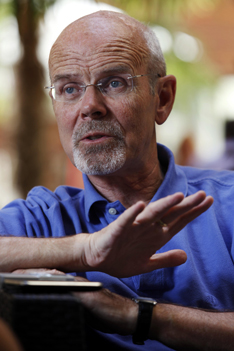
Philip Pettit (Laurence S. Rockefeller University Professor of Politics and Human Values, Princeton University; Distinguished University Professor of Philosophy, Australian National University)
For Hobbes, people in the condition of nature have a shared language and society but lack a sovereign and a state Language and society ensure that they are inescapably competitive, unlike other animals. A sovereign and a state would solve the problem, subjecting each to a common, pacifying power. But how are they to transition from the one condition to the other? His theory of the social contract—better perhaps, the political contract—is meant to solve that problem.
Philip Pettit is L.S. Rockefeller University Professor of Politics and Human Values at Princeton University, where he has taught political theory and philosophy since 2002, and for a period that began in 2012-13 holds a joint position as Distinguished University Professor of Philosophy at the Australian National University, Canberra. He was appointed a Companion of the Order of Australia in 2017. Common Minds: Themes from the Philosophy of Philip Pettit appeared from OUP in 2007, edited by Geoffrey Brennan, R.E.Goodin, Frank Jackson and Michael Smith. He works in moral and political theory and on background issues in the philosophy of mind and metaphysics. His recent single-authored books include The Common Mind (OUP 1996), Republicanism (OUP 1997), A Theory of Freedom (OUP 2001), Rules, Reasons and Norms (OUP 2002), Penser en Société (PUF, Paris 2004), Examen a Zapatero (Temas de Hoy, Madrid 2008), Made with Words: Hobbes on Mind, Society and Politics (PUP 2008); On the People's Terms: A Republican Theory and Model of Democracy (CUP 2012); Just Freedom: A Moral Compass for a Complex World (W.W.Norton 2014) and The Robust Demands of the Good: Ethics with Attachment, Virtue and Respect (OUP 2015). His recent co-authored books include The Economy of Esteem (OUP 2004), with Geoffrey Brennan; Mind, Morality and Explanation (OUP 2004), a selection of papers with Frank Jackson and Michael Smith; A Political Philosophy in Public Life: Civic Republicanism in Zapatero's Spain (PUP 2010), with Jose Marti; and Group Agency: The Possibility, Design and Status of Corporate Agents (OUP 2011), with Christian List. He gave the Tanner lectures on Human Values at Berkeley in April 2015, which appeared in late 2018 with OUP, New York (with commentary by Michael Tomasello) as The Birth of Ethics: A Reconstruction of the Nature and Role of Morality.
The State of Nature and Colonialism: Empty vs Waste Land at Home and Abroad

Barbara Arneil (Professor of Political Science, The University of British Columbia)
The ‘state of nature’ has many meanings. In previous research, I have analyzed how John Locke’s understanding of the state of nature is central to his colonial justifications of settlers’ right to property in ‘waste’ lands of America via his agrarian labour theory of property. While land and agrarian labour have been central to the process of colonization back to its earliest etymological origins in the Latin word ‘colonia’, in this paper I examine how the positing of land in its natural state as ‘empty’ or ‘waste’ in the modern British colonial imagination has shaped domestic and settler colonial policies from the 17th to 19th centuries; manifested in the practices of enclosure in Britain, dispossession in America and mass resettlement/removal of ‘idle’ and/or ‘irrational’ people(s) both at home and abroad.
Barbara Arneil (Ph.D, London) is interested in the areas of identity politics and the history of political thought. As the author of John Locke and America (OUP, 1996) and many related articles, she has a specialization in the intersection between liberalism and colonialism. She is also interested in gender and political theory, publishing Feminism and Politics, Oxford Blackwell, 1999 (translated into Chinese and published by Oriental Press, 2005). In it she examines how gender shapes the definition and scope of ‘politics’. She has written a critique of social capital from the perspective of diversity and inclusive justice, entitled Diverse Communities: The Problem with Social Capital, Cambridge University Press, 2006 and has published a co-edited anthology entitled Sexual Justice/Cultural Justice, Routledge, 2006. She has done research in the areas of social trust and diversity, global citizenship and cosmopolitanism, the role of disability in political theory and domestic colonies. She has published a co-edited book, with Nancy Hirschmann, entitled Disability and Political Theory with Cambridge University Press, 2016 and Domestic Colonies: The Turn Inward to Colony, Oxford University Press, 2017. Her current research is on the theoretical and ideological distinctions between imperialism versus colonialism and is beginning research towards a book on an ‘organic political theory’. Barbara Arneil is Past President of the Canadian Political Science Association and was named a Fellow of the Royal Society of Canada in 2022.
The Rhetoric of Science and the Science of Rhetoric in Hobbes's State of Nature

Ioannis Evrigenis (Professor of Political Science and Professor of Classical Studies, Tufts University)
Many had discussed the state of nature before Hobbes, but it was his notorious use of that concept in De Cive and Leviathan that made it a mandatory point of reference for theorists of politics, in general, and of the social contract, in particular. Hobbes's success in using the state of nature is evident in the fact that the concept was adopted by his critics as much as by his emulators, something that continues to this day. Many have taken issue with the assertion that the natural condition of humanity is "solitary, poore, nasty, brutish, and short," a "war of every man, against every man," yet very few have dismissed the notion as irrelevant. To understand what Hobbes is doing in his account of the state of nature and why it matters, we will begin by tracing his view of how the human mind works. In particular, we will focus on the role of pride, the mechanism by which we form syllogisms, the function of the imagination, our respect for pieties, and our fascination with shock and fear. In so doing, we will reassess dominant interpretations of Hobbes's political thought and of the state of nature, as well as Hobbes's claim to have discovered a science of politics.
Ioannis D. Evrigenis teaches courses on ancient and early modern political thought, the social contract, and ethics and international relations, as well as seminars on Plato, Machiavelli, Hobbes, and political theory methods. He holds a B.A. from Grinnell College, an M.Sc. from the London School of Economics & Political Science, and A.M. and Ph.D. degrees from Harvard University. His doctoral dissertation was awarded the Herrnstein Prize. Professor Evrigenis is co-editor of Johann Gottfried Herder's Another Philosophy of History and Selected Political Writings (Hackett, 2004). He is also the author of articles on a wide range of topics in political theory, and of Fear of Enemies and Collective Action (Cambridge University Press, 2008), which received the 2009 Delba Winthrop Award for Excellence in Political Science. His most recent book is entitled Images of Anarchy: The Rhetoric and Science in Hobbes's State of Nature (Cambridge University Press, 2014).
Slavery and the Social Contract
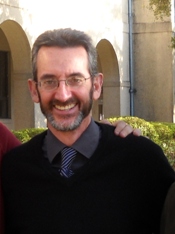
John Protevi (Phyllis M. Taylor Professor of French Studies, Louisiana State University) [Twitter]
This presentation will offer an overview of the figurative and literal as well as the political and penal senses of the term “slavery” in Hobbes, Locke, and Rousseau, which are only tangentially related to real world Atlantic slavery. The second part of the presentation will discuss how these senses relate to real world slavery, and its attendant phenomena of resistance and marronage.
John Protevi received his Ph.D. in philosophy from Loyola University Chicago in 1990. A long-time member of the faculty in French Studies at LSU, he was named Phyllis M. Taylor Professor of French Studies in 2011. In 2012 he also became Professor of Philosophy with teaching duties in the Department of Philosophy and Religious Studies.
Spinoza and the Social Contract
Sandra Leonie Field (Lecturer in Philosophy, Monash University, Australia)
There has been an outpouring of both scholarly and popular works on Spinoza's philosophy in recent times. But its exact contours remain contested. Specifically, regarding Spinoza's political philosophy, scholars disagree whether Spinoza offers a radicalised and improved social contract theory, or whether he offers a profound critique of social contract theory. The core of Spinoza's political theory is his striking reduction of the concept of right to a concept of power. Spinoza notes that for Hobbes, a social contract brings into being a civil condition where civil rights displace natural rights. But Spinoza objects: natural rights are nothing other than degrees of power, and rights so understood continue regardless of any social contract. All a social contract can do is reorganise relations of power. In this talk, I will lay out Spinoza's extremely interesting theoretical position as a follower and critic of Hobbes, and I'll argue that the lesson of his oeuvre is that we need to move beyond the social contract approach to thinking about political life.
Sandra Leonie Field is the author of Potentia: Hobbes and Spinoza on Power and Popular Politics (New York: Oxford University Press, 2020). She is Lecturer in Philosophy at Monash University. Previously, she was Associate Professor of Humanities (Philosophy) at Yale-NUS College, Singapore. Her research topics include early modern European political philosophy; democratic theory; and concepts of power. She has also written on non-Western philosophy.
Modern capitalism as colonialism: Rethinking CB Macpherson's theory of possessive individualism

John Holmwood (Emeritus Professor, Faculty of Social Sciences, University of Nottingham)
CB Macpherson's account of the political theories of Hobbes and Locke has been very influential in interpreting the theory of possessive individualism as a precursor to modern capitalism. It is relatively straightforward to show that the theory is better understood as a direct justification of colonialism. However, this talk will go further to suggest that the association with modern capitalism becomes less problematic once we understand that colonialism and capitalism are integral. Contra most subsequent conceptualisations which account for capitalism as only contingently related to colonialism, we should conceptualise capitalism in terms of the logics of colonialism.
John Holmwood is emeritus Professor of Sociology in the School of Sociology and Social Policy, having joined the School in January 2010. He was previously professor of sociology at the Universities of Edinburgh, Sussex and Birmingham. In 2014-15 he was a member of the Institute for Advanced Study, Princeton. His main research interests are in sociological theory (including its history), colonialism and inequality, and religion and schooling. With Gurminder K. Bhambra, he has written Colonialism and Modern Social Theory (Polity, 2021). He is an advocate of public sociology and was an expert witness for the defence in professional misconduct cases brought against Birmingham teachers following (false) accusations that they were part of a 'plot to Islamicise schools'. His book about the 'Trojan Horse affair', written together with Therese O'Toole, Countering Extremism in British Schools? The Truth about the Birmingham Trojan Horse Affair, was published by Policy Press. He has been collaborating with LUNG theatre company in the development of their acclaimed play (and associated engagement events) about the affair - Trojan Horse. Further information, publications, etc, are available at: johnholmwood.net
The Significance of the Individual and the Concept of the Social in the work of Carl Schmitt

Timothy Howles (Junior Research Fellow in Political Theology and Associate Director of Laudato Si' Research Institute, Oxford University)
The essay The Significance of the Individual was one of Carl Schmitt’s first publications in 1914. It is by no means an easy read. But for those who do pick it up, this text might seem to reinforce a portrait of Schmitt we had already assumed. For here we find Schmitt the “anti-individualist”, willing to confer dignity to individuals only on the basis of their functional utility to the constitutional state. This hardly seems the basis for a social contract worthy of the name. In this presentation, however, I wish to take another look at this early text. For rather than brute submission of individuals to the state, leading to social undifferentiation, Schmitt actually claims to be offering a “metaphysics of the self”, leading to emancipation and flourishing of individuals within a larger aggregate. Thus, he writes: “the derivation of the value of the individual from its task […] does not destroy the dignity of the individual. Rather, it opens up the possibility of a justified dignity in the first place”. By considering this little-known early text, I will try to show how Schmitt envisages humans transitioning from an atomised and antagonistic state of nature to a form of harmonious social existence, and how this sets the scene for his later (and better-known) work in political philosophy.
Tim completed his doctorate in 2018 at the University of Oxford under the supervision of Professor Graham Ward. His thesis examined the concept of the Anthropocene as it has been explored within recent continental philosophy and religion. His research interests lie at the intersection of politics and theology, with a focus on Earth System Science. He provides teaching in the Faculty of Theology & Religion and in the School of Geography & the Environment at the University of Oxford, and has contributed to a transdisciplinary project exploring the role of environmental social sciences and humanities in the UK higher education sector. Tim is also Associate Director of the Laudato Si’ Research Institute, a wide-ranging role including support for research programming, research grants, the visitor and affiliate programme, and academic events. Tim grew up in Birmingham and remains a committed supporter of West Bromwich Albion football club. He now lives in Oxford with his wife and two children. He is also an ordained Anglican priest and continues to engage in ministry in his local church. His only claim to fame is that he was a contestant on the television programme “University Challenge” when he was as a student. He refuses to say how many questions he got right!
Civilization and its Others: American Imaginaries, State of Nature, and Civility in Hobbes
Stépahnie Martens (York University, Canada)
8 pm AEST (Melbourne time), May 7, 2024; 6am New York; 12 noon Paris
Other time conversions here
In Modern Social Imaginaries (2003, later forming a chapter in A Secular Age, 2007), Charles Taylor suggests, among many conceptual clarifications, that ‘a social imaginary’ may simply be thought of as ‘the ways people imagine their social existence.’ (p. 23) This deliberately loose yet comprehensive approach can be very fruitful in the history of ideas —and this is indeed shown by the vast and ambitious project Taylor undertakes re. secularization. More modestly, in past works, I have explored the way American imaginaries spread by Renaissance travel literature were transformed during the 17th century into a sort of ‘Aboriginal imaginary’ —the background against which the notion of civilization developed and endured. Such an approach may contrast with and complement recent critical approaches to the canon of Western political and legal thought, often applying the critical lens of race and genre to draw connections between supposedly universalist philosophies and their role in sustaining or legitimizing imperial and colonial conquests. This paper and presentation proposes to apply Taylor’s notion of ‘social imaginary’ to Hobbes’s texts, as part of a larger genealogy of civilization – civilization working as a form of exclusion and domination that eschews biological determinism in favour of social, historical bias. This “civilizational” thinking certainly can work – and will work later on in conjunction with modern racism and white privilege – to exclude many. The racial contract – as per Mills – is only a late instalment on a more fundamental one, the civilizing contract.
Stéphanie B Martens is Sessional Assistant Professor in the Faculty of Liberal Arts and Professional Studies, York University, Canada. She is the Author of The Americas in Early Modern Political Theory (Palgrave Macmillan, 2016) and has published widely on Hobbes, Locke, Rousseau, Foucault and Nietzsche.
States of nature as theories of normativity: Kant and his predecessors
Macarena Marey (University of Buenos Aires) [Academia.edu]
8 pm AEST (Melbourne time), June 4, 2024; 6am New York; 12 noon Paris
Other time conversions here
The state of nature in social contract theories tells us two stories, one about who the main political actors are, and another one about the supra-juridical normativity and principles those actors use to judge and act politically once they are in the civil state. In this paper I focus on the latter matter by contrasting Kant’s approach to the state of nature and its role in his social contract theory with the conceptions of the state of nature in Hobbes, Locke, Achenwall, and Rousseau. Following the thesis that pre-juridical normativity functions as supra-juridical normativity once in the state, my main question is: how is “natural”, in the sense of “pre-political”, normativity generated? With this I am referring not only to the source of normativity, but mainly to how pretensions of normativity arise when people interact in the state of nature, and if these are or are not regulated by a moral-legal order independent from that interaction.
Dr Macarena Marey is Director of the Center for Critical Studies and Philosophy of the Present at the Institute of Philosophy at the Faculty of Philosophy and Letters in the University of Buenos Aires. She specializes in the tradition of the social contract and theories of democracy, and she is currently researching secularism in the 21st century. She is the author of Omnilateral Will and the Finitude of the Earth (La Cebra: 2021) and the editor of Theories of the Republic and Republican Practices (Barcelona, Herder: 2021). She has published works on political philosophy in numerous journals (such as Constellations, Kant-Studien, Critical Horizons, Problemos, Isegoría, Ideas y valores, Areté, etc.) and in books from different countries. She leads the research project "The notion of consent in modern theories of the social contract: conceptual and normative issues" (National Agency for Scientific and Technological Promotion).
From Natural Politics to Social Contract in the History of Ideas
Simon Kennedy (University of Queensland)
8 pm AEST (Melbourne time), August 6, 2024; 6am New York; 12 noon Paris
The social contract is a general theory that undergirds some modern conceptions of social and political order. It also helps explain and theorise why people cooperate. But social contract theory hasn't always been the leading explanation for these things. This paper explores pre-modern theories of social and political agreement, focusing on the medieval and early modern theological theories of political society. The conclusion will draw a contrast between modern and pre-modern theories, and explore the meaning of the secularisation of theories of society and politics.
Simon Kennedy is an intellectual historian and historian of political thought. His research focuses on early modern Protestant political ideas and jurisprudence. His publications include Reforming the Law of Nature: The Secularization of Political Thought, 1532-1689 (Edinburgh UP, 2022). His current projects include an examination of the role that interpretations of the Decalogue played in forming early Protestant understandings of political authority. He is also working on the problem of implementing an intellectual historical methodology in constitutional interpretation.
Of Contract and Covenant: Thomas Hobbes, Baruch of Spinoza, and Augustine on Social Agreement and Power

Boleslaw Z. Kabala (Tarleton State University and Villanova University)
8 pm AEDT (Melbourne time), October 8, 2024; 5am New York; 11am Paris
Thomas Hobbes and Baruch Spinoza are often contrasted on their understandings of the social contract, as recently explored in the work of Sandra Leonie Field and others. Thus, the Monster of Malmesbury is associated with the formal power of an explicit agreement to set up society, whereas his younger and more romantic Dutch interlocutor (incidentally also the first theorist of modern democracy) is aligned with informal power, and, by the end of his life, the possibility that society might come into being without any contract whatsoever. Augustine did not present in any of his writings a notion of foundational agreement to institute the social project, but he does include elements of what would later become covenantalism, which involves robust notions of interpersonal commitment and consent. In this presentation, I contrast both Hobbes and Spinoza’s understanding of founding agreements with Augustine’s overlapping consensus between the cities of God and man, especially in Book 19 of City of God, showing how it involves elements of both formal and informal power.
Dr. Boleslaw “Bolek” Z. Kabala is an Assistant Professor of Political Science at Tarleton State University in Stephenville, Texas. He received the 2024 College of Liberal & Fine Arts (COLFA) Outstanding Junior Faculty Award at Tarleton. He also serves as a Research Associate at the Augustinian Institute at Villanova University. Previously, Dr. Kabala taught at Colorado Christian University and completed his Ph.D. in Political Science at Yale in 2016. He has held positions as a James Madison Postdoctoral Fellow at Princeton and Visiting Scholar at the American Public Philosophy Institute at the University of Dallas. Dr. Kabala is the lead editor of Augustine in a Time of Crisis: Politics and Religion Contested (Palgrave, 2021) and Augustine: Frontiers of Pluralism (Routledge, 2024). His current book project, Millennial Visions: Hobbes, Spinoza & The Return of Theological Politics, explores the dialogue between Hobbes and Spinoza and its impact on contemporary debates on public reason and secularization.
Michel Serres, Porous Becomings, and the Social Contract Tradition
What new perspectives does the work of Michel Serres bring to today's most pressing social questions? What work can the idea of a natural contrat do in today's ecological debates? How is knowledge constructed today, and what is at stake in its modes of production? Join Andreas Bandak, Daniel M. Knight (co-authors of Porous Becomings: Anthropological Engagements with Michel Serres) and Christopher Watkin (author of Michel Serres: Figures of Thought) for a roundtable discussion of the importance of Michel Serres today. The session will include plenty of time for audience contributions, discussion, and questions.
8 pm AEDT (Melbourne time), September 19, 2024; 6am New York; 12 noon Paris

Andreas Bandak (University of Copenhagen)
Dr Andreas Bandak is an associate professor in the Department for Cross-Cultural and Regional Studies at the University of Copenhagen. Specialized in anthropological studies of Syria, Christianity, exemplarity, and temporality, Bandak has studied the situation leading up to the uprising in 2011 as well as the wider situation in the Levant following in the wake of the violent and protracted civil war. Bandak is the author of Exemplary Life: Modeling Sainthood in Christian Syria (2022). Bandak has also edited volumes such as Ethnographies of Waiting (Bloomsbury, 2018, with Manpreet Janeja), The Social Life of Prayer (2021), and Porous Becomings: Anthropological Engagements with Michel Serres (2024, with Daniel M. Knight).
Daniel M. Knight (University of St Andrews)
Dr. Daniel M. Knight is a Reader in Social Anthropology and Director of the Centre for Cosmopolitan Studies at the University of St Andrews. He holds a PhD in Anthropology from Durham University and a BA from the University of Wales, Lampeter. His research in Thessaly, Greece, focuses on economic crisis, time, temporality, neoliberalism, neocolonialism, and renewable energy. His books include History, Time, and Economic Crisis in Central Greece (2015), The Anthropology of the Future (2019), and Vertiginous Life (2021). He is co-editor with Andreas Bandak of Porous Becomings: Anthropological Engagements with Michel Serres (2024).

Christopher Watkin (Monash University)
A/Prof Christopher Watkin is an ARC Future Fellow and Associate Professor of French and Francophone Studies at Monash University. His publications include Difficult Atheism (2011), French Philosophy Today (2016), and Michel Serres: Figures of Thought (2020).
Creating the Commonwealth: Power, Projection and Religion in Hobbes’s Leviathan

Amy Chandran, Assistant Professor of Humanities, Hamilton Center, University of Florida
Tuesday 25 March 2025, 9am Melbourne time. Monday 24 March, 6pm Florida, 10pm London. Time conversions here.
Register here for the Zoom meeting.
This presentation investigates familiar difficulties surrounding the generation of the Commonwealth from out of the state of nature, and proposes a novel way of understanding Hobbes's solution. Building on recent explorations of power and projection, it argues that Leviathan proposes the concrete construction of a “Common Power.” Examination of Hobbes’s expanded account of natural religiosity in Leviathan suggests that projections of “power invisible” prompted by fear or hope may elicit acts of honor, despite the pervasive conditions of natural equality. If the “laws of honor” operate in the natural condition, this explains how and why individuals might constitute themselves as “instrumental powers” of an increasingly common entity by way of a free-gift of their will. Hobbes polemically suggests this free-gift is the “grace” or divine intervention required for salvific deliverance from the natural estate. This shows how power might be compounded to a singular site, such that the “Mortal God” instituted in the covenant can be understood to be a rational representation of omnipotence in history.
Amy Chandran is an Assistant Professor in the Hamilton Center at the University of Florida. She completed her PhD at Harvard University in 2023.
Cultures of Trust

Tuesday 8 April 2025, 8pm Melbourne time. London 11am; New York City 6am. Time conversions here.
Register here for the Zoom meeting.
In this talk I consider what sustains a culture of trust, arguing that it depends on embedded norms of trustworthiness, which norms have certain ‘ideational’ conditions—conditions which concern the ideas and normative principles which predominate within a population. I divide the ideational component into conditions which concern its content and its legitimacy. That norms of trustworthiness have an ideational component also indicates ways that a culture of trust may be undermined, and the chapter closes by considering one solvent of trust, namely egoism. I close by considering the relevance of a culture of trust for the social contract tradition, in light of the classic Hobbesian conception of the state of nature, and the role of the state and the law.
Tom Simpson is the incoming Alfred Landecker Professor of Values and Public Policy at the Blavatnik School of Government, University of Oxford and is also a Senior Research Fellow, Wadham College. He works on a variety of issues in moral and political philosophy, including trust, freedom, and issues in technology and security, such as the ethics of autonomous weapons. His book on trust, Trust: A Philosophical Study, was recently published by OUP (2023).
Standing Up to Beijing and the Common Good

David M. McCourt, Professor of Sociology, University of California, Davis and NYU Abu Dhabi
Tuesday 15 April 2025, 8pm Melbourne time. 2pm Abu Dhabi; 11am London; 6am New York City. Time conversions here.
Register here for the Zoom meeting.
In recent years policy-makers from numerous western countries have effected a marked shift on policy towards the People’s Republic of China. Out has gone the optimistic vision of shared economic growth and cooperation characteristic of the early 2000s, and in has come a dark image of the West and China locked in a potentially decades long competition for global power and influence, if not a new Cold War. As the cases of the United States, Australia, and the United Kingdom show, this shift was far from inevitable, following instead the triumph of elites and policymakers critical of China—labelled respectively Competitors, Securocrats, and Critics—over their pro-Engagement colleagues. Retracing this recent history, this seminar centers the question of the common good in America, Australia and Britain’s policies of “standing up to Beijing.” In particular, what are the trade-offs between defending Western countries from legitimate concerns emerging from a more powerful China—from domestic interference to geopolitical challenges—and viewing all issues relating to Beijing through a military-security lens?
David M. McCourt is Professor in the Department of Sociology at the University of California-Davis, and is spending the academic year 2024-2025 as Visiting Professor at New York University Abu Dhabi. The author of The End of Engagement: America’s China and Russia Experts and U.S. Strategy Since 1989, he is currently finishing a follow-on study titled American Hegemony and China’s Rise: Knowing the PRC in Washington, Canberra, and London, on which this seminar is based.
The Oceans as a Commons: everyone’s, no-one’s, or a public good?

Tuesday 29 April 2025, 8pm Melbourne time. London: 11am; New York City: 6am. Time conversions here.
Register here for the Zoom meeting.
Are the oceans a commons? The high seas are open to all nations and governed by international law, reflecting Grotius’s mare liberum principle of unhindered access for trade, fishing, and navigation. Historically, the high seas were minimally regulated, with law focusing on flag-state jurisdiction and rules of naval warfare. The 1982 UN Convention on the Law of the Sea (UNCLOS) marked a pivotal moment, introducing Global South-led ideas of national Exclusive Economic Zones, shared responsibility for high seas fisheries, and the reservation of the high seas for peaceful purposes. Critically, it introduced a regime for seabed mining and equitable benefit-sharing but left marine biodiversity conservation in areas beyond national jurisdiction largely unaddressed. Recent efforts, like the 2023 High Seas Biodiversity Treaty, aim to fill this gap. Ultimately, the high seas are a global public good requiring shared responsibility and stewardship. Its legal regime is dynamic, and has shown the capacity to evolve to address new challenges and promote collective governance for sustainable use and protection.
Professor Douglas Guilfoyle joined UNSW Canberra in 2018, specializing in maritime security, international law of the sea, and international and transnational criminal law. His research focuses on maritime law enforcement, naval warfare, international tribunals, and the history of international law. A 2022–2025 ARC Future Fellow, he investigates small states’ litigation against greater powers. He is also a non-resident fellow at the Sea Power Centre – Australia, and was a Visiting Legal Fellow at DFAT (2018–2019). Previously, he served as a law professor at Monash University and a Reader at UCL, and has practised and advised government and international organisations.
Children’s Periodicals and the Common Good: The Charitable Child
Monday 8 September 2025, 8pm Melbourne time. 6am New York, 11am London. Further time conversions here.
Register here for the Zoom meeting.
This paper explores how children’s magazines encouraged children to help other children, defining a philanthropic role for young people that is reinforced through the press. It uses children’s print culture to examine the relationship between children and charitable institutions in the nineteenth and early twentieth centuries and foreground children’s active roles. Not only does this approach demonstrate children’s agency and responsiveness to the needs of others during this period, but it also shows how ideas of charity were articulated in printed materials for children. Charitable ideals for children were mobilised in periodicals and traversed boundaries based on class, gender, and race. The ubiquity and frequency of children’s periodicals meant that young people were regularly exposed to charitable ideas in both fictional and non-fictional materials in ways that reinforced the expectation that they should help others in need.
Kristine Moruziis an associate professor in the School of Communication and Creative Arts at Deakin University, Australia and author of The Charitable Child: Philanthropy in Children’s Periodicals, 1840-1940 (Edinburgh UP 2024). She is also author of Constructing Girlhood through the Periodical Press, 1850-1915 (2012) and From Colonial to Modern: Transnational Girlhood in Canadian, Australian, and New Zealand Children’s Literature (1840-1940) (2018). She researches on historical and contemporary children’s literature and has edited a number of collections including Edinburgh History of Children’s Periodicals (Edinburgh UP 2024), Literary Cultures and Nineteenth-Century Childhoods (Palgrave 2023), and Sexuality and Sexual Identities in Literature for Young People (Routledge 2021).
Diverse relations to alterity: collective individuation and subject groups in Simondon, Guattari, and chemical ecology

Timothy Jackson, Co-Head, Australian Venom Research Unit, University of Melbourne
Tuesday 16 September 2025, 9am Melbourne time. 15 September 4pm LA, 7pm NYC. Time conversions here.
Register here for the Zoom meeting.
If the individual is an ephemeral phase in being and the subject is always in relation with something more than “its self”, then who or what pre-exists “a social contract” and is capable of entering into it? By the same token, if the subject is always in relation with an occult alterity within, to what extent is a stable notion of the “common good” achievable amongst subjects who are always at odds with themselves? In this talk we’ll undertake a whirlwind tour of the processes of individuation and subjectivation detailed in the philosophies of Gilbert Simondon and Félix Guattari, alongside a consideration of what the science of ecology – specifically of the chemical kind – might have to tell us about the nature of autonomy and subjectivity.
Dr Timothy Jackson is an evolutionary toxinologist specializing in reptile venom systems, particularly those of Australian elapid snakes. He holds a PhD from the University of Queensland, has published extensively (28 peer-reviewed papers and 26 book chapters), and is passionate about the role of venom evolution in improving snakebite treatment. His expertise spans evolutionary biology, venomics, bioinformatics, toxin structure-function, and the philosophy of science. Since 2017, Dr Jackson has led the Venoms and Antivenoms Reference Laboratory at AVRU, focusing on characterizing snake venoms and evaluating antivenom efficacy.
Thinking about the Age of Choice

Sophia Rosenfeld, Walter H. Annenberg Professor of History at the University of Pennsylvania
Tuesday 30 September 2025, 11am Melbourne time. Monday 29 September 6pm LA, 9pm NYC. Time conversions here.
Register here for the Zoom meeting.
Contracts always have a complex relationship to choice. On the one hand, partners to a legitimate contract have to agree to its terms voluntarily. On the other, the contract binds the parties once it is signed and sealed. The history of personal choice, and particularly its expansion into a synonym for freedom in the modern world, is thus very much bound up with the history of contracts of every kind. This talk will explore the relationship among popular sovereignty, voting, and choice from the 18th century onwards and the implications for how we envision our social contract and our obligations to one another today.
Sophia Rosenfeld is Walter H. Annenberg Professor of History and former chair of the History Department at the University of Pennsylvania. Her latest book is The Age of Choice: A History of Freedom in the Modern World (2025), which was named a New York Times Editors’ Choice. She is also the author of A Revolution in Language (2001); Common Sense: A Political History (2011), which won the Mark Lynton History Prize and the Society for the History of the Early Republic Book Prize; and Truth and Democracy: A Short History (2019), as well as co-editor of the award-winning, six-volume Cultural History of Ideas (2022) and a former co-editor of the journal Modern Intellectual History. Her work has been translated into many languages and supported by fellowships from the Guggenheim Foundation, the Institute for Advanced Studies (Princeton), the Institute for Advanced Studies (Paris), the Mellon Foundation, the American Council of Learned Societies, and both the Remarque Institute and the Center for Ballet and the Arts at NYU, as well as well as previous positions as Professor of History at the University of Virginia and Yale University and visiting professorships at UVA Law School and the EHESS in Paris. In 2022, she held the Kluge Chair in Countries and Cultures of the North at the Library of Congress and was also named by the French government an Officer in the Ordre des Palmes Académiques. In 2025, she was elected a member of the American Academy of Arts and Sciences. She also continues to write and to speak in a wide variety of venues about the state of contemporary democracy and the challenges of free speech. Her essays and reviews on these subjects can be found in The New York Times, The Washington Post, The Guardian, and The Nation, among other outlets.
Simone de Beauvoir and the “Adventurer”—Navigating the Return to the Common Good
Mary Townsend, Associate Professor of Philosophy, St. John’s University, Queens, New York
Tuesday 4 November 2025, 8pm Melbourne time. London: 9am; New York City: 4am. Time conversions here.
Register here for the Zoom meeting.
If return to a more robust social contract has become necessary, what do we do with the individuals who wilfully step outside of it? In her Ethics of Ambiguity, Simone de Beauvoir describes five paradigmatic ways human beings avoid recognition of each other’s mutual freedom, responsibilities, and projects. In this talk I’ll describe the case of the “adventurer,” who unlike the nihilist or the “serious” man does not resort to violence or coercion within his community, but instead departs from conventional and contractual relations in a storied escape--only to involve himself in the projects of others in some far-away place. For Beauvoir, what does it take for the adventurer to realize that “to will oneself free is also to will others free”? I’ll discuss Beauvoir’s unique approach to Hegelian recognition and existential freedom, and how she proposes to integrate these into a politics that preserves the common good.
Mary Townsend is Associate Professor of Philosophy at St. John’s University, Queens, New York. Her research focuses on political psychology ancient and modern, Hegelian-influenced philosophers from Kierkegaard to Simone de Beauvoir, and the history of the philosophy of feminism. Her book, The Woman Question in Plato’s Republic (2017), was named “required reading” by the University of Pennsylvania’s Emily Wilson, translator of Homer’s Odyssey and Iliad. Dr. Townsend also writes on philosophy and culture with work at places such as The New York Times, The Atlantic, Wisdom of Crowds,and The Hedgehog Review.
Geoff Keeling
The Ends of Autonomy Colloquium
15-16 December 2020, UK time (time conversions here)
An international, interdisciplinary online Zoom colloquium hosted by Monash University, drawing together insights from philosophy, economics, literary and cultural theories into how the concept of autonomy is changing today.
Keynote speakers:


Monash Colloquium:
Warwick Colloquium: