
Aboriginal leaders come together with NSW government to strengthen disaster resilience
Monash University’s National Indigenous Disaster Resilience (NIDR) program hosted the first Policy Roundtable on Aboriginal Disaster Resilience in New South Wales on Thursday 27 November, to prioritise Indigenous leadership in disasters and strengthen how communities prepare for and recover from environmental events.
The NSW Policy Roundtable brought together key Indigenous organisations and community leaders with representatives from NSW Government, emergency management and disaster resilience agencies to strengthen relationships and develop an agreed list of targeted, accountable actions that improve Indigenous inclusion in emergency management.
Held at Australian Hall on Gadigal Country, a historic site of Aboriginal resistance, the day started with a Welcome to Country from Uncle Michael West, and opening addresses from Raymond Kelly, Dhangatti/Gumbayngirr man and Chairperson for the NSW Aboriginal Land Council; Janelle Saffin MP, NSW Minister for Recovery; Charishma Kaliyanda MP, NSW Parliamentary Secretary for Emergency Services; and Kate Meagher, Acting CEO NSW Reconstruction Authority.
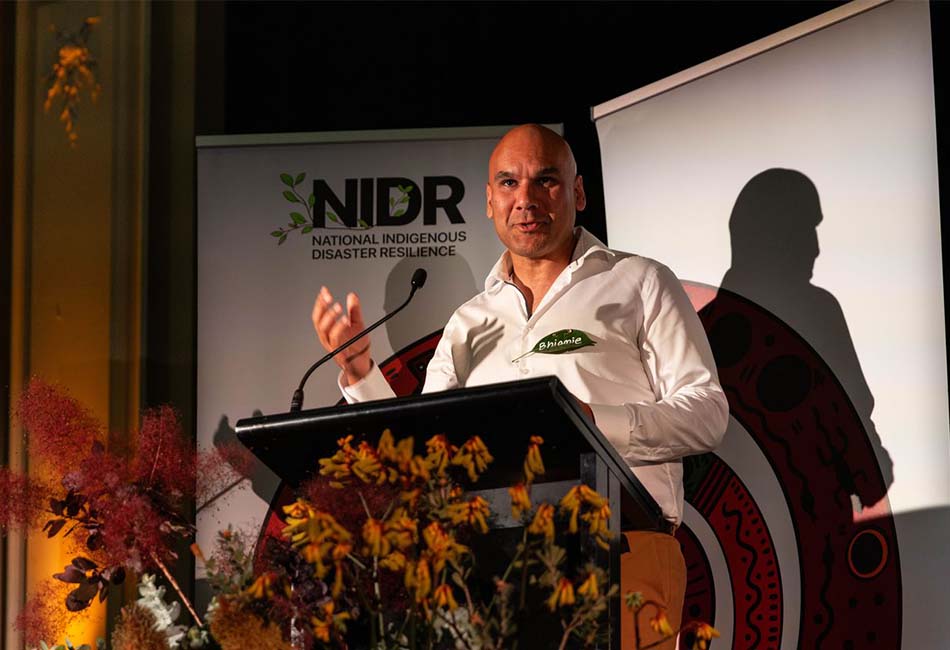
Professor Bhiamie Williamson, National Indigenous Disaster Resilience. Image credit: Gabrielle Connole
Councillor Kelly began the discussion by acknowledging that while Aboriginal communities face greater risks during environmental disasters, they often find themselves leading community response and recovery efforts.
“Our communities are hit first, hardest and longest. Our stories are not only about vulnerability, they’re about capability. If we are truly serious about disaster resilience, Aboriginal leadership must be embedded at every stage. Our knowledge is the way forward to keep us all safe.
“Through this recovery of identity, status around where we come from, who we are, and how we’ve survived, says and should say something to the greater Australia. People talk about having a fair go – we know how to go the distance.”
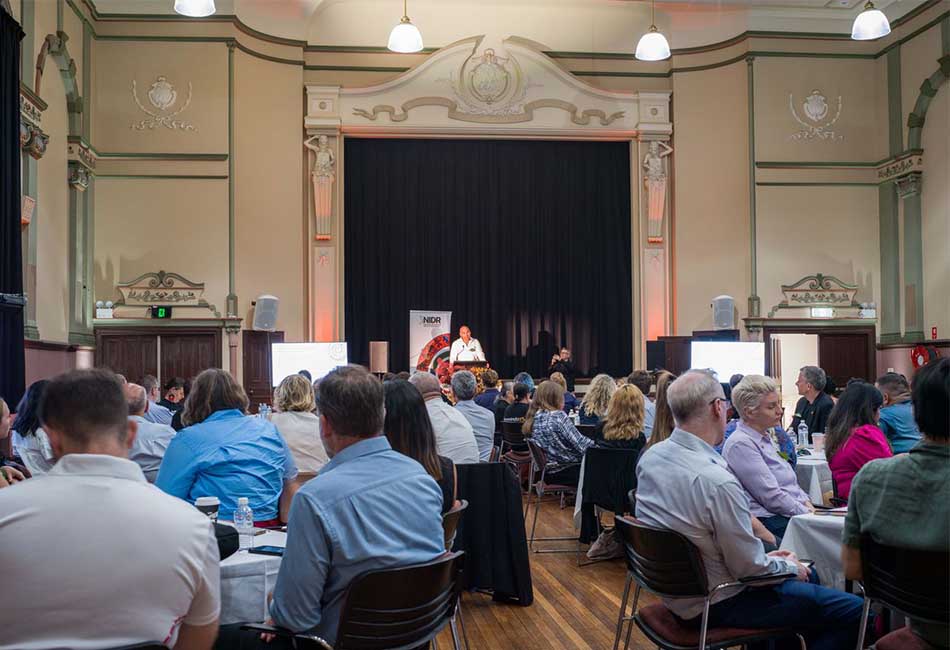
Image credit: Gabrielle Connole
Minister Saffin emphasised the importance of Aboriginal knowledge in disaster resilience.
“We’ve got a lot to learn, share and understand about disasters and their impacts on communities. As the first Minister for Recovery in NSW, we know Aboriginal people and communities are at high risk of natural hazards.
“We need to understand more the deep connection to Country, culture and community, and how this shapes resilience and recovery. I’m committed to being guided by Aboriginal knowledge in how to do disasters better.”
The group then heard from representatives from Indigenous communities directly impacted by recent disasters, who shared their own lived experiences and examples of leadership and resilience during floods and fires.
Joshua Donoghue from the Kinchela Boys Home Aboriginal Corporation emphasised the importance of culturally safe support in disasters, talking about the Kempsey floods earlier this year.
“Our people couldn’t go into the evacuation centre without feeling judged. So we set up a hub for our people, so they could be culturally safe. We opened the back of our office so our people could feel comfortable, a safe place for them.
“We need more help beforehand, not after. Let’s make the change and get it done early, not late.”
A common theme throughout the day was the importance of listening to and prioritising Indigenous voices, and learning from Indigenous lived experiences so that all NSW communities can better prepare for and respond to disasters.
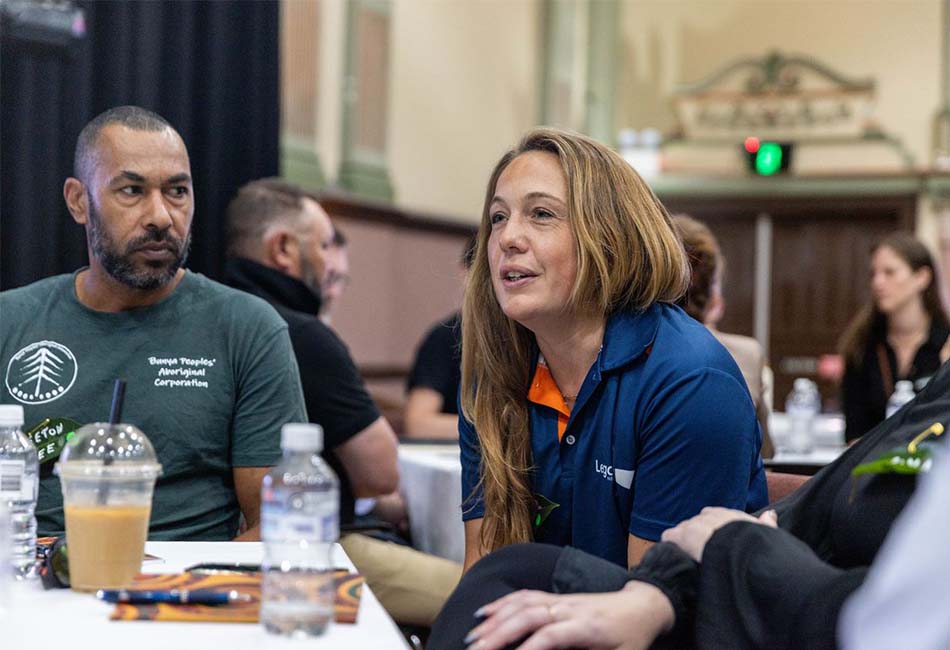
NSW Roundtable delegates. Image credit: Gabrielle Connole
Kylie Jacky, Jali Local Aboriginal Land Council Chairperson, spoke about the ongoing impacts of the 2022 Cabbage Tree Island floods and the need to recognise Indigenous knowledge.
“The unheard stories and unseen resilience our community holds has never been recognised. No one asked us what we know about floods, they still haven’t asked us. This directly led to our community members still being displaced today, since flooding in 2022, and not being able to go home.
“Our voices are finally being heard thanks to the urgent perseverance of our people. But we still need help. There’s space for allies. Don’t make decisions for us.”
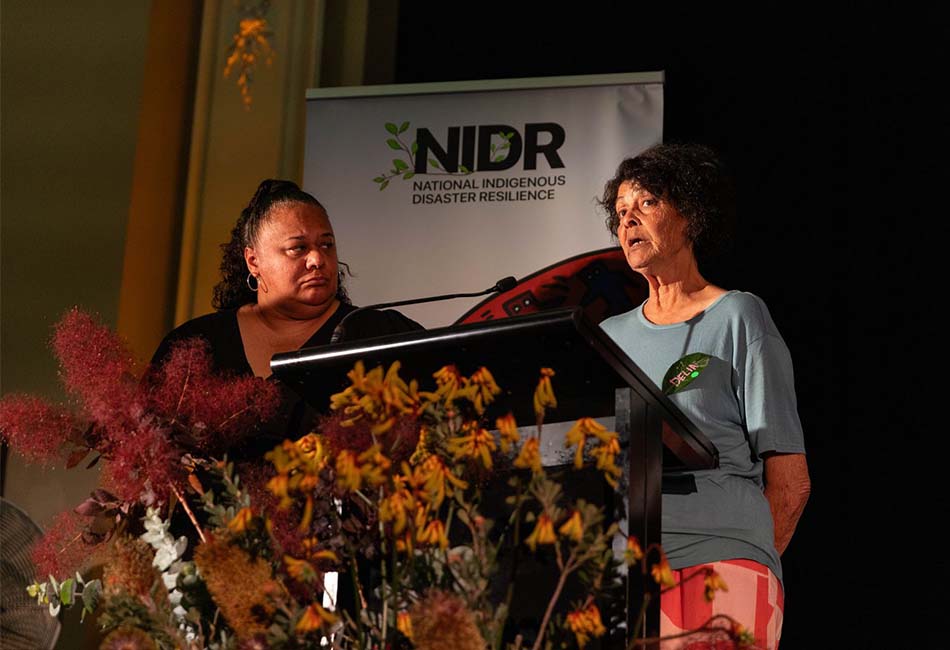
Aunty Delia Rhodes and Kylie Jacky, Jali Local Aboriginal Land Council. Image credit: Gabrielle Connole
An expert panel of different disaster response and emergency management representatives helped explain how they would each respond to a local catastrophic scenario and answered clarifying questions from the audience, including representatives from NSW Police Force, NSW Reconstruction Authority, NSW State Emergency Service, Fire and Rescue NSW, NSW Rural Fire Service, NSW Ambulance and NSW Department of Communities and Justice.
Delegates then collectively workshopped a new list of tangible actions and accountabilities. Three calls to action came out of the meeting:
1. Invest in capacity building for First Nations-led disaster preparedness.
2. Strengthen community knowledge transfer to local leaders who are equipped to act in crises.
3. Fund culturally grounded approaches that mainstream systems often overlook.
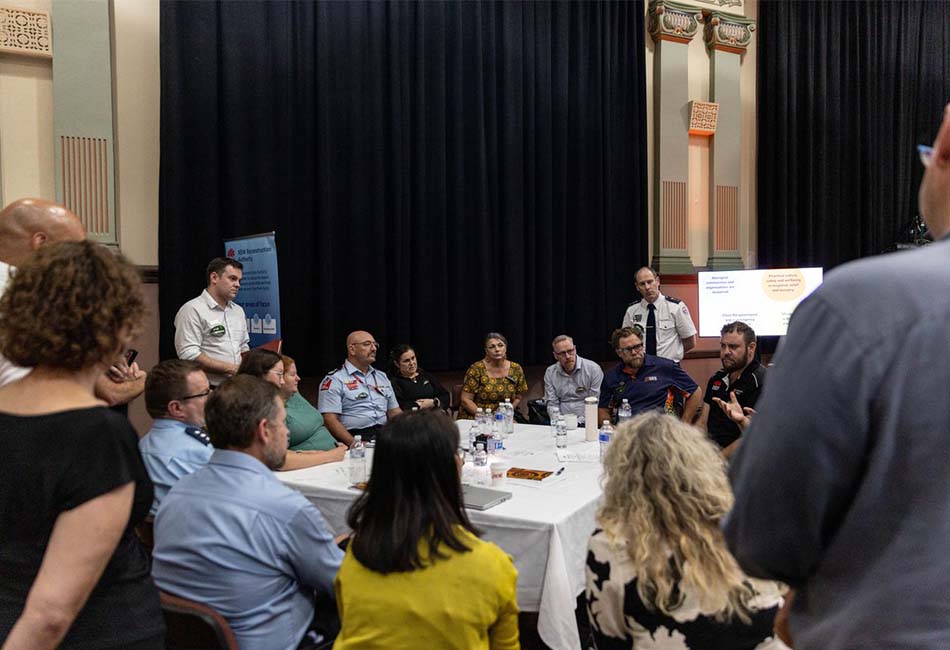
Image credit: Gabrielle Connole
NIDR is now developing these goals and other learnings from the Roundtable into a Communique that will improve inclusion of Indigenous peoples in NSW emergency management, recovery and resilience approaches moving forward.
Hayden Oliver, Katungal Aboriginal Corporation, captured the spirit of the day, with words of resilience and hope.
“We’ll never be able to say goodbye to disasters, but with support, funding, and the passion of everyone in this room, we can build on community resilience and have a safe journey through these turbulent times.”
A communique was developed following the Roundtable, which is informed by these discussions and is directed to all individuals and entities supporting resilience across the emergency management continuum. The full communique is available online.
Image credit: Gabrielle Connole
Keep up to date with NIDR events and research by following the team on LinkedIn or browsing the website.
The next NIDR Gathering will be held on Gunaikurnai Country, Lakes Entrance, Victoria in May 2026 and you can learn more here. NIDR Gatherings showcase Indigenous excellence and leadership in emergency management, community recovery, disaster resilience and Caring for Country across Australia.