
Rose Byfleet
Can you tell us a bit about yourself and your academic journey?
I read History at Oxford (MA) before spending a decade working in consulting, digital strategy, and marketing in the retail and luxury sectors, specialising in cosmetics and fragrance. While completing my MA in Renaissance Studies at the University of London, I project-managed the delivery of the digital archive of the Medici family in Florence—an experience that deepened my passion for archival 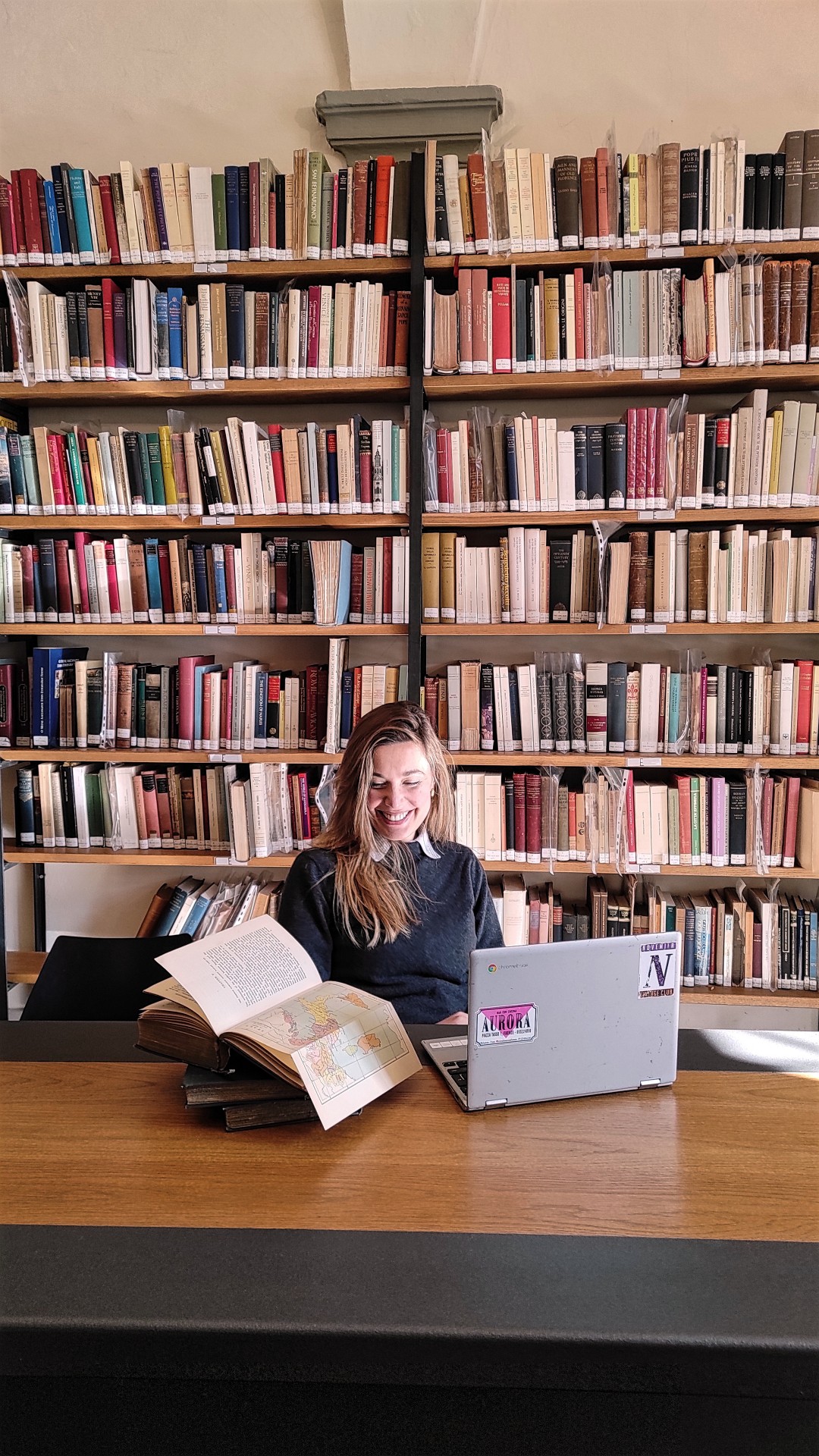 research and sparked my love of sixteenth-century Italy. As a pre-doctoral candidate, I was awarded a Renaissance Society of America Paul Oskar Kristeller Travel Fellowship and a fellowship from the Bibliographical Society of America to support my research. I then won a full scholarship to undertake my PhD at Monash as part of Professor Guy Geltner’s ARC-funded project, Pursuing Public Health in the Preindustrial World, 1100–1800. Most recently I have won a Postgraduate Fellowship at the European University Institute, Fiesole (Australian European University Institute Fellowships Association Inc - AEUIFAI Fellow) so I am back in Florence.
What was your research project when you received the Bill Kent Prato Graduate Research Fellowship?
My research explores the medicinal use of fragrance in sixteenth- and seventeenth-century Italy. My PhD dissertation, Between Art and Alchemy: Perfume Culture in Grand Ducal Tuscany (1537–1670), investigates the therapeutic applications of scent, its production, and its artistic representation focusing on the Medici court in Florence. Recently, my work has broadened to include the role of air and environment in early modern understandings of health. I pay particular attention to the women of the Medici family, examining their engagement with perfume both as creators and consumers. With a background in history, art history, and the modern fragrance industry, I am deeply invested in interdisciplinary and intersensory approaches, drawing on archival research, visual analysis, and material reconstruction to illuminate overlooked aspects of early modern life. I specialise in the intersections of art, material culture, and the history of science and medicine. My research explores how sensory experiences—particularly scent—shaped elite culture, health practices, and artistic production in Grand Ducal Tuscany.
Has there been a particularly meaningful moment or experience during your research abroad?
In November 2023, I initiated the Cultures of Air in the Premodern World project with an all-day workshop at the Monash University, Prato campus, sponsored by the Centre for Medieval and Renaissance Studies. The workshop brought together ten early career researchers from around the world, along with the 2023 Visual Artist in Residence at Monash Prato, to develop interdisciplinary insights into the perception and management of air before 1650. This ongoing project has been a particularly meaningful experience, and I will present some of the work that emerged from this workshop at the Renaissance Society of America conference in Boston in March 2025.
What skills or insights did you gain from the fellowship?
The Bill Kent Prato Graduate Research Fellowship provided the opportunity to return to the archives in Florence. I developed my primary source research and analysis skills, working in archives and libraries to uncover material related to perfume, medicine, and the Medici court. This deepened my expertise in Italian paleography, allowing me to navigate and interpret historical texts more effectively.
If you had to describe the impact of this opportunity in one sentence, what would you say?
The opportunity had a profound impact on my research; it deepened my understanding of the relationship between health, scent, air, and architecture by allowing me to engage directly with the Medici properties I was studying and their environment, thereby enriching both my perspective and analysis.
What advice would you give to someone considering applying?
I would encourage applicants to make the most of being physically present in Italy—immerse yourself in the archives and libraries but also take time to experience the spaces, landscapes, and sensory environments that shaped the historical subjects you’re studying. Be open to how direct engagement with place can shift your perspective and deepen your research in unexpected ways.