Research
The medical profession continues to be challenged by rare, debilitating neurodegenerative disorders and patients face inevitable chronic decline leading to death. While treatments have improved in recent decades, understanding the underlying pathophysiology and mechanisms of neurodegenerative disease, as well as the relationship to clinical and functional outcomes, are constant research endeavours. Furthermore, clinical trials for rare diseases face significant obstacles, including high disease heterogeneity; slow disease progression; recruitment challenges; and scarcity of sensitive, reliable, and functionally meaningful disease biomarkers.
Through interdisciplinary research programs, our researchers integrate a range of sophisticated tools to support the next generation of clinical trials and subsequent clinical practices, including state-of-the-art brain imaging methods and analytical techniques, multimodal artificial intelligence-based treatment outcome assessment models, and digital cognitive paradigms.
Our neuroimaging work in Huntington’s disease (IMAGE-HD) and Friedreich Ataxia (IMAGE-FRDA) has pioneered multi-modal imaging and discovered novel biomarkers sensitive to tracking disease progression, providing new insights for examining and treating such diseases at the brain, cognitive, motor, blood, and speech level. This work has paved the way for global, large-scale ongoing studies, such as TRACK-FA.
TRACK-FA is a global natural history study that tracks the neurobiological changes underlying Friedreich Ataxia. Our group leads the TRACK-FA Neuroimaging Consortium, the international global team of academic, industry and consumer partners that oversees the TRACK-FA study. Our leadership of the TRACK-FA study exemplifies our commitment to high quality cutting-edge interdisciplinary research that strives to improve health outcomes for individuals with Friedreich Ataxia.
Overall, our research holds significant potential to advance understanding and treatment of other rare diseases beyond Friedreich Ataxia and Huntington's Disease.
Areas of research/projects
Research focus areas
- Identify novel biomarkers of disease progression to help inform future clinical trials and new treatments.
- Translate research findings into the clinic and home to improve clinical care, functional outcomes and quality of life.
- Train the next generation research scientists and graduate research students.
- Promote professional and personal growth to make impact in the community and beyond.
A Natural History Study to TRACK Brain and Spinal Cord Changes in Individuals with Friedreich ataxia (TRACK-FA)
 Professor Nellie Georgiou-Karistianis is the Overall Coordinating Principal Investigator of TRACK-FA, the most extensive worldwide longitudinal, multi-centre neuroimaging study in FA with 200 children and adults (and ~100 matched controls) and three assessments (baseline, 12-month, and 24-month follow-up). The TRACK-FA study aims to improve understanding of the natural disease history of Friedreich ataxia (FA) (specifically, related to changes in the brain and spinal cord), validate neuroimaging measurements in FA to deliver a set of trial-ready biomarkers, and develop a comprehensive database to facilitate ongoing community research and discovery. The study is a collaboration between seven international sites, including, Monash University (Australia), University of Minnesota (USA), Aachen University (Germany), University of Campinas (Brazil), University of Florida (USA), the Children’s Hospital of Philadelphia (USA) and McGill University (Canada). FARA (USA) and four industry partners (PTC Therapeutics, Takeda, IXICO, Novartis Gene Therapies) will provide input on study design, endpoints, and monitoring. Professor Nellie Georgiou-Karistianis is also the chairperson of the TRACK-FA neuroimaging consortium.
This study builds on the work of the IMAGE-FRDA study, led by Professor Nellie Georgiou-Karistianis, which involved longitudinal multimodal neuroimaging of participants with FA conducted between 2013 and 2016 at Monash University. This study has already produced a number of novel findings regarding cerebral and cerebellar involvement in FA, including our understanding of disease progression throughout the brain.
-

Image taken from the August 2023 edition of the TRACK-FA Newsletter, which you can read here.
Utilizing AI-Predictive Models for Multimodal Neuroimaging and Clinical Biomarkers in Friedreich Ataxia: Enhancing Disease Progression and Treatment Outcome Assessment
Chief investigators: Dr. Susmita Saha, Dr. Ian Harding and Professor Nellie Georgiou-Karistianis
Collaborator: Dr. Paul Harrison (Monash Bioinformatics Platform)
In this study we utilise the TRACK-FA dataset and traditional machine learning models to determine whether we can use diverse data – including demographic data, genetic information, disease history, brain MRI measures, and clinical measures – to predict annual changes in clinical and neuroimaging outcomes.
The innovative prediction models that we are developing have the potential to improve the efficiency of clinical trials and to improve patient care.
Currently, one of the obstacles facing clinical trials in rare diseases is recruiting a sufficient number of participants. Our robust, personalised predictive models could allow clinical trials to be conducted without a placebo group, which means that it will be easier to recruit sufficient numbers of participants. Our predictive approach could be especially transformative for clinical trials investigating cutting-edge treatments, such as gene therapy, which has long-lasting and irreversible effects and requires early, rapid and accurate decision making.

Biomarkers in Friedreich Ataxia: Enhancing Disease Progression and Treatment Outcome Assessment
In this study we utilise the TRACK-FA dataset and traditional machine learning models to determine whether we can use diverse data – including demographic data, genetic information, disease history, brain MRI measures, and clinical measures – to predict annual changes in clinical and neuroimaging outcomes.
The innovative prediction models that we are developing have the potential to improve the efficiency of clinical trials and to improve patient care.
Currently, one of the obstacles facing clinical trials in rare diseases is recruiting a sufficient number of participants. Our robust, personalised predictive models could allow clinical trials to be conducted without a placebo group, which means that it will be easier to recruit sufficient numbers of participants. Our predictive approach could be especially transformative for clinical trials investigating cutting-edge treatments, such as gene therapy, which has long-lasting and irreversible effects and requires early, rapid and accurate decision making.
Prognostic Enrichment for Early-Stage Huntington's Disease Clinical Trials: An Explainable Machine Learning Approach
PhD Project
Student: Mohsen Ghofrani-Jahromi
Supervised by Professor Nellie Georgiou-Karistianis, Mohsen's PhD project harnesses machine learning and artificial intelligence approaches to predict brain degeneration in Huntington's Disease (HD) over time.
Recent failures in HD clinical trials underscore the critical need for advanced enrichment techniques for participant recruitment. In his study, Mohsen is leveraging data from three longitudinal observational studies, TRACK-HD, PREDICT-HD, and IMAGE-HD, in order to develop prognostic and stratification models based on machine learning.
The proposed stratification model could achieve an accuracy of 80% in classifying patients into two distinct and homogeneous groups based on their anticipated brain atrophy. By integrating cognitive, motor, and imaging biomarkers, such approaches enable more accurate prognosis of HD progression. Furthermore, they hold potential for improved post-hoc analysis of response to trials in a patient-specific manner.
Computerised cognitive training in Huntington’s disease: A randomised controlled trial
PhD Project
Student: Katharine Huynh
Supervised by Professor Nellie Georgiou-Karistianis, Katharine’s study examines the effects and neural mechanisms of computerised cognitive training in Huntington’s disease. Individuals with Huntington’s disease are randomised to either a training group, or a control group. Training group participants complete two 1-hour sessions of cognitive training per week over 12 weeks. Control group participants receive lifestyle education via monthly newsletters. Using cognitive assessments, questionnaires, and MRI scanning, we will assess changes in cognitive function, mood, quality of life, and functional connectivity of brain networks underlying cognitive function.
Exploring computational/statistical modelling to predict disease progression in Huntington’s Disease using combined IMAGE-HD, PREDICT-HD and TRACK-HD datasets
Applications of statistical modelling in Huntington’s disease (HD) is a promising avenue of research, directed towards predicting disease progression. In the past few years, researchers have shown the positive impacts of modelling disease progression to find the most sensitive biomarkers, not only in HD, but also in other neurodegenerative diseases such as Alzheimer’s’ disease. Our research program applies statistical and computational modelling techniques to a global data set, including those from IMAGE-HD, PREDICT-HD and TRACK-HD, to find a model that best explains disease progression with high accuracy and better stratification of disease epochs. We will incorporate clinical, behavioural and imaging measures to find the combination that provides the highest predictability of disease progression. These modelling techniques will be crucial to understanding the level of contribution of each marker to disease progression, which can then be used to advance the development of more effective treatments to delay neural degeneration and subsequent onset of HD.

Cortical Morphometry and Neural Dysfunction in Huntington’s Disease
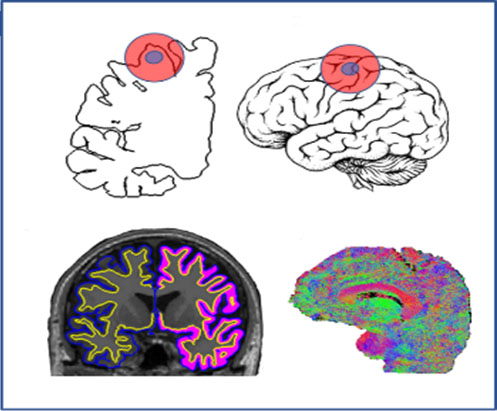
This project is being undertaken by PhD candidate Mr Brendan Tan, under the supervision of Prof Nellie Georgiou-Karistianis, Prof Alex Fornito, Dr Rosita Shishegar and Dr Govinda Poudel. This research is the first to investigate region-specific, longitudinal, cortical morphometry and tractography changes in Huntington’s disease (HD). Using data from the Melbourne-based IMAGE-HD study (n = 108; three time points over 30 months), Brendan has used a suite of brain imaging software (FreeSurfer, MRTrix3) to reconstruct the cortical surface and white matter microstructure of the brain in controls, pre-HD and symp-HD. The images shown below are examples of the types of analysis he has conducted, and the cortical surface and white matter structure images he has created. He hopes to provide further understanding of the neuropathology of disease, which may in turn lead to the development of reliable biomarkers of disease progression for use in clinical trials.