
Co-designing the future of heart surgery: A study led by community and science
Over 2 million patients undergo open heart surgery every year and 1 in 4 will suffer a major complication.
The PUMA study (Pulmonary Artery Catheters in Low-risk Cardiac Surgery: a consumer co-designed, multicentre randomised clinical trial), seeks to answer whether the routine use of a pulmonary artery catheter (PAC) in low-risk cardiac surgery patients is justified.
Pulmonary artery catheters are commonly used during and after open-heart surgery to monitor heart function, but we don’t actually know if they improve patient outcomes, says Dr Luke Perry, study lead and Scientific Director of the Victorian Cardiac Anaesthesia Research Laboratory at the Victorian Heart Institute.
“Observational studies suggest they might lead to unnecessary treatments and complications, yet these devices have never been tested in a gold-standard clinical trial. Because of this uncertainty, their use varies a lot—some hospitals use them all the time, while others rarely do,” Dr Perry said.
“The PUMA trial is essential to finding out whether these catheters truly benefit patients or if there are safer, less invasive alternatives."
Consumers shaping clinical trials from the ground up
Vital to the success of this work are the community and consumers who co-design the trial.
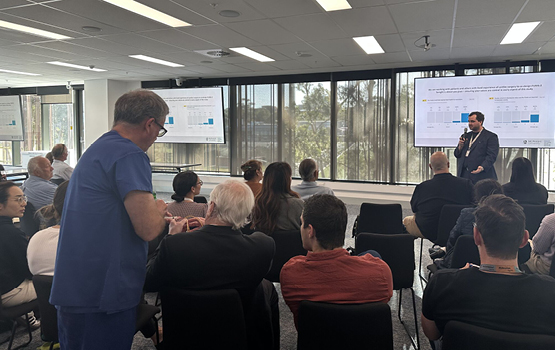
The PUMA team held a Community Co-Design Symposium at the Victorian Heart Hospital to shape the second phase of the trial, engaging heart surgery patients recruited during the pilot, community members, healthcare workers, researchers and students.
“Importantly, this isn’t just talk – real changes are happening,” said Dr Perry.
“We are making material changes to PUMA-2's design in response to feedback from our Symposium, quantitative surveys, and Zoom focus groups held for rural Australians.”
“The inputs from consumer and community groups are so powerful and truly influence outcomes. Their voices must be heard in shaping clinical trials from the ground up.”