
Patients co-design world-first $3.7 million PUMA clinical trial set to simplify heart surgery across Australia
Australians undergoing open-heart surgery may soon benefit from safer, simpler care thanks to a new $3.7 million Medical Research Future Fund grant awarded to researchers from Monash University’s Victorian Heart Institute. Co-designed with patients and their families, PUMA is a world-first clinical trial that will compare a commonly used invasive monitoring device called a pulmonary artery catheter (PAC) to a less invasive and simpler alternative called a central venous catheter (CVC).
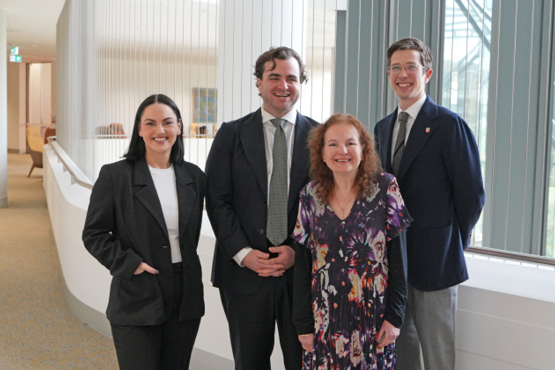
PUMA Team: PUMA Lead Investigator Dr Luke Perry (centre left) with co-investigator A/Prof Lachlan Miles (far right) and cardiac surgery survivors & PUMA Investigators Paige Druce (left) and Anne Hosemans (right).
Australians undergoing open-heart surgery may soon benefit from safer, simpler care thanks to a new $3.7 million Medical Research Future Fund grant awarded to researchers from Monash University’s Victorian Heart Institute. Co-designed with patients and their families, PUMA is a world-first clinical trial that will compare a commonly used invasive monitoring device called a pulmonary artery catheter (PAC) to a less invasive and simpler alternative called a central venous catheter (CVC).
Lead investigator Dr Luke Perry, Head of Anaesthetic Research at the Victorian Heart Institute, said that PUMA will catch the field of cardiac surgery up, which is decades behind on evidence for pulmonary artery catheters.
“These invasive devices have been broadly de-adopted in other high-risk patient groups after large clinical trials in sepsis, acute respiratory distress syndrome, and non-cardiac surgery failed to show a benefit to patients,” he said.
“PUMA will resolve decades of international controversy around the role of pulmonary artery catheters in contemporary practice, paving the way for high-value care that could reduce major complications and get patients home to their families sooner.”
Each year, over 2 million people must undergo open-heart surgery to solve life threatening issues. Inserted into the heart through a vein in the neck, PACs give unique insights into cardiac function during and after surgery which can be used to guide treatment decisions.
“Pulmonary artery catheters provide important information about heart function. Unfortunately, they are not without risk, and could even trigger unnecessary treatments, increase complications, and prolong hospital admissions,” said A/Prof Lachlan Miles, PUMA co-investigator and Head of Research, Department of Anaesthesia at Austin Health.
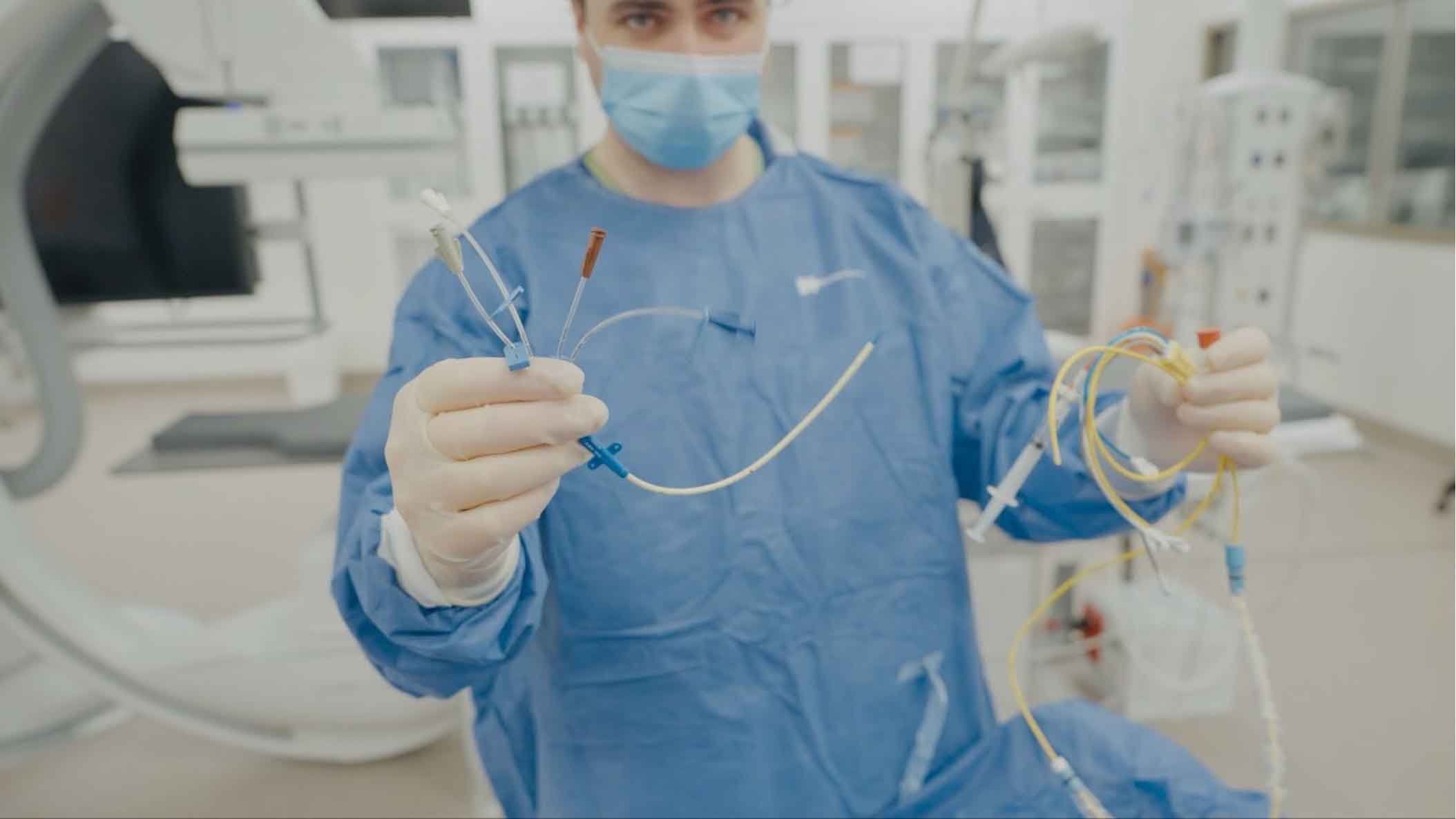
PUMA Lead Dr Perry demonstrating the pulmonary artery catheter (right) with the less invasive central venous catheter (left).
A novel clinical trial co-designed by patients and their loved ones
PUMA has been co-designed with consumers over three years to reflect the priorities of heart surgery patients and their loved ones. As part of the VHI Community Pulse platform, PUMA has incorporated lived experience into every aspect of the trial, including a co-design symposium, co-design workshops, and community surveys.
The trial will focus on what patients said matters most: surviving surgery, getting home sooner and avoiding complications.
At the heart of the study is strong consumer leadership, including lived-experience investigator Paige Druce, a two-time cardiac surgery survivor whose insights have shaped the study’s priorities and approach from the earliest pilot phase.
As a patient and researcher she says it is important to feel confident that every procedure is truly necessary.
“Co-designing clinical trials with people who have lived experience is important because it helps to make sure the research focuses on things that matter to the people it’s meant to help, and ensures that the research is done in a way that feels fair and respectful to those taking part,” Ms Druce, an international expert in co-design, said.
Being a part of the PUMA Consumer Advisory team has enabled me to give back and ensure that research strives to deliver the right outcomes for patients, said Anne, PUMA Pilot participant and heart surgery survivor. “When you’re experiencing bad health and have worrying feelings, research helps you feel confident you are in the best hands.”
Read more: PUMA trial: Redefining best practice in heart monitoring after open-heart surgery
Strategic partnerships will ensure PUMA’s success
PUMA brings together powerful collaborative partnerships, including the ANZCA Clinical Trials Network, Weill Cornell Medicine, Monash Health, The University of Melbourne, the Australian Commission on Safety and Quality in Health Care, MIT, ERAS Cardiac Society, and the Healthcare Carbon Lab.
Supporting this are Australia’s leading cardiac patient advocacy groups Heart Foundation, hearts4heart, Heart Support Australia, and Her Heart.
If CVCs are shown to be just as effective or better, the findings could reduce unnecessary procedures, shorten ICU stays, reduce healthcare costs, and significantly cut the environmental footprint of intensive care by 2030.
The 2,000 patient trial will begin recruitment in Australia and internationally in 2026.
The project would not have been possible without the support of internationally renowned intensivist, the late Professor Rinaldo Bellomo AO, whose kind mentorship as Dr Perry’s PhD supervisor helped establish the foundations for PUMA. Monash University acknowledges his profound contribution to critical care research and the lasting legacy he leaves across clinical science and patient-centred innovation.