
Seminar | Ducks on water: lessons learned from New England's system operational analysis and renewable energy integration studies
Welcome to Monash Energy Seminar Series. We look forward to seeing you participating in informative seminars that are held monthly for the presentation and discussion of various energy and climate change topics with light refreshments and networking to follow.
We aim to bring together Monash and external energy and climate experts to promote a cross-disciplinary understanding of challenges and opportunities rising during the global energy crisis. Building and growing the Monash Energy community is the priority of the Monash Energy Institute. By offering the Monash Energy Seminar Series, we are enabling the opportunity for all passionate and interested in energy, including academics,, students, practitioners, professionals and volunteers to congregate in one space.
We aim to create a collaborative environment that helps to share research, expertise, practice and innovative ideas for developing a clean and sustainable energy future. Monash Energy Seminars are open and free events, but do require registration.
Abstract
The introduction of variable energy resources (VERs), like solar and wind, necessitates fundamental changes in the power grid's dynamic operation. This evolution is caused by several drivers including decarbonisation, growing electricity demand, the deregulation of electricity markets, active end-user participation, and digital innovations in energy technologies. Furthermore, VER forecasts are uncertain and their profiles are intermittent; thus requiring greater quantities of operating reserves. In such a case, fast-ramping natural gas and hydro-electric power plants take on a prominent grid balancing role. At even higher levels of solar PV and wind generation, grid flexibility saturates and VER curtailment becomes the only remaining option for reliable grid balancing. To avoid this undesirable future, demand-side resources become a necessary path for energy system development. These resources are not just energy artifacts, but also exist within other engineering systems. Consequently, their integration gives rise to new multi-disciplinary challenges such as the energy-water nexus.
This presentation seeks to share lessons learned from two system operational analysis and renewable energy integration studies conducted in cooperation with ISO New England. In the first, VER resources are increased in the coming decade to reveal a future of grid saturation and VER curtailment. The follow-on New England Energy-Water Nexus Study shows that coordinated energy-water resources can create a triple bottom-line synergy worth $70M/yr. The presentation concludes that a decarbonisation agenda must evolve from power grid studies with electricity as a single energy carrier to multi-energy engineering systems studies that specifically coordinate multiple energy carriers through many layers of coordinated planning and operations management decisions.
Watch the video
Speaker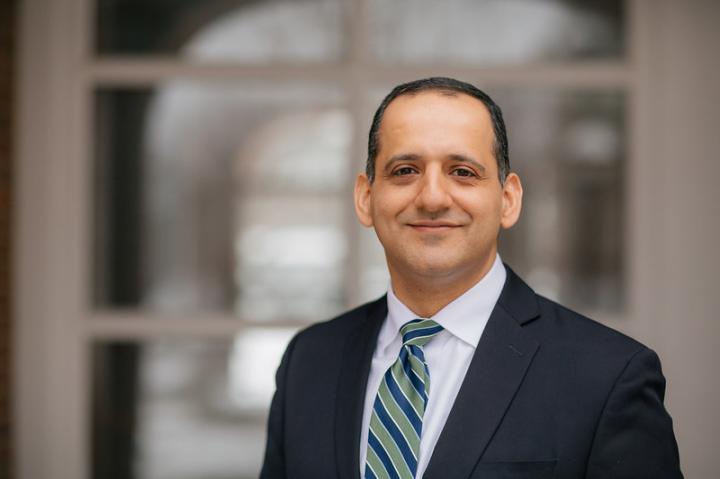
Professor Amro M Farid
Alexander Crombie Humphreys Chair Professor of Economics in Engineering at Stevens Institute of Technology School of Systems and Enterprises
Visiting Professor MIT Mechanical Engineering
Fulbright Scholar / CSIRO Visiting Scientist
Chief Executive Officer of Engineering Systems Analytics
Prof Amro M Farid is the Alexander Crombie Humphreys Chair Professor in Economics of Engineering at the School of Systems and Enterprises at the Stevens Institute of Technology and a visiting professor at MIT Mechanical Engineering. He leads the Laboratory for Intelligent Integrated Networks of Engineering Systems (LIINES) and has authored over 150 peer reviewed publications in:
- Smart Power Grids
- Energy-Water Nexus
- Electrified Transportation
- Industrial Energy Management
- Interdependent Smart City Infrastructures
He received his Bachelor of Science in 2000 and his Master of Science in 2002 from the MIT Mechanical Engineering Department. He went on to complete his PhD degree at the Institute for Manufacturing within the University of Cambridge (UK) Engineering Department in 2007. He has varied industrial experiences from the electric power, automotive, semiconductor, defence, chemical, and manufacturing sectors. As an Environment and Greenhouse Gases Specialist, he designed and implemented Air Liquide's Worldwide Environmental Management System and was the lead technical advocate for Air Liquide's position on the EU Emissions Trading Scheme. In 2010, he began his academic career as a visiting scholar at the MIT Technology Development Program and the Masdar Institute of Science and Technology (UAE). In 2014, he founded Engineering Systems Analytics LLC as a startup engineering software and consulting company to provide techno-economic insight to energy and infrastructure operators. In 2021, he became a Fulbright Future Scholar to investigate the energy-water-hydrogen nexus in Australia.
As an academic, he has made active contributions to the MIT-Masdar Institute Collaborative Initiative, the MIT Future of the Electricity Grid Study, the IEEE (Institute of Electrical and Electronics Engineers) Vision for Smart Grid Controls, and the Council of Engineering Systems Universities. He currently serves as Chair of IEEE Smart Cities R&D Technical Activities Committee, and Co-Chair of the IEEE Systems, Man & Cybernetics (SMC) Technical Committee on Intelligent Industrial Systems. He is a senior member of the IEEE and a member of the ASME (American Society of Mechanical Engineers) and INCOSE(International Council on Systems Engineering).
Event host
Professor Ariel Liebman, Director, Monash Energy Institute
Event Details
- Date:
- 19 October 2022 at 3:30 pm – 5:00 pm
- Venue:
- G29, New Horizons, 20 Research Way, Clayton
- Campus:
- Clayton Campus
- Cost:
- Free, no registration required
Description
Welcome to Monash Energy Seminar Series. We look forward to seeing you participating in informative seminars that are held monthly for the presentation and discussion of various energy and climate change topics with light refreshments and networking to follow.
We aim to bring together Monash and external energy and climate experts to promote a cross-disciplinary understanding of challenges and opportunities rising during the global energy crisis. Building and growing the Monash Energy community is the priority of the Monash Energy Institute. By offering the Monash Energy Seminar Series, we are enabling the opportunity for all passionate and interested in energy, including academics,, students, practitioners, professionals and volunteers to congregate in one space.
We aim to create a collaborative environment that helps to share research, expertise, practice and innovative ideas for developing a clean and sustainable energy future. Monash Energy Seminars are open and free events, but do require registration.
Abstract
The introduction of variable energy resources (VERs), like solar and wind, necessitates fundamental changes in the power grid's dynamic operation. This evolution is caused by several drivers including decarbonisation, growing electricity demand, the deregulation of electricity markets, active end-user participation, and digital innovations in energy technologies. Furthermore, VER forecasts are uncertain and their profiles are intermittent; thus requiring greater quantities of operating reserves. In such a case, fast-ramping natural gas and hydro-electric power plants take on a prominent grid balancing role. At even higher levels of solar PV and wind generation, grid flexibility saturates and VER curtailment becomes the only remaining option for reliable grid balancing. To avoid this undesirable future, demand-side resources become a necessary path for energy system development. These resources are not just energy artifacts, but also exist within other engineering systems. Consequently, their integration gives rise to new multi-disciplinary challenges such as the energy-water nexus.
This presentation seeks to share lessons learned from two system operational analysis and renewable energy integration studies conducted in cooperation with ISO New England. In the first, VER resources are increased in the coming decade to reveal a future of grid saturation and VER curtailment. The follow-on New England Energy-Water Nexus Study shows that coordinated energy-water resources can create a triple bottom-line synergy worth $70M/yr. The presentation concludes that a decarbonisation agenda must evolve from power grid studies with electricity as a single energy carrier to multi-energy engineering systems studies that specifically coordinate multiple energy carriers through many layers of coordinated planning and operations management decisions.
Watch the video
Speaker
Professor Amro M Farid
Alexander Crombie Humphreys Chair Professor of Economics in Engineering at Stevens Institute of Technology School of Systems and Enterprises
Visiting Professor MIT Mechanical Engineering
Fulbright Scholar / CSIRO Visiting Scientist
Chief Executive Officer of Engineering Systems Analytics
Prof Amro M Farid is the Alexander Crombie Humphreys Chair Professor in Economics of Engineering at the School of Systems and Enterprises at the Stevens Institute of Technology and a visiting professor at MIT Mechanical Engineering. He leads the Laboratory for Intelligent Integrated Networks of Engineering Systems (LIINES) and has authored over 150 peer reviewed publications in:
- Smart Power Grids
- Energy-Water Nexus
- Electrified Transportation
- Industrial Energy Management
- Interdependent Smart City Infrastructures
He received his Bachelor of Science in 2000 and his Master of Science in 2002 from the MIT Mechanical Engineering Department. He went on to complete his PhD degree at the Institute for Manufacturing within the University of Cambridge (UK) Engineering Department in 2007. He has varied industrial experiences from the electric power, automotive, semiconductor, defence, chemical, and manufacturing sectors. As an Environment and Greenhouse Gases Specialist, he designed and implemented Air Liquide's Worldwide Environmental Management System and was the lead technical advocate for Air Liquide's position on the EU Emissions Trading Scheme. In 2010, he began his academic career as a visiting scholar at the MIT Technology Development Program and the Masdar Institute of Science and Technology (UAE). In 2014, he founded Engineering Systems Analytics LLC as a startup engineering software and consulting company to provide techno-economic insight to energy and infrastructure operators. In 2021, he became a Fulbright Future Scholar to investigate the energy-water-hydrogen nexus in Australia.
As an academic, he has made active contributions to the MIT-Masdar Institute Collaborative Initiative, the MIT Future of the Electricity Grid Study, the IEEE (Institute of Electrical and Electronics Engineers) Vision for Smart Grid Controls, and the Council of Engineering Systems Universities. He currently serves as Chair of IEEE Smart Cities R&D Technical Activities Committee, and Co-Chair of the IEEE Systems, Man & Cybernetics (SMC) Technical Committee on Intelligent Industrial Systems. He is a senior member of the IEEE and a member of the ASME (American Society of Mechanical Engineers) and INCOSE(International Council on Systems Engineering).
Event host
Professor Ariel Liebman, Director, Monash Energy Institute
Event Contact
- Name
- energy-institute@monash.edu
- Phone
- Organisation