
Saeede Nazari Goldar
SECURITY CONSTRAINED INTEGRATED SYSTEM PLANNING TOWARDS A 100% RENEWABLE GRID
Saeede Nazari Goldar
PhD Candidate, Faculty of Engineering, Monash University (Zema Scholar)
Supervisors: A/Prof Roger Dargaville, Prof David Hill
Research interests: Integrated energy systems, renewable energy systems and sustainable development, optimisation of the electricity system, power system reliability and security.
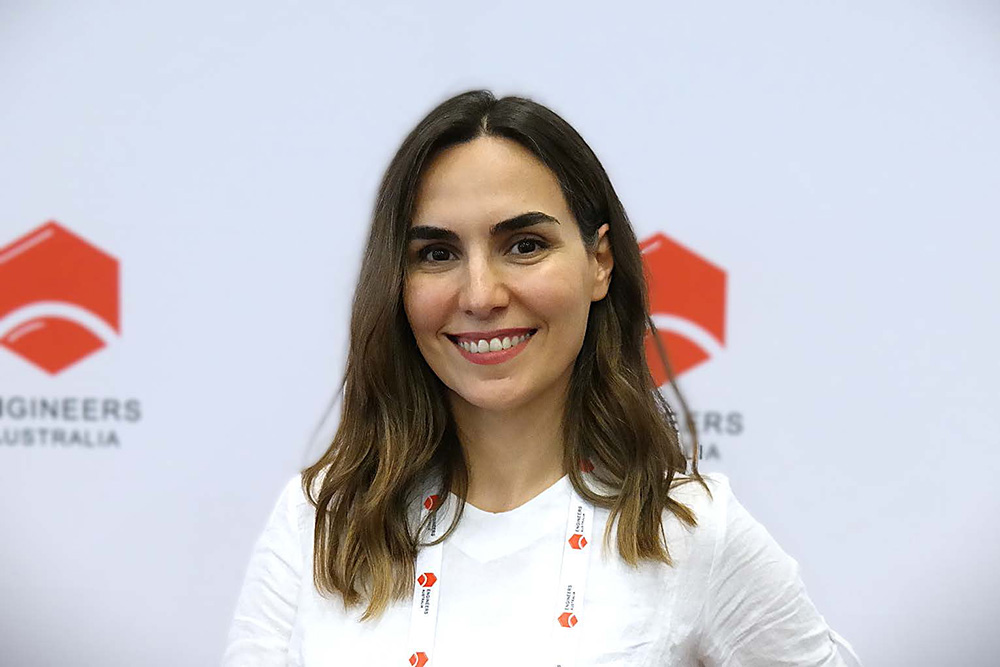
Saeede completed her Master's degree in Science, Electrical Engineering – Control System Engineering at Amirkabir University of Technology, Tehran, Iran in 2013.
Before receiving the 2022 Zema Energy Studies Scholarship, she worked for several years in both technical roles across different industries. Most recently, as a Production and Plant Engineer at COOLON LED Lighting in Melbourne, she led process improvements, explored automation solutions, and collaborated closely with product designers to boost manufacturing efficiency and product quality.
With over eight years of hands-on experience across various industries, Saeede’s career has consistently been driven by a strong interest in sustainability and development. While building technical skills and overcoming challenges in fast-paced environments, she often found it difficult to make time for deeper study in the area she was most passionate about – modern electricity systems and energy transition.
Receiving the Zema Energy Studies Scholarship marked a turning point. It allowed her to step away from the demands of industry work and fully immerse herself in research, critical discussions, and future-focused learning in the energy sector.
“For years, I was trying to move toward a career in the energy industry while juggling demanding roles in other fields. The scholarship gave me the space to realign my path – to focus, learn, and finally connect my goals with real opportunities in the sector.”
Now, just over halfway through her PhD program, Saeede has enjoyed connecting with like-minded professionals in the energy industry. She recently joined the Australian Energy Market Operator (AEMO) as a Senior Engineer, where she’s applying both her past experience and current research to real-world challenges – contributing to the future of the electricity industry.
Saeede’s PhD research focuses on the techno-economic aspects of electricity system expansion planning. She aims to ensure that the future electricity system – with a high share of renewable energy – can remain cost-effective, reliable, and secure.
Her research is supervised by Dr Roger Dargaville, Director of Sustainability and Senior Lecturer at the Faculty of Engineering, and Professor David J Hill, Department of Electrical and Computer Systems Engineering.
On choosing this path, Saeede said:
“I was fascinated by the scale of new projects and the speed at which technologies are transforming the energy sector. Renewable energy is constantly evolving, and that means there’s always room to grow, diversify, and keep learning.”
She added:
“Before starting my PhD, I was following the Monash Energy Club and several research organisations focused on the energy transition. I saw that Monash had strong partnerships with industry, and that really motivated me to explore how I could apply my skills and expand my knowledge in modern electricity systems. When I found out about the Zema Energy Studies Scholarship, I applied right away – and I’m honoured to have been selected.”
Research aims
As the world shows increasing determination to reduce emissions to zero by 2050, the electricity grid is taking on a more central and complex role. Integrating renewable energy sources is essential for phasing out coal and other fossil fuels, but it also introduces challenges to system reliability due to the intermittent and seasonal nature of these resources as well as lack of the physical inertia. Power system security risks are often overlooked in high-level investment and planning models. However, addressing these risks post-planning phase can lead to significant implementation and operational costs. To effectively assess and maintain security and reliability at all times, detailed dynamic models must be integrated with long-term planning frameworks. Our research also explores the potential of emerging, though currently expensive, technologies to provide critical system security services.
The goal of this research is to ensure that variability in renewable energy generation and the associated reduction in system inertia do not become barriers to achieving deep decarbonisation and building cost-efficient, reliable and secure electricity systems for the future.