
Household energy choices are adding up
Australia's emissions are falling and households across NSW are helping drive the change. But are we on track to meet our 2030 targets?
Australia's emissions dropped 1.6 per cent – or 7.5 million tonnes – in the year to March 2026, according to new figures released by the Federal Government last Friday.
That brings Australia's annual total down to around 455 million tonnes, similar to Vietnam and South Africa.
The biggest change came from electricity, where emissions fell 3.7 per cent – 5.6 million tonnes – as renewable generation reached record levels.
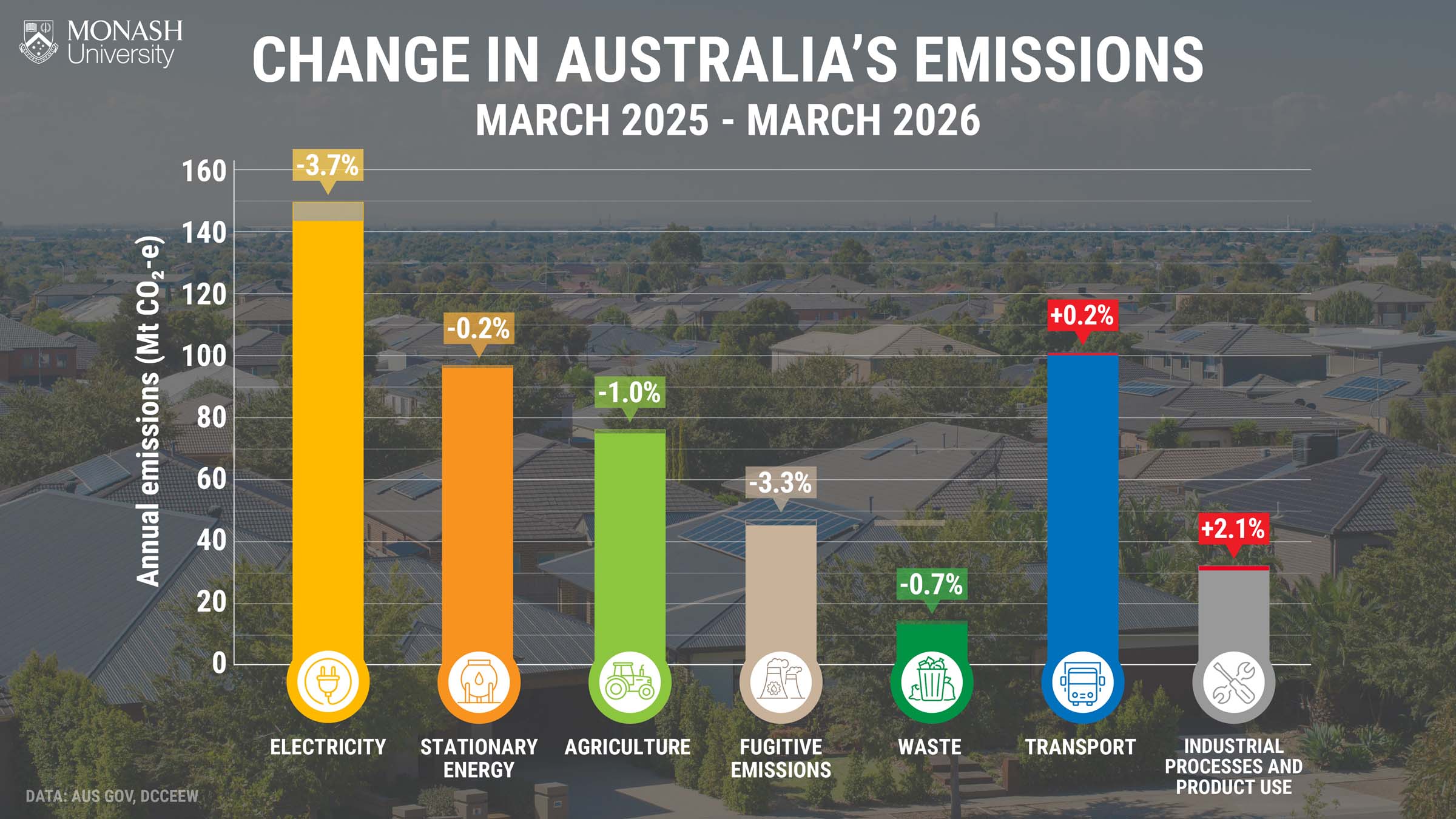
Electricity remains Australia's largest source of greenhouse gas emissions, but like in the first quarter of this year, it has seen some of the most significant change.
Emissions from electricity have been steadily trending downhill since 2009, and are now more than 26 per cent lower than they were in 2005.
Rapid growth in renewables has been a key driver behind this change, and households have led the charge.
Solar panels on the roof, a battery in the garage and an electric vehicle (EV) in the driveway are becoming as familiar as a fridge or washing machine.
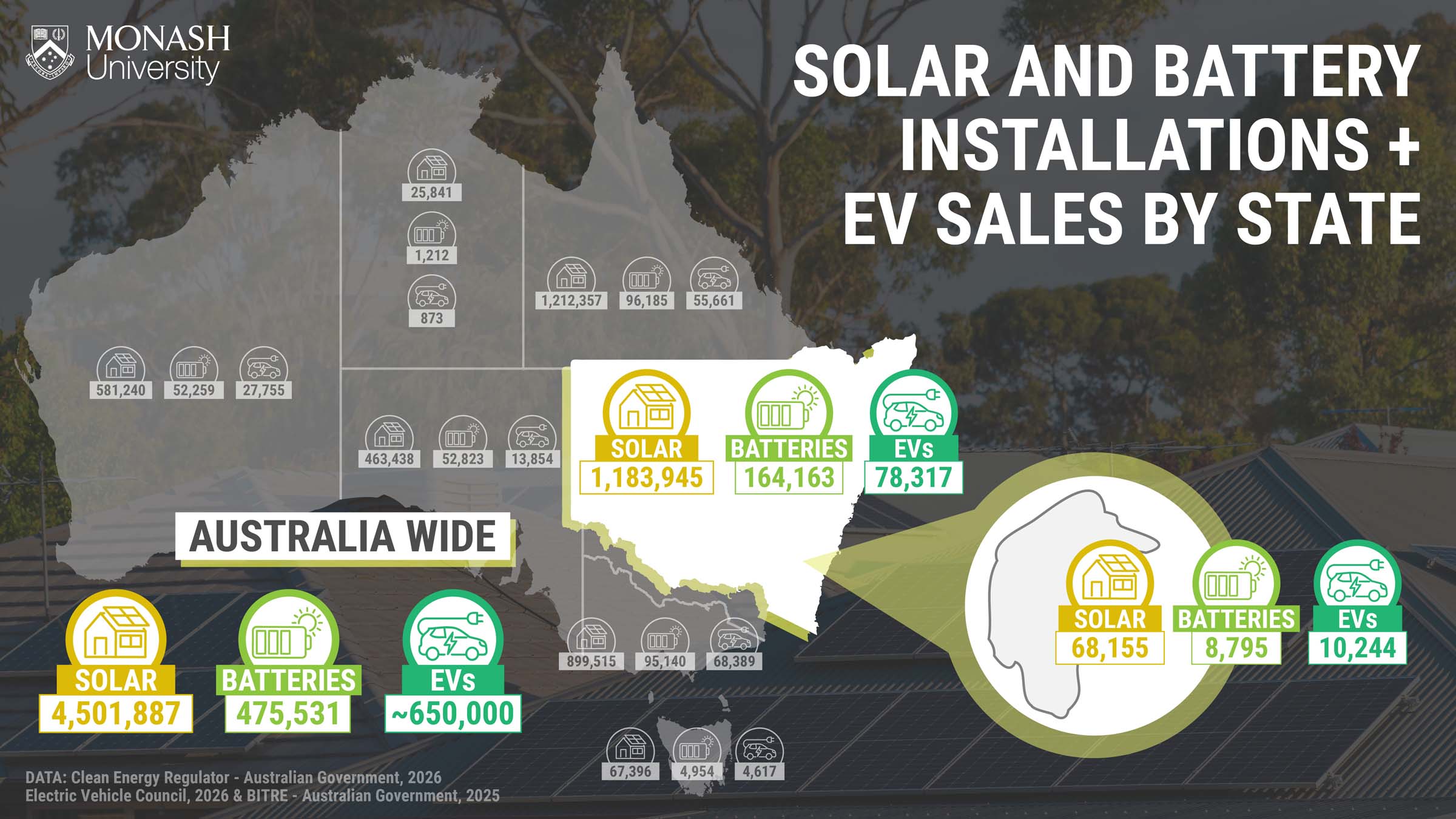
More than four million small-scale solar systems are now soaking up the sun on Australian rooftops.
And home batteries are quickly catching up.
Just this year over 265,000 have been installed – more than three and a half times the number recorded in 2024.
That means households with solar can now store excess energy during the day and use it to run appliances, heat or cool at low cost after the sun goes down.
Electric cars are becoming part of that picture too.
Battery electric vehicles (EVs) account for almost 17 per cent of new car sales in the year to date, with plug-in hybrids making up another nine per cent.
Together, these technologies are giving households more control over when and how they use electricity, often with the added incentive of reducing energy and transport costs.
Here in NSW, over 1.1 million homes now have rooftop solar, while more than 164,000 households have a battery.
As of January 31 last year, NSW was also home to around 78,000 EVs.
This figure is likely to be higher now following the recent surge in recent surge in EV sales in response to the fuel crisis.
But the shift is not happening at the same pace across the board.
Transport emissions rose 0.2 per cent in the first quarter of this year, largely due to greater diesel use on the roads and more domestic aviation.
Those from industrial processes also increased 2.1 per cent, driven by higher steel production.
Are Australia's emissions on track?
Australia signed the Paris Agreement in 2015, pledging to help limit global warming to well-below 2C above pre-industrial levels.
Under the agreement, Australia committed to reducing emissions by 43 per cent below 2005 levels by 2030 and 62-70 per cent by 2035, before reaching net zero by 2050.
The latest numbers show emissions are moving in the right direction, but there is still work to be done to meet these goals.
So far, our emissions are 25 per cent below 2005 levels.
That leaves another 18 per cent reduction to achieve in only 4 years.
Households will continue to be part of the change as more Australians install solar and batteries, switch to electric appliances and zoom around in EVs.
For those wondering where to start, a free tool called Electric Saul can help explore what might work in your home and what rebates and government support you might be eligible for.