
Research
Climate and Social Change Research
The success of the Hub model is underpinned by rigorous research and evaluation. We seek to understand how exposure to climate information impacts beliefs and behaviours related to climate change, and how we can tailor communications to shift attitudes toward solutions.
We test our approach and methods through peer-reviewed research publications, and we draw on Monash’s world-leading expertise in research, including climate-science, ecology, health, education, engineering, creative arts and design.
Partnering with communities, industries, and governments, we investigate how critical information can be made accessible and engaging for diverse audiences. As such, our research is designed to help communities and policymakers make good decisions and negotiate a shared future.
We build understanding of how people and landscapes are impacted by climate change, and how they interpret, engage with and respond to proposed solutions.
Our research provides new knowledge and innovative ideas that support the effective communication of climate adaptation and the implementation of climate solutions.
Multidisciplinary research teams from around the globe collaborate with our Hub to examine climate communication in both local and global contexts.
We also track emerging communication technologies, platforms and practices – along with the shifting social, political and environmental contexts in which information is circulated – to ensure our capacity to communicate the complexity and nuance of the climate/energy transition is always growing.

National Climate Action Survey
From 2025, the National Climate Action Survey is a partnership between the Griffith Climate Action Beacon and the Monash Climate Change Communication Hub. The survey reveals what Australians think, feel, and do about climate change and related environmental and climatic events, conditions and issues.

Wellbeing and Climate Change
Wellbeing frameworks can help us understand how a population is faring. This work investigates how these frameworks can be implemented to support communities and effective decision making.

Sport: Feeling the Heat
Sport is a key site for the communication of climate change and solutions, at local, national and international levels. This work explores sport’s potential as a platform for change.

Global youth climate communication
This project explores young people’s perceptions of, communication about, and engagement with climate change as a global crisis in Hong Kong and Melbourne from a comparative approach.

Social Licence and the Energy Transition
As governments, companies, and individuals compete for resources, conflicts over environments and landscapes are rising. Our research analyses these disputes across Australia and Asia, focusing on social licence and energy transition.

Sports as a communications platform for environmental issues
This project investigates in-depth the range of environmental messages communicated by media sport, and how these messages reflect and negotiate the dilemma of promoting environmental awareness.

Developing inclusive research methods for women in climate and health
Funded by the World Health Organization (WHO), this multi-country study across Malaysia and Indonesia examines the barriers that limit women's involvement in climate change and health research.
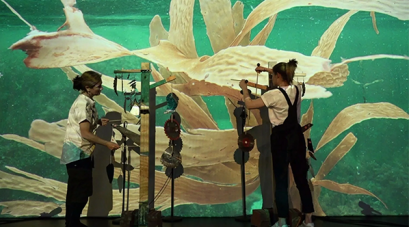
Climate Vocabularies: New methodologies for music and science communication
Climate Vocabularies explores how music can enhance science storytelling, aiming to create more compelling and emotionally resonant climate messaging. The project will develop, test, and share an innovative framework for interdisciplinary collaboration, assessing its impact on musicians, scientists, and audiences alike.

Food resilience in a time of changing climates
As climate change and other threats pose challenges to food security, we are researching how people are affected, what they want for the food system, and how those transformations can happen.

Supporting climate communication through journalists in Malaysia and Indonesia
Building capacity through co-production in Indonesia and Malaysia to address the climate change communication gap between scientific and lay audiences through journalists.