
Cli-Fi: Climate Fiction & Climate Change
Climate fictions are an important way of communicating climate science to non-specialist audiences and are being explored within the School of Languages, Literatures, Cultures and Linguistics by Professor Andrew Milner and Dr James Burgmann-Milner (who publishes under J.R. Burgmann). As the Taiwanese blogger Dan Bloom, who originally coined the term cli-fi, wrote, ‘one very important thing we can do about climate change is to encourage more and more novelists to write cli-fi novels and cli-fi movie scripts…to nurture these authors and…this rising new literary genre.’
Milner and Burgmann have developed an ideal typology of climate fictions built around five measures of formal utopianism and six measures of substantive response to climate change. The five formal variants of utopian fiction are: the classical eutopia; the critical eutopia; the classical dystopia; the critical dystopia; and the fiction set in a reality neither significantly better nor significantly worse than our own, the non-utopia they term the base reality text. The six variants of climate response are: denial; mitigation (including climate engineering); positive adaptation; negative adaptation; deep ecological anti-humanism; and pessimistic fatalism.
Their publications emerging from this project include:
- Andrew Milner, ‘The Sea and Eternal Summer: An Australian Apocalypse’ in Gerry Canavan and Kim Stanley Robinson (eds) Green Planets: Ecology and Science Fiction Wesleyan University Press, Middletown, 2014.
- Andrew Milner, J.R. Burgmann, Rjurik Davidson and Susan Cousin, ‘Ice, Fire and Flood: Science Fiction and the Anthropocene’ Thesis Eleven No. 131, 2015.
- Andrew Milner and J.R. Burgmann, ‘A Short Pre-History of Climate Fiction’ Extrapolation Vol. 59, No. 1, 2018.
- Andrew Milner and J.R. Burgmann, ‘Climate Fiction: A World-Systems Approach’ Cultural Sociology Vol. 12, No. 1, 2018.
- J.R. Burgmann, ‘Why It's Time for Video Games to Address Climate Change’ IGN, July 24 2019.
- Andrew Milner and J.R. Burgmann, Science Fiction and Climate Change: A Sociological Approach, Liverpool University Press, 2020.
- Andrew Milner and J.R. Burgmann, ‘Anthropocene Fiction and World-Systems Analysis’ Journal of World-Systems Research Vol. 26, No. 2, 2020.
- J.R. Burgmann, Children of Tomorrow: A Novel, Upswell, 2023.
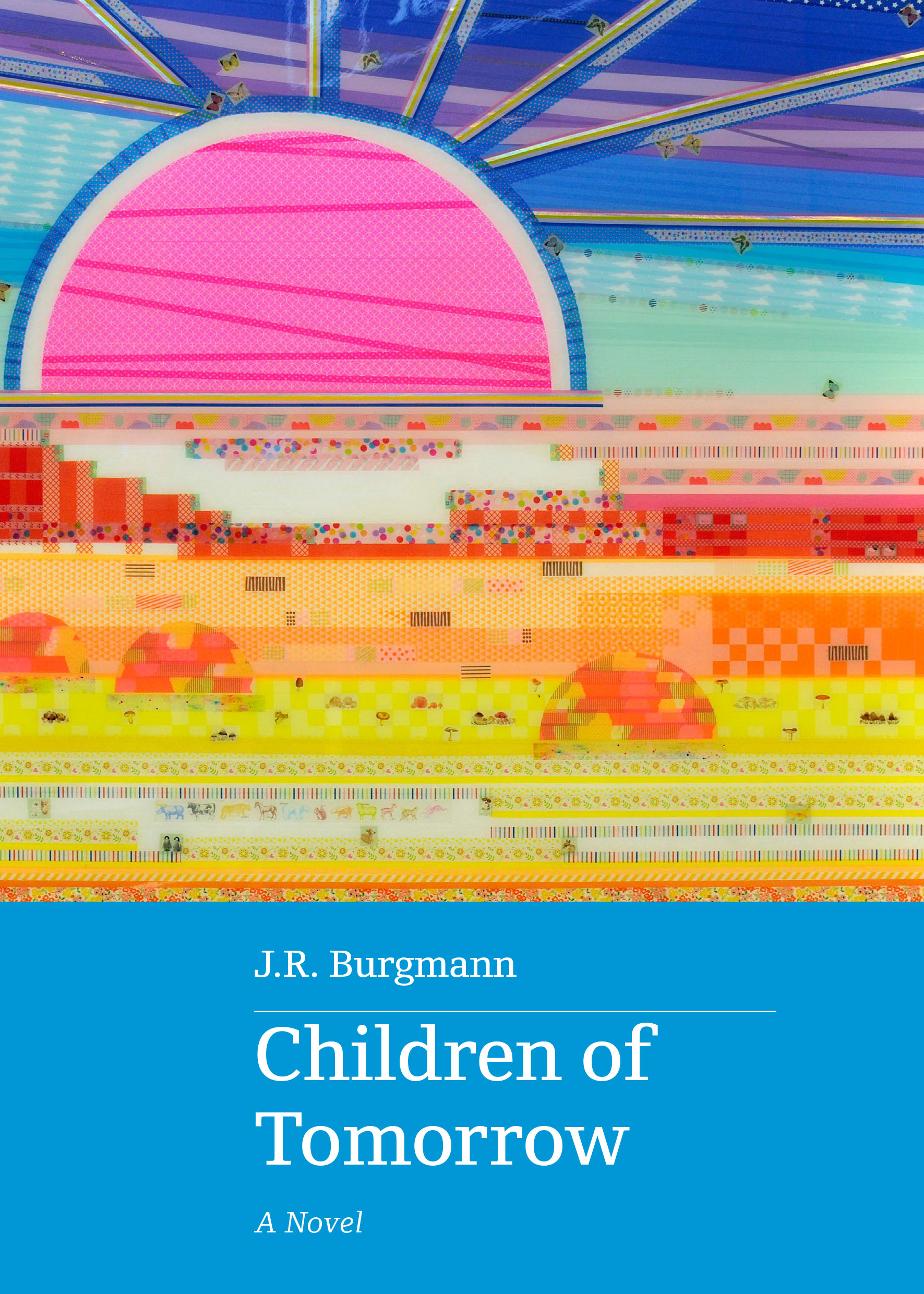
Children of Tomorrow by J.R. Burgmann
Out 3 March 2023
Children of Tomorrow depicts an all-too-real future history, rushing on at an unstoppable speed and fracturing the lives of its many characters, the effects of which ripple throughout subsequent generations and the earth they inherit.